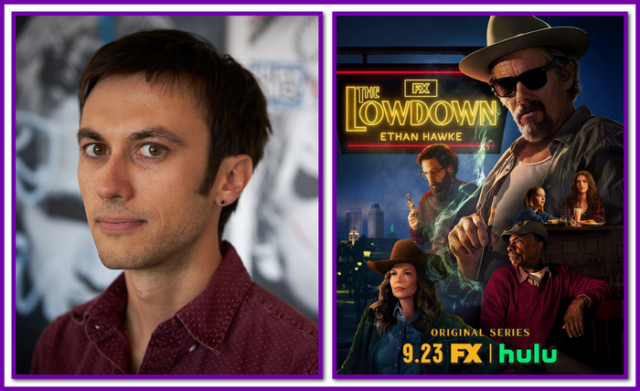
What makes the sound design of THE LOWDOWN so distinctive isn’t simply the gunfire, the chaos, the noir atmosphere, or even the rhythmic pulse of Tulsa itself. It’s the way Supervising Sound Editor CARY STACY and the team at Formosa Group transform sound into emotional architecture — building a sonic world where cicadas become percussion, muffled screams inside a car trunk become dark comedy, and the squish of boots in a cow field can carry as much narrative weight as a line of dialogue.
And for Stacy, that process begins with embracing the reality of the environment rather than fighting against it.
“About 80% of the series is outside,” Stacy notes early in our conversation, laughing slightly at the realization. “I hadn’t thought much about that. It really is.”
That exterior-heavy production style presented immediate challenges. Natural ambience — bugs, cicadas, wind, open-air reflections — constantly threatened to overwhelm production dialogue. Yet instead of stripping away those environmental textures in post-production, Stacy and his team leaned into them whenever possible, preserving the authentic sonic fingerprint of Oklahoma.
“This show was recorded quite well,” Stacy explains. “Compared to a lot of other shows, I was mostly pleased with the tricky locations. Some places, bugs or cicadas were a little crazy, but we would kind of just amp it down a little bit and live with it as well, because it’s natural. And the feel we were going for anyway.”
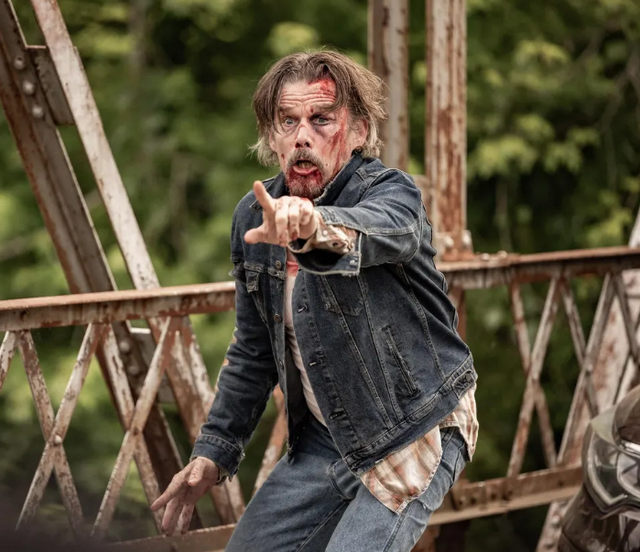
That philosophy becomes one of the defining elements of THE LOWDOWN’s sonic identity. The insects, the heat, and the air itself become part of the storytelling language. Tulsa isn’t simply seen onscreen — it’s heard.
And according to Stacy, much of that tonal cohesion stemmed from an unusually close collaboration with picture editor Patrick Tuck.
“Honestly, that’s the closest I think I’ve ever worked with a picture editor,” Stacey says. “Usually, it depends on the show. Sometimes producers kind of keep them away from the mix stage. But on this show, Patrick was even on episodes he didn’t cut himself. He was still kind of the primary voice for the show. So I was just in constant communication with him about everything.”
That collaborative relationship allowed sound and editorial rhythm to evolve together rather than independently. Instead of simply servicing a locked picture, Stacy often found himself shaping emotional momentum alongside Tuck in real time.
“I think we realized early on that we could have fun with stuff,” Stacy says. “And we weren’t too afraid of surprising them with something really different. A lot of the times we got away with it, and they liked our little ideas.”
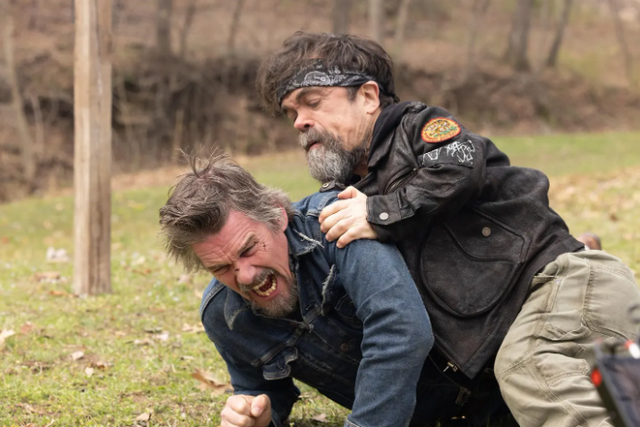
That willingness to experiment becomes especially apparent in one of the series’ most surreal and unforgettable sequences — the tar-and-feathering scene.
For Stacy, it stands as the single moment that best encapsulates the layered craftsmanship of the show’s sound design.
“That whole sequence there,” he says, “that was really fun.”
The sequence required an intricate layering of ADR, group recordings, Foley, effects work, music, and environmental ambience. Screams were treated and manipulated. Foley textures were exaggerated. Group recordings were distorted. Even the insects themselves became part of the rhythmic design.
“One thing I just thought of actually, with the tar-and-feathering scene,” Stacey recalls. “At the end of that, there’s a big music moment… and Mitch [Lestner] was cutting kind of a rhythmic cicada thing ramped up to the end. And we cut that in sync with the music that’s happening there as well.”
The result is a scene that feels simultaneously hyper-realistic and dreamlike — grounded in physical discomfort while drifting into something almost hallucinatory.
“It was hyper-realistic,” Stacy says. “We just really had fun with it.”
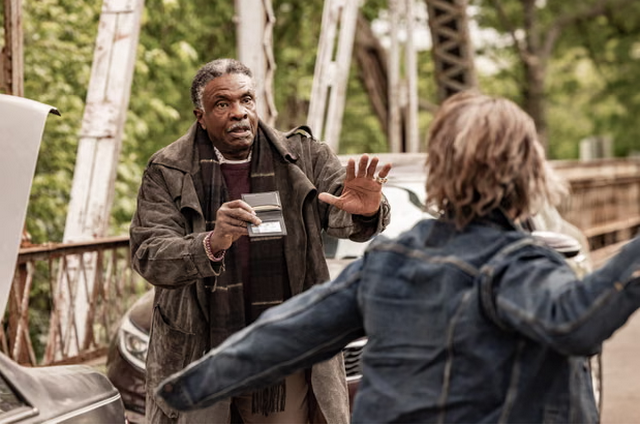
That balance between tension and absurdist humor runs throughout THE LOWDOWN, nowhere more effectively than in the memorable trunk sequence involving Ethan Hawke’s Lee Raybon. Locked inside a car trunk while screaming and pounding for escape, the scene could easily have veered into horror. Instead, Stacy and the sound team shape it into something darkly comedic without sacrificing tension.
“That was a blast,” Stacy says. “I think my personal favorite part of that was just working with the dialogue… Ethan’s screaming in the trunk there and the perspectives on that.”
The production audio itself became an unexpected advantage.
“A lot of the screaming in there was recorded in a trunk-like little setup,” Stacy explains. “The reflections of the production audio were appropriate for a trunk. So everything sounded really good, and we would just match anything added to that kind of reflection.”
The realism of the acoustics helps ground the scene, while the restraint in the overall sound mix keeps the sequence playful rather than traumatic. Even when bodies are dumped over a bridge moments later, Stacy understands precisely how much sound to use — and how much restraint to exercise.
“My other favorite sound on that little moment,” he says with a laugh, “was when the bodies are pushed over the bridge… and it’s kind of quiet, and then you just hear the body hitting the metal.”
That instinct for tonal modulation extends into the series’ action sequences as well, including the intricate vehicle crash involving Scott Shepherd’s character. Stacy credits effects editor Mitch Lestner for helping construct the layered realism of the moment.
“He’s really good at anything car-related and gun-related,” Stacy says. “He nailed it with that car stuff. I struggle cutting cars a lot of the time. It’s a really difficult thing to cut and make interesting.”
And then there’s the gunplay itself — another recurring sonic element woven throughout the series’ noir framework.
“It’s really fun,” Stacy admits. “I love finding ways to make sure they pop within their scenes and feel appropriate.”
But for Stacy, the true joy of episodic storytelling isn’t simply the individual moments. It’s the opportunity to develop a long-form sonic identity across an entire season.
“You get to work with this crew for a very long time,” he says. “You really kind of dial in a sound palette.”
That palette — humid, rhythmic, funny, dangerous, intimate, and chaotic all at once — becomes one of THE LOWDOWN’s defining artistic signatures.
And if the series continues evolving sonically in Season Two, Stacy is more than ready to dive back into Tulsa noir once again.
“Once we started mixing,” he says with a laugh, “it was just all hands on deck.”
By debbie elias, exclusive interview 05/05/2026
Season One of THE LOWDOWN is now streaming on HULU and Disney+