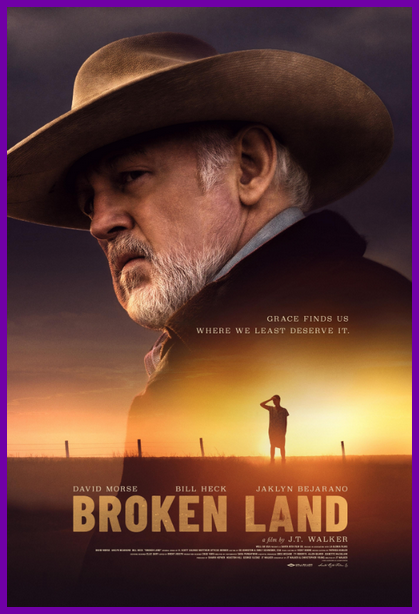
Some films announce their intentions loudly. BROKEN LAND does the opposite.
Writer/director J.T. Walker’s feature debut unfolds with quiet confidence, allowing its story to emerge through weathered faces, lingering glances, empty rooms, and the vast, unforgiving landscape of South Texas. It is a film that understands the power of stillness and trusts audiences to find meaning in the spaces between words.
The result is a deeply affecting character study that explores family, loss, immigration, forgiveness, and the complicated notion of home.
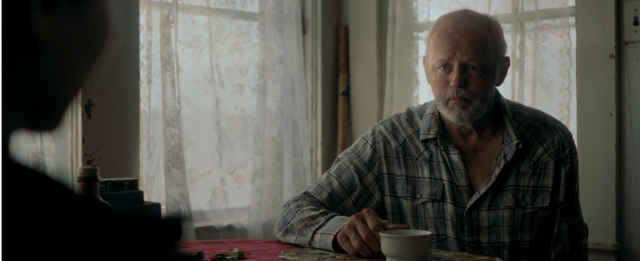
Carson Tidwell (David Morse) wants nothing more than to be left alone.
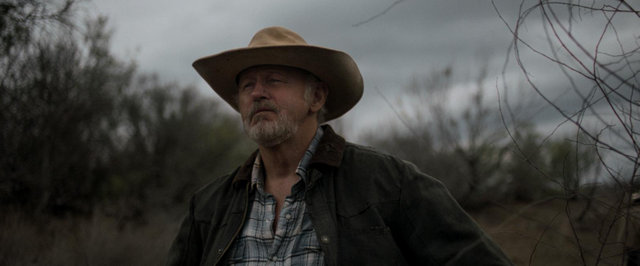
Living in near isolation on his remote Texas ranch, Carson spends his days tending cattle, carrying the emotional scars of his wife’s death and the estrangement of his son Harley (Bill Heck), a Border Patrol agent whose relationship with his father remains fractured by years of unresolved pain. When Carson accidentally shoots Irena (Jaklyn Bejarano), a pregnant migrant crossing his property on her journey north, an act of violence unexpectedly becomes the catalyst for healing.
What follows is neither a political treatise nor a conventional immigration drama.
Instead, BROKEN LAND becomes an intimate exploration of two wounded souls who slowly discover compassion, trust, and humanity in one another.
Walker demonstrates remarkable restraint as a filmmaker. Rather than relying on exposition-heavy dialogue, he allows visual storytelling to carry much of the narrative weight. Working with cinematographer Sara Purgatorio, he crafts a visual grammar that speaks volumes.
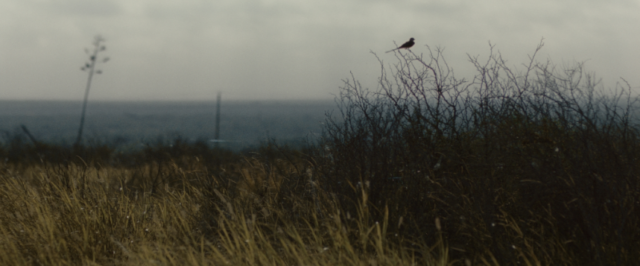
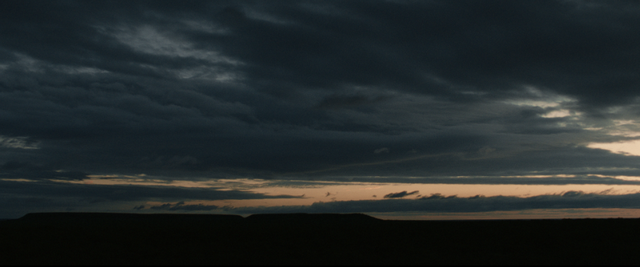
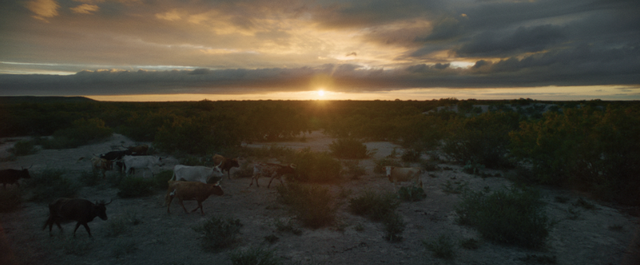
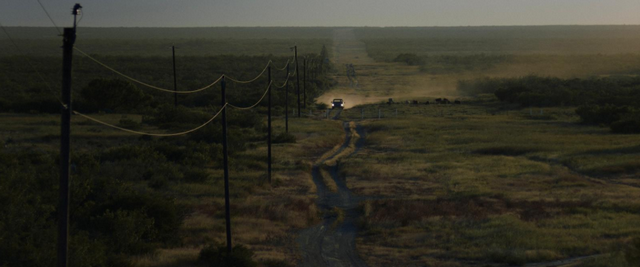
The film opens with expansive widescreen imagery that emphasizes both the beauty and isolation of the Tidwell ranch. Vast panoramic vistas stretch endlessly toward the horizon, capturing the desolation of a place that once served as the center of family life but now sits largely abandoned. Yet these wide shots do far more than establish geography. They reveal Carson’s emotional state.
He exists alone within an immense landscape, disconnected from family, community, and purpose.
As Carson and Irena gradually begin to lower their defenses, the camera responds. The visual language subtly evolves, moving closer and closer to the characters. Two-shots become more intimate. Framing grows warmer. Physical proximity begins to mirror emotional proximity. Without ever calling attention to itself, the cinematography charts the transformation of both characters. Purgatorio’s work is stunning throughout.
Natural light becomes an active storytelling tool. Sunrises and sunsets bathe the landscape in soft pinks, golds, and amber hues, while interiors embrace practical lighting and natural shadows that create texture and authenticity rather than artificial polish.
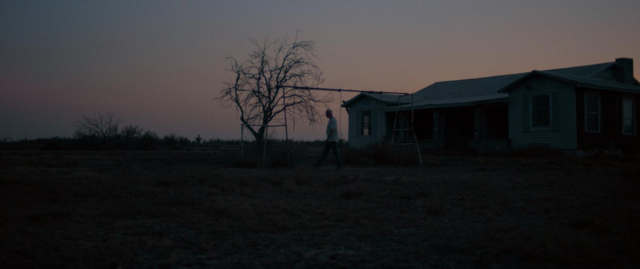
Equally impressive is the film’s production design, thanks to production designer Chad Yaro.
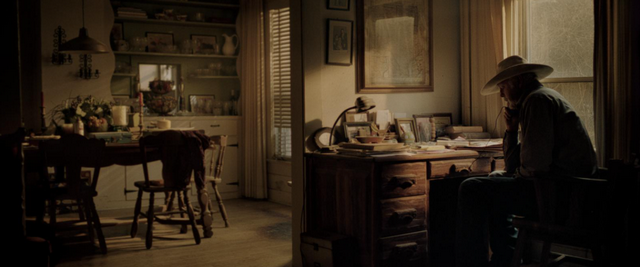
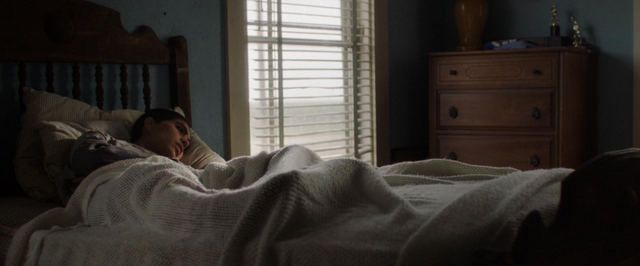
Because BROKEN LAND was shot on Walker’s actual family ranch—his grandparents’ ranch—the film possesses an authenticity that simply cannot be manufactured. The house feels lived in because, in many ways, it was. Every room tells a story. The room Carson gives Irena offers bright windows, blue walls, white trim, and a sense of possibility and renewal. By contrast, the remainder of the house feels suspended in time. Dark furniture, drawn curtains, fading colors, and decades-old décor create the feeling of a life interrupted.
Most striking is the preserved bedroom of Carson’s late wife. Soft filtered sunlight passes through sheer curtains. Antique furnishings remain in place. Warm tones linger across the walls. It is the only room in the house that still feels emotionally alive, a sanctuary of memory untouched by grief’s passage. Walker and production designer Chad Yaro transform the ranch house into a physical manifestation of Carson himself. Frozen. Waiting. Unable to move forward. Until Irena arrives.
And remarkably, the emotional turning point of the film comes not through confrontation, confession, or melodrama. It comes through a cup of tea.
While recovering from her injuries, Irena ventures outside and discovers a small tree growing near the house. She recognizes its potential, plucks a few leaves, and prepares tea for Carson. It is a simple gesture. A tiny act of kindness. Yet it changes everything. That single cup of tea becomes the film’s fulcrum. Until that moment, Carson and Irena exist primarily as caretaker and patient, reluctant strangers bound by circumstance. Afterward, something shifts.
Trust begins to emerge. Fear begins to recede. Compassion quietly takes root.
The beauty of the sequence lies in its simplicity. Walker understands that meaningful transformation rarely arrives through grand speeches. More often, it arrives through small moments of grace. From there, the film’s emotional evolution unfolds organically.
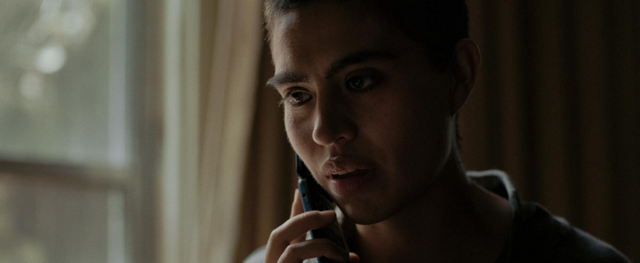
Carson begins taking better care of himself. The stained T-shirts disappear. He showers. He combs his hair. He puts on proper shirts. He repairs parts of the ranch. He begins cooking real meals. In short, he begins living again. Meanwhile, Irena gains confidence, independence, and agency. She observes. She listens. She heals.
Their relationship never feels forced because Walker allows it to develop through behavior rather than dialogue.
Anchoring everything is David Morse, who delivers one of the finest performances of his career. Morse has always possessed a remarkable ability to communicate emotion with minimal dialogue, and BROKEN LAND gives him the perfect canvas on which to work. Every look, every hesitation, every subtle shift in posture reveals Carson’s internal struggle. The performance is deeply felt without ever becoming sentimental.
Equally impressive is Jaklyn Bejarano. Her portrayal of Irena balances vulnerability and resilience in equal measure. She conveys determination, intelligence, fear, and hope while maintaining an emotional authenticity that never falters.
Together, Morse and Bejarano create a relationship that feels profoundly human.
Editor Brent Joseph deserves significant recognition for maintaining the film’s delicate balance. BROKEN LAND is unapologetically a slow burn, yet Joseph never allows the pacing to become stagnant. The film understands the value of atmosphere, giving audiences space to absorb the environment, the performances, and the emotional journey while quietly sustaining narrative tension throughout.
The score by Matthew Atticus Berger and H. Scott Salinas further enriches the experience. Infused with subtle regional influences, the music enhances the film’s sense of place without overwhelming the storytelling, providing emotional support while allowing silence to remain one of the film’s most powerful tools.
Perhaps most impressive is Walker’s refusal to reduce the story to easy answers. Immigration. Birthright citizenship. Family estrangement. End-of-life choices. Legacy. Belonging.
BROKEN LAND engages with all of these themes while avoiding simplistic conclusions.
Instead, Walker remains focused on people. Human beings trying to find connection. Trying to find forgiveness. Trying to find purpose. Trying to find home.
The film’s final moments provide a beautiful visual and emotional counterpoint to everything that came before. The desolation and isolation of Texas eventually give way to warmth, family, and community. The contrast is profound, yet it never feels manipulative.
By the time Walker arrives at his final image—a quietly radiant close-up of Carson seated at a family table, smiling once again—it feels completely earned.
For a debut feature, BROKEN LAND is remarkably assured filmmaking.
Patient. Compassionate. Visually eloquent. And deeply human.
Like the best stories, it reminds us that home is not always where we begin. Sometimes it’s where we find our way back to ourselves.
Directed by J.T. Walker
Written by J.T. Walker and Christopher Young
Cast: David Morse, Jaklyn Bejarano, Bill Heck
by debbie elias, 06/02/2026
BROKEN LAND is available On Demand on June 12, 2026.