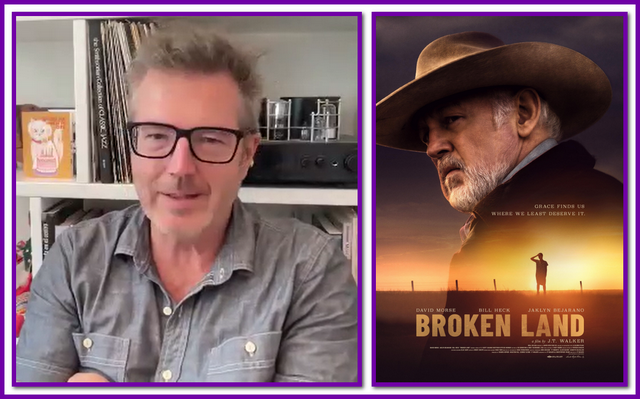
Some films begin with a screenplay. BROKEN LAND began with a memory.
For writer/director J.T. WALKER, the film’s origins stretch back decades to childhood summers spent on his grandparents’ ranch in South Texas, a place that became increasingly meaningful precisely because he didn’t live there full time.
“My parents were divorced, so I left Texas when I was young,” Walker explains. “When I would come back, that’s the home that I had.”
Over the years, the ranch took on an almost mythical quality. “My grandparents’ ranch house was always the anchor.”
While other homes came and went, the ranch remained. His parents moved. Life changed. The ranch endured.
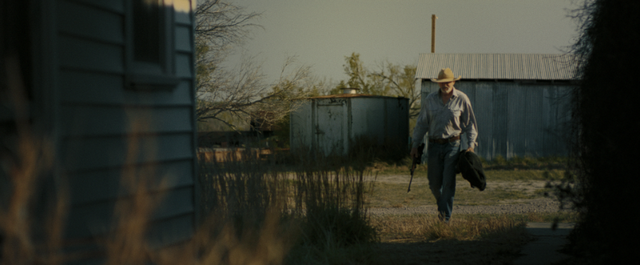
Every summer, Walker returned to work cattle, ride horses, and spend time alongside his grandfather, a lifelong cattleman whose connection to the land left a lasting impression. “It was a working ranch,” Walker says. “That was his whole career.”
Looking back, Walker admits that distance may have deepened his emotional connection to the place.
“I think I mythologized it to some degree.” Yet the ranch wasn’t only defined by family memories.
Because of its proximity to the border, Walker frequently witnessed migrants crossing through the property on their journey north. “There would be people crossing the border and stopping at the ranch on their way north.”
As a child, he found himself fascinated by their stories.
“I was always really intrigued.” Questions lingered. Who were these people? Where had they come from? Where were they going? What circumstances had led them to walk for miles across some of the harshest terrain in Texas? “There were kids. There were whole families.”
Those memories stayed with him long after childhood ended.
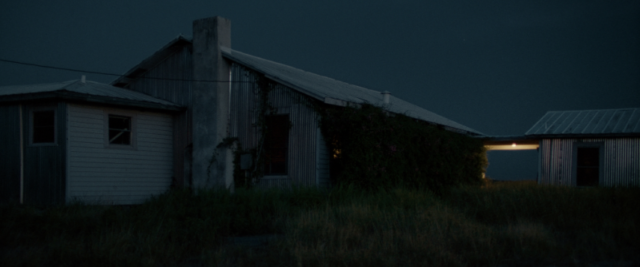
Years later, after his grandparents had passed away and the ranch house had sat largely unoccupied for nearly two decades, Walker realized that both the place and the stories connected to it were beginning to slip away. “I had always wanted to tell a story there.”
At the same time, he found himself confronting another reality. After years of writing screenplays, he still had not directed a feature film.
Eventually, the decision became simple. “Damn it, I just have to make a film before I die.” Walker laughs at the bluntness of the statement, but the sentiment remains sincere.
“I have to make a film that’s going to—if nothing else happens, and the name of this film is on my tombstone, then that’s good enough.”
When he began evaluating which story deserved that commitment, the answer became obvious. “It was this film.”
Not because it was the easiest. Not because it was the most commercial. But because it mattered most. “It’s my family’s history. It’s the most meaningful to me.”
Initially, Walker expected to shoot the project for almost nothing. “I thought I was going to be shooting it for $50,000 with my friends and non-professional actors.”
Then circumstances changed.
A fellow Texan connected with the material, helped support the project, and allowed the production to expand beyond its original scope.
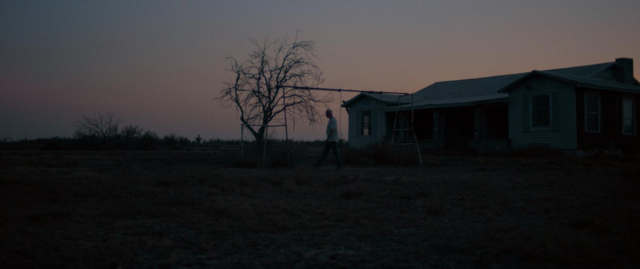
Even so, the mission remained unchanged. “I wanted to shoot on the ranch before it completely disappears.”
That urgency ultimately became the foundation of BROKEN LAND.
What began as childhood memories, family history, and lingering questions about people crossing the Texas landscape evolved into a deeply personal film about belonging, compassion, loss, and the search for home.
Because BROKEN LAND was filmed on Walker’s family ranch, production design became an unusually personal process. The house audiences see onscreen is not a carefully constructed set designed to evoke nostalgia. It is the actual house where Walker spent childhood summers with his grandparents. Yet recreating those memories proved more complicated than simply opening the front door.
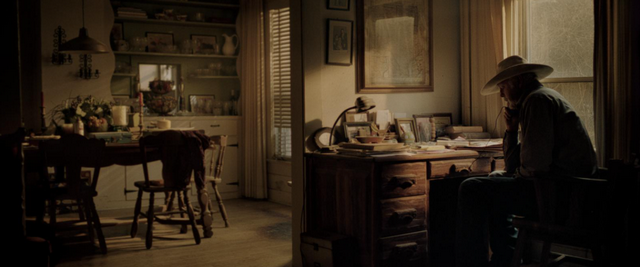
When Walker’s grandmother passed away, much of the house remained intact, but not everything survived the passage of time. Interestingly, the items most closely associated with her had largely disappeared. “The feminine elements got removed,” Walker explains.
The furniture remained. The kitchen remained. The breakfast table remained. His grandfather’s easy chair remained.
But many of the details that reflected his grandmother’s personality had vanished. “The finer things were taken out of the house.”
Decorative plates that once hung on the walls were gone. Curtains had disappeared. Personal effects had been removed. Even the beautiful bone hairbrushes his grandmother used were no longer there.
As a result, production designer Chad Yaro found himself engaged in something closer to archaeological reconstruction than traditional set dressing. “We were basically recreating some of those decorations.”
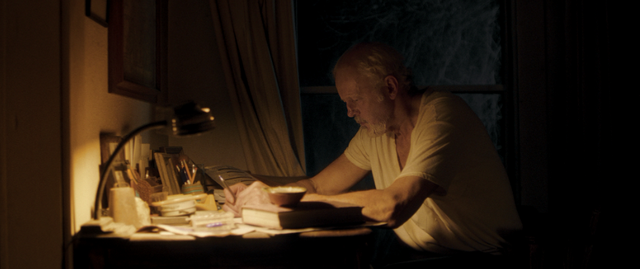
Some pieces remained exactly where Walker remembered them. “The chair that she sits in is my grandmother’s actual chair.” Other details required careful recreation. The goal was not simply historical accuracy. The goal was emotional truth.
In many ways, Walker found himself rediscovering his grandmother through the production itself.
That process became particularly evident during the search for the car that would represent Carson’s late wife. Originally, Walker imagined something very specific. “My grandmother did not have a Cadillac. She had an Oldsmobile.”
Then he found an electric-blue Cadillac convertible with a white vinyl top. “I love this when a prop changes your thinking.” Rather than simply serving the story, the vehicle began informing it. “What if that was hers?”
The question unlocked fresh insights.
“She’s a little more fun than I imagined her.” What began as a prop became a character detail.
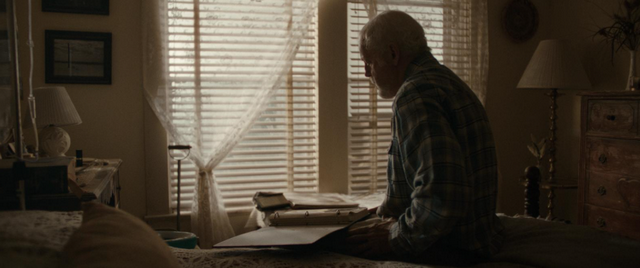
And what began as production design became a process of discovery. “The props mostly reflect who my grandmother was, but they also changed who I thought of as the character.”
For all of BROKEN LAND’s sweeping landscapes, emotional wounds, and deeply personal themes, the film’s most important moment arrives with something remarkably simple. A cup of tea.
After being injured and recovering at the ranch, Irena ventures outside and discovers a plant growing near the house. She plucks a few leaves, recognizes their value, and brews tea. On the surface, it is a small gesture. In reality, it changes everything. When discussing the sequence, Walker immediately lights up.
“I love it. Thank you for bringing that up.” The moment resonated because it represents far more than a practical act of kindness. “It is specifically that cup of tea.” Until that point in the film, Carson has largely occupied the role of caretaker. He provides shelter. He provides food. He provides protection. Irena remains dependent upon him. The tea quietly alters that dynamic. For the first time, she gives something back.
“That moment is also something that she makes herself. That she offers, that she brings. Not just her reacting to him.”
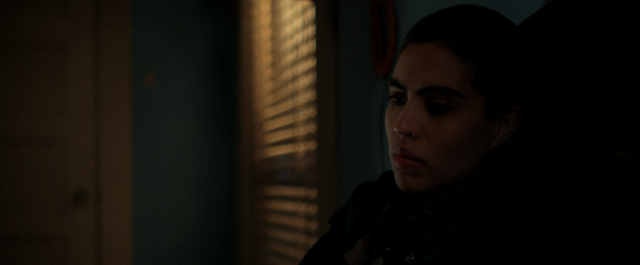
The suspicion that initially defines their relationship begins to dissolve. Walls begin to lower. Trust begins to emerge. Kindness and compassion move to the forefront.
As Walker and I discussed, the tonal shift that carries the remainder of the film can be traced directly to that single gesture. “It’s embodied in that cup of tea.” The beauty of the sequence lies in its simplicity. Walker never announces its importance. There is no grand speech. No dramatic revelation. No overt declaration of friendship. Instead, a shared cup of tea accomplishes what pages of dialogue never could. It transforms two strangers into people beginning to see one another. And in doing so, it quietly changes the course of the entire film.
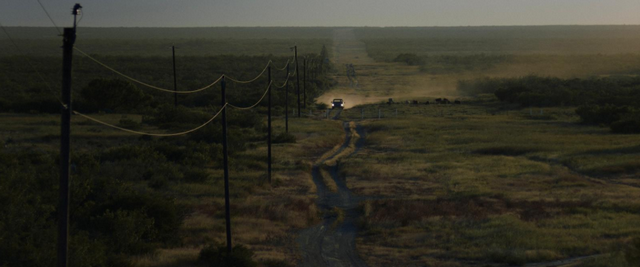
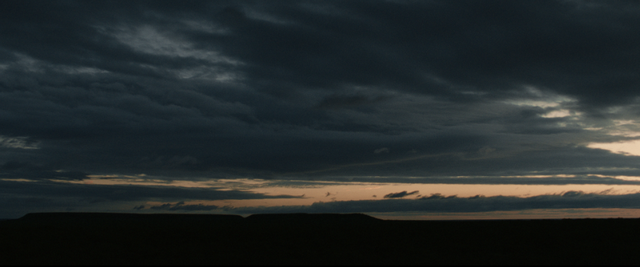
Working alongside cinematographer Sara Purgatorio, Walker developed a visual grammar that mirrors the film’s emotional evolution. The opening sections emphasize distance and isolation. Wide frames place Carson within the immense Texas landscape, visually reinforcing both his solitude and the emotional barriers he has constructed around himself.
As Carson and Irena gradually begin to connect, however, the visual language evolves.
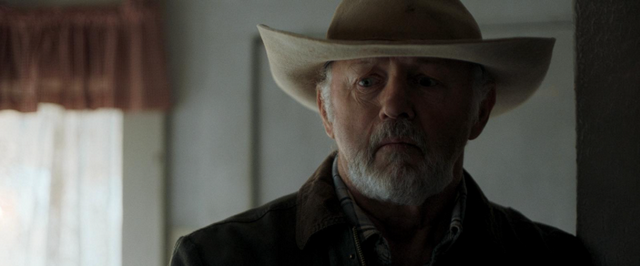
The camera moves closer. Framing becomes more intimate. The emotional distance separating the characters begins to shrink. Walker and Purgatorio allow the cinematography to quietly reflect changes occurring beneath the surface. Without ever calling attention to itself, the camera charts the emotional journey of the characters. It is visual storytelling at its most effective.
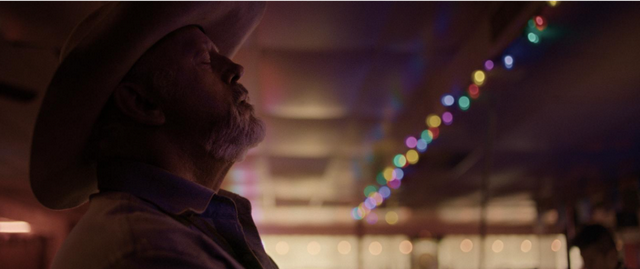
Long before David Morse officially joined BROKEN LAND, Walker already knew who he saw when he imagined Carson Tidwell. “First of all, he just emanates what’s happening with him.” What attracted Walker wasn’t simply Morse’s talent. It was his presence.
“He’s got that sort of iconic remote quality, and yet you know everything he’s thinking.” That balance fascinated Walker from the beginning. “That’s what I wanted for the character.”
While Morse possessed the emotional qualities Walker envisioned, there was one challenge. Unlike Carson, Morse had no ranching background. The actor’s response speaks volumes about his commitment.
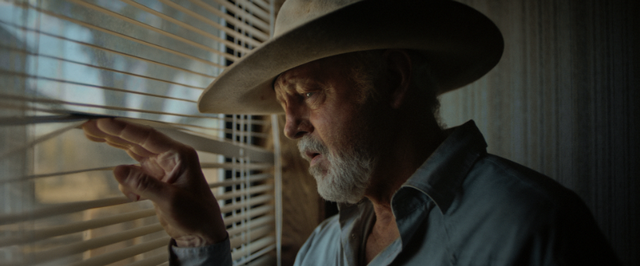
“He drove down and spent a week with one of our neighbors.” That neighbor, a local rancher named J.W., became an invaluable resource. “David went out and fed the cattle with him. He nursed a calf. He got up and fixed fences in the morning.” None of it was required. It was simply the work Morse believed necessary to understand the character. “David did all that on his own time to research the character.”
Walker remains clearly impressed by the effort. “When David commits, he commits.” For Morse, authenticity begins with belief. “He can’t do something he doesn’t believe in.”
That preparation extended beyond ranch work. It included the smallest behavioral details.
Walker points to an early scene in which Carson arrives in his truck to feed the cattle. As Carson stops the vehicle, he opens the door and shuts off the engine in a single fluid movement. The action lasts only a moment. Most viewers probably won’t consciously register it. Walker did. And so did Morse.
“He had the truck for a week before we shot.” Morse spent days driving it, learning its quirks, becoming comfortable behind the wheel. “It was becoming his truck.” By the time cameras rolled, the vehicle no longer felt like a prop. It felt like something Carson had owned for years. “He had that kind of facility with the truck.” It’s precisely the sort of detail that rarely draws attention to itself, yet quietly contributes to a performance’s authenticity.
One of the most delicate balancing acts in BROKEN LAND belongs to editor Brent Joseph. The film unfolds as a character study and slow-burn drama, carefully building emotional investment while simultaneously maintaining narrative tension. When discussing the editing process, Walker is quick to credit Joseph’s contribution. “Brent definitely was a writer on that level.”
Walker embraces one of filmmaking’s oldest truths. “The film is written three times.” First as a screenplay. Then during production. And finally in the editing room.
For BROKEN LAND, Joseph became an essential creative partner in shaping the film’s rhythm and emotional architecture. “Brent definitely was a writer on that level in terms of structuring the build.”
Walker freely admits his affection for what many would call slow cinema. “I really love slow cinema.” The earliest cut reflected that sensibility. “The first cut was like two hours and fifteen minutes.” The challenge quickly became finding the balance between patience and momentum.
How do you preserve atmosphere without losing audience engagement? How do you allow viewers to sit with a moment while still moving the story forward?
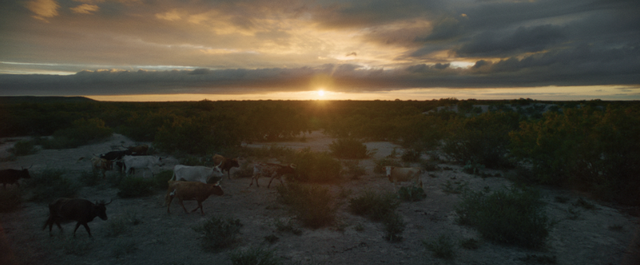
“There was this struggle. We don’t want to lose people, but we also want to pull them in.” For Walker and Joseph, BROKEN LAND was never intended to function solely as a plot-driven narrative. “It’s not just about the plot.” Instead, they wanted audiences to experience the environment itself. The grass moving in the wind. The sounds of the ranch. The changing light across the Texas landscape. The silence that exists between conversations. “We wanted them to absorb the environment and the story.”
That idea of absorption became one of the film’s guiding principles. The result is a film that trusts its audience.
As Walker notes, “The storytelling all blends together.”
When asked what he learned about himself while directing his first feature, Walker pauses. Not because he doesn’t have an answer. Because he has too many.
“It’s not because there’s one answer. It’s because there’s fifteen.” After a moment, he settles on two.
The first lesson is simple. “We are capable of bringing our dreams into the world.” For years, BROKEN LAND existed as little more than an idea. A screenplay. A memory. A hope.
And by every practical measure, the odds were stacked against it. “The odds of it being made and being made in the way that it was made were virtually none.” And yet it happened. That realization changed something fundamental for Walker. “The fact that I was able to do that gives me hope.” Not simply hope for himself. Hope for others. “I feel a lot more capable, and I feel that other people who don’t believe that they’re capable are capable.”
The second lesson emerged during the making of the film itself.
Walker recalls a quote often attributed to Sir Edmund Hillary. “Once you begin something, all kinds of help come your way.” For Walker, that idea proved remarkably true. An investor fell in love with the screenplay. David Morse embraced Carson. Jaklyn Bejarano became Irena. Sara Purgatorio brought extraordinary visual sensitivity to the story. Countless collaborators poured themselves into the production. “They all put their hearts into it.”
Again and again, Walker found people willing to go further than they were required to go. People who believed in the story. People who wanted to help bring it to life. “They just went so much further than they had to.”
Looking back, Walker sees a larger truth in those experiences.
“The world is waiting to help us if we begin things.”
It is a fitting lesson for a filmmaker whose first feature emerged from childhood memories, family history, and a determination to preserve something meaningful before it disappeared.
BROKEN LAND is, in many ways, the embodiment of that philosophy. A dream that became a film. A memory that became a story. A home that became a legacy.
And for Walker, perhaps the most important discovery of all is that none of it would have happened had he not taken the first step.
“The world is waiting to help us if we begin things.”
by debbie elias, exclusive interview 06/01/2026
BROKEN LAND is available On Demand on June 12, 2026.