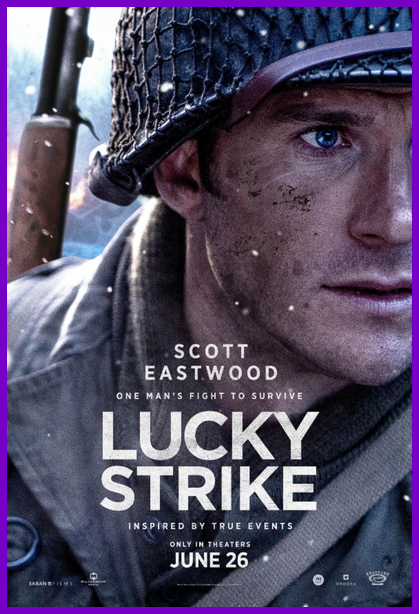
One of the most powerful and emotionally immersive viewing experiences on the screen today, LUCKY STRIKE derives its power not only from its World War II authenticity and remarkable technical and visual craftsmanship, but from experiencing the war through the first-person perspective of Captain Castle, an engineer who voluntarily enlisted and left his young family to join the fight against the Nazi regime. World War II remains one of the few wars in history where good and evil are so clearly defined, a fact that lends itself powerfully to both filmmaking and storytelling.
Set in December 1944 during the Battle of the Bulge, we follow the journey of Captain Castle, who is given the assignment of blowing up a roadway being used by SS Panzer divisions. As bluntly and honestly described by Castle’s superior officer, “These are not soldiers. They are murderers.” It is imperative that Castle and his men secure the mountainous road and stop the SS from advancing to an all-important Allied fuel depot. We have already witnessed the brutality of the SS in the film’s opening black-and-white sequence when they ambush and massacre a platoon of Black soldiers, so we fully understand the gravity of the orders given to Castle.
While attempting to secure their target, Castle and his platoon are ambushed, with Castle left as the sole survivor. Injured and with his Motorola SCR-300 radio—nicknamed “Lassie”—as his only lifeline, Castle is trapped behind enemy lines and must make his way more than 30 kilometers (18.64 miles) to a safe evacuation point where help can arrive.
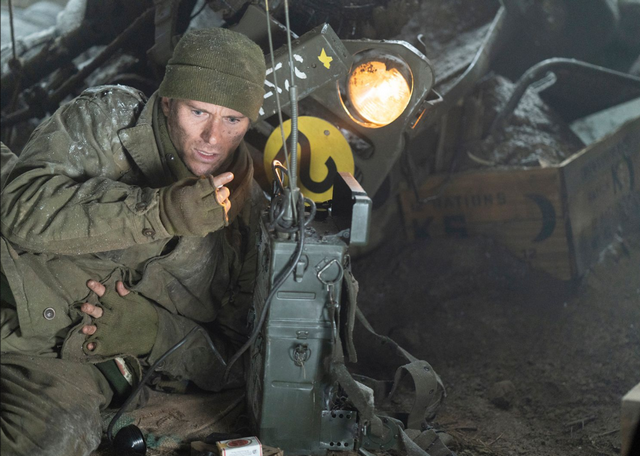
As much as I love all of director Rod Davis Lurie’s work—most recently The Outpost, another military film and collaboration with Scott Eastwood—experiencing LUCKY STRIKE through the first-person perspective of Captain (eventually Colonel) Castle touches something emotionally inexplicable. Together with Scott Eastwood’s Castle, we are there. I was there with Castle. I felt his pain, his adrenaline, his concern, his confusion, his sorrow, his loneliness, his desperation, his fear, and ultimately, his joy—not joy at surviving, but gratitude for the manufacture of “Lassie,” his constant companion on that 19-mile trek through Nazi territory.
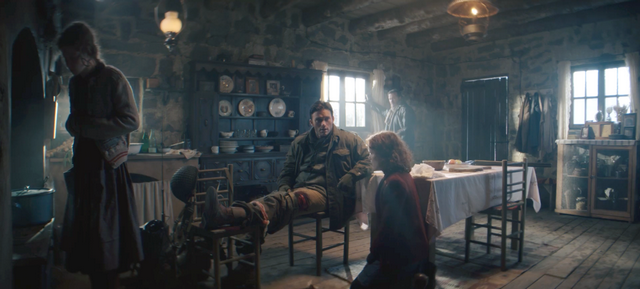
As Castle, this is the performance of Scott Eastwood’s career. His focus and intensity are riveting to watch. So, too, is his fear. A prime example comes when Castle seeks refuge in the barn of a French farmer and his family, only for the very SS division he is trying to escape to arrive, forcing him to hide beneath the floorboards of a root cellar and watch through a crack in the planks. Will he be discovered? Thanks to the incredible lensing of cinematographer Lorenzo Senatore, extreme close-ups of Castle’s eye peering through the floorboards send chills down your spine as the brutality and hatred of the SS unfold above him.
In another standout sequence, Castle dives into a field of bloodied corpses to avoid detection while SS soldiers loot their own dead. We hold our collective breath along with him, especially when the corpse beside him suddenly opens his eyes and looks directly at Castle, ready to call out. The lensing of this horrifying tableau is stunning. And kudos to the film’s colorist, Asa Fox, and his team, for adding just the faintest tinge of rusty red blood.
Courtesy of Christal Khatib’s rapier editing, we spend much of the film on tenterhooks, flinching in our seats and jumping out of our chairs. Eastwood is extraordinary in these moments. Yet he is equally compelling in Castle’s quieter displays of humanity—saving the farmer’s daughter, or plunging over the side of a road in a tank rather than striking a dog. His mounting frustration as Allied forces fail to reach him is communicated through the smallest gestures, whether in the look on his face or the force with which he slams the handset of Lassie back into its cradle.
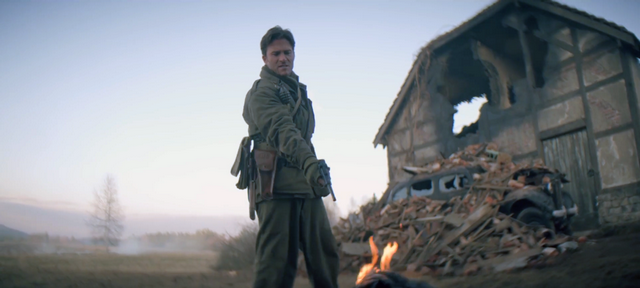
But LUCKY STRIKE extends well beyond Eastwood’s remarkable performance. The emotional power of this story would not exist without Lorenzo Senatore’s cinematography, Christal Khatib’s editing, Erik Carlson’s production design, Larry Groupe’s emotionally evocative score (with an end-title song written by Lurie), and the immersive sound design, editing, and re-recording mix by the Buffalo 8 team led by Brian Berger and Lawrence He. Together, they transport us to December 1944.
LUCKY STRIKE’s visual design is built around three distinct yet cohesive looks: black and white, vibrant color for post-war sequences, and desaturated battlefield imagery. The transition from black and white to color marks our movement into Castle’s subjective experience, reinforcing the film’s first-person perspective.
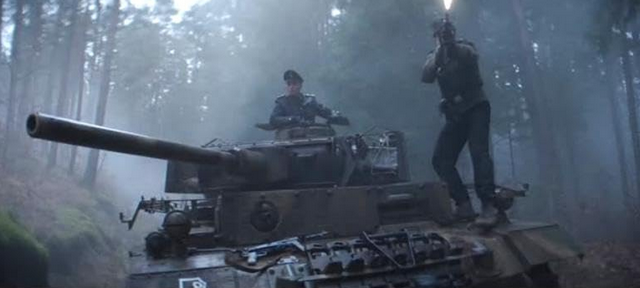
Clearly influenced by the work of French cinematographer Pierre Lhomme and Jean-Pierre Melville’s 1969 masterpiece Army of Shadows, Lurie’s opening black-and-white sequence immediately establishes the film’s visual identity. While many WWII films lean into sepia tones, Lurie instead embraces authentic black-and-white imagery reminiscent of wartime newsreels and surviving photographs, immediately immersing us in the period. The subsequent desaturated battlefield palette keeps us grounded in time and place, following a brief but beautiful burst of vibrant post-war color that quietly plants visual breadcrumbs through Lurie and co-writer Marc Frydman’s screenplay. Perfectly blocked long “oners” keep us immersed in Castle’s perspective.
Lurie and Senatore create an extraordinary visual language through handheld camerawork, drones, extended takes, and immersive “oners.” The use of fog and mist, both practically and metaphorically, elevates the film’s distinct visual grammar.
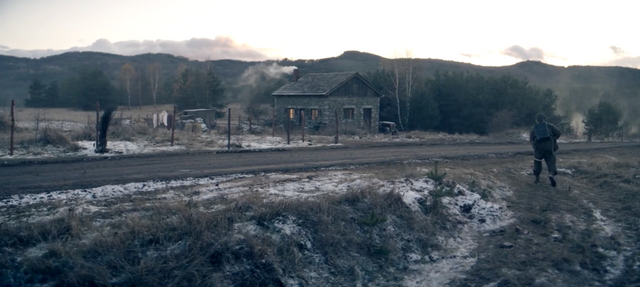
Particularly striking is the beauty juxtaposed against the horrors of war. Mist, fog, and snow—all gifts of Mother Nature—become integral to the film’s emotional and visual palette. The recurring appearance of a white stallion is both metaphorical and Biblical. Within the film’s first five minutes, we travel alongside a platoon of Black soldiers, watching headlights slice through dense fog in two singular beams. Moments later, their truck becomes stuck, engines rumble to life, and the Nazis launch a devastating frontal assault. Gunfire tears through the fog, the glass, the canvas, and the men inside. The suddenness of the attack is palpable. We remain cloaked in the softness of the mist even as it becomes a shroud concealing death. Our pulse races.
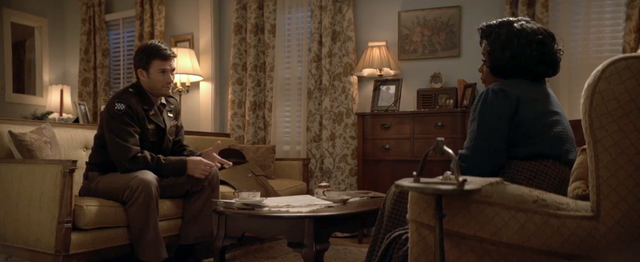
Lurie then carries us from death into the vibrancy of life as Colonel Castle visits Mrs. Caldwell, whose son served with the 761st Tank Battalion and died in the war; a woman who worked in a factory making equipment for the soldiers. The color palette springs to life with rich period detail and warm tones throughout the Caldwell home.
From there, Lurie gently guides us back into Castle’s memories of Belgium. The palette becomes muted—washed in pale greens and grays—as though memory itself is fading. We rejoin Charlie Company inside the command tent as Castle moves among his men before receiving the orders that will define his journey: cut off the road, stop the Panzer division, and protect the Allied fuel depots.
As we move deeper into the fray, sound becomes every bit as immersive as Senatore’s cinematography. The depth and directionality of the gunfire reverberating through the dense forest are impeccable. Machine guns chatter. Rifles crack. The camera shifts effortlessly between sweeping movement and intimate handheld close-ups. Extreme close-ups of Castle removing the dog tags from fallen comrades are profoundly personal. Overhead shots punctuate his 19-mile journey—the rare moments we step outside his perspective—only for Khatib’s editing to thrust us immediately back into the urgency and volatility surrounding him.
Keeping us firmly inside Castle’s point of view for the film’s entirety is a masterful accomplishment. Khatib fully embraces that perspective, as well as the decision not to subtitle the German and French dialogue. Castle doesn’t understand what these people are saying, so neither should we. It’s a wonderfully effective storytelling choice.
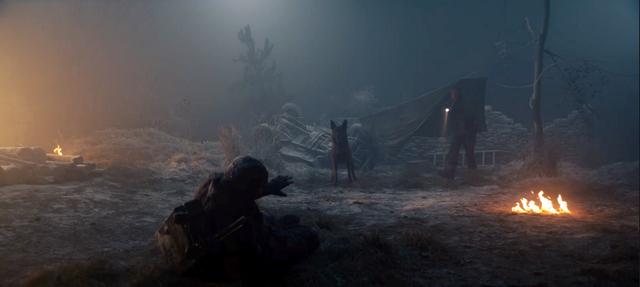
The sound design and score are equally exceptional. Every sonic choice is crafted to reflect Castle’s experience on the battlefield, with certain sounds subtly exaggerated to convey his psychological state. Larry Groupe’s score, working in tandem with themes composed by Lurie, introduces recurring motifs that seem to shield Castle from the chaos around him. One particularly memorable motif is a pizzicato bass figure that gradually expands into rich brass orchestration featuring the warmth of French horns and bass trombones. It not only defines key emotional moments but serves as an elegant musical bridge throughout Castle’s journey.
Casting is equally strong. The Nazis are given a distinct visual identity, yet we rarely see them clearly, allowing them to remain little more than boots, helmets, and distant silhouettes—faceless embodiments of evil. The Americans, by contrast, are unmistakably everymen, reminiscent of a Jimmy Stewart hero, much like the thousands of ordinary young men who answered the call to serve. Particularly effective opposite Eastwood are Aunjanue Ellis-Taylor as Mrs. Caldwell and Jonathan Yunger as fellow Allied soldier Cash.
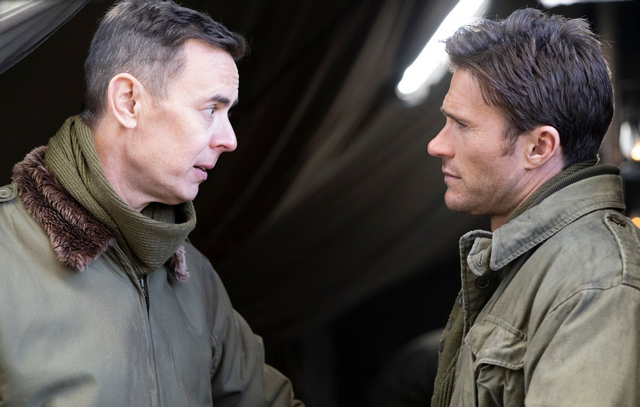
But it is the authenticity and honesty of LUCKY STRIKE that ultimately prove so compelling. This is an emotional powerhouse told through the intimate perspective of one soldier, yet it speaks to the larger purpose of the entire war.
Why did we fight?
Why did a man fight when he didn’t have to?
Why didn’t he give up?
Why does a woman in a factory labor to build the finest radio possible for the men in the field?
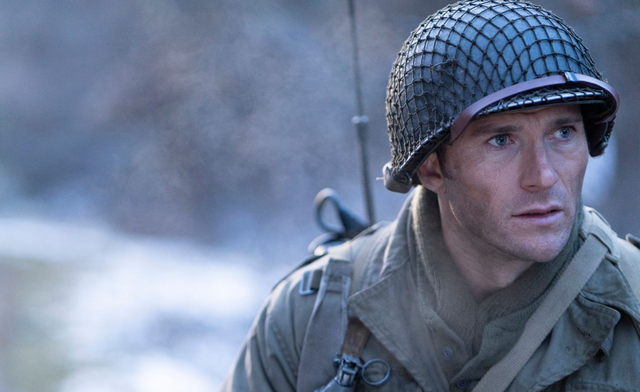
From the rich emotional contrast between ethereal beauty and the horrors of war to the transportive soundscape and the ever-present crackle of Lassie, Rod Davis Lurie places us inside Captain Castle’s boots—and inside his mind. We know who the heroes are. We know who the villains are. But LUCKY STRIKE reminds us why that distinction mattered, why courage mattered, and why one man’s journey through the Ardennes continues to resonate more than eighty years later.
Directed by Rod Davis Lurie
Written by Marc Frydman and Rod Davis Lurie
Cast: Scott Eastwood, Aunjanue Ellis-Taylor, Colin Hanks, Jonathan Yunger
by debbie elias, 06/17/2026
LUCKY STRIKE is in theatres nationwide on June 26, 2026.