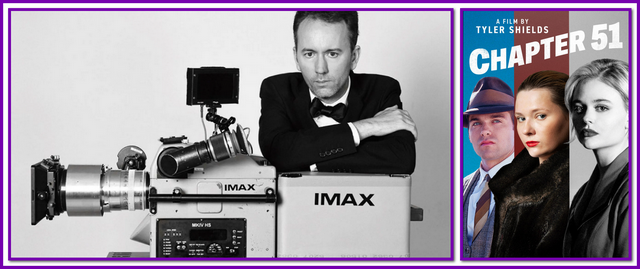
TYLER SHIELDS doesn’t think like most filmmakers.
He doesn’t merely compose a frame or choreograph a performance. He thinks in lenses, film stocks, aspect ratios, camera formats, sound design, editing rhythms, and even costume palettes, each serving a precise dramatic purpose. With CHAPTER 51, Shields has created a stylish neo-noir murder mystery wrapped inside an unabashed love letter to the art of cinema, layering visual and technical references that span nearly a century of filmmaking while simultaneously pushing the medium into unexplored territory. It is glorious.
CHAPTER 51 is the tale of the making of “Dissident”, a $500 million film during which three actresses are murdered by an unidentified figure known as the Hollywood Killer. As fear spreads across the set, production continues under a new director. Years later, former FBI agent Thomas Scott reopens the case, unraveling a haunting story of ambition, obsession, and the cost of keeping the cameras rolling.
Serving as writer, director, cinematographer, editor, colorist, costumer, and even stepping in front of the camera as FBI agent Thomas Scott, Shields embraces virtually every creative facet of the production. Yet despite wearing more hats than most filmmakers would dare attempt, CHAPTER 51 never feels like an exercise in excess. Every creative choice—from the use of Super 8, 16mm, 35mm, 65mm, VistaVision, Panavision and IMAX to the creation of an entirely new anamorphic IMAX format built specifically for the film—exists to support story and character rather than spectacle alone.
The result is a film that rewards careful viewing. Hidden within its murder mystery are cinematic references to Alfred Hitchcock, the Golden Age of Hollywood, legendary cinematographers, studio-era personalities, and filmmaking techniques that many modern audiences may never have encountered, yet instinctively feel. It’s the kind of film that almost demands a second—and third—viewing simply to absorb the countless details woven into every frame.
For Shields, however, CHAPTER 51 wasn’t born in a writers’ room or after years of outlining.
It began with a rabbit.
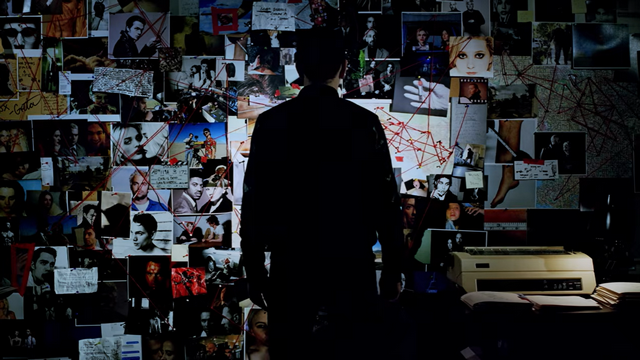
“I had a wild rabbit living in my backyard that had been injured,” Shields recalled. “I’d bought carrots for it, and one night there was one carrot left that had gone bad. It was about 3:30 in the morning. I threw it across the kitchen into a tiny little bag and it went in. The second it happened, the entire movie flashed before my eyes.”
That unlikely late-night moment became something far larger than a murder mystery.
“I thought, okay… the serial killer films himself. He celebrates it. These are the actors. This is the story.” What followed was years of expanding that single flash of inspiration into something Shields realized was becoming “a love letter to cinema as a whole,” where every detail—even character names, camera choices and individual lenses—would pay homage to filmmaking history. Each reference serves story before nostalgia.
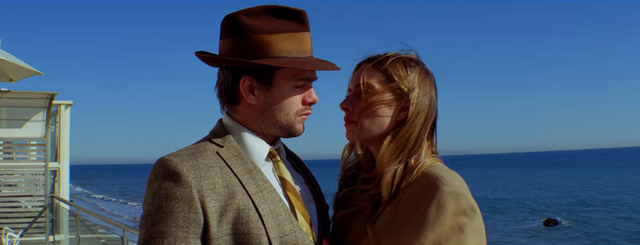
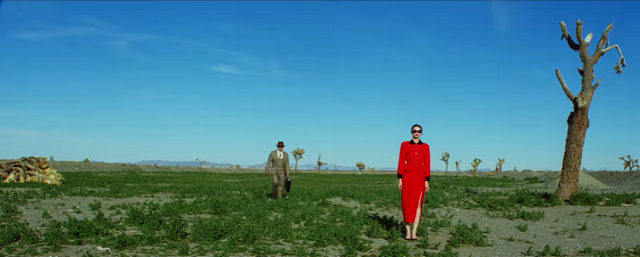
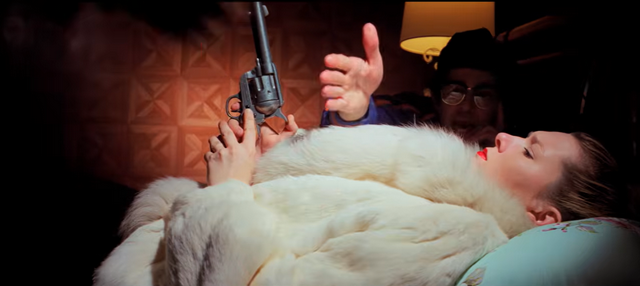
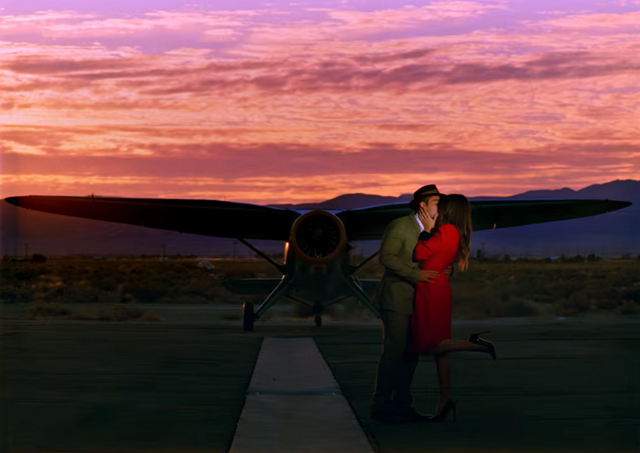
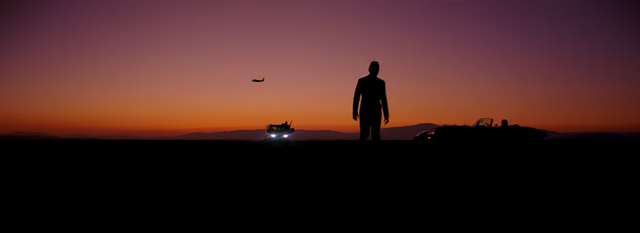
It was an ambition that immediately resonated during our conversation because CHAPTER 51 doesn’t simply reference classic Hollywood—it inhabits it. Characters carry names that evoke Hollywood legends – Bergman, Mankiewicz, Ball, Demy. Visual compositions recall Hitchcock, while the helicopter sequence unmistakably tips its hat to “North by Northwest”. Vintage styling, noir aesthetics, Max Factor-inspired makeup, and even the opening strains of “Rhapsody in Blue” transport audiences into a cinematic landscape where every image feels simultaneously familiar and entirely new.
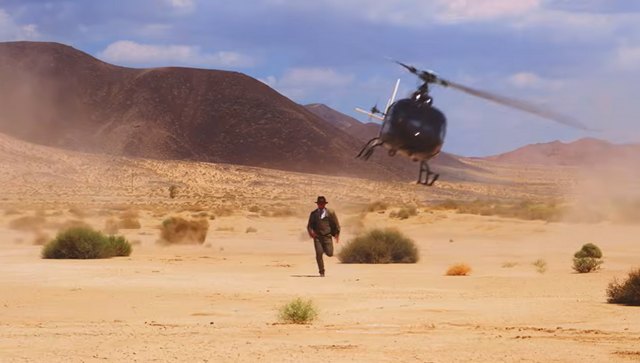
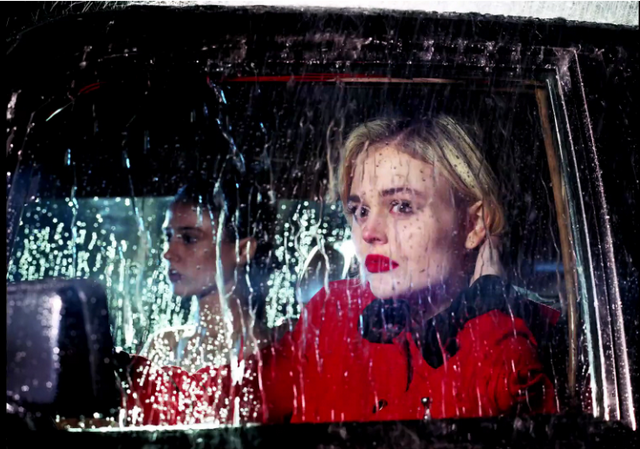
“You got all of the references,” Shields smiled after hearing many of those influences called out. “Every single detail of the film is a reference… So many people asked me, ‘Do you think anyone is ever going to notice all these things?’ The fact that you noticed them brings such joy to me.”
But those references extend far beyond visual quotations.
One of Shields’ most fascinating creative decisions was assigning each principal character an entirely different cinematic identity. Rather than photographing everyone through identical lenses or film stocks, each performer received a unique visual vocabulary.
“I always tell actors the lens can change your performance,” Shields explained. “I wanted each performer, each character, each suspect and each victim to have their own specific feel… their own film stock… their own lenses.” With 140 different lenses at his disposal, 40 of which were never used, Shields had an unparalleled palette from which to choose.
His cast embraced the philosophy so completely that actress Emily Alyn Lind, having learned how each stock altered the emotional texture of an image, specifically requested Vision2 200T for one of her scenes.
That philosophy becomes immediately apparent on screen.
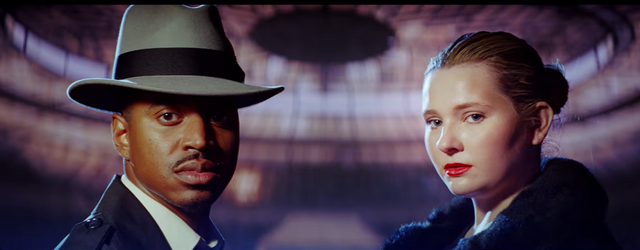
For Shields, the comparison was almost musical.
“If Christopher Pace is the electric guitar, Dustin is the piano and Effy is the violin… when you get them all together, they’re playing jazz.”
That philosophy perfectly explains why every suspect, every victim and every personality within CHAPTER 51 feels visually distinct before a single line of dialogue is spoken.
If CHAPTER 51 celebrates the mechanics of filmmaking, it is equally a celebration of the artists standing before the camera.
Despite engineering an astonishing array of film formats, lenses and visual motifs, Shields never allows technology to eclipse performance. Instead, each technical choice exists to elevate character, giving every suspect, victim and filmmaker within CHAPTER 51 a distinct cinematic identity.
That philosophy extended far beyond camera placement.
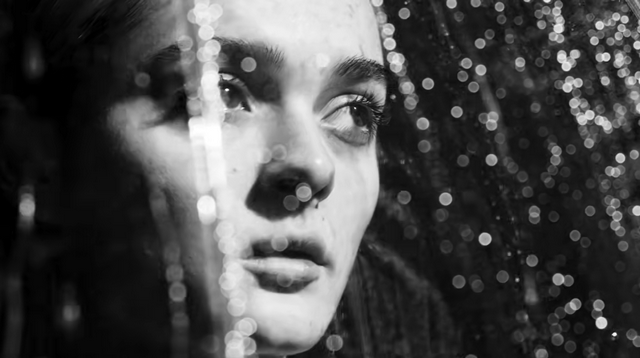
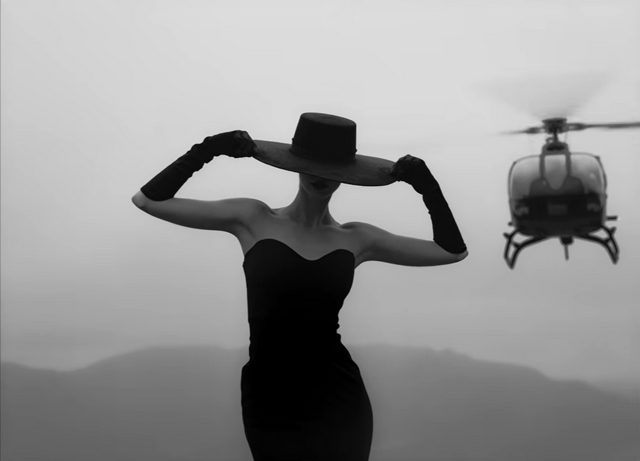
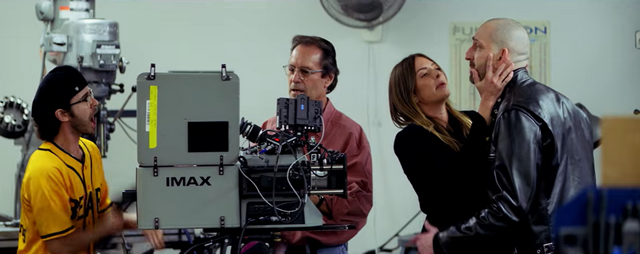
Shields encouraged his cast to become students of the filmmaking process itself. Actors learned how to load film magazines, identify vintage film stocks, swap lenses and understand how different photographic formats subtly altered performance. Before long, the production had become something resembling an old Hollywood repertory company, with performers investing themselves not only in their characters, but in every creative discipline surrounding them.
Shields explained. “Different formats change how an audience experiences you.”
“I had specific film stocks that I use for different characters. We use some film stocks in here from the 70s, we use some re-cans from the ‘Matrix’ in the 90s.”
With CHAPTER 51, Shields shot not only on Kodak film stock, but in every format known – Super 8am, 16mm, 35mm, 65mm, and in IMAX, Panavista and VistaVision, including a new format of anamorphic IMAX. He called upon ARRI cameras, an IMAX MSM 9802 with Hasselblad lenses, a Panavision System 65 Studio Camera and panavision lenses, and the Wilcam W-11 (VistaVision) which was used by Hitchcock.
“When you bring out those big cameras, even when you bring out, like the Super 8 camera, which is a tiny camera, people are so just focused. Everybody wants to be shown on film.”
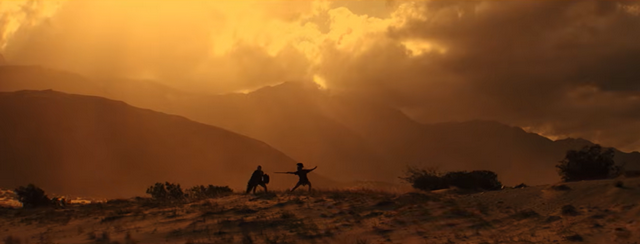
Dylan Sprayberry delivers one of the film’s most layered performances as Dustin Scott, with Shields often keeping the young actor deliberately unaware of unfolding events to preserve genuine reactions. “He was so game for that,” Shields said. “He just blows it out of the park.”
“There were a lot of moments where he wouldn’t know what was going to happen,” Shields explained. “The result is a performance filled with authentic uncertainty, allowing Dustin to evolve naturally alongside the audience as the mystery surrounding the Hollywood Killer grows increasingly tangled.”
Todd Mandel delivers an unforgettable turn as Tedd Mankiewicz. He had never acted before. “He didn’t want to do it, because he was like, ‘I’m not an actor. You have great actors, get an actor to do it.’ I said, ‘There is nobody I know who can play this part like you. And then he, he got into it, and, man, when he dedicated himself, he was in.”
That willingness to trust both his performers and the filmmaking process extends throughout the cast.
Then there is Colman Domingo.
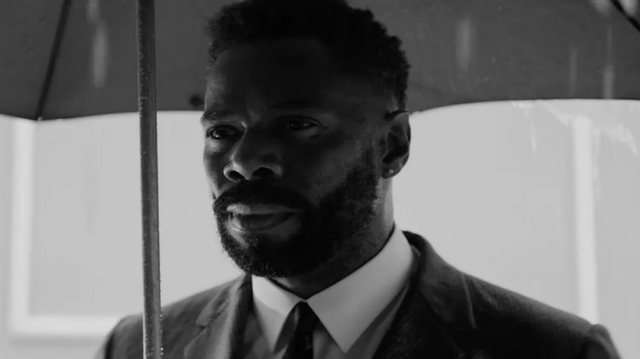
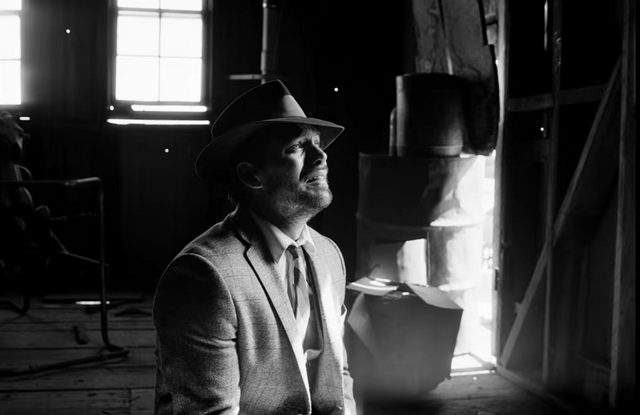
Perhaps no presence looms larger than Colman Domingo’s Christopher Demy. Although Demy occupies comparatively little screen time, Shields photographs him with deliberate restraint—lingering profiles, commanding extreme close-ups, carefully sculpted lighting and negative space combine to elevate the enigmatic auteur into an almost mythic figure. Demy becomes less a suspect than an omnipresent force hovering over every frame.
Already a longtime friend before his meteoric rise to awards-season prominence, Domingo was Shields’ only choice for the enigmatic Christopher Demy. Appearing less frequently than many of the film’s other players, Domingo nevertheless commands every frame through carefully composed profiles, extreme close-ups and an almost mythic screen presence. “I needed somebody who could be this mastermind. He is the architect of all of this.”
“Colman can leave a lasting impression in five seconds. I needed somebody who could leave that lasting impression,” Shields said. “You point a camera at Colman and magic happens.”
Watching Domingo’s restrained performance, it’s difficult to disagree.

It is a sentiment borne out repeatedly throughout CHAPTER 51. Rather than relying upon dialogue alone, Shields allows composition, framing and Domingo’s extraordinary screen presence to communicate volumes, making Demy one of the film’s most unforgettable creations despite his measured appearance throughout the narrative.
If Shields encouraged his actors to understand the mechanics of filmmaking, he was equally committed to preserving the spontaneity of performance.
Yet the production’s greatest revelation may not be found in any individual performance.
It lies within the atmosphere Shields cultivated behind the camera.
Instead of maintaining rigid divisions between departments, he encouraged curiosity.
Actors wandered into the editing room. They learned to identify vintage film stocks. They discussed lenses. They watched rough assemblies before returning to set to film scenes that would complete sequences they had already seen taking shape.
“We edited while we were shooting,” Shields explained. “There would be days where the actors would watch an edit before we went to shoot the missing scene.”
“When I started [CHAPTER 51], the only reason I was able to do the movie was because of Da Vinci Resolve… The program hit just at the right time where I was like, ‘Oh, I can edit IMAX film without doing proxies… I can put in iPhone footage with IMAX footage, and I can do all of this different stuff and the program will run it’ … I’ve never edited a film before. I’ve been editing things for a long time, but never like this. And you know, this obviously was a massive undertaking to edit.”
Such collaboration is almost unheard of on productions of any size, where editorial rooms are traditionally closed long before actors ever glimpse a frame. On CHAPTER 51, however, the edit itself became another classroom.
Emily Alyn Lind frequently sat beside Shields during editing sessions. Dylan Sprayberry stopped in to offer observations. Connor Paolo joined discussions. Logan Huffman would edit with Shields. Far from guarding the process, Shields welcomed fresh perspectives from the very artists whose performances were unfolding on screen.
“I cast all these people because I think they’re brilliant and they all have great ideas.”
That philosophy quietly echoes throughout the entire production.
No one was expected simply to perform a job.
Everyone was invited to understand filmmaking itself.
That same spirit of collaboration carried into post-production.

Working with composer Neuman Mannas—creating his very first feature score—Shields approached music much as he had approached cinematography: every note had to reinforce story. Together, often working from midnight until four in the morning, they crafted an eclectic score that moves effortlessly between original orchestral recordings of classics such as “Rhapsody in Blue” and “Moonlight Sonata” while simultaneously establishing an entirely original musical identity for CHAPTER 51. “All of those were original recordings that we did just for the movie.”
“Tyler is my favorite bandmate I’ve ever had,” Mannas told him during the process.
It is difficult to imagine a greater compliment between collaborators.
It is an apt description.
Listening to Shields discuss music, one quickly realizes he directs composers much the way he directs actors or photographs performers. Every collaborator becomes another instrument contributing to the same cinematic symphony.
The same meticulous philosophy extended to sound.
Working alongside sound mixer Brent Kiser, Shields discovered that silence could often prove more powerful than amplification.
Rather than overwhelming scenes with effects or musical cues, he frequently chose restraint, allowing empty space, quiet footsteps, and barely perceptible ambience to heighten suspense far more effectively than volume ever could.
“Just before we’ve done the sound mix, I had these really brilliant people pushing the sound to where every little detail of every shot that you see in the movie is amplified by the sound or by there being no sound, and all of that was a decision, and that was something that I had never done before. My advice to anybody who wants to make a movie or make any type of visual is understand how the sound will be, and it will amplify your picture times a hundred.”
Ironically, some of the film’s most unsettling moments achieve their power precisely because almost nothing is heard. The Hollywood Killer moves with unsettling precision, and the resulting absence of sound invites audiences to imagine horrors far greater than anything shown explicitly on screen—a distinctly Hitchcockian philosophy that perfectly complements the film’s elegant visual restraint.
As Shields devilishly admits, “One of the funniest things is when we filmed the murders. On one, which people will know when they see the film, it’s a long tracking shot through [the house]. The actress had no idea that the murderer was there when we filmed that; for real, that’s how quiet it actually was, even down to specific shoes that were worn, so when she turns around and the moment happens, she had no idea that he was there, or that that was happening in that second.” Because of the silence, the camera captured authentic fear and surprise on her face.”
For many filmmakers, CHAPTER 51 would read like a catalogue of production challenges.
Multiple film formats. Vintage cameras. Experimental lenses. Massive digital files. Groundbreaking scanning technology. An independent budget.
Shields, however, sees none of those things as obstacles. “I don’t look at them as challenges,” he said with a smile.
“I look at them as opportunities.”
That philosophy may explain as much about the finished film as any camera, lens, or film stock.
Rather than accepting existing limitations, Shields repeatedly found himself inventing solutions. Working alongside cinematographer and actor Giovanni Ribisi and collaborators at Lasergraphics, new scanning workflows were developed for VistaVision and IMAX—technology that dramatically reduced processing times while opening new creative possibilities for future productions.
Even something as seemingly mundane as threading a decades-old VistaVision camera once used by Hitchcock became an act of discovery.

Consulting a laminated threading diagram that had accompanied the camera for years, Shields and his collaborators eventually realized the instructions themselves were wrong.
“So we redrew it,” he recalled matter-of-factly.
It is an almost perfect metaphor for the entire production.
Rather than asking, “How has this always been done?” Shields repeatedly asked, “What if there’s a better way?”
That curiosity extends beyond technology.
It becomes a philosophy of making art.
As Shields describes the production, one truth becomes impossible to ignore.
Actors weren’t content simply to memorize dialogue. They wanted to understand vintage film stocks. They learned how to load cameras. They discussed lenses. They sat beside Shields during editing sessions. Composer Neuman Mannas immersed himself in picture editing while sound designer Brent Kiser explored the emotional power of silence.
It wasn’t a hierarchy.
It was an education.
Or, as Shields himself put it: “Everybody on this movie learned everything.”
In many ways, that single sentence may reveal more about Tyler Shields than any discussion of cameras or lenses ever could.

If CHAPTER 51 demonstrates anything beyond Tyler Shields’ remarkable technical achievements, it is that true artistry rarely recognizes boundaries.
What began with a single spark of inspiration ultimately became something much larger—a celebration of the artistic possibilities that emerge when curiosity, collaboration and craftsmanship converge.
Photography becomes cinematography.
Editing becomes rhythm.
Sound becomes silence.
Costume becomes character.
Light becomes emotion.
Every discipline informs the next until they cease to exist independently, functioning instead as parts of one unified creative language.
Curiosity is contagious.
His actors wanted to understand lenses.
His performers learned film stocks.
The editing room became a classroom.
His composer immersed himself in storytelling.
His collaborators explored disciplines well beyond their own specialties.
As Shields smiled while reflecting on the experience,
“Everybody on this movie learned everything.”
Perhaps no sentence better captures the spirit of CHAPTER 51.
It is a film born not merely from technical innovation or artistic ambition, but from a collective desire to understand every facet of the creative process.
In an industry increasingly driven by speed and specialization, Tyler Shields offers something refreshingly different.
He reminds us that cinema remains the one art form capable of embracing every other art.
Painting. Photography. Music. Performance. Architecture. Design. Literature. Editing. Light. Sound.
Each contributes its own voice until the whole becomes something greater than the sum of its parts.
Most filmmakers ask audiences to watch their films.
Tyler Shields asks audiences to experience his.
by debbie elias, exclusive interview 06/23/2026
CHAPTER 51 is now available On Demand and all Digital platforms.