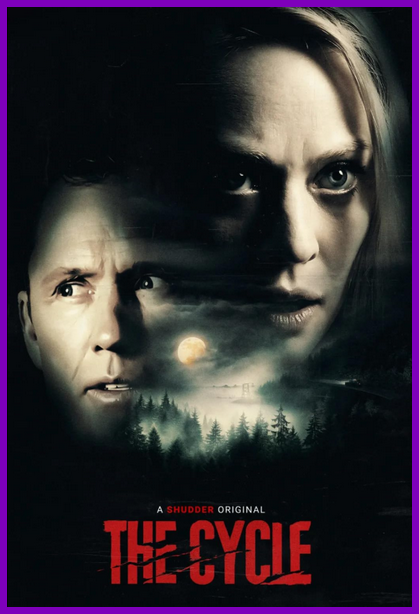
Step by step. Inch by inch. Frame by frame. Sound by sound. With THE CYCLE, director Jordan Downey delivers a master class in slow-burn horror that is as methodical as it is mesmerizing, as psychologically unsettling as it is visually arresting, and ultimately as explosive as it is unexpected. This is horror filmmaking at its finest. And what makes it even more extraordinary is that Downey doesn’t need to show us everything to keep us on tenterhooks and scare the living daylights out of us. He knows the imagination is a powerful thing. And he uses it to perfection.
Written by Downey and Kevin Stewart, who also serves as cinematographer, THE CYCLE is a beautifully constructed exercise in suspense, ambiguity, and escalating terror, anchored by strong performances from Deborah Ann Woll, Jeffrey Donovan, Jack Doolan, and Will Hochman. With a screenplay that carefully parcels out information, a visual grammar that is nothing short of exquisite, impeccable sound design from Brian Berger, an evocative score from Nick Soole, and astonishing practical effects courtesy of Patrick Magee and his team, THE CYCLE is one of those rare horror films that demands your attention from the first frame to the last.
And believe me, you will not want to look away.
The story begins with a horrific discovery. A body is found at the scene of a crime, but DNA evidence identifies the remains as belonging to a man who disappeared thirty-six years earlier. That man is the father of Megan, a forensic anthropologist played by Deborah Ann Woll. For Megan, what begins as an investigation quickly becomes something much more personal as she seeks answers about her father’s disappearance and the circumstances surrounding this disturbing discovery.
But answers don’t come easily in THE CYCLE.
Downey and Stewart have crafted a screenplay that is almost deceptively simple in its initial presentation. Characters are introduced, relationships established, questions raised. And then, gradually, almost imperceptibly, the uncertainty begins to spread. Who knows what? Who can be trusted? What is being withheld? And how do the pieces of this increasingly disturbing puzzle fit together?
What I particularly love about the writing is the way Downey and Stewart develop the principal characters, allowing each to contribute to the mystery without resorting to clumsy exposition or obvious misdirection.
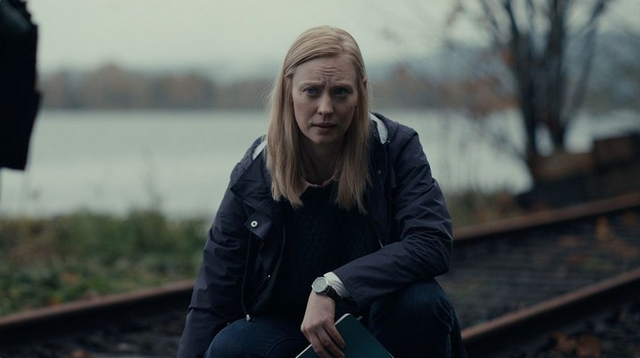
Woll is exceptional as Megan. There is an intelligence and determination to her performance that immediately establishes the character as someone accustomed to working through evidence, examining details, and drawing conclusions. But there is also an emotional vulnerability beneath that professional exterior. Megan is not simply examining a case. She is confronting a piece of her own history, one that has remained unresolved for decades.
Woll brings an almost stream-of-consciousness quality to Megan’s investigative process, allowing us to follow her thoughts as she studies evidence, considers possibilities, and attempts to reconcile what she knows with what she is discovering. Her performance is thoughtful, measured, and wonderfully nuanced, making Megan a compelling anchor for the film.
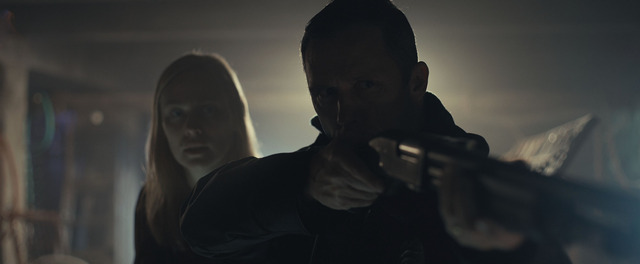
Jeffrey Donovan is equally impressive as Marks. Quiet, reserved, and seemingly unflappable, Marks is a fascinating counterpoint to Megan’s more openly analytical nature. Donovan has always been an actor capable of communicating volumes with the smallest shift in expression or the slightest change in vocal inflection, and here that restraint becomes particularly effective. There is an almost impenetrable quality to Marks, leaving us to wonder what may be going on beneath that calm exterior.
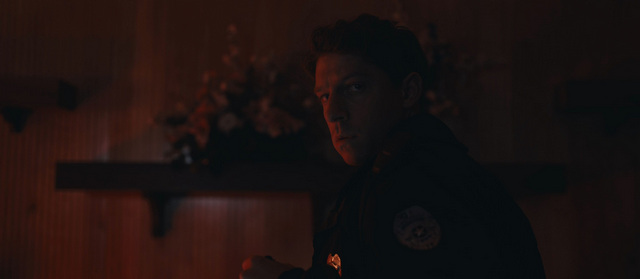
Will Hochman adds another intriguing dimension as Ian, a fellow police officer and the son of Marks. There is an easygoing, almost chatty quality to his interactions with Megan, but Downey and Stewart wisely allow ambiguity to linger. Ian is personable, yet questions remain. And the father-son relationship between Ian and Marks adds another layer of complexity, particularly given Marks’ quiet, reserved, and almost impenetrable demeanor. Hochman plays beautifully into that uncertainty, keeping us wondering just how much Ian knows and what role, if any, he may have in the increasingly disturbing events.
And then there is Jack Doolan as Lenny, a police officer who becomes increasingly important as the story unfolds. Initially somewhat unassuming, Lenny proves to be one of the film’s most interesting surprises, particularly in the third act. Doolan brings an understated authenticity to the role, allowing us to discover dimensions of Lenny that might otherwise have gone unnoticed. His bravery, unwavering faith, and sense of duty reveal a man whose abilities and character have perhaps been underestimated, both personally and professionally. There is a quiet dignity to Lenny that speaks volumes about the kind of police officer he is, and Doolan makes every moment count.
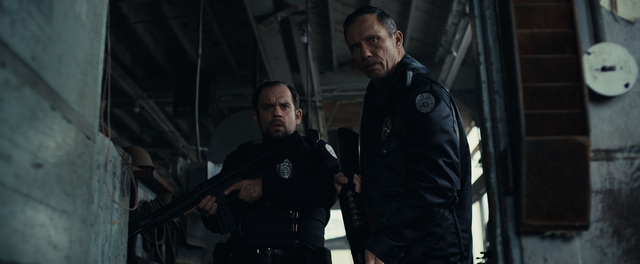
Equally deserving of praise is Jeb Berrier as the coroner, bringing a wonderfully eccentric, almost wacky quality to a character who could easily have been little more than a functional piece of the investigative puzzle. Berrier gives the role personality and an offbeat unpredictability that adds another dimension to the film’s carefully cultivated atmosphere of uncertainty. There’s something wonderfully peculiar about his performance, a tonal quirkiness that provides a welcome contrast to the more reserved personalities surrounding him while keeping us wondering just what to make of this unusual fellow.
It’s a wonderful balancing act. Rather than directing suspicion toward one obvious individual, the screenplay allows doubt to circulate among the characters, encouraging the audience to remain alert to every interaction, every hesitation, every seemingly inconsequential detail.
And that’s where the filmmaking becomes truly extraordinary.
Working with cinematographer Kevin Stewart, Downey creates a visual language that is not merely beautiful to look at but integral to the storytelling. Every composition appears carefully considered. Camera placement, lighting, depth of field, framing, and the relationship between foreground and background become tools for directing our attention and manipulating our perception.
Particularly striking is the use of extreme close-ups.
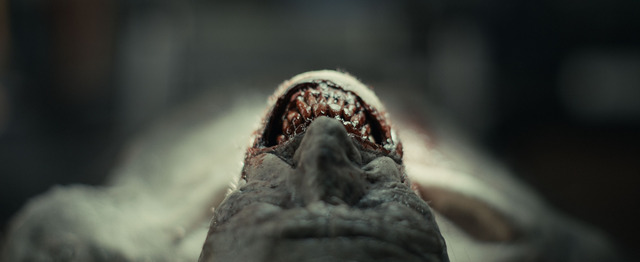
A finger. A fingernail. A foot. A knee. A fragment of an object. A seemingly insignificant detail suddenly assumes enormous importance simply because of how Stewart photographs it and how Downey positions it within the narrative.
These aren’t gratuitous insert shots or decorative flourishes. They are essential components of the film’s visual grammar.
And they are creepy as hell.
Too often filmmakers employ extreme close-ups as a crutch, substituting visual fragmentation for actual storytelling. That is emphatically not the case here. Downey and Stewart understand precisely how to use these images to communicate information while simultaneously withholding the larger picture. We are permitted to see something, but not necessarily everything surrounding it. And in that absence, our imaginations go into overdrive.
The technique also allows the filmmakers to establish geography and movement without relying on conventional wide shots. Characters can move through the background, sometimes deliberately out of focus, while an object in the foreground commands our attention. The result is a fascinating interplay between what is immediately visible and what we are being encouraged to notice.
One particularly effective example involves the funeral home, where the camera draws attention to damaged plastic flowers. It’s a simple visual detail, yet one that communicates atmosphere and suggests an event without requiring an elaborate sequence to illustrate it.
That is intelligent, economical, imaginative filmmaking.
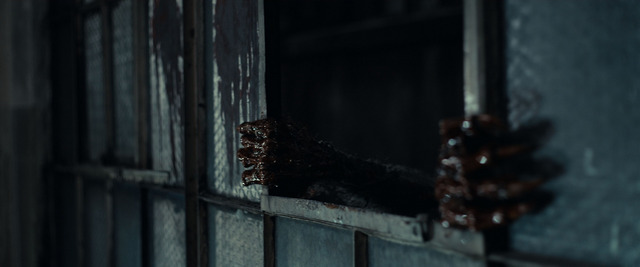
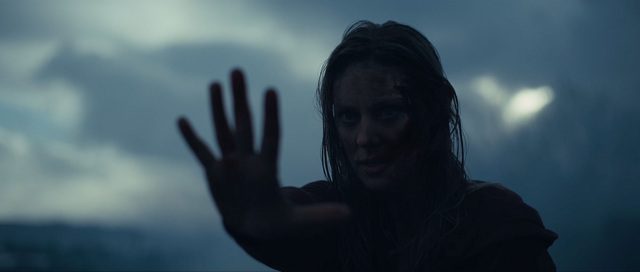
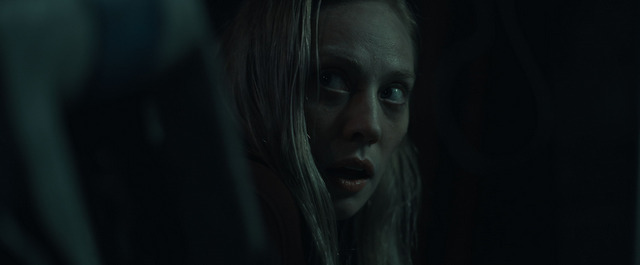
Stewart’s lighting is equally impressive. Shadow is not simply an absence of illumination but an active storytelling element. Faces emerge from darkness, compositions are divided by light and shade, and carefully controlled illumination creates an almost painterly quality to individual frames.
There is a particularly gorgeous image of Megan’s face early in the film, with shadow and light working together to create a moment of striking visual stillness. It’s the kind of composition that demands to be studied, not simply glanced at.
And as the film progresses, the visual environment becomes increasingly important.
Production designer Patrick O’Donnell deserves considerable praise for creating spaces that contribute so effectively to the atmosphere. The warehouse and its basement, in particular, become integral to the film’s visual identity. Architectural details, spatial relationships, and the interplay of darkness and illumination provide Downey and Stewart with a wonderfully evocative environment in which to build suspense.
The camera angles are inventive without becoming self-conscious. Rather than relying on familiar tricks or exaggerated Dutch angles, Stewart finds more imaginative ways to create unease. There is an elegance to the compositions, even when the images themselves become deeply disturbing.
And then there is the sound.
Oh, the sound!
THE CYCLE is an intensely sonic experience, and sound designer, sound editor, and re-recording mixer Brian Berger does absolutely magnificent work.
Listen carefully to what is happening around the characters. A door creaks. An alarm sounds. A telephone dial tone emerges somewhere in the distance. Footsteps interrupt the silence. A small, seemingly innocuous sound becomes charged with menace because of its placement within the scene.
Berger builds layers of sound that are as important to the storytelling as the images themselves.
One early nighttime sequence involving Megan is particularly effective in demonstrating this approach. Individual sounds emerge within the darkness, each adding another element to the uncertainty. Rather than overwhelming the audience with an aggressive barrage of effects, Berger allows the soundscape to develop gradually, drawing us deeper into the moment.
And then, just as importantly, there are the silences.
Moments when the soundtrack becomes almost unnervingly still.
Moments when we find ourselves listening for something—anything—to break that stillness.
Moments when a single footstep can send a chill down the spine.
This is where THE CYCLE becomes genuinely frightening. Downey understands that anticipation can be far more terrifying than immediate revelation. Berger’s sound design exploits that understanding beautifully, creating an environment in which the smallest sonic detail can become a source of dread.
Complementing Berger’s work is Nick Soole’s outstanding score, with its haunting, atmospheric textures and shades of dark jazz that bring an almost noir-like sensibility to the proceedings. Particularly evocative is the lonely saxophone accompanying Megan as she drives into town, its mournful tones suggesting isolation, uncertainty, and an emotional landscape that extends well beyond the immediate action. Elsewhere, strings become particularly effective, with tremolo passages heightening the tension of carefully composed close-ups. The marriage of image and music is exquisite, each reinforcing the other without competing for attention.
But perhaps what is most impressive is the filmmakers’ understanding of when music is unnecessary.
At times, the simple sounds of traffic or rain against a windshield provide a more intimate and emotionally effective accompaniment to a conversation than an orchestral cue ever could.
That restraint is essential to the film’s success.
And it carries directly into Downey’s editing.
Serving as his own editor, Downey demonstrates an extraordinary understanding of pacing, rhythm, and the emotional impact of allowing a moment to breathe.
THE CYCLE begins slowly. Very slowly. Deliberately. Methodically.
But make no mistake: slow does not mean sluggish.
Every moment has purpose. Every pause allows another layer of uncertainty to settle over the proceedings. Every sustained reaction invites us to consider what a character may be thinking, feeling, or concealing.
Downey isn’t afraid to hold on an actor’s face or allow a composition to remain undisturbed. Nor does he feel compelled to cut simply because contemporary filmmaking conventions suggest that audiences require constant visual stimulation. Quite the opposite.
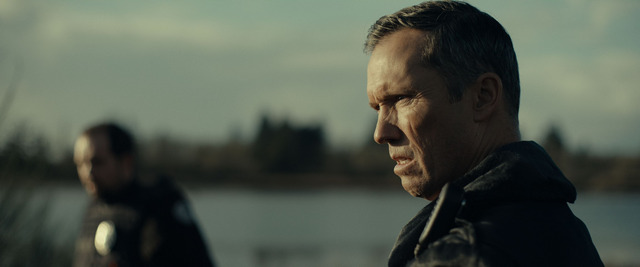
He trusts the performances. He trusts the images. And he trusts the audience.
There is a remarkable confidence in that approach, particularly in a genre where rapid cutting and sudden shocks are so often used as substitutes for genuine suspense.
Downey understands that tension requires time to develop.
And when the film begins shifting gears, that patient construction pays enormous dividends.
The escalation is beautifully controlled. What begins as a methodical investigation gradually becomes something far more unsettling, with each new development adding pressure to an already taut narrative.
Step by step. Inch by inch. And then everything explodes.
The contrast between the film’s deliberate opening and the intensity of its later passages is staggering. Because Downey has invested so much time establishing character, atmosphere, and uncertainty, the resulting payoff possesses a visceral impact that a more impatient film could never achieve.
And that brings us to another of THE CYCLE’s great achievements: its practical effects.
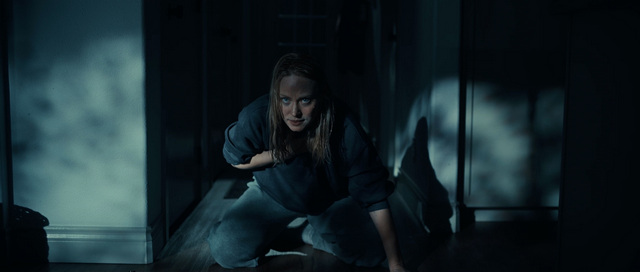
Without revealing precisely what Patrick Magee and his extraordinary team have created, suffice it to say that their work is phenomenal.
This is the kind of craftsmanship that reminds us why practical effects remain such an essential part of horror filmmaking. There is a tangible quality to the work, a physical presence that gives the images weight, texture, and immediacy.
The attention to detail is remarkable. But the achievement isn’t simply technical.
Trevor Newlin delivers an extraordinary physical performance, one that deserves recognition for the stamina, control, and commitment required to bring this aspect of the film to life.
And that’s an important distinction. Practical effects may provide the physical artistry, but it takes a performer to transform that artistry into something emotionally and dramatically convincing.
Newlin is not merely an element of the effects work. He is an actor, and his physical performance is integral to the finished result.
Together, Magee, Newlin, and their collaborators accomplish something truly special.
I won’t say more about the specifics because THE CYCLE deserves to be experienced without advance knowledge of its surprises.
And surprises there most certainly are.
What ultimately makes THE CYCLE so effective is the remarkable unity of its creative elements. The screenplay, performances, cinematography, production design, editing, sound, score, and practical effects aren’t competing for attention. They are working together, each contributing to the same carefully orchestrated experience.
Downey and Stewart have created a film that respects the intelligence of its audience. They don’t explain everything. They don’t show everything. They don’t telegraph every development or rush to provide answers. Instead, they invite us to observe, listen, question, and participate.
And the result is a horror film that is far more unsettling than many of its louder, bloodier, more aggressively sensational counterparts.
THE CYCLE gets under your skin.
It stays there.
And when the final act arrives, all that meticulously cultivated tension erupts with an intensity that is nothing short of breathtaking.
I was on the edge of my seat. My jaw was practically hanging open. And yes, I found myself yelling at the screen. That doesn’t happen often.
THE CYCLE is a triumph of visual storytelling, atmospheric craftsmanship, and intelligent horror filmmaking. Jordan Downey and Kevin Stewart have created something exceptional, a film that understands the power of what we see, what we hear, and, most importantly, what we don’t.
A slow burn that becomes a raging inferno.
Director: Jordan Downey
Written by: Jordan Downey and Kevin Stewart
Cast: Deborah Ann Woll, Jeffrey Donovan, Will Hochman, Jack Doolan, Carl W. Crudup, Jeb Berrier, Gretchen Corbett, David Myers Gregory
DP – Kevin Stewart
Editor – Jordan Stewart
Sound Designer/Editor/Re-Recording Mixer – Brian Berger
Composer – Nick Soole
by debbie elias 10/10/2026
THE CYCLE is available on October 23rd on Shudder.