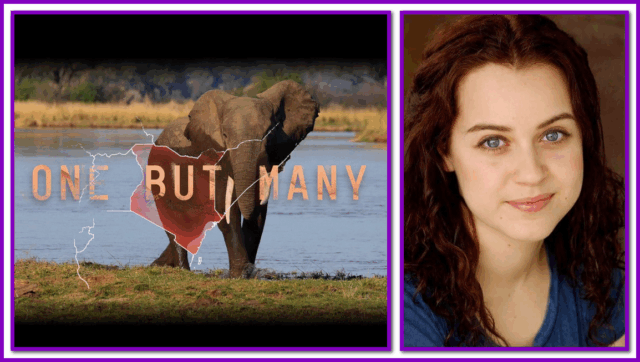
An in-depth exclusive conversation with editor and co-producer MARIE-NOELLE MARQUIS discussing the story development and editorial process of the powerful documentary ONE BUT MANY, which marks its world premiere at Dances With Films on June 29, 2025.
SYNOPSIS: ONE BUT MANY is an unflinching documentary that investigates how Human-Wildlife Conflict has become the fastest-growing threat to endangered species and how Human-Wildlife Conflict is being weaponized—used against the very people and animals it affects most. The film exposes deep ties between the trophy hunting industry and policy decisions driven by both the U.S. and African governments, leaving communities and wildlife in deadly peril. But in parts of Kenya, where trophy hunting has been banned for decades, extraordinary models of coexistence are not only emerging—they’re thriving. With raw truth and radical hope, ONE BUT MANY dares to reimagine how humans and wildlife share space in an increasingly complex world.
ONE BUT MANY is directed by Janna Giacoppo and co-written by Giacoppo and Joel Olicker and was filmed in Zimbabwe, Zambia, Kenya, South Africa, Botswana, and England.
MARIE-NOELLE MARQUIS boarded this project back at the beginning of the pandemic lockdown, stepping in as not only a co-producer but also as the documentary’s editor. Marie is a gifted filmmaker whose work is exemplary both in front of and behind the lens in various disciplines, including editing. But where she really shines is with her storytelling vision and executing not only her visions, but those of other directors, through the editing process. Working closely with director Janna Giacoppo for the past 4+ years since the COVID-19 shutdown, Marie began the editing process of ONE BUT MANY with 28 hours of initial footage that Janna had already obtained. Originally intended as a series, due to the pandemic, the vision shifted to that of a feature-length documentary.
As an editor, Marie-Noelle was very conscious of avoiding a monotonous documentary style of just interview clips. She worked to create a dynamic narrative by weaving together interviews with archival footage, animation, and beautiful wildlife visuals. The goal was to keep the audience emotionally engaged by providing visual variety, using music to support the emotional journey, and creating “peaks and valleys” in the storytelling. By including moments of hope, beauty, and connection alongside the more challenging information, Marie and Janna together ensured the documentary would be visually compelling and not just a series of talking heads.
The editorial process involved multiple iterations – Marie estimates around 18 different versions of the film. They started by having Janna record herself telling the story naturally to help establish a through-line. A constant process of discovery, with new interviews and footage being added over time, significant re-cutting became the norm for Marie. Some of the editorial challenges included:
- Balancing emotional content with informative storytelling
- Finding and integrating archival footage
- Maintaining a hopeful tone while addressing difficult conservation issues
- Creating a cohesive narrative from complex source material
Marie emphasized the importance of collaboration, music, and maintaining audience engagement throughout the editing process. They were constantly refining the story, ensuring they kept the initial “wow” moments for viewers while diving deeper into the complexities of human-wildlife conflict.
Initially, the through-line was very broad, covering multiple aspects of human-wildlife conflict. Working closely with Janna to distill the core story, which was about how conflict between humans and wildlife could actually be solved by people and wildlife coming together, having Janna record herself telling the story “helped us find the organic narrative flow” but always maintaining the central message of hope and connection, showing how simple communication and coexistence could be the solution to complex human-wildlife conflicts.
Finding archival footage was extremely challenging. Marie described it as “difficult” but also somewhat serendipitous. They were constantly searching for specific visual elements to support their narrative, often feeling like doors would unexpectedly open when they needed certain footage. For example, for the Safari Club International segments on trophy hunting, obtaining footage was particularly difficult since these events are typically closed to outsiders. Marie reflected that they were constantly questioning whether they could actually use the archival material they found, dealing with licensing and legal challenges. Some specific challenges with the archival footage and photos included:
- Limited resources for additional shooting
- Difficulty accessing closed events like trophy hunting conventions
- Verifying the usability of found footage
- Matching visual quality across different archival sources
The most exciting moments came when they discovered unexpected archival material, like the convention footage, which Marie described as a moment of disbelief – “I can’t believe, like, wait a minute, is this for real?!” They also used creative solutions like animation when archival footage was unavailable, ensuring they could still effectively communicate complex information visually. The process was so intricate that Marie-Noelle noted some archival finds actually helped guide the story’s development, with some sections being created or modified based on what visual materials they could secure. Hot-button topics such as trophy hunting benefit greatly from readily identifiable “touchstones” such as reference to the international story of Cecil the Lion, or images of the Trump boys posing with their animal trophy.
The animation was part of Janna’s vision from the beginning. Initially, they were looking for archival footage to explain certain concepts, like the predator-proof enclosure. When they couldn’t find suitable footage, they turned to animation. Some animations were created early in the process, while others were developed as they worked through the edit to help clarify complex information, such as the situation in Botswana. The color palette of the animation was intentionally chosen to reflect the African landscape, using brick, copper, red, and sandy yellow tones to maintain visual consistency with the documentary’s overall look.
A “crucial part” of Marie’s editing was the music, thanks to a beautiful score by Cody Westheimer. “As someone with a conservatory background, I always pull music for inspiration and cut to it. Music changes the tone of the film and helps craft emotional moments. In ONE BUT MANY, we collaborated early on with the composer to find the right musical style, using music to help lift the audience out of darker moments and create a meditative, emotional connection to the visuals.” It was essential in pacing the documentary and guiding the audience’s emotional journey.
As she reflects on the filmmaking process of storytelling and editing, some of the overall key challenges Marie-Noelle Marquis faced in editing ONE BUT MANY included:
- Developing a clear through-line from 28 hours of initial footage, which went through approximately 18 different versions.
- Balancing emotional content – creating peaks and valleys that don’t emotionally exhaust the audience while maintaining hope as the central theme.
- Finding and licensing archival footage, especially from challenging sources like Safari Club International events.
- Integrating animation and music to support the narrative and help convey complex conservation concepts.
- Ensuring the visuals and voiceover complemented each other without being insensitive, like showing cute lion cubs while discussing difficult topics.
- Maintaining a consistent color scheme and tone throughout the documentary.
- Keeping the audience engaged by remembering they haven’t spent years studying human-wildlife conflict, so introducing concepts in an accessible way.
The overall goal was to craft a story that shows the interconnectedness of humans and wildlife, highlighting both the challenges and potential solutions in conservation.
Showing efforts for coexistence was crucial to the documentary and Marie-Noelle and Jana deliberately structured the film to move beyond just highlighting problems, focusing on hope and solutions. They wanted to demonstrate that the answer to human-wildlife conflict is simple: connection, communication, and mutual support. By showcasing examples like predator-proof enclosures, lion training exercises, wildlife photo tourism, and community conservation efforts, they illustrated practical ways humans and animals can live together. The goal was to inspire viewers by proving that peaceful coexistence is possible, not just overwhelm them with negative statistics. The film’s third act specifically celebrates these positive approaches, showing that with understanding and collaborative strategies, humans and wildlife can thrive together.
To hear more of Marie-Noelle Marquis’s editing process, including specific “wow discoveries”, fun moments, educational information, and more with ONE BUT MANY,
TAKE A LISTEN. . .
by debbie elias, exclusive interview 06/22/2025