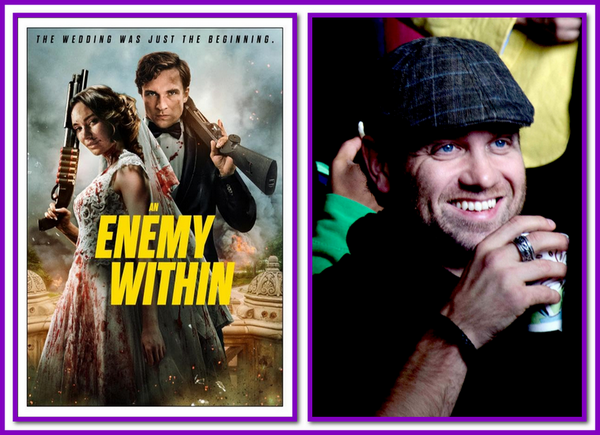
With his debut narrative feature AN ENEMY WITHIN, writer-director JOHN MICHAEL KENNEDY delivers a tightly wound chamber thriller where greed, betrayal, old money entitlement, and simmering resentment collide inside a sprawling English estate over the course of one increasingly volatile night. But beneath the film’s twisting mystery mechanics and darkly entertaining family warfare lies something more carefully constructed: a story in which every character believes they are justified, even as their worlds collapse around them.
“None of them are ultimately good people,” Kennedy says with a laugh. “I really like films when characters live in the gray. It’s more like real life.”
That moral ambiguity became central to Kennedy’s approach from the earliest stages of writing. While audiences may immediately recognize shades of KNIVES OUT, SUCCESSION, or even David Fincher’s intricate game-playing thrillers in the film’s DNA, Kennedy points to an unexpected literary inspiration underpinning the story’s emotional architecture: Mary Shelley’s Frankenstein.
“There’s a famous quote,” Kennedy explains. “‘No man chooses evil because it is evil. He only mistakes it for the happiness, the good he seeks.’ That was thematic for every character.”
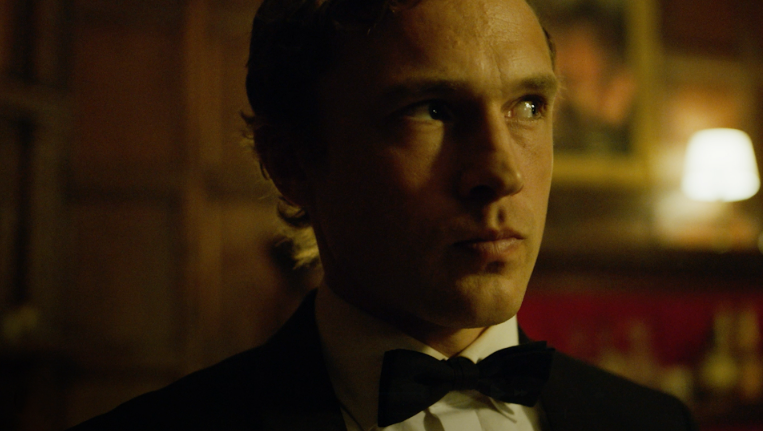
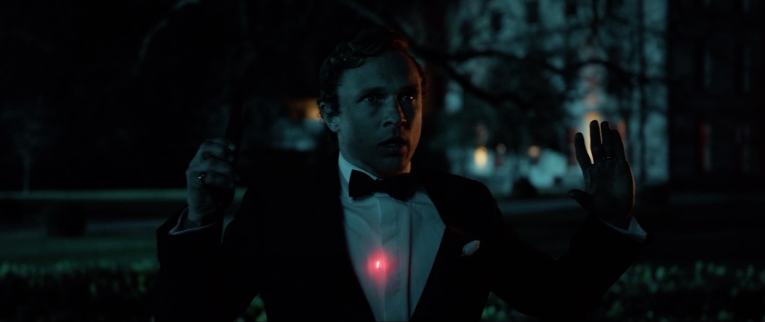
That philosophy runs through every poisonous interaction between the Wingates and the Foresights, two deeply dysfunctional families bound together by wealth, manipulation, and mutual distrust. On his wedding night, Caleb Wingate, played by William Moseley, receives a chilling ultimatum: kill his father-in-law before midnight or his new bride dies. As accusations fly and loyalties fracture, nearly everyone inside the estate becomes both predator and prey.
Importantly, Kennedy never positions a single puppet master at the center of the chaos.
“Everybody is a puppet master at some point,” he says. “It had to feel inevitable. I didn’t want audiences to feel cheated by the twists.”
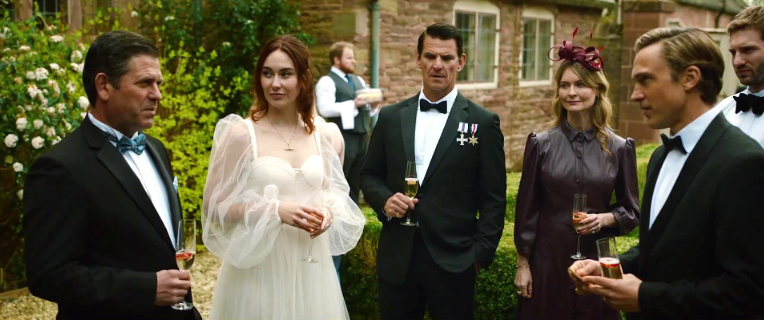
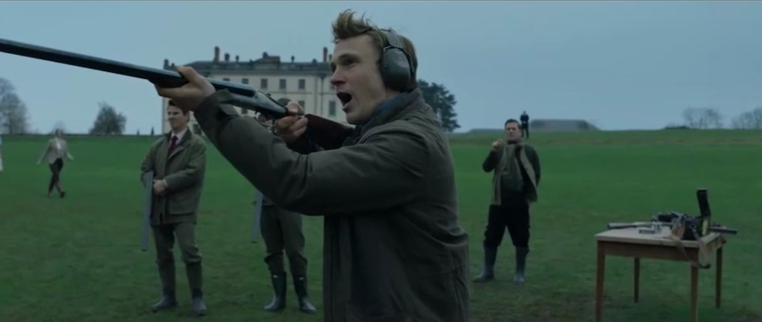
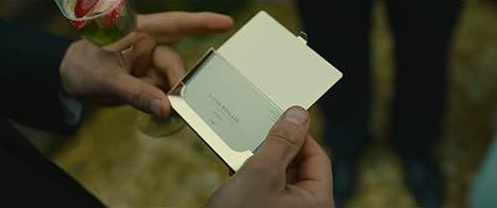
That sense of inevitability is one of the film’s greatest strengths. Kennedy meticulously structures the screenplay so that every character’s motives intersect and clash, allowing revelations to emerge naturally from personality rather than arbitrary shock value. The result is a film where suspicion constantly shifts, but the emotional logic never breaks.
One of the standout performances comes from Alexander Lincoln as Jackson, an abrasive, snark-fueled wildcard who masks insecurity behind bravado and alcohol.
“He’s the most insecure person in the room at all times,” Kennedy says. “He navigates that through humor and this fake alpha masculinity. But ultimately he’s just striving for a voice in the room.”
That insecurity makes Jackson oddly relatable amid the film’s parade of manipulative elites and morally compromised opportunists. Kennedy credits casting director Matt Bailey for immediately identifying Lincoln as the perfect fit for the role.
The ensemble itself proved essential to making the script’s delicate balancing act work. Kennedy praises the entire cast — including Moseley, Patrick Baladi, Kim Spearman, Tristan Gemmill, Kate Isitt, Toyin Omari-Kinch, and Harrison Daniels as the mysterious “Wolf” — for bringing depth and individuality to a densely layered ensemble narrative.
Moseley, in particular, provides an effective emotional anchor. Best known to many audiences as Peter Pevensie in THE CHRONICLES OF NARNIA, Moseley arrives carrying an inherent sense of earnestness and youthful innocence that Kennedy cleverly weaponizes throughout the film.
“You still see him as this fresh-faced, eager young man,” Kennedy says. “So when everything starts unraveling around Caleb, you feel for him immediately.”
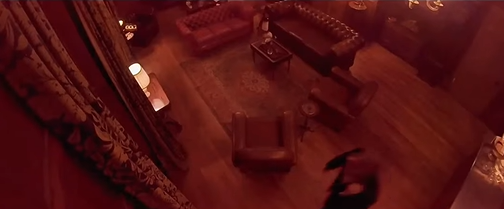
Visually, AN ENEMY WITHIN operates as both a mystery and a psychological pressure cooker. Kennedy and cinematographer Lorenzo Levrini intentionally compress the film’s geography as tensions escalate, moving from the apparent openness of the estate grounds into the increasingly suffocating confines of a dark, wood-paneled study and bar room dominated by heavy draperies, shadowy corners, and centuries of accumulated patina.
“We wanted to compress the space around Caleb as the story moved forward,” Kennedy explains.
The opening scenes establish the estate in broad daylight, showcasing the wealth and privilege surrounding the families. But as the night progresses, the same room transforms into something far more sinister. Reds, blacks, greens, and golds gradually overtake the palette, with Levrini’s lighting emphasizing paranoia, suspicion, and emotional decay.
“We wanted every time we went back into that room to feel different,” Kennedy says. “A new experience within the bar.”
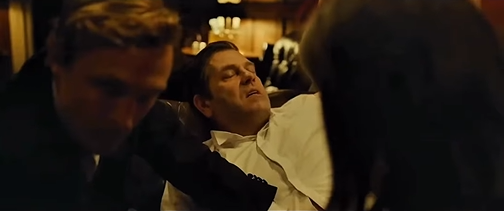
That evolving visual language became critical to preventing the contained setting from ever feeling static. Kennedy and Levrini deliberately avoided relying on excessive close-ups, instead favoring mid-shots, layered blocking, environmental framing, and shifting camera perspectives to maintain spatial tension. Characters crawl across floors, hover around wounded bodies like mourners at an open casket, or emerge from shadows with the visual menace of assassins entering a duel.
“We focused on creating these assassin entries from the characters wherever we could,” Kennedy says.
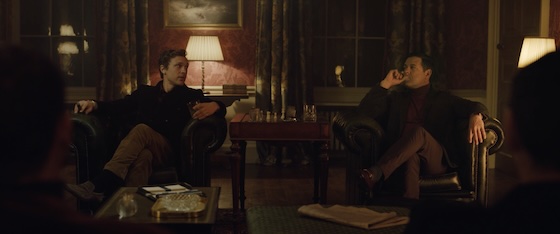
The influence of classic western staging even found its way into the visual grammar, with Kennedy referencing “cowboy shots” and standoff compositions that subtly frame the family confrontations as psychological gunfights long before the film’s explosive third act.
And when that eruption finally arrives, Kennedy gleefully subverts expectations.
One of the film’s most entertaining sequences sees the women of the families ultimately taking command, emerging armed and prepared for violence while the men’s carefully maintained power structures begin collapsing around them.
“That was the passing of the torch,” Kennedy says. “Julia was never a wilting flower hiding in the corner.”
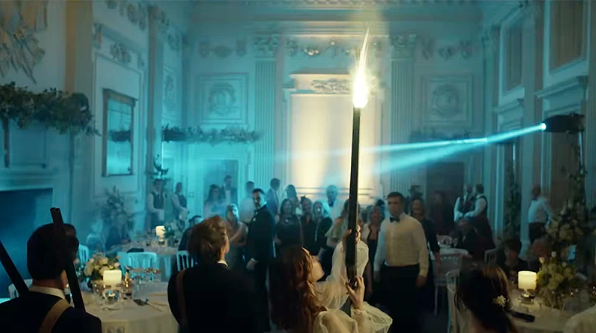
The tonal contrast of that sequence becomes especially striking as armed family members descend into the brightly lit wedding reception area after spending much of the film cloistered inside the claustrophobic darkness of the study. Kennedy and Levrini use that sudden visual expansion almost like a release valve, allowing the film’s simmering absurdity and operatic dysfunction to finally explode into the open.
Production itself became an endurance test. Shot during the lingering chaos of the COVID era, the production faced repeated shutdowns, cast absences, and constant scheduling upheaval.
“We got hit by COVID during production,” Kennedy recalls. “We were riding on the fly. I’d show up asking who was even in today.”
At one point, Kennedy isolated himself during breaks, sleeping in his car between setups in hopes of avoiding infection and keeping the production alive.
“I honestly don’t think the film would have been made without that mentality from everyone,” he says.
Despite the logistical nightmares, Kennedy credits the collaborative spirit of the cast, crew, and location owners for helping the production survive. The estate itself — a stately manor in Herefordshire — became an essential component of the storytelling.
“The house had to be a character,” Kennedy says.
That philosophy extended beyond visuals into the sonic landscape crafted by composer Caleb Blood. The score blends classical composition with modern textures while subtly embedding ticking clock motifs into the soundscape, constantly reinforcing the urgency of the film’s midnight deadline.
“There’s a ticking clock throughout the composition,” Kennedy explains. “A constant reminder that time is running out.”
That ticking urgency, paired with Gustav Lindquist’s sharp editing and the eerie surveillance imagery surrounding the Wolf, keeps the film moving with relentless momentum while preserving the mystery’s intricate layers.
For Kennedy, the experience of making his first feature ultimately reinforced the importance of trusting instinct, embracing collaboration, and remaining flexible when inevitable obstacles emerge.
“Sometimes you have to bend,” he says. “You have to stay creative with it and stay positive.”
Already, Kennedy is looking ahead to future projects, including a modern-day Birmingham and London-set gangland vigilante thriller and a contained sci-fi project inspired by films like EX MACHINA.
But with AN ENEMY WITHIN, Kennedy has already established something important: a confident visual voice capable of balancing tension, dark humor, character psychology, and ensemble chaos within an impressively controlled cinematic framework. Stylish, wickedly entertaining, and loaded with suspicion at every turn, the film proves Kennedy understands one of the hardest tricks in thriller storytelling — how to make audiences enjoy watching terrible people destroy each other while still caring who survives the night.
by debbie elias, exclusive interview 05/06/2026
AN ENEMY WITHIN is available on Digital and On Demand on May 15th.