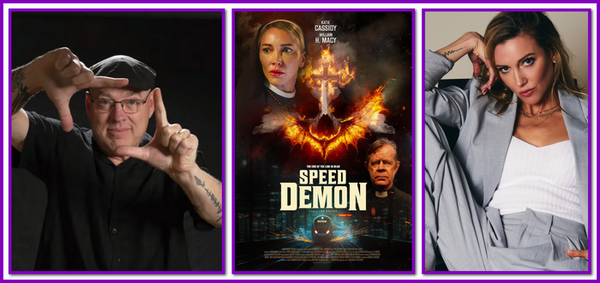
When audiences first hear the premise of SPEED DEMON, the immediate reaction may be one of disbelief.
A runaway train.
A demon named Asmodeus. King of the Demons. The Demon of Revenge.
A nun called upon to perform an exorcism.
On paper, it sounds like the kind of high-concept supernatural action-horror mash-up that could easily veer into camp. Instead, director JON KEEYES and star/producer KATIE CASSIDY deliver something far more compelling. Beneath the demonic possession, biblical imagery, and escalating terror lies a deeply human story about grief, addiction, faith, and self-discovery.
At the center of that story is Sister Lu.
Portrayed with remarkable emotional complexity by Cassidy, Sister Lu is not introduced as a saintly figure of unwavering conviction. She is a woman carrying profound wounds. Haunted by the suicide of her father, struggling with addiction, questioning her place within the Church, and burdened by years of unresolved trauma, she is battling her own demons long before Asmodeus ever boards the train.
For Cassidy, it was precisely those contradictions that made the role irresistible.
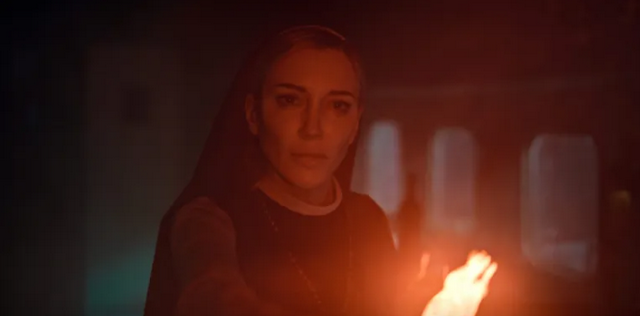
“Given her flaws and her backstory and the complications and her hardship with the relationship with her father, I could relate to that,” Cassidy explains. “Then her self-medicating and turning to drugs and alcohol to suppress the trauma that she’s been through. She’s dealing with these inner demons, but also external demons. She has to put down the bottle, step into her power, and save the day. I love that she was a badass, and I love strong female characters.”
That emotional foundation became the key to making SPEED DEMON resonate beyond its supernatural premise.
Keeyes immediately recognized the uniqueness of Domenico Salvaggio’s screenplay, embracing its unusual blend of genres while ensuring that character remained the driving force.
“How often do you get to direct an action movie about a runaway train that happens to be a horror movie about demon possession that happens to be about a nun performing an exorcism filled with drama and comedy?” Keeyes laughs.
Yet beneath the film’s “weird and wonderful” exterior lies a carefully constructed character journey. While Sister Lu’s troubled history existed in the script from the outset, Keeyes saw an opportunity to deepen her emotional arc.

The death of her father was always present in the screenplay, but as development progressed, Keeyes and writer Domenico Salvaggio continued refining the character, exploring the experiences that shaped Sister Lu into the woman audiences meet aboard the doomed train.
“There was always an idea of doing further Sister Lu movies,” says Keeyes. “Thinking about both the arc within SPEED DEMON and the future as well, I wanted to delve much further into her backstory and the things that have painted her and touched her and made her the way she is.”
Cassidy embraced that challenge wholeheartedly, seeking authenticity wherever she could find it. One particularly valuable resource came from a recovering addict who helped her understand the nuances of addiction and recovery, lending credibility to a struggle the film wisely portrays with restraint rather than sensationalism.
The result is one of Cassidy’s strongest performances to date.
What makes Sister Lu compelling is not simply her ability to confront supernatural evil. It is her vulnerability. Cassidy communicates volumes through subtle expressions and searching eyes, allowing audiences to feel the character’s internal conflict even in moments of silence. The temptation to escape through substances, the lingering pain of loss, and the uncertainty of faith are ever-present beneath the surface.
Most importantly, Sister Lu’s journey is one of agency.
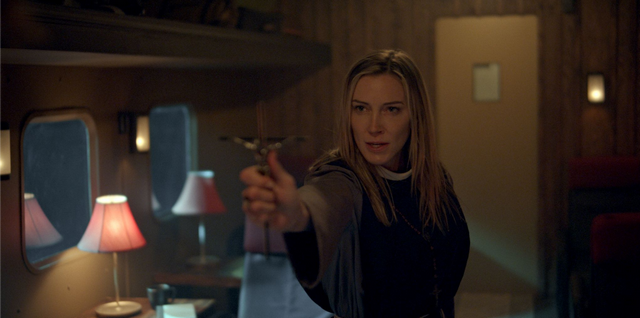
Within a rigid patriarchal institution, she is a woman frequently underestimated, uncertain of her own worth, and fearful that her past mistakes have rendered her unworthy of her calling. Yet when crisis strikes and traditional authority figures are removed from the board, it is Sister Lu who must step forward. The supernatural threat may drive the plot, but it is her evolution from self-doubt to self-belief that gives the story its emotional power.
While Sister Lu’s journey anchors SPEED DEMON, one of the film’s most memorable surprises arrives in the form of eleven-year-old Sophia, played by newcomer Sky Vaux Fuller.
Intelligent, observant, and possessing a wisdom beyond her years, Sophia quickly emerges as far more than a frightened passenger caught aboard a runaway train. Through her growing friendship with Sister Lu, she becomes a source of optimism and perspective amidst the escalating chaos.
For Keeyes, finding the right young actress proved critical.
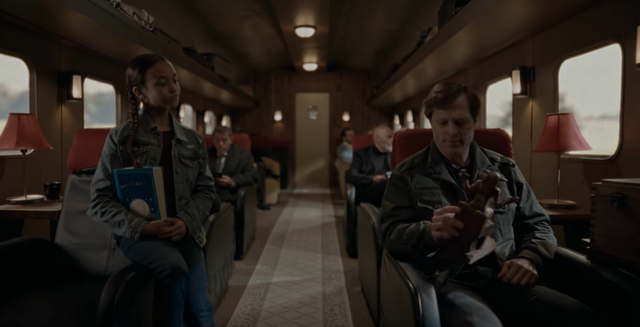
“She was literally the very last person we looked at,” he recalls. After narrowing the field of candidates, casting director Heidi urged him to watch one final audition before making his decision. “She said, ‘Wait before you make a decision. I’ve got one more person I need you to see.'”
That final audition belonged to Sky Fuller. The impact was immediate. “She was so wonderful, such a great actress,” says Keeyes. “Her big eyes—yeah, she was fantastic.”
What ultimately distinguishes Fuller’s performance is her ability to avoid the pitfalls often associated with precocious child characters. Sophia is undeniably intelligent, but she never feels manufactured or overly knowing. Instead, Fuller imbues the character with curiosity, sincerity, and emotional honesty.
Keeyes credits much of that success to the young actress herself.
“She kept all of us laughing. She is so full of energy.”
That energy translates beautifully to the screen. As darkness closes in around the passengers and Sister Lu finds herself increasingly burdened by impossible choices, Sophia becomes a reminder of what remains worth saving.
In many ways, the relationship between the troubled nun and the inquisitive young girl becomes one of the film’s most unexpected strengths. Their scenes together provide warmth and humanity while reinforcing one of the film’s central ideas: that faith is not simply belief in the supernatural, but belief in the possibility of hope.
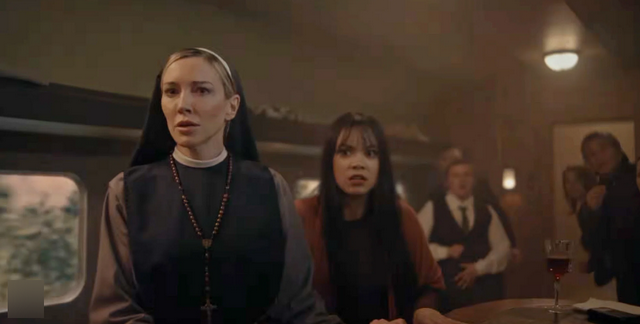
While Sister Lu and Sophia provide the emotional center of SPEED DEMON, the film’s success ultimately depends upon the passengers surrounding them.
From the skeptical Edwin to the devoted Father Novak, from the loving relationship shared by David and Vicky to the frightened travelers suddenly thrust into unimaginable circumstances, every passenger serves a distinct narrative purpose. For Keeyes, assembling that ensemble required far more than finding talented performers. It required finding the right combination of performers.
“I got a lot of really, really strong actors,” he explains. “I got a lot of really good auditions, and I had a lot of choices, which was beautiful.”
The challenge, however, extended beyond individual performances. “You start getting into, okay, I don’t want anybody to look too much the same. Everybody’s got to be their own individual.”
What Keeyes seeks during auditions is not necessarily perfection, but surprise.
“Fifteen actors do the same delivery the same way, but the sixteenth does it differently, and I’m like, that’s what I’m interested in. What are you doing differently? What are you bringing?”
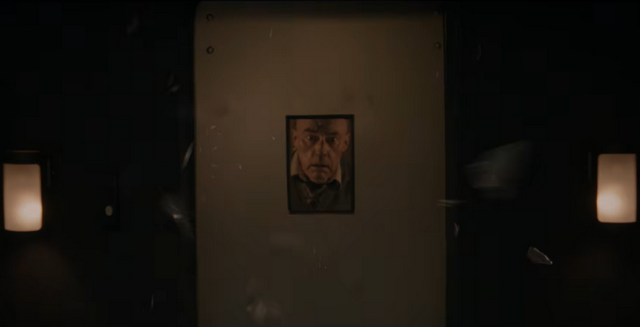
Keeyes approached the process almost like assembling a puzzle, studying auditions across multiple screens, searching for combinations of personalities, energies, rhythms, and emotional textures that would complement one another. The result is an ensemble that feels remarkably organic.
Although rehearsal time proved limited, the cast quickly established the chemistry necessary to make the relationships believable. Sari Arambulo and Jeremy Matthew Feight were able to spend time developing the dynamic between Vicky and David before filming began, while Cassidy and William H. Macy discussed the history connecting Sister Lu and Father Novak.
Perhaps most importantly, production scheduling worked in the filmmakers’ favor. The early days of filming focused on scenes in which the passengers themselves are becoming acquainted with one another. “Everybody clicked really, really quickly,” says Keeyes.
Coming at it from the acting perspective, for Cassidy, “I feel like we all prepared separately, and by the way, that’s what is more authentic to the story as well. . .It’s kudos to John and the casting director for casting such great actors that the dynamics worked really well, and everyone was very unique and specific. We all kind of gelled together, and it just worked. I think you just get lucky sometimes, and I think that’s a little bit of what happened here.”
That natural progression mirrors what audiences experience on screen. Just as the passengers begin learning who they can trust and rely upon, the actors were simultaneously discovering one another as collaborators.
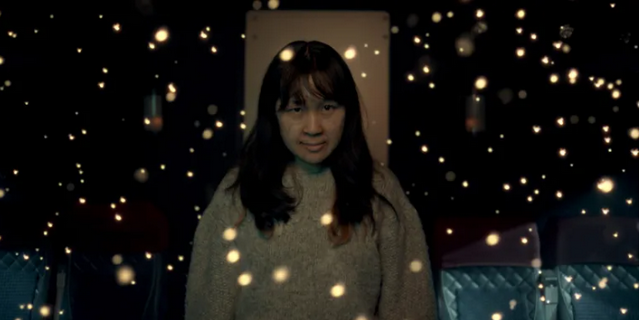
Long before cameras rolled, Keeyes knew that SPEED DEMON would live or die on the strength of its visual design.
A runaway train offers inherent dramatic momentum, but it also presents significant filmmaking challenges. Confining actors and camera crews inside a series of connected train cars risks visual repetition, something Keeyes was determined to avoid.
Weeks before official pre-production began, Keeyes found himself alone inside the unfinished train sets, script in hand, studying the physical space and imagining how every corridor, compartment, chair, lamp, and shadow would contribute to the story.
“The train cars had already been built, but they had not been dressed out or painted or anything,” Keeyes recalls. “I got to spend weeks by myself in those train cars with the script, working out how I wanted the train to look on the inside.”
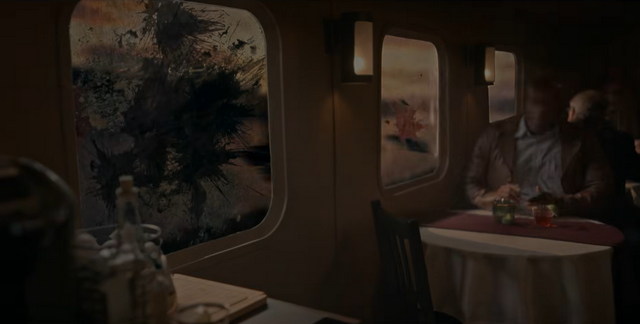
Working closely with cinematographer Austin Schmidt and production designer Diego Diaz, Keeyes began developing a visual strategy that would ultimately become one of the film’s greatest strengths.
Before Schmidt even arrived on location, director and cinematographer spent countless hours discussing visual concepts, camera movement, color palettes, spatial relationships, and the emotional language of the train itself.
“Austin and I spent a ton of time on Zoom,” says Keeyes. “We got to spend a lot of time discussing and walking through all of that.”
Those conversations were translated into tangible design choices through Diaz and the art department, creating richly textured train interiors filled with dark woods, deep burgundies, practical lighting, and carefully controlled shadows. Once Schmidt arrived, preparation intensified.
“Austin got into town, and then we spent all of pre-production basically blocking.”
The goal was deceptively simple: prevent the train from ever feeling visually confined. Rather than treating the narrow corridors as limitations, Keeyes and Schmidt embraced them as opportunities.
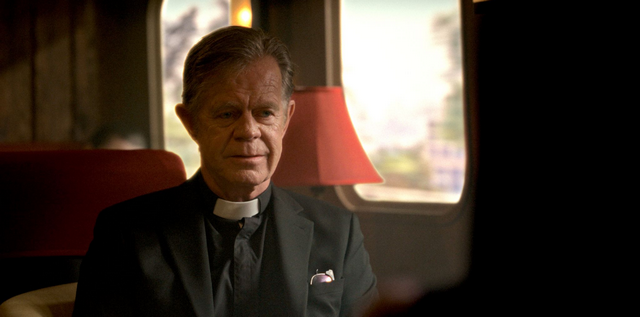
“One of the things that I love about Austin is his ability to not do the same shot twice,” Keeyes explains. “He was constantly looking for ways to keep the train feeling unique.”
That commitment to visual variety becomes evident throughout the film. Hallways become channels of suspense. Windows become portals for terror. The train’s elegant bar evolves into a strategic gathering point. Every corner of the train reveals a new visual perspective. For Keeyes, the extensive preparation served another purpose beyond visual storytelling.
“We spent so much time blocking and shot listing and figuring out how to keep it exciting and moving, but also giving the actors the ability to respond and move around and come up with things on the spot.” That balance between meticulous preparation and creative flexibility allows the film to feel simultaneously controlled and alive.
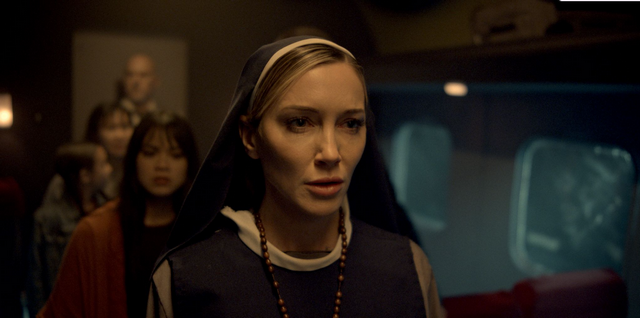
If the train serves as the film’s physical battleground, the mysterious realm known as “the in-between” becomes its spiritual one.
Existing somewhere between life and death, the in-between allows Sister Lu to communicate with her deceased father while simultaneously confronting the demonic force threatening everyone aboard the train.
Editor R.J. Cooper, another longtime Keeyes collaborator, further strengthens the film’s visual and emotional continuity. As Sister Lu moves between the physical reality of the train and the mysterious realm of the in-between, Cooper’s editing maintains clarity while steadily ratcheting tension, ensuring that the increasingly complex narrative remains both emotionally grounded and dramatically engaging.
For Keeyes, creating the realm required far more than simply photographing darkness. It demanded the creation of an entirely separate visual language.
“I walked into it with an idea of what I wanted out of the in-between,” Keeyes explains. “Then Austin kind of ran with that, and he came back with a whole bunch of different ideas. We started throwing some away and finding some others and incorporating those things until we kind of came into that.”
The process exemplifies the collaborative shorthand Keeyes and Schmidt have developed over years of working together. For both filmmakers, the objective was never to create imagery that was merely striking.
“Austin’s desire is always telling stories, not just doing pretty shots. Always telling story through the camera.”
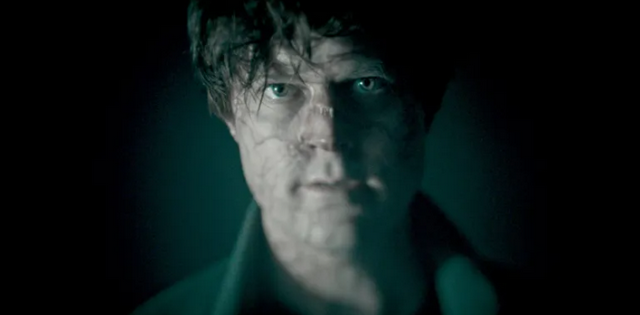
That philosophy proves particularly effective within the in-between. Every frame serves a narrative purpose. The darkness surrounding Sister Lu becomes more than atmosphere; it becomes an extension of her emotional state. The isolation reflects years of unresolved grief. The uncertainty mirrors her wavering faith. The liminal nature of the space echoes her struggle to reconcile the woman she was with the woman she is becoming.
Most importantly, the in-between was designed to feel like a destination unto itself.
“We wanted the in-between to become its own particular space within this universe.”
The result is one of the film’s most compelling visual achievements. Rather than functioning as a simple supernatural device, the in-between becomes a character in its own right—a place where memory, faith, trauma, and destiny intersect.
In many ways, it becomes the visual embodiment of what SPEED DEMON is ultimately about: the difficult journey between who we were and who we are capable of becoming.
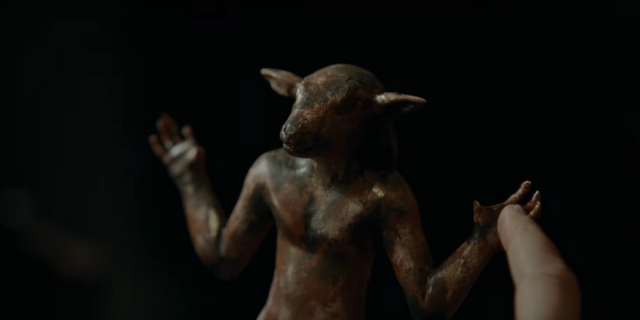
By the time SPEED DEMON reaches its conclusion, audiences may find themselves wanting more of Sister Lu. Fortunately, Keeyes already has plans.
“The script for another chapter is written,” he reveals. “And if everything goes well, we definitely plan on doing a second, and we’ve even got the treatments for three, four, and five.”
Cassidy needs no convincing. Asked whether she would return for future installments, her response is immediate. “Oh, yeah!” It is easy to understand why.
The greatest achievement of SPEED DEMON is not the runaway train, the demon Asmodeus, or even the exorcism itself. It is the creation of a heroine whose struggles feel deeply human despite the supernatural forces surrounding her.
For Keeyes and Cassidy, grounding the supernatural was never about diminishing the horror.
It was about making audiences care about the person standing in its path.
And in Sister Lu, they have created a heroine worth following wherever the rails lead next.
by debbie elias, exclusive interview 05/27/2026
SPEED DEMON is available on streaming platforms on May 31, 2026.