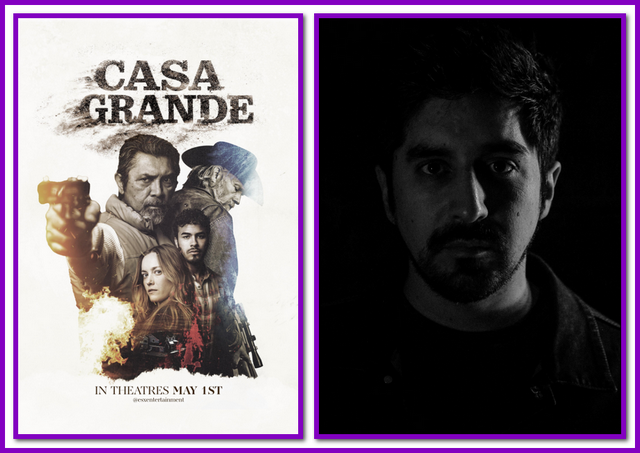
Stepping into an established world is never easy, especially when audiences already feel deeply connected to the characters inhabiting it. But for director JUAN PABLO ARIAS MUNOZ, that challenge became part of the creative excitement behind CASA GRANDE, the feature-film continuation of the acclaimed television series that now expands its emotional and cinematic scope into something far larger, more urgent, and deeply resonant within the framework of the modern Western.
“I was a big fan of the series,” Arias Munoz says. “I appreciated so much the work that was done. I loved the characters. I was a big fan of the cast. So when they all decided to come back, that was the best sign that we were on the right track.”
Rather than simply extending the episodic storytelling onto a larger canvas, Arias Munoz approached CASA GRANDE as an opportunity to re-engineer the material through a more expansive cinematic lens. The result is a film that preserves the emotional intimacy and family-centered conflicts of the original series while embracing the scale, urgency, and visual grandeur of a contemporary Western.
“We wanted the story to feel more urgent,” he explains. “We wanted it to feel prettier. We wanted to take this story to the big screen because it feels bigger in scope. It feels bigger in stakes.”
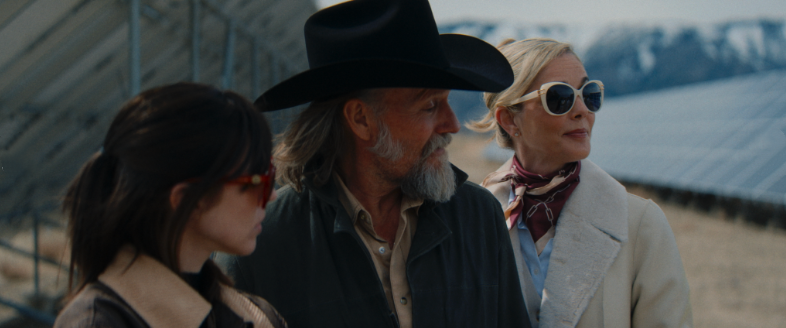
At the center of the film is a deeply layered conflict over land, legacy, identity, and survival. While traditional Westerns have long revolved around territorial disputes and questions of ownership, CASA GRANDE modernizes those themes through contemporary tensions involving lithium extraction, mineral rights, economic development, and the increasingly fragile balance between progress and preservation.
“The Western is always about land,” Arias Munoz says. “Who has the right over the land? Who owns the land? Who works the land? Who is allowed to be there? The land dispute is at the heart of the Western, and it’s at the heart of this film.”
What makes CASA GRANDE especially compelling is the way it reframes those familiar Western themes through Latino perspectives rarely centered in mainstream modern Western storytelling. Rather than positioning Latino characters solely within supporting or labor-focused roles, Arias Munoz intentionally places them at the center of both sides of the conflict.
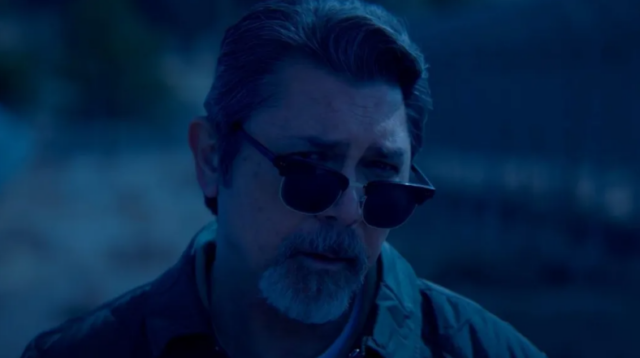
That decision becomes especially powerful through the casting of Lou Diamond Phillips as Roy Reyes, a wealthy and highly educated businessman whose ambitions for lithium extraction threaten the ranching legacy and way of life represented by the Clarkman family.
“Usually the Latino antagonist is someone from the criminal world,” Arias Munoz says. “Someone from the cartels or a stereotype like that. Lou Diamond Phillips plays an educated man, a man of great wealth, a man talking about the future.”
Importantly, Arias Munoz avoids simplifying Roy Reyes into a traditional villain. Instead, the filmmaker explores the complicated emotional and generational motivations fueling the character’s relentless pursuit of progress.
“There’s a part of what Roy is trying to bring to the table that is commendable,” Arias Munoz explains. “He wants progress. He wants jobs. He wants to grow the economy. But at the cost of what?”
That moral ambiguity extends throughout the film. Rather than constructing a simplistic battle between good and evil, CASA GRANDE becomes a study in competing value systems, generational trauma, and differing definitions of stewardship.
“You just have characters protecting what they know and protecting what they believe in,” Arias Munoz says.
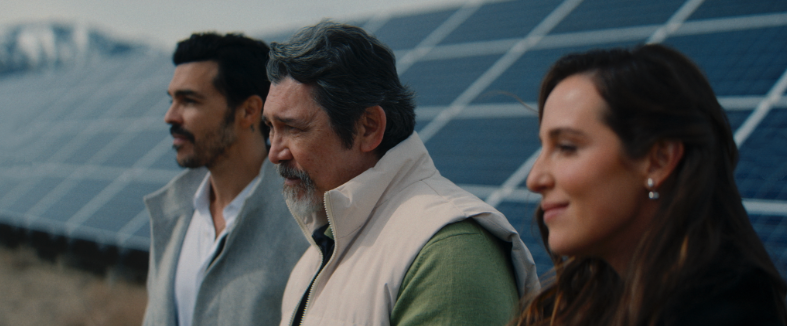
That tension is particularly evident within the Reyes family itself, especially in the dynamic between Roy and his son Leon. While Roy is willing to sacrifice almost anything to secure his family’s future and power, Leon begins questioning how far progress should go when it comes at the expense of morality, community, and human lives.
“For Roy Reyes, he’s willing to do anything to ensure the future of his family,” Arias Munoz says. “For Leon, he’s not willing to betray his own values for money.”
That generational divide mirrors similar fractures within the Clarkman family, creating a layered emotional tapestry where nearly every character is forced to confront conflicting loyalties between family obligation, personal ethics, and survival.
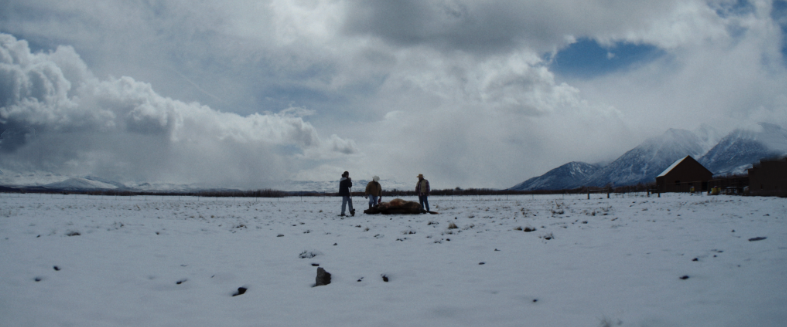
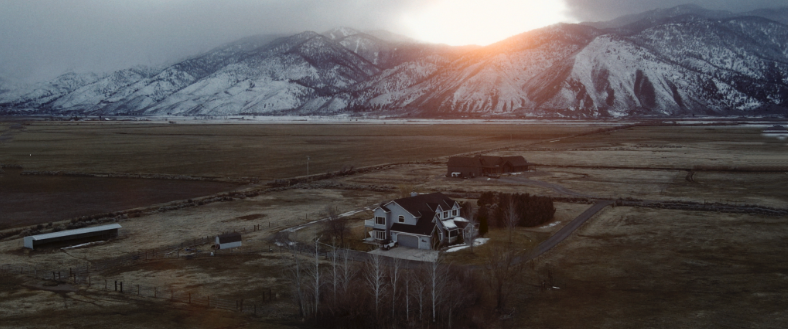
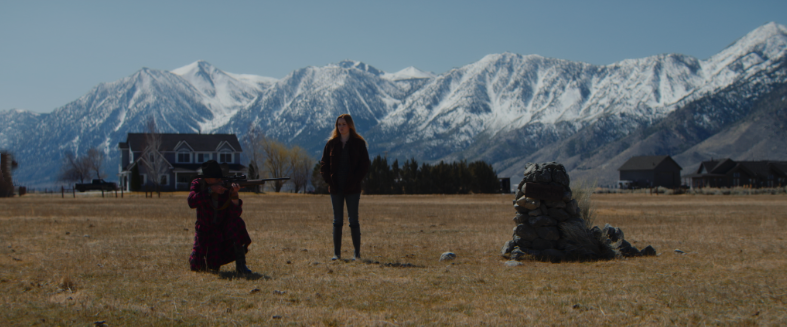
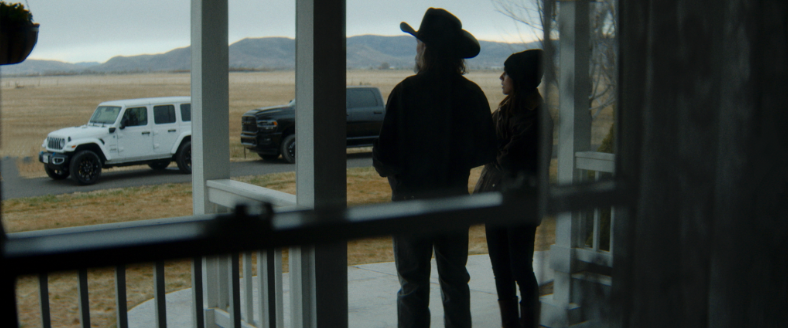
Visually, Arias Munoz and cinematographer Reuben Steinberg fully embrace the grandeur of the Sierra Nevadas while balancing that scale with moments of striking emotional intimacy. Sweeping mountain vistas, snow-covered fields, wind-swept ranchland, and rugged natural environments contrast beautifully against the warmth and closeness of family interiors, particularly within the Clarkman and Morales homes.
The environment itself became both collaborator and obstacle throughout production.
“If you want those amazing views of the mountains, you can’t shoot them off the main road,” Arias Munoz says. “You have to go really deep into the land.”
That commitment to authenticity came with enormous logistical challenges. Cast and crew regularly faced unpredictable weather conditions, remote terrain, and rapidly changing natural elements that could dramatically alter entire shooting days. Some mornings began without knowing whether mountain ranges would even remain visible beneath cloud cover by the time cameras rolled.
“We didn’t know if we were going to get rain or snow or wind,” Arias Munoz recalls. “But we were very lucky. The cinema gods were very good to us.”
That unpredictability ultimately became part of the film’s visual language. Falling snow, harsh winds, sudden storms, and shifting natural light frequently added unexpected emotional texture to scenes, enhancing the authenticity and immersion of the story’s world.
“The wind blowing through her hair in that scene was pure chance and pure luck,” he says with a smile.
The balancing act between epic landscape photography and emotional intimacy continued into the editing process with editor Brett Hudland, who helped shape an enormous amount of footage into the final film. Arias Munoz admits the initial cut ran nearly three hours.
“There was so much more in-depth in every relationship,” he says. “So many incredible scenes and performances that we loved.”
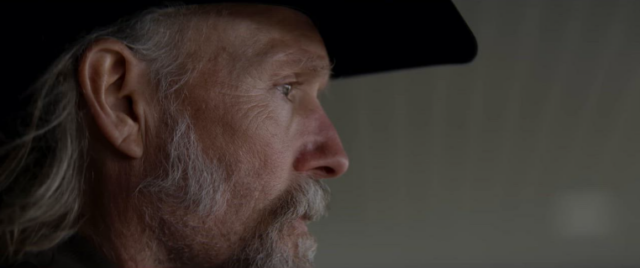
Condensing the material without sacrificing emotional depth became one of the film’s greatest challenges. Rather than simply trimming scenes, the editing process evolved into an exercise in discovering new cinematic rhythms and emotional structures within the footage itself.
“One thing we ended up finding was intertwining parallel family moments into single emotional sequences,” Arias Munoz explains. “The movie really grew in the edit.”
Those editorial choices allowed the film to maintain its emotional richness while creating stronger narrative momentum. Arias Munoz credits the collaborative process with discovering visual storytelling opportunities that often conveyed emotional meaning more powerfully than dialogue alone.
“We trusted the image,” he says. “The image would often tell a lot of the story and the feeling.”
Throughout the filmmaking process, Arias Munoz says one of the greatest lessons he learned involved trusting actors as collaborators, particularly because many members of the cast had already lived with these characters for years through the series.
“They know their characters so much better than I could ever know them,” he says. “The movie became stronger because I was able to incorporate their thoughts and their view of the characters.”
For Arias Munoz, that collaborative spirit ultimately became the emotional foundation of CASA GRANDE itself.
“The job of the director,” he says, “is to provide a safe space for actors to do their work.”
With CASA GRANDE, Juan Pablo Arias Munoz delivers a modern Western that feels simultaneously intimate and expansive, deeply rooted in tradition yet fully engaged with contemporary anxieties surrounding land, identity, progress, and belonging. More importantly, he demonstrates a clear understanding that the best Westerns are never simply about territory. They are about the people fighting to define what “home” truly means before it disappears forever.
By debbie elias, exclusive interview 05/06/2026
CASA GRANDE is in theatres now.