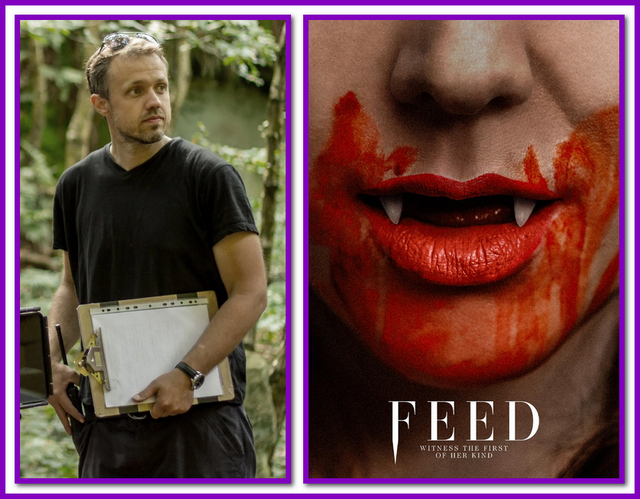
Which is more evil: an ancient Irish vampire with the power to control your mind or a modern-day social media influencer?
After watching writer-director Marco van Belle’s FEED, the answer may not be as obvious as one might think. Although, personally, I’m putting my money on the influencers.
It’s a wickedly clever juxtaposition at the heart of van Belle’s contemporary spin on ancient Irish vampire mythology, and one born from a deceptively simple desire: he wanted to make what he calls a “vampire movie with a capital V.”
No sparkle. No romanticized immortality. Van Belle wanted to go back to the darkness—to the ancient mythology surrounding vampires and the powers originally attributed to them.
And that’s where things got interesting.
Working with Irish producers Jack and Dom of Ripple World Pictures, van Belle began digging into some of the earliest vampire myths from Ireland and Europe. What he discovered was not only a way into the story, but a bridge spanning centuries.
“I was very relieved to find that the first power, the original power ascribed to vampires in Irish and European legends, was mind control,” says van Belle.
And mind control, he realized, is influence.
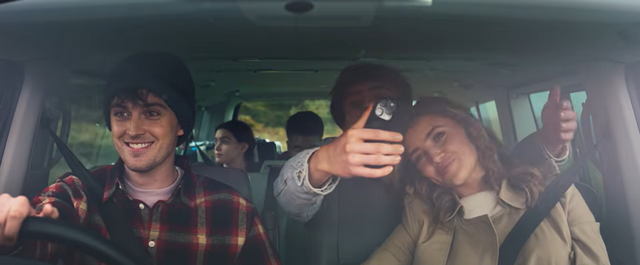
“Realizing that mind control was this OG vampire power before anything else that we’ve seen in cinema, of course, mind control is the power of influence, and we have a culture now where we are besieged with both influence and influencers, but also, which is what I became interested in, the lure of the power of influence, the attraction of becoming an influencer.”
Suddenly, the centuries separating an ancient Irish vampire from a group of social media influencers snapping photographs, hawking products, and curating their lives for an audience begin to disappear.
The vampire promises power. Immortality. The fulfillment of desire. Give yourself over and everything you want can be yours.
Social media makes much the same sales pitch. At least the vampire has the courtesy to bite you first.
For van Belle, however, discovering that connection also solved a much more practical filmmaking problem.
FEED is a low-budget production. A period film steeped entirely in ancient Irish mythology was simply beyond its means. Van Belle needed a way to preserve that mythology while placing it within a world the production could afford.
Rather than taking contemporary characters into the ancient past, he brought an ancient creature into the present.
“I was looking for some sort of way in to find a way to link ancient myths about vampires to contemporary characters,” he explains. Once the connection between vampiric mind control and modern influence revealed itself, “it felt like there wasn’t a huge amount of work to do to see the parallels.”
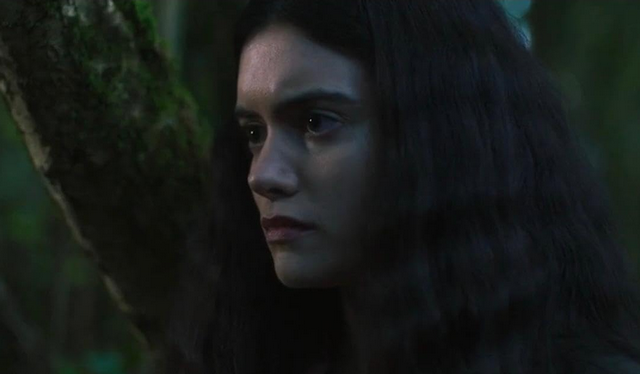
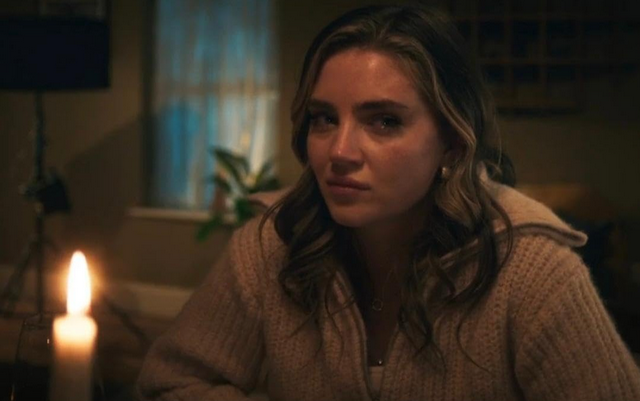
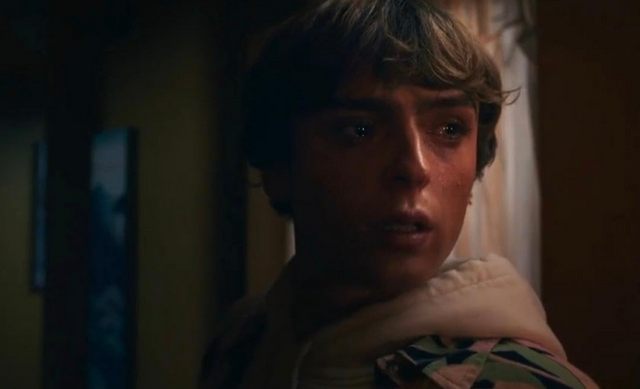
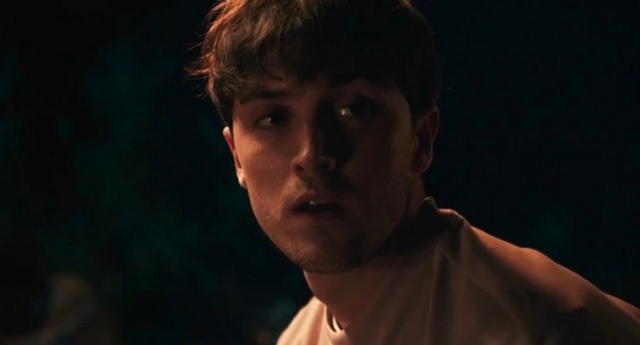
Those parallels take physical form in Orla (Grace Collender), a grieving young woman whose friends gather for a weekend intervention only to awaken the Dearg-Due, an ancient vampiric entity whose influence offers Orla something infinitely more seductive than eternal life: the possibility of being reunited with the family she has lost.
But before van Belle could unleash an ancient evil, he needed somewhere to put it. And that required coffee.
FINDING THE IMPOSSIBLE
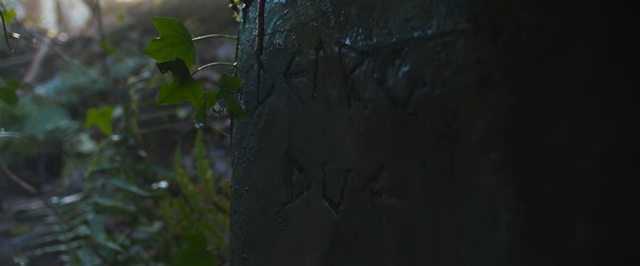
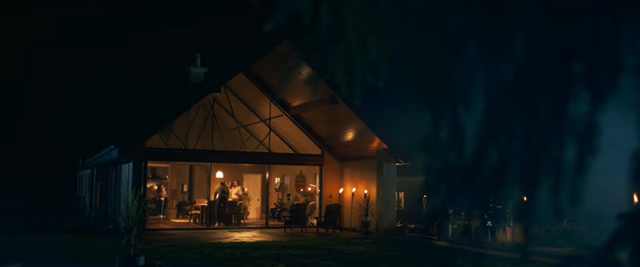
FEED needed an isolated house surrounded by forest. It needed to be visually interesting inside and out. The owners needed to be willing to leave for the duration of the shoot. And it needed to be located in an area of north Wexford where the production could accommodate its cast and crew.
And, van Belle adds, “We don’t have Hollywood money.”
After repeated trips through the area, van Belle stopped at a place where he knew he could get a good cup of coffee. The barista asked what kept bringing him back. Van Belle decided to chance his arm.
“I used to be a reporter. I used to be a journalist. I know the best way to get information is to talk to people, put boots on the ground.” So he described the impossible house.
“I’m looking for a house surrounded by forest in the middle of nowhere, that’s really interesting inside aesthetically, and I need owners who’d be willing to move out.”
The barista thought for a moment. “I think I know the house.”
One phone call and a text exchange later, van Belle was standing on the property within half an hour. “I knew that we were never going to find anyone better.”
There was just one tiny problem. Approximately 100,000 Christmas trees.
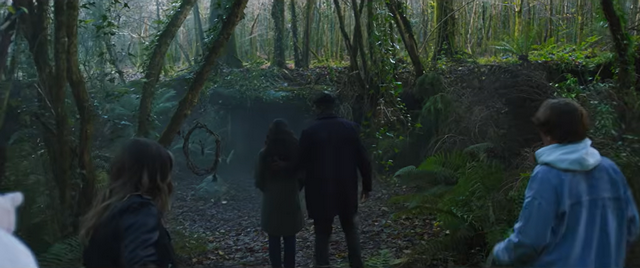
The house was surrounded by a commercial Christmas tree farm filled with six-foot trees. Cinematographer Aidan Gault took one look and warned van Belle that he might have to veto the location. Because it doesn’t take much to alter the visual vocabulary of a movie.
“You put a Christmas tree in a movie, even if there’s no snow, even if there’s 100,000 of them, you put a Christmas tree in a movie, it’s a Christmas movie.” FEED was emphatically not a Christmas movie.
Enter production designer John Leslie.
Eight approximately 30-foot pine trees elsewhere on the property were already scheduled to be felled later in the year. A deal was struck with the landowner. The trees were cut, hauled to the house, holes were dug, and all eight were effectively replanted to construct an artificial forest edge around the property, masking the Christmas tree farm beyond it.
“So when you watch the movie and you look out the back doors of the house and you see a forest, what you’re actually seeing is one layer of already felled and replanted pine trees, and they’re masking 100,000 Christmas trees.”
Even van Belle remains somewhat mystified by how Leslie and the production team managed it. “I don’t know how they afforded the truck that brought the trees there. I don’t know how they afforded the ratchet straps that were there, hidden, holding them in place, but they pulled off a miracle.”
And you would never know. That illusion became only the beginning.
MAKING EVERY SHOT PURPOSEFUL
The house presented another challenge. It looks spacious on camera, but once actors, camera, lighting, and crew were squeezed inside, even its largest rooms became tight.
For van Belle and Gault, necessity could not be allowed to become an excuse for visual monotony.
Van Belle spent the weekend before production walking through the house with the script, drawing floor plans and working through camera positions. He established a rule for himself: Never put the camera in the same place twice.
“I basically set myself the goal of always having every choice dictated by the story and the character and the moment and what they were going through and what I wanted the audience to go through.” Camera position, lens selection, movement—everything needed to be what van Belle calls “visually purposeful.” Never simply: This is the only place we can fit the camera.
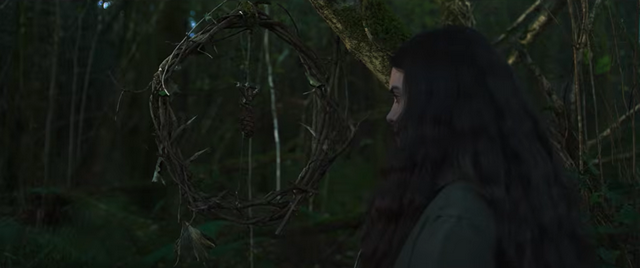
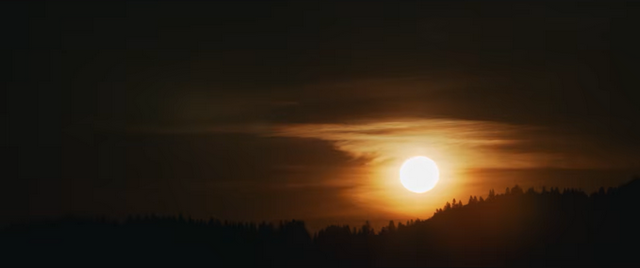
Gault’s willingness to embrace darkness and negative space becomes essential to that visual grammar. From the violent, blood-saturated historical prologue through the shadowy forest and increasingly ominous interiors, darkness isn’t merely the absence of illumination in FEED. It becomes a presence.
And that was a deliberate choice at a time when the realities of streaming exhibition can encourage filmmakers to do precisely the opposite.
“We all know that certainly the age of streaming and people watching things on multiple platforms has meant that there’s been a technical push to not make films that have too many true bits of dark shadow in them, because people are concerned that the audience might be playing it if they can’t see it well enough.”
Van Belle and Gault resisted.
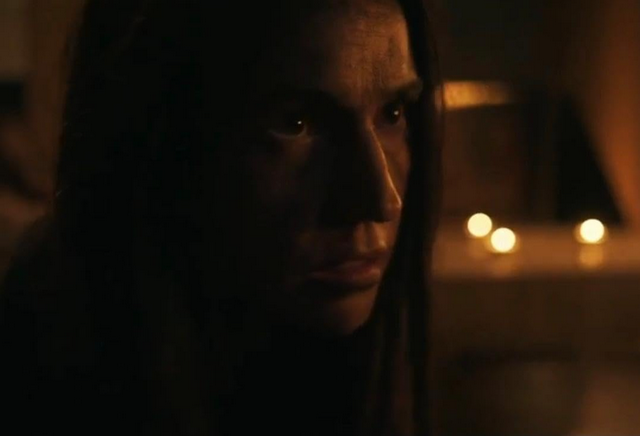
Between Gault’s photography and the final grade, they found a balance that would satisfy the technical demands of home viewing without surrendering the deep shadows and negative space van Belle associates with the horror films on which he grew up.
“We were able to pass the technical tests to make sure people can see it at home, but also keep those dark vibes.”
And sometimes what appears to be lurking within those shadows isn’t where you think it is at all.
One particularly striking overhead image finds leaves carpeting the forest floor as an oily, rancid-looking black substance appears to bubble upward from beneath the earth. Similar imagery recurs as the Dearg-Due’s liquid form moves through the story. Except those shots weren’t made in a forest. They weren’t even made outside.
They were photographed on the abandoned third floor of an unfinished office building. “All of that was built on plywood platforms in this empty office,” van Belle reveals.
The platforms could be tilted, allowing the filmmakers to pour the black liquid across them and control its movement practically rather than spending money creating it digitally. Leaves and other dressing completed the illusion.
And the wind rustling through the imaginary forest? Very tired camera and lighting crew members waving leaves in front of lights on the final day of photography.
“You come up with great ideas under the budget gun to your head.”
It’s an observation that could almost serve as the production mantra for FEED.
SHOOTING THE EDIT
That same pressure shaped the construction of the film itself.
Van Belle knew FEED’s schedule wouldn’t permit the luxury of shooting exhaustive coverage and handing mountains of footage to his editors to discover the movie afterward. Instead, he had to arrive knowing what he needed.
“I had to take the kind of David Fincher approach, which is, you know, coverage is for wimps.”
The montages threaded throughout FEED weren’t discovered in the editing room. Van Belle designed and photographed them largely as they were intended to appear, particularly a major midpoint montage involving the spreading black liquid.
“I shot for an edit.”
Virtually everything photographed appears somewhere in the finished film. Van Belle can think of only one unused shot, lost because the entire scene containing it was removed.
That created an unusual challenge for editors Andrew MacRitchie and Karenjit Sahota. Their job wasn’t to excavate a movie from hundreds of hours of material. It was to find creative possibilities within something already tightly prescribed.
For van Belle, that meant learning another skill: letting go.
MacRitchie and Sahota needed room to contribute their instincts. Producers and executive producers had notes. Scenes could be subtly reordered, shots shifted, rhythms adjusted. Within a limited amount of material, the editors found ways to honor what van Belle had designed while allowing him to see his own scenes differently.
For a director who had walked onto the set knowing where virtually every camera position would be, stepping back became its own creative exercise.
KNOWING WHEN TO STOP
If FEED’s images rely heavily on darkness, its soundscape knows how to fill that darkness—and when not to.
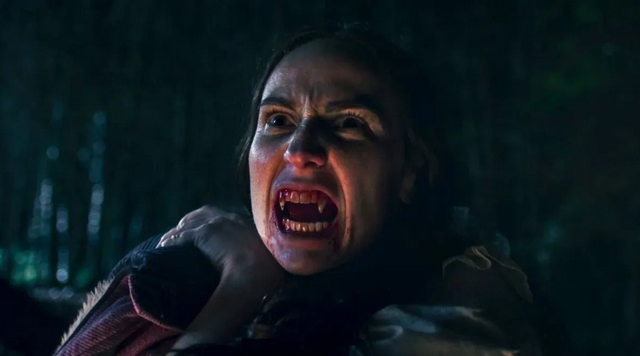
The historical prologue announces itself with sonic violence. Van Belle wanted the Dearg-Due’s shrieks and the brutality surrounding it pushed toward maximum intensity.
Later, however, the soundtrack becomes seductive. Leaves. Wind. Nature. Whispers. Voices almost imperceptibly summoning Orla toward the forest.
The contrast is crucial.
Ancient evil doesn’t always have to scream to exert its influence.
Van Belle arrived at post-production with strong ideas about sound, perhaps helped—and, he admits, occasionally hindered—by his own background in broadcasting. Before filmmaking, he spent two years in radio and additional time in television news. As a radio journalist, he constructed pieces by layering interviews, Foley, and environmental sound. It gave him confidence in his ear. Perhaps a little too much.
His sound team wasn’t afraid to tell him so. They would essentially tell him no, something was too much; less would accomplish more. The soundtrack could remain rich and intricately layered without calling attention to every ingredient.
Or, as van Belle jokingly characterizes their instructions to him: “Sit in the corner there, please, go on your phone for five minutes, and let me just dial this back a touch.”
The experience reinforced an idea that extends well beyond sound.
“Craft is knowing how to do it, but creativity is knowing when to stop.”
THE SOUND OF SOMETHING ANCIENT
Composer Max De Wardener extends FEED’s collision between antiquity and modernity into the score.
Van Belle wanted music that could be simultaneously compelling and unsettling. The sound is contemporary, at times sparse and aggressive, with something of a Carpenter-esque quality, but beneath it are instruments and sounds reaching much farther backward.
De Wardener created sounds himself using instruments and objects and incorporated the work of a specialist playing an ancient Scandinavian string instrument.
Again, the reasoning returns to the central conceit of FEED. “We weren’t taking a contemporary character into the ancient mythological past. We were taking an ancient mythological creature into the present.” The score needed to make the same journey.
Even the end credits demonstrate how effectively De Wardener’s musical language coheres. Unable to afford another bespoke cue, the filmmakers combined two existing score stems, mixing between them. They fit together—and fit the length of the credits—almost perfectly.
Necessity, once again, became invention.
FINDING ORLA—AND A VAMPIRE YOU CAN THROW AROUND
For all of FEED’s technical challenges, none of it works without Orla.
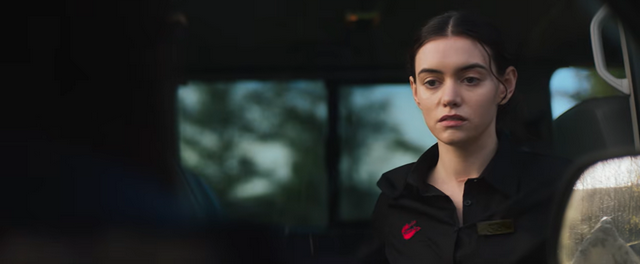
She is the throughline of the film, appearing in almost every frame and carrying both its grief and its supernatural temptation. Van Belle knew he needed an actor capable not merely of playing the character but of embodying the collision between ancient and contemporary that defines the film itself.
He found that in Grace Collender.
Van Belle describes what he was seeking as a kind of timelessness—not conventional attractiveness, but a quality that would allow Orla to feel equally plausible had FEED been set in the 1800s or today. Then he saw Collender’s audition. “That’s Orla.”
“You’re not looking to be thinking, ‘That’s an actor who can play Orla.’ You’re looking for somebody to give you a new image of what the character you wrote looks like.”
Collender brought something else equally valuable to a production operating under intense time pressure: preparation.
“She turned up with a level of preparedness for every individual scene that was equal to my level of preparedness.” Given the director’s meticulous advance planning, that’s saying something.
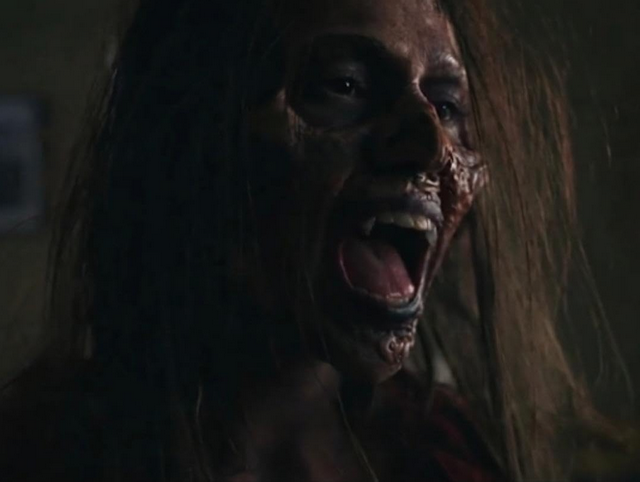
And then there was the Dearg-Due.
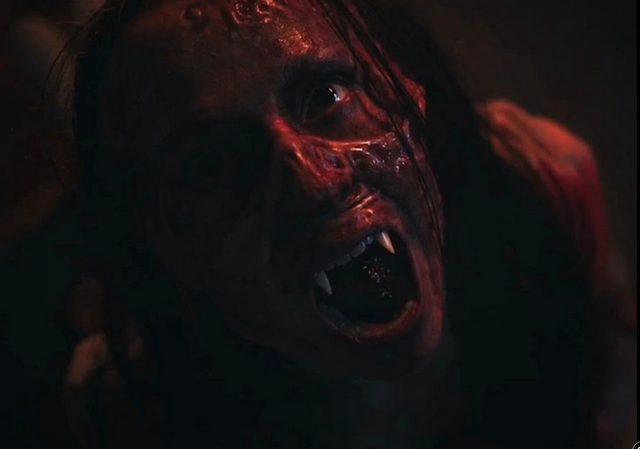
Niamh Hogan brought something entirely different to the role. The vampire is an intensely physical presence, and Hogan brought not only performance ability and a love of horror, but extensive physical and stunt experience. That meant the production didn’t need to double her.
“She was game for anything.”
And on this production, that turned out to be considerably more important than anyone might initially have realized. Because FEED had one white dress for its vampire.
One.
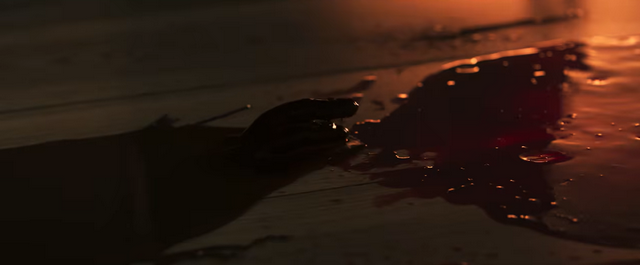
There were no duplicates waiting in wardrobe after a stunt. No clean replacement ready after gallons of stage blood.
Van Belle remembers walking outside during a camera reset and seeing Hogan in costume for the first time while members of the crew poured pints of blood over her. Artistic considerations momentarily disappeared.
“All I was thinking was, ‘Oh, holy hell! That blood’s going to go everywhere in this house that we can’t afford to replace.’”
When someone asked whether Hogan needed more blood, van Belle decided perhaps they had achieved sufficient vampiric saturation. “She looks great. That’s enough. That’s enough blood, guys. Hold on the blood. That’s perfect.”
The costume team—and its scrubbing brushes—handled the rest.
Low-budget vampire filmmaking distilled to its essence:
One dress. Lots of blood. No room for mistakes.
BACK TO THE BEGINNING
Whether FEED itself continues remains an open question.
Van Belle is realistic about sequels: audiences first have to demonstrate that they want one. But the mythology he has tapped extends far beyond the events of a single film.
And mention one particular possibility and something happens to him.
The Dearg-Due, within FEED’s mythology, reaches back roughly to the sixth century. Van Belle, fascinated by placing contemporary genres such as horror, crime, and thrillers within historical settings, begins considering what might happen if he were finally able to make the kind of period story FEED’s budget initially made impossible.
A Celtic horror film. The ancient vampiric entity in its own time.
“I’ve lit right up, getting all excited. You can hear it in my voice.”
Oh, we can.
For FEED, necessity brought an ancient Irish vampire into the modern world. It transformed mind control into influence, ancient temptation into social media seduction, a Christmas tree farm into an ominous forest, an unfinished office floor into supernatural earth, limited coverage into deliberate visual grammar, and one very heavily bloodied white dress into a lesson in the value of preparation.
Limitations didn’t simply dictate how Marco van Belle made FEED.
They helped him discover what FEED should be.
And should he ever get the opportunity to take the Dearg-Due back into the ancient Celtic darkness from which it came?
Some vampires, it seems, are very difficult to put back in the ground.
by debbie elias, exclusive interview 09/03/2026
FEED is available on Digital and On Demand