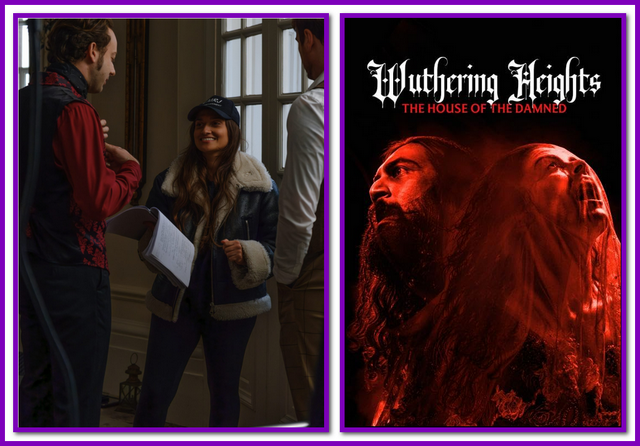
There have been countless interpretations of Emily Brontë’s Wuthering Heights, from celebrated theatrical adaptations to television productions, radio dramas, and even opera. Generations of filmmakers have explored the tortured romance of Catherine and Heathcliff, their destructive passion, and the unforgiving landscape of the Yorkshire moors. But director REBECCA J. MATTHEWS (aka Becca Hirani) has taken a decidedly different approach to this literary classic.
With WUTHERING HEIGHTS: THE HOUSE OF THE DAMNED, Matthews and screenwriter Liana Failla have unleashed the Gothic horror inherent in Brontë’s novel, transforming its themes of obsessive love, grief, cruelty, vengeance, and supernatural longing into a deliciously dark tale of blood sacrifice, spectral apparitions, and psychological torment. And Matthews couldn’t be happier about it.
During an engaging conversation about the film, Matthews proved as enthusiastic about the intricacies of cinematic storytelling as she is about the pleasures of horror itself. From the intentionality of camera framing and editing transitions to the relationship between costumes and color, the practical challenges of filming inside a historic castle, and the extraordinary detail of the film’s soundscape, Matthews approaches filmmaking as an interconnected collection of creative disciplines, each contributing to the telling of a story.
But first, there was the question of whether the world really needed another adaptation of Wuthering Heights.
For Matthews, the answer was an emphatic yes, particularly if that adaptation embraced the darkness already residing within Brontë’s pages.
“I know it’s kind of a bit more of a radical take than what a lot of people have portrayed in their versions before,” Matthews acknowledged, expressing hope that the film was satisfying audiences eager for a different interpretation. “I do hope it’s ticking some of the gothic boxes that they’ve been wanting to see in a version that hasn’t quite happened so far.”
As Matthews sees it, the horror was never far beneath the surface of the original material.
“It’s just such a tragic story, and it is so dark, and there are so many harrowing themes in it, and it does touch on the supernatural elements,” she explained. Those qualities suggested a natural opportunity to push the story further into horror without abandoning its literary foundation. For Matthews and Failla, the challenge wasn’t to impose something entirely foreign upon Brontë’s narrative. It was to heighten what was already there.
FINDING THE HORROR IN BRONTË
The collaboration between Matthews and Failla began with a shared affection for the novel and a mutual desire to work together. Both are horror filmmakers with an appreciation for period settings, and Matthews has a particular fondness for Gothic storytelling.
“I’m just a big fan of doing period gothic pieces,” she explained. “I always lean into wanting to do something that is from the past. I just think it’s such a great world to explore creatively.”
Discovering their common enthusiasm for Wuthering Heights provided the perfect opportunity. Rather than Failla delivering a completed screenplay for Matthews to direct, the two developed the adaptation together, discussing the structure, the elements of the novel they wanted to preserve, and the ways those elements could be reimagined within a horror framework.
“We worked on a treatment and a structure together,” Matthews recalled, determining what they would take from the book and how they would adapt it into their version. Once that foundation was established, Failla took responsibility for the screenplay.
Matthews was delighted with the result, particularly because Failla’s background in directing and assistant directing gave her an understanding of the practical demands of translating words into images.
“There’s a lot of language in the way she’s written the script that is very helpful to a filmmaker in translating it onto screen and visually,” Matthews explained. “It’s a very filmmaker-friendly screenplay.”
That understanding proved especially valuable given the film’s limited budget and compressed production schedule. Certain sequences required conversations about not merely what should happen dramatically, but how the action could actually be staged and photographed. Matthews recalled one such discussion involving a dog attack.
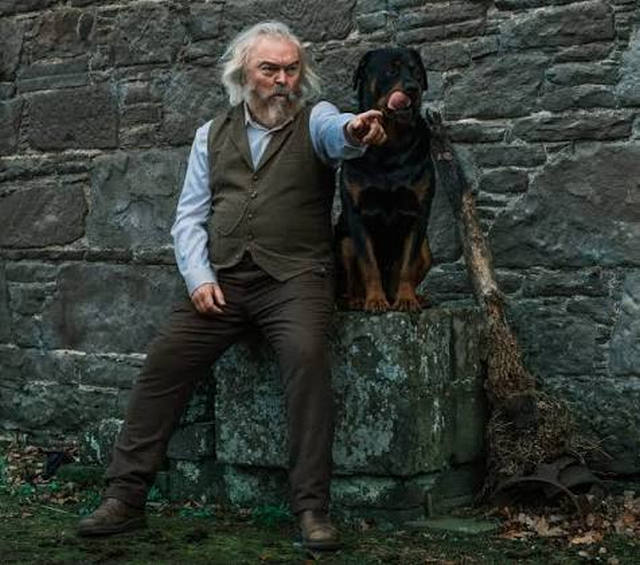
“I remember just talking to her about—we’ve got a scene with a dog, a dog attack—how are we going to film that the way you’ve written it?” It’s a seemingly straightforward question, but one that reveals the practical value of having a screenwriter who understands the filmmaking process.
An action sequence may read beautifully on the page, but translating it into images requires consideration of camera placement, physical movement, available resources, safety, and the time needed to achieve the desired result. Failla’s experience as a director and assistant director allowed Matthews to explore those questions collaboratively rather than simply inherit a sequence that might prove difficult to execute.
“It is just so helpful to see her vision as well, of how she would do things,” Matthews explained. And that collaboration became particularly important under the production’s financial and scheduling constraints.
“We did it on a very tight schedule with quite a limited budget in the grand scheme of things,” Matthews acknowledged, emphasizing how useful it was to have a writer who understood those restrictions from a practical filmmaking perspective.
The result was a screenplay that offered not only a dramatic foundation but also a workable blueprint for translating its Gothic horrors to the screen. And throughout that process, the filmmakers remained mindful of the literary origins of their story.
Matthews was particularly pleased that Failla incorporated selected lines directly from Brontë’s novel, preserving elements of the original language even as the narrative moved into more overtly supernatural territory. For Matthews, the balance between literary fidelity and creative reinvention was essential. The film may be filled with ghosts, blood, and horrific imagery, but its emotional foundations remain rooted in the original story.
GIVING EVERY CHARACTER A CAMERA LANGUAGE
Once the screenplay was established, Matthews turned to cinematographer Raffaele Nocerino, a previous collaborator with whom she had already developed a strong creative shorthand. Their task was to create a visual grammar that would distinguish the psychological experiences of the principal characters while reinforcing the film’s Gothic atmosphere.
Matthews is a meticulous planner, particularly when it comes to determining how the camera will tell the story. “I’m quite a shot list person, so I always kind of do like a very comprehensive shot list,” she explained.
But developing that shot list was only the beginning of her collaboration with Nocerino.
“Raph and I have worked together a few times, so we have a quite a good understanding of each other and how we like to tell stories visually.” The two discussed specific principles of camera language that would guide the production, ensuring that framing and movement remained consistent with the psychological perspective of each character.
As Matthews explained, “We kind of talked through key camera language topics that we wanted to make sure we were true to throughout our story and our filmmaking approach to it.”
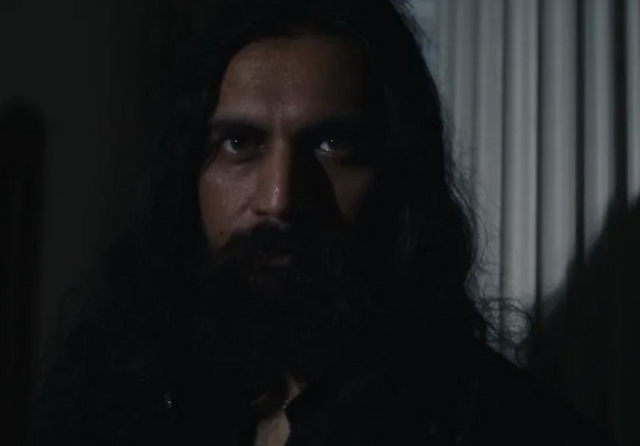
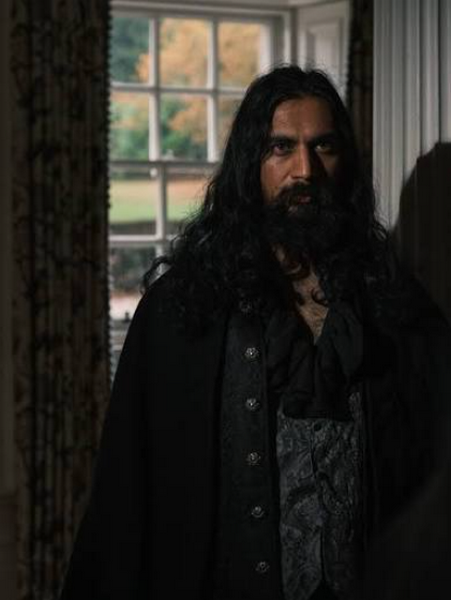
For Heathcliff, played by Sky Cheema, the visual language is deliberately restrictive.
“A lot of the stuff with Heathcliff is quite intense, so it’s deliberately quite close to him. His shots are usually quite intensely framed.”
That intensity extends to some particularly unusual framing choices. During certain sequences, faces disappear entirely from the composition, leaving the audience watching torsos, hands, legs, or movements that are simultaneously intimate and anonymous.
The approach creates unease while withholding information, allowing the camera to suggest more than it explicitly reveals. In sequences involving Heathcliff’s more disturbing activities, the absence of faces also complicates the audience’s immediate identification of the figures within the frame.
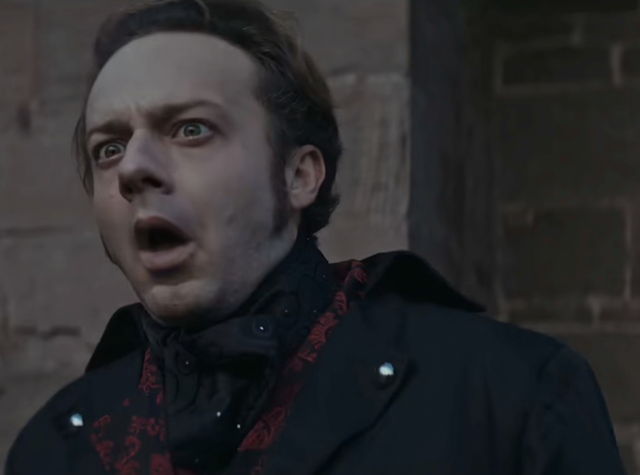
Lockwood, played by Ross Townsend-Green, receives a very different treatment.
Because he is the outsider entering Wuthering Heights and gradually discovering its secrets, Matthews wanted the camera to share his experience of exploration.
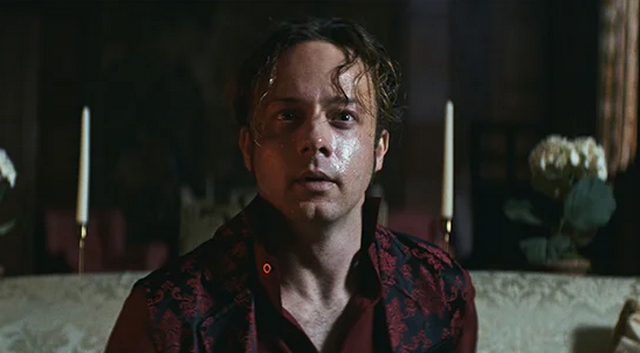
“We kind of have a bit more of a free-flowing camera language with him, where we’re often following him through doors into spaces, into new areas he’s not explored and that we’ve not explored as the audience before.”
Rather than merely observing Lockwood from a distance, the camera becomes his companion, moving with him as the mysteries of Wuthering Heights gradually unfold. Matthews wanted viewers to experience the discoveries alongside him, allowing camera movement to establish a relationship between character, architecture, and audience.
One man is visually trapped within his obsession. The other is moving ever deeper into a world he does not understand.
And as Lockwood’s physical and psychological condition deteriorates, the distinction between what he witnesses and what he imagines becomes increasingly uncertain.
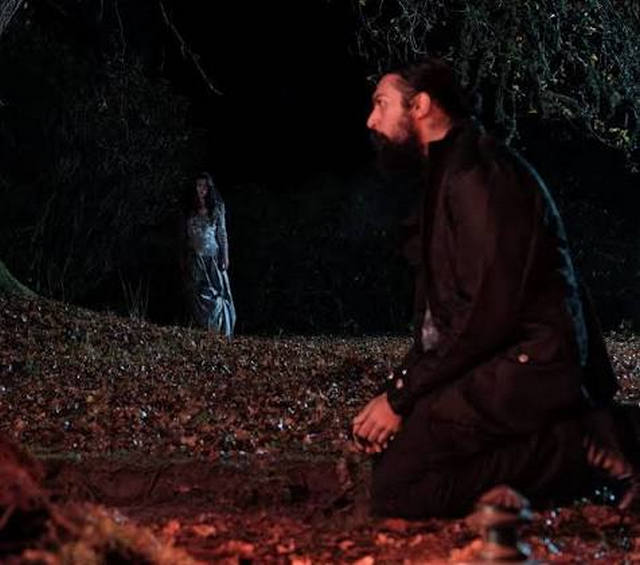
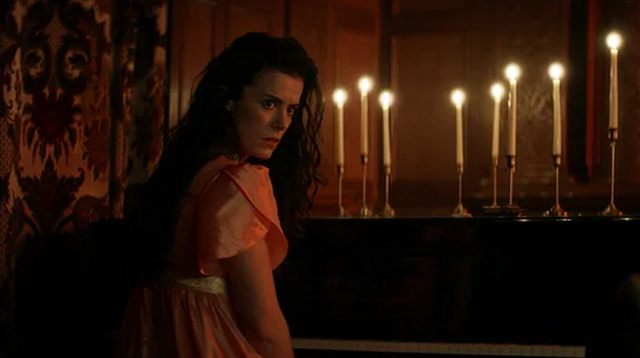
Catherine’s appearances introduce yet another dimension to the visual storytelling. Sometimes she is little more than an indistinct figure in the distance. At other moments, her presence is startlingly immediate.
Matthews described the contrast in the staging and photography of those appearances.
“A lot of stuff with Catherine is sometimes, it’s quite far away, and we can’t quite distinguish what it is or who she is, and then other moments she’ll just jump right in your face.” The deliberate unpredictability keeps the audience uncertain about when Catherine will appear and how much of her will be revealed.
The camera’s relationship with Catherine is therefore different from its relationship with either Heathcliff or Lockwood. She exists somewhere between a distant, indistinct presence and an immediate supernatural threat.
For Matthews, none of these decisions is arbitrary. “The camera language and the visuals is so important with the storytelling, and I kind of like that everything has a meaning to it.”
MOVING THROUGH THE PAGES OF A BOOK
That philosophy extends to Matthews’ work as the film’s editor.
Rather than treating editing as a separate process that begins after production, she incorporates transitions and visual connections into her planning from the outset. “I’m quite keen on making the edit as seamless as possible,” she explained.
The literary origins of Wuthering Heights were particularly important to this approach. Matthews wanted the movement between scenes and time periods to evoke the experience of traveling through a story, with one image flowing into another. “I kind of wanted it to feel like we were flown through the pages of this story,” she said.
Fire became one of the devices used to accomplish that effect. “Particularly when we go into the flashbacks, the flashback moments,” Matthews explained, “we’ll kind of pan into and like zoom into a fire, and then we’ll pull away from the fire, and we’ll be in a new time and a new world.”
It’s a deceptively simple but beautifully effective visual transition, with the camera moving into the flames of a fireplace before emerging in another time period, connecting past and present through a shared visual element.
For Matthews, these transitions were an integral part of her storytelling approach, carefully considered in collaboration with cinematographer Raffaele Nocerino and designed to maintain a sense of continuity even as the narrative moves through time. “I always try to find an interesting way to transition between shots and scenes,” Matthews explained. “That was particularly important to me because this is adapted from a book, and I kind of wanted it to feel like we were flown through the pages of this story.”
These transitions are more than visually appealing editorial flourishes. They reinforce the idea that the history of Wuthering Heights remains inseparable from its present, with each movement through the flames becoming another turn of the page in a story whose past refuses to remain buried. The past is not simply remembered. It continues to exert its influence upon the living.
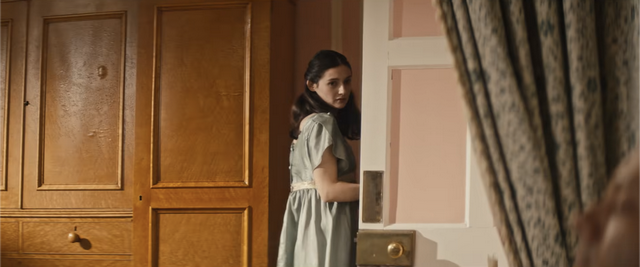
Color contributes to that continuity as well.
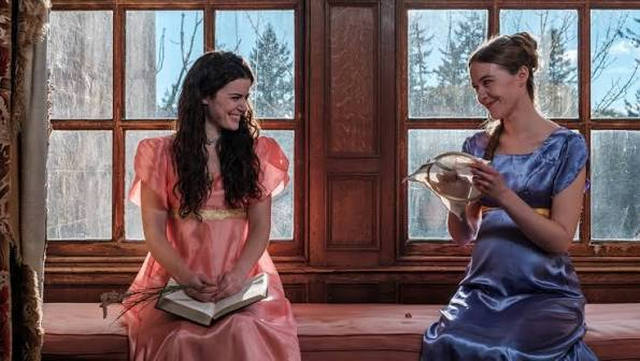
Lockwood’s bedroom, with its salmon, peach, and pink tones, offers a visual contrast to the darker spaces inhabited by Heathcliff. But those colors also connect the room to Catherine’s earlier life, particularly the soft pink of her youthful costume. For Matthews, the connection was entirely intentional.
“It’s all kind of linked and has some kind of relevance and meaning,” she explained.
That attention to color leads directly to one of the film’s most visually compelling collaborations.
DRESSING A GHOST
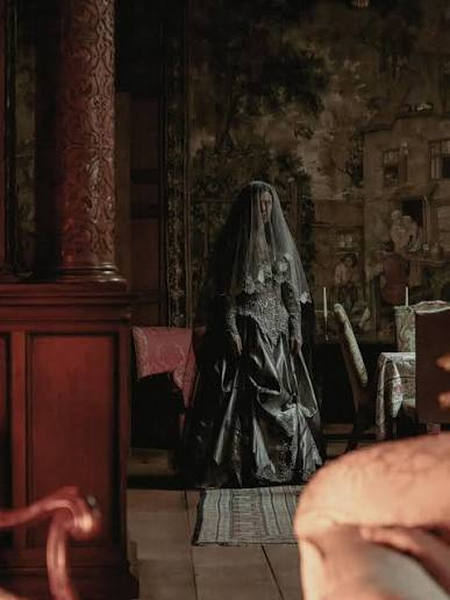
Costume designer Francesca Fletcher faced an intriguing challenge in creating Catherine’s spectral appearance. The initial concept involved dressing the character entirely in black, a seemingly natural choice for a Gothic ghost.
But Matthews reconsidered. The image felt too familiar, particularly in its resemblance to The Woman in Black. The filmmakers wanted something more distinctive.
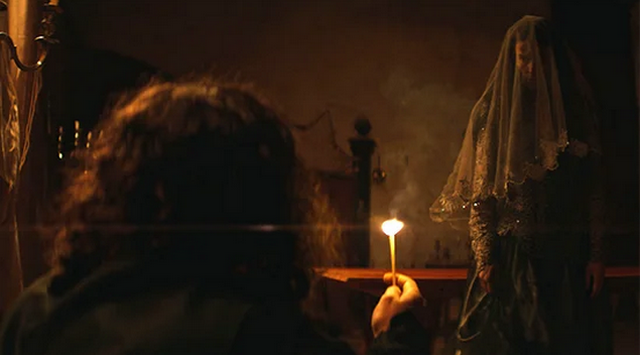
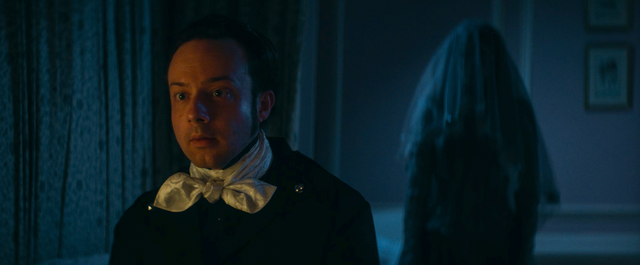
The solution was a costume of gray and dark silver, with heavy lace and crystalline accents that respond beautifully to the film’s candlelit photography.
“I was so pleased with it because we were going to go with an all-black outfit to begin with and make it really gothic,” Matthews explained. But the familiar black-clad apparition was an image she felt had already been explored.
When gray and dark silver were suggested, the possibilities became immediately apparent. “I think it worked just so well, and it is a little bit different,” she said.
The result is an apparition whose physical presence seems to depend upon light.
The dense lace of Catherine’s veil obscures her face, denying the audience certainty about what lies beneath. Meanwhile, the crystalline details catch the flickering illumination, permitting the figure to emerge from the darkness without becoming fully defined. It is an especially effective marriage of Fletcher’s costume design and Nocerino’s cinematography.
But the costumes also participate in the film’s broader storytelling through color.
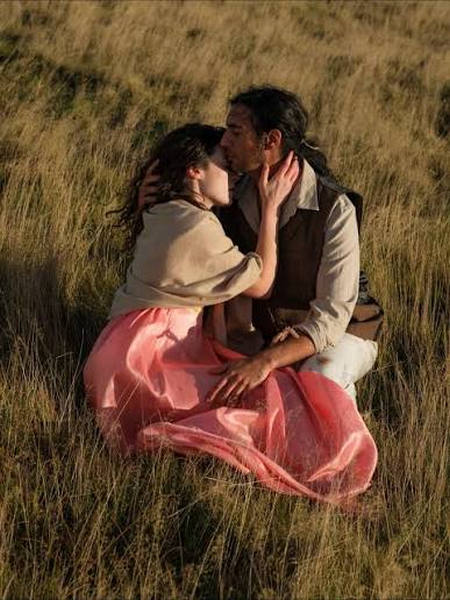
The pink of the younger Catherine represents a more innocent period of her life and connects visually to the room Lockwood occupies. That warmth stands in contrast to the gray spectral figure haunting the dark corridors in the present.
Matthews confirmed that the contrast was designed to carry meaning. “The pink of Catherine’s youth from when she was younger, contrasting with what we see in her bedroom where Lockwood stays, in her costume, it’s all a bit more innocent,” Matthews explained. “And then to what she kind of is in the present day, the gray ghost wandering the dark gray halls. It’s meant to be a theme there.”
Heathcliff’s wardrobe contributes to a different psychological impression. His dark blues and near-black clothing allow him to merge visually with the surrounding architecture, particularly within the film’s richly shadowed interiors.
As the discussion turned to Heathcliff’s increasingly disheveled appearance and the way he seems almost to materialize from the walls, Matthews offered a revealing description of the character.
“He’s kind of just rotting himself there in that house, just distressed and obsessing over her,” she observed. “He’s kind of just become one with the creepy house almost.”
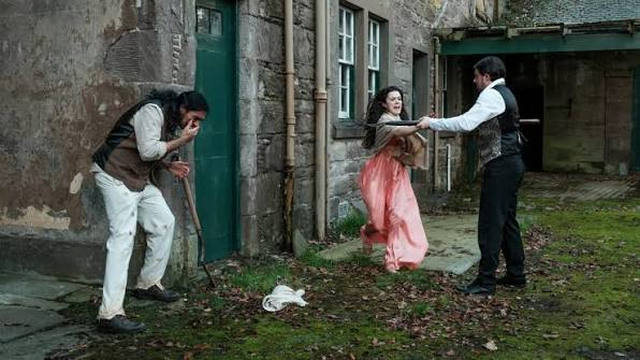
And then there are Heathcliff’s white trousers. Against all that darkness, blood, and Gothic depravity, they provide a startling visual contrast. They also inspired considerable discussion about the practicalities of keeping white trousers clean on a horror production.
Matthews took the resulting laundry concerns in good humor. After all, bloodletting is hardly an incidental activity in this particular version of Wuthering Heights.
CASTING THE LIVING AND THE DAMNED
The success of Matthews’ visual approach also depends upon performances capable of supporting the film’s shifting balance of horror, tragedy, and humor.
And as Matthews readily admits, she was extraordinarily fortunate in finding her cast. “It wasn’t difficult to actually cast these people. I kind of had worked with some of them before, but a lot of them were brand new,” she explained.
For Matthews, the casting process became a series of discoveries in which the right performers seemed almost to announce themselves.
“It was just one of those moments where you’re casting, going through applications, and you know when you’re like, ‘That’s the person I had in my mind play this role. That is right. That’s them.’ It was a lot of those moments, which I guess is very lucky and very rare to happen.”
Sky Cheema’s Heathcliff and Elle O’Hara’s Catherine embody the destructive relationship at the center of the story, while Ross Townsend-Green’s Lockwood provides a contrasting perspective.
Matthews was particularly pleased by how readily the performers inhabited the Gothic atmosphere. “They definitely encapsulate that gothic horror vibe, I think, with the characters for sure.”
But Lockwood presents a special challenge.
He is curious, awkward, increasingly distressed, and occasionally wonderfully foppish. More importantly, his physical and psychological deterioration becomes one of the film’s principal narrative threads.
For Townsend-Green, that meant charting a progressive decline while working through a shooting schedule that bore little resemblance to the chronology of the story.
“Lockwood’s character is like varying degrees of distress, and he’s sick, and he’s tormented,” Matthews explained. “Quite often with the shooting schedule, those scenes were very spread out, and they were jumping all over the place.” Maintaining continuity required an unusually close collaboration between director and actor.
“It was really important for Ross and I to be connected on when he started his decline and what state he’s in for this particular scene number because he was often jumping around from various states of Lockwood throughout the day.”
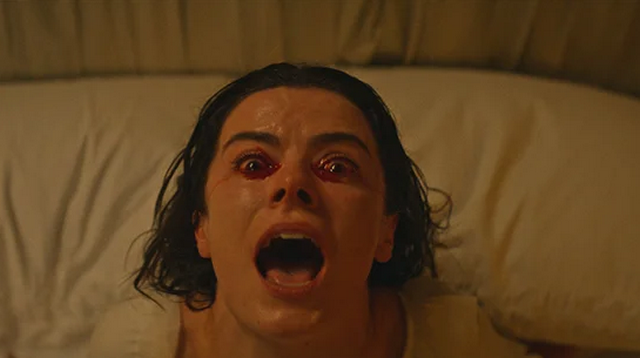
That attention to the progression of Lockwood’s condition becomes especially apparent in the performance’s physical details, from increasingly red-rimmed eyes and perspiration to changes in movement, behavior, and emotional stability. “I think he did so well to keep that up and keep it in flow and in sync with the actual timeline because that can be quite tricky.”
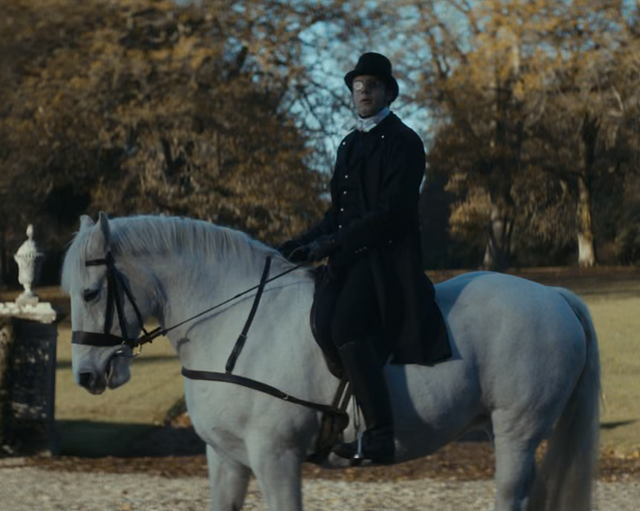
But Townsend-Green also gives Lockwood an amusing collection of physical idiosyncrasies.
His habit of investigating things that are clearly none of his business provides some of the film’s most entertaining character moments, including a sequence in which he furtively examines a diary, holding it close as though he were a child sneaking forbidden candy. Matthews appreciated the personality Townsend-Green developed through those small gestures.
“He’s really done so well at developing such a great in-depth character because Lockwood’s just snooping around all the time, getting himself into more trouble almost because he’s getting so invested and obsessed with this story and finding out what’s happened.”
That curiosity also provides the film with an important element of humor. Lockwood repeatedly ignores warnings, particularly those issued by Joseph, played by Gordon Joseph Millar.
“He has many warnings. Joseph does give him plenty. Still, he still gets himself into trouble.”
Nicola Wright’s Nellie provides another essential counterbalance, particularly when Lockwood insists that he is seeing things she cannot perceive.
For Matthews, Nellie and Joseph serve a specific narrative purpose beyond their individual personalities. “They’re the characters that have kind of seen, from an outsider’s perspective, everything that’s happened with Cathy and the family, through them being younger up until now.”
As witnesses to the household’s history, they offer a perspective that neither the tormented Heathcliff nor the increasingly distressed Lockwood can provide. “I think it’s kind of interesting that they’re the ones that we see the actual neutral sort of perspective from of what’s actually happening as well.” And that grounding becomes increasingly important as the supernatural elements intensify.
But Matthews also appreciates the comedy inherent in Lockwood’s behavior. “He’s just a bit bumbly, and he kind of puts his foot in it all the time, which makes the character a bit more fun, I think. You need a bit of lightheartedness.”
It’s a welcome reminder that even in a house filled with ghosts, madness, and blood sacrifice, there’s still room for a character who simply cannot resist sticking his nose where it doesn’t belong.
A CASTLE THAT CAME READY FOR ITS CLOSE-UP
For a filmmaker devoted to period storytelling, finding the right location can be as important as finding the right cast.
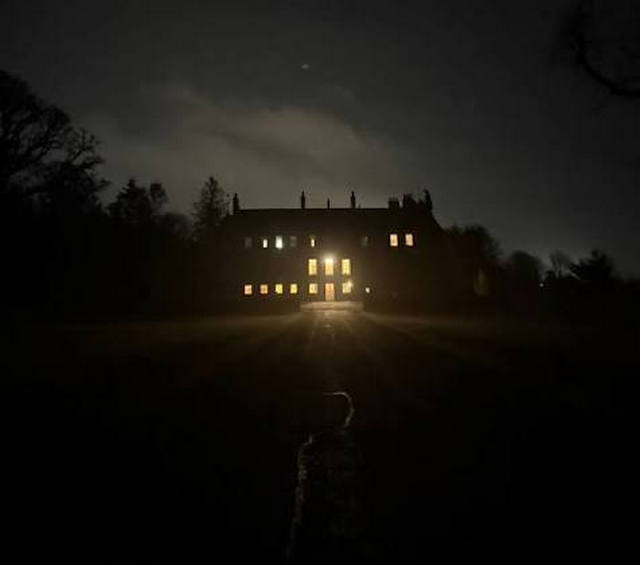
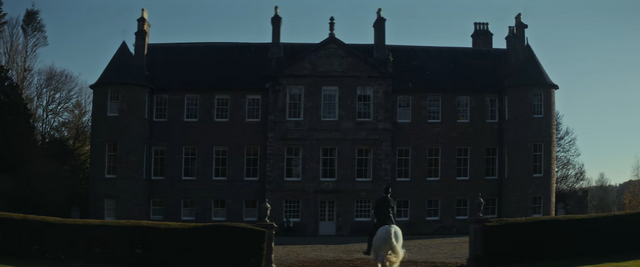
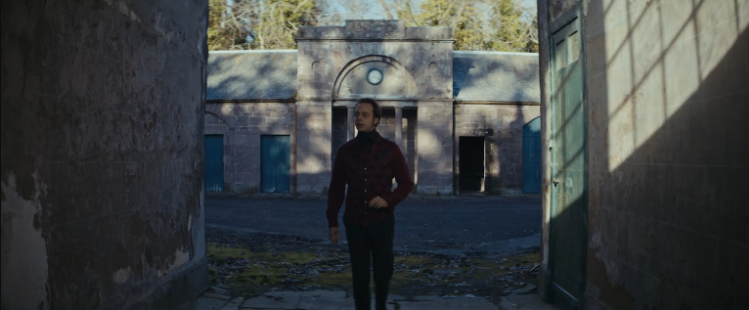
And for WUTHERING HEIGHTS: THE HOUSE OF THE DAMNED, Matthews found something close to a production designer’s dream. Brecken Castle.
“You know, this location was absolutely glorious to film at, and we were so lucky,” Matthews enthused.
The location was discovered by line producer Tish Piwowarek after an extensive search for a property capable of accommodating the film’s period requirements without overwhelming its limited budget.
“We were looking for the right place for a long time, and we did run into some locations where there were restrictions with it, or we’d need to do a lot with it in terms of building the art department and building the rooms with a lot of set deck and things like that.”
Given the financial constraints, those requirements presented a significant concern.
“Because we were a little bit tight on our budget, we were just kind of nervous that we weren’t going to be able to pull it off, especially with the time period.” Then came Brecken Castle.
“We actually found this location, and everything we needed was in there. So a lot of the actual set design that’s in the film does exist in this place.” The furniture, artwork, draperies, wall coverings, architectural details, and decorative finishes were already part of the property.
Rather than attempting to recreate the appearance of a historic manor, the filmmakers could photograph the real thing. For Matthews, it was an extraordinary opportunity.
Even better, the owner of the property welcomed the production. “The owner of the property was so film-friendly, so happy for us to be there. Found the whole process really exciting. They were very involved with us and working with us along the way.”
That cooperation afforded the production considerably more freedom than Matthews had initially anticipated.
“Restrictions-wise, we did have quite a lot of free rein. We were very lucky in that regard.” Of course, freedom did not eliminate the responsibility of protecting the historic interiors. With cast, crew, lights, cameras, and other equipment moving through rooms containing valuable artwork and artifacts, considerable care was required.
“There’s logistical issues in working in spaces where there’s actual artwork and artifacts and items that are very expensive, and you need to be careful around with big equipment and lights and a lot of bodies moving and people running and things like that. So we had to be very careful and respectful.”
But the greatest technical challenge came from an unexpected direction. Height.
Some of the castle’s bedroom windows were so far above ground level that the production’s exterior lighting equipment could not initially reach the positions required for Nocerino’s lighting design.
“The building was so high, we actually couldn’t get some of our lights up, exterior lights up through the window in the bedroom that we wanted to, because it was so high. We didn’t quite have the stand high enough to reach it.”
The problem was eventually solved, but Matthews recalled the difficulty of determining how to illuminate the room as planned.
Beyond that, however, the castle offered extraordinary flexibility.
“We just tried to film and utilize it as best we could because when it’s all there and looks amazing on camera, you just got to try and use it to the maximum advantage that you can.”
For Matthews, the appeal extended well beyond production convenience. She has a particular affection for historic architecture and period interiors, making the property’s remarkable state of preservation especially meaningful. “It’s so rare now that you can go into an actual historical building and see it as it probably was all that time ago,” she observed.
Too often, she finds that beautiful historic exteriors conceal extensively modernized interiors. “You go to a property, and it’s all beautiful on the outside. It’s very old, but you go inside, and it’s modern. Everyone’s refurbished it, and all the character’s gone. And it’s just so heartbreaking.”
Brecken Castle was different.
“It was just so nice that it was preserved so well, and it just felt like you literally were just stepping back in time when you went into the property.” That authenticity provided production designer Christy Louise and the entire creative team with a remarkable foundation.
And it allowed Matthews to embrace the very thing she loves about period filmmaking: the opportunity to transport audiences into a world whose textures, furnishings, architecture, and atmosphere feel genuinely connected to another era.
For a story in which the past refuses to remain buried, the location could hardly have been more appropriate.
LET THERE BE BLOOD
Of course, an authentic historic setting does not mean the filmmakers were obliged to behave themselves. Not when there’s blood to spill. And Matthews was more than willing to embrace the possibilities.
The film’s practical blood effects include some wonderfully exaggerated moments, particularly a spray that erupts upward before curving over in an almost fountain-like stream. Rather than disguising the extravagance, Matthews welcomed it. The effects were created practically, using blood rigs developed by the makeup team, and they had to be executed under considerable time pressure.
“It’s all practically done. It’s all done in the moment with not a lot of time to get it done, given the schedule that we had,” Matthews explained.
And when it came to determining how much blood was enough, Matthews’ instincts as a horror enthusiast were unmistakable. “I just think more, more, more,” she laughed, explaining that her approach came from the entertainment value of horror itself.
The film contains relatively few major bloodletting sequences, making it all the more important that those moments deliver. “There’s a couple of bloody attacks, but I was like, let’s really just push this and go for it.”
For Matthews, however, the exaggerated effects serve a purpose beyond the obvious pleasures of practical gore. Many of the most disturbing images are filtered through Lockwood’s increasingly unstable perception. He is ill, frightened, and struggling to distinguish reality from hallucination. That uncertainty gives Matthews permission to exaggerate the violence.
“These things are happening to Lockwood or in Lockwood’s state of mind when he’s having these visions of what Heathcliff’s doing. So it can be overexaggerated, I think, and still lend itself into the story.”
What the audience witnesses may not represent events precisely as they occur. Instead, the imagery may reflect Lockwood’s fevered interpretation of what he believes he has seen. “Maybe it is exaggerated in his mind and he’s horrified by it. That’s not realistic, but it’s very bloody.”
That distinction allows the blood effects to occupy a space somewhere between grotesque horror and darkly amusing excess.
Even the color of the blood was important.
Rather than using an overly bright, artificial red, the effects employ a darker, richer tone that complements the film’s muted visual palette. “It’s very dark, which I think makes it feel a little bit more genuine and real almost,” Matthews explained.
But achieving these effects practically introduced another challenge. There was little opportunity for repeated takes.
Blood rigs had to function correctly, the camera had to capture the effect, and the actors had to deliver their performances, frequently with only one realistic opportunity to get everything right. “You have to get it right on the first take, otherwise there’s a lot of reset time. The actor needs to get cleaned, the costume needs resetting, and sometimes you just don’t have the time for that.”
Matthews was particularly appreciative of the makeup artist responsible for the rigs, praising her ability to deliver the effects under such demanding conditions.
And, of course, there remained the rather pressing matter of Heathcliff’s white trousers. In a production involving this much blood, those trousers practically deserve their own place on the call sheet. One can only imagine the costume department’s reaction whenever Matthews decided that a scene required just a little more blood. Or, as her enthusiasm suggests, considerably more.
After all, subtlety has its place in Gothic horror. But sometimes a blood fountain is simply too much fun to resist.
THE SOUND OF A HAUNTED HOUSE
While the film’s visual design and practical effects provide immediate pleasures, Matthews is equally passionate about what audiences hear.
Indeed, one of her primary objectives was to create a film driven by its soundscape rather than an incessant musical score.
Working with composer James Allen Roberson and sound designer and re-recording mixer Barney Brookes, Matthews developed a sonic environment that would reflect not only the historical setting but the individual character of the rooms and the relentless weather surrounding Wuthering Heights.
“I wanted obviously to tap into the historic time period that we were in, and obviously hint into the horror and help emphasize some of the shock factor and things,” Matthews explained of her discussions with Roberson. But the music was only one part of her approach.
“The soundscape is a big thing in the film because I wanted us to always be able to hear how drastic the hallways are, hear the elements of the weather outside, so you can constantly hear the wind and the thunder and the rain.”
For Matthews, those environmental sounds were inseparable from Brontë’s original setting. The moors, the storms, and the isolation of the house are fundamental to the story’s Gothic identity. But the challenge was to create more than a generalized atmosphere of bad weather. Matthews wanted each interior space to possess its own acoustic identity.
“We talked about having atmos for different rooms and how each room might sound, and get the richness of the flames from the fire and stuff in there.”
The result is a soundscape in which the architecture seems to have its own personality. The corridors possess an acoustic character different from the more intimate living spaces. Wind and rain are heard beyond the windows, while fireplaces and furnishings introduce a sense of warmth and enclosure.
“So it was really soundscape driven,” Matthews explained. “That was my goal with it, to make it more atmospheric and moody and settled into the kind of sound design that we have.” That required a careful balance between the contributions of Roberson and Brookes.
Matthews wanted music and environmental sound to complement one another without constantly competing for the audience’s attention.
“Maybe the music takes precedence in some scenes or in some moments where it needs to, but then we have it very subtle and just kind of there in the background, and you let the sound drive the story in this moment.”
Roberson also experimented with instrumentation to create a score that felt slightly removed from conventional horror expectations. “I wanted things to just sound a little bit off-kilter and a bit different to how a traditional horror score might sound.”
But Matthews was equally interested in knowing when to dispense with music altogether. “It’s very easy to just have the whole movie with a backing track of score the whole time. But moments of silence and just letting the sound do its job, I think, is important as well.” That restraint becomes especially effective during sequences in which the audience is left waiting for something to happen.
Without music announcing an approaching threat, every sound acquires greater significance. A footstep might indicate an approaching character. A gust of wind might be nothing more than weather. Or a faint noise might suggest the presence of something considerably more disturbing.
But Matthews’ attention to sonic detail goes even further.
The sound team discussed the individual qualities of the characters’ footsteps, using those distinctions to reinforce personality. “We got so detailed with even talking about how I would want Heathcliff’s footsteps to sound in comparison to Lockwood’s, just for their character establishments and all that kind of stuff.” Such decisions may operate almost subconsciously for the audience, but they contribute to the impression that every aspect of the film has been considered.
The same is true of the acoustic differences between the rooms.
“Having the elements playing constantly from outside the windows and what it might sound like in the drafty hallway versus the cozy living space, I think it’s all different. It needs to make sense.”
And that specificity is one of the soundscape’s most impressive achievements. Too often, historic mansions and castles are presented sonically as hollow, cavernous spaces, with footsteps and voices echoing as though every room were an empty warehouse. Not so here.
The heavy furnishings, draperies, architectural details, and intimate living spaces create a richness that distinguishes one environment from another. There is even a sonic warmth to the rooms surrounding the fireplaces. Matthews was delighted by that observation, particularly because the contrast between interior comfort and exterior hostility was something she had deliberately sought.
“A lot of the key things that happen in the living room, they’re surrounded by a roaring fire and things like that. So it’s feeling that coziness and richness against what you can hear of the bitterness outside.”
That contrast becomes part of the storytelling itself. Lockwood may have every reason to leave Wuthering Heights, but the warmth of the interiors offers a seductive alternative to the bitter weather beyond the walls. Matthews recognized the character’s reasoning. “Maybe I will just stay here because I don’t want to face what’s out there, but this is kind of comfy.”
Of course, Lockwood’s preference for comfort over common sense is hardly his wisest decision. And Matthews’ soundscape makes that decision all the more understandable.
The house may be haunted, but at least the fireplace is roaring. Outside, the moors are considerably less inviting.
It’s a marvelous example of how sound design can accomplish far more than creating atmosphere. It can establish geography, reinforce character, manipulate expectation, and even help explain why a seemingly sensible person might choose to remain in a house he should have fled long ago.
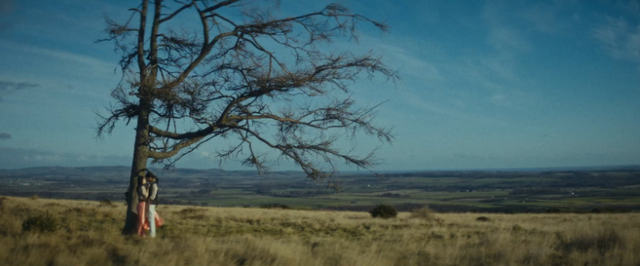
THE MAGIC BEYOND THE SHOT LIST
After discussing the many creative and technical elements involved in making WUTHERING HEIGHTS: HOUSE OF THE DAMNED, Matthews reflected upon what the experience had taught her about herself as a filmmaker.
The production had been demanding. Preparation time was limited. The shooting schedule was tight. Post-production also required a rapid turnaround. And Matthews is candid about the lessons those circumstances provided.
“I really explored on this particular project my limitations of what I know I can do and what I can do better next time with just a bit more prep time,” she explained. “We didn’t have much prep time on this. We didn’t have much post-production time on this. It was a very quick turnaround.”
For Matthews, the experience reinforced the importance of allowing sufficient time for the creative process whenever circumstances permit. “I like the value in just giving yourself a little bit more time where you can, and it isn’t always possible, but it really does help just to enrich everything and feel like things aren’t so rushed.” But the film also taught her something equally important.
For a director who thrives on preparation, there is considerable creative value in learning when to abandon the plan. Matthews had entered production with a detailed understanding of the screenplay, extensive shot lists, and a carefully developed visual approach.
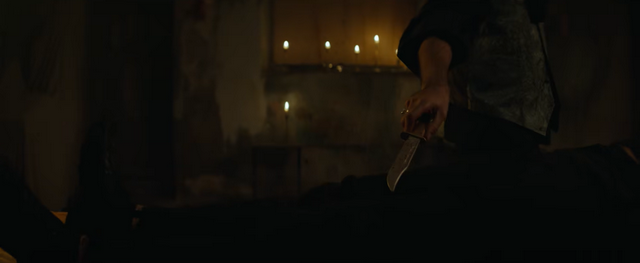
“I’m a big shot lister. I’m a huge fan of this story. I knew the script inside out. We did a lot of prep work with the actors, a lot of prep work with Raff.” Yet even the most thorough preparation cannot anticipate every discovery that occurs once a production begins.
“But really, when you get there, things just happen, and magic really does happen in the moment.” That realization became one of the most valuable lessons of the experience.
“I think it’s learning to be as prepared as you can be, and knowing what you want, but also allowing creative ideas to come into the mix and not letting it throw you.”
The extraordinary location provided a perfect example. Although Matthews and Nocerino had developed detailed plans for photographing the film, Brecken Castle occasionally presented opportunities that were simply too good to ignore. A room that had not originally been selected for a particular sequence might suddenly reveal itself as the ideal setting. And when that happened, Matthews had a choice. She could adhere to the original plan. Or she could embrace the unexpected possibility and rethink the scene.
“You see an amazing room that you didn’t plan to use, but it’s like, how can we not use this space? It will look amazing on camera. It fits the story. It works so well.”
On WUTHERING HEIGHTS: THE HOUSE OF THE DAMNED, Matthews and her team did precisely that. “Let’s adapt this whole scene into this space, which we did do on this shoot.”
Of course, such a decision has consequences. Changing a location affects far more than the background of a shot. Blocking must be reconsidered. Camera positions may need to change. Lighting setups have to be redesigned. The relationship between actors and architecture must be reevaluated. “That can obviously throw you because the blocking changes, everything changes, the lighting design, all of it.”
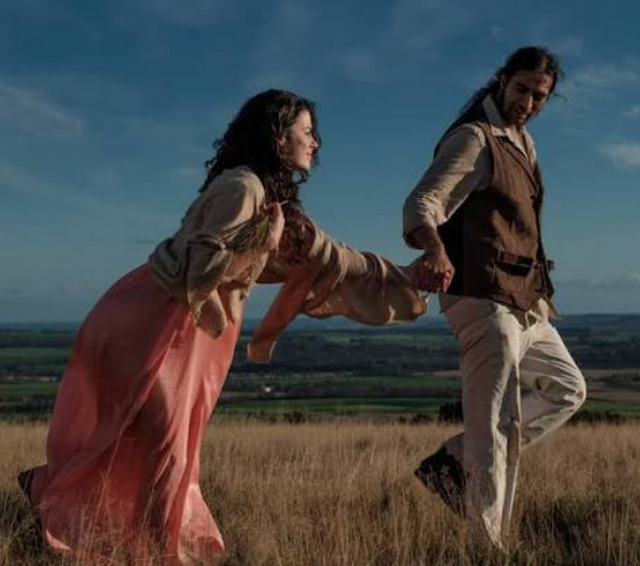
For a filmmaker who values careful planning, those changes could easily become a source of frustration. But Matthews discovered that they could also produce some of the most exciting creative moments. “Magic happens if you can just creatively open yourself up to things and not stick too much to your original ideas. That’s when all the really cool stuff happens, I think.”
It is an important distinction. Matthews isn’t advocating a lack of preparation. Quite the opposite.
Her experience reinforced the importance of knowing the material, understanding the characters, and developing a coherent cinematic approach. But she also came to recognize that preparation should provide a foundation for discovery rather than become a restriction upon it. “Just trusting you’ve done the work and allowing yourself to then develop on that and create things in the moment as well.”
It’s a philosophy she intends to carry into future projects.
Among those possibilities is OLIVER TWIST’S NIGHTMARE ON FLEET STREET, while another literary reimagining is being developed with Emerge Entertainment, the production company behind WUTHERING HEIGHTS: THE HOUSE OF THE DAMNED.
And Matthews is already looking forward to applying what she has learned. “I’ll work really hard at being more open to change and having a bit of playing, a bit of fun on set when you’re creatively working with people as well.”
Her enthusiasm for returning to classic literature is equally apparent. With so many stories available for reinvention, the challenge may be deciding which one to tackle next. As Matthews observed, “There’s a lot. It’s just knowing which one to do next because they all fit.”
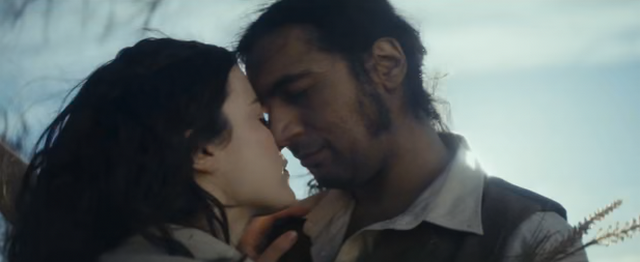
For Matthews, the pleasures of filmmaking lie not only in executing a vision but in discovering what that vision can become through collaboration. That spirit is evident throughout WUTHERING HEIGHTS: THE HOUSE OF THE DAMNED.
A shared love of Brontë’s novel becomes an unconventional horror adaptation. A carefully considered screenplay becomes a visually expressive cinematic narrative. Costumes and color become extensions of character psychology. A historic castle becomes both an authentic period environment and an active participant in the storytelling. Sound becomes architecture. Silence becomes suspense. And practical blood effects become opportunities for both horror and dark amusement.
But perhaps most revealing is Matthews’ willingness to recognize that some of the most memorable cinematic moments cannot be anticipated entirely on paper. For all her meticulous preparation, she remains open to discovery.
And in the haunted halls of Wuthering Heights, that openness has produced a film that is as imaginative in its craftsmanship as it is delightfully wicked in its interpretation of a literary classic.
by debbie elias, exclusive interview 10/08/2026
WUTHERING HEIGHTS: THE HOUSE OF THE DAMNED arrives on Digital and VOD October 16, 2026.