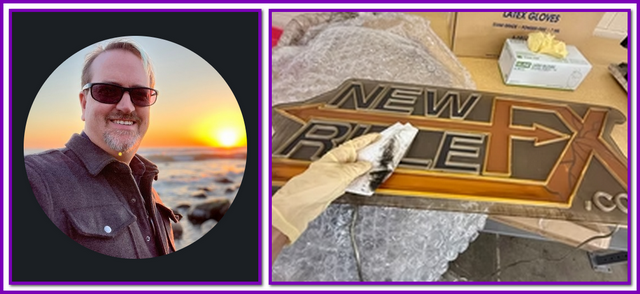
On a Friday morning in Los Angeles, RYAN JOHNSON, Founder and President of NewRuleFX, one of Hollywood’s premier practical effects fabrication studios, is almost offhanded when he talks about watching his life’s work burn down in twenty minutes.
“Don’t burn your shop down. That’s not fun,” he says wryly, remembering the November fire that turned years of molds, tooling, inventory, and hard-earned craftsmanship at NewRuleFX into charred debris.
“We lost quite a bit of stuff…all our tooling and all that, and your molds just get burned up in a matter of like 20 minutes. It’s really humbling…and yeah, it’s given me a lot of new avenues to think about. Like, what am I doing with my life?”
For most people, that question would signal an ending.
For Johnson, it became a blueprint.
Within weeks of the fire, he had secured a new facility in Northridge. With a little GoFundMe money, a determined crew, and a great deal of stubbornness, NewRuleFX began rebuilding from the ground up—not simply replacing equipment, but preserving something far more valuable: the people whose skills made the company possible.

More Than Props
NewRuleFX doesn’t do lamps or filing cabinets. You don’t go there for a desk or a picture frame to dress your set, the way you would a traditional prop house. You go there when that picture frame has to smash over someone’s back, or when that desk needs to collapse under a stuntman without sending him to the ER.
What NewRuleFX creates isn’t simply a collection of props—it’s the invisible craftsmanship that allows filmmakers to tell stories safely and convincingly. Johnson refers to the company’s work broadly as “special effects props,” distinguishing it from the everyday items found in a traditional prop rental house.
“It’s kind of anything that you’re not going to just go to the rental house and rent for a while and then bring back. These are props that are usually going to be used in the service of creating dramatic effects—whether that’s a fight scene, an explosion, or a bunch of stuff falling and breaking.”
The line is simple. If it’s static, you rent it. If it’s going to do something—and probably do it violently—you build it. And once actors and crew are in range, safety becomes the axis everything spins around.
“A big part of what we’re trying to do is make sure that we can keep the crew and the actors and everybody safe on set,” he says. “Anytime there’s some kind of kinetic action happening, we want to give people really good, reliable alternatives to the real thing.”
He describes a typical job: a production comes in with a “hero knife” for a horror movie. It’s the knife—iconic, instantly recognizable, the one that will be framed, thrust, brandished, and probably plunged. Productions often arrive with a beautifully designed “hero knife” intended for close-ups.
“They’ll say, ‘This is the hero knife that our character is going to be using,’” he explains. “We have a bunch of scenes where we’re going to be in real close combat with the other actors. He’s going to be slashing it around, maybe jabs it in. So we take that real item and make a mold of it, so that we can then make foam versions, plastic versions, rubber versions.” One version may simply lie on a table. Another is designed for close-quarters combat. Yet another safely withstands repeated stabbings, slashes, and falls.
On the breakaway side, he’s just as precise. The same philosophy extends to breakaway glass, concrete, ceramic, and countless other materials.
“A big part of what we’re trying to do is make sure that we can keep the crew and the actors and everybody safe on set,” Johnson says. “Anytime there’s some kind of kinetic action happening, we want to give people really good, reliable alternatives to the real thing.”
Ironically, audiences don’t actually want reality.
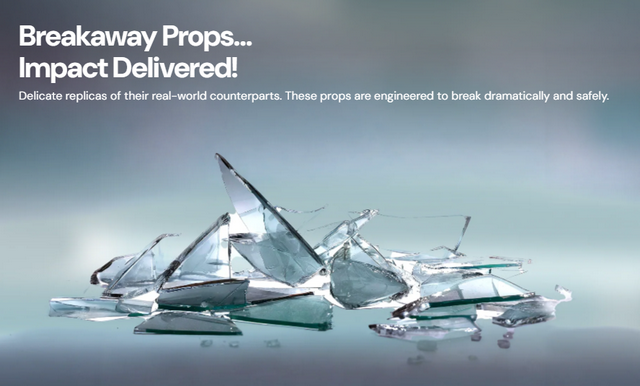
“We’re so used to seeing Hollywood’s version of everything breaking and exploding into lots of tiny little pieces. If you dropped a real beer bottle on the ground, it’s going to break in maybe four pieces. The Hollywood version breaks into hundreds.” Johnson smiles at the distinction.
Movie magic, it turns out, often looks far better than reality.
If Johnson and his crew have done their jobs well, audiences never stop to wonder how the illusion was created.
The Details That Sell the Illusion
While spectacular breakaways often grab the attention, it’s frequently the smallest details that sell the illusion.
“We’re a molding and casting company primarily,” Johnson says. “That’s our bread and butter. You give us an object, and we’ll turn it into a mold so that we can make a breakaway version of it or a rubber version of it. Or we can cover it with fake blood or whatever you want to do.”
A perfect example is stage blood.
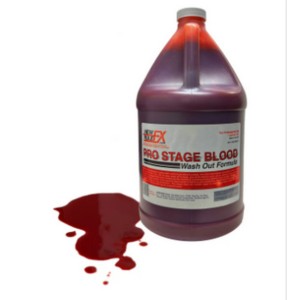
NewRuleFX manufactures its own washable formula in 44-gallon batches, purchasing chemicals in bulk so the company can keep prices within reach not only for major studios but also for independent productions.
“I really wanted to try to keep things as affordable as possible,” Johnson says. “Not only for the big productions but also the little guys.”
Because the blood is manufactured in-house, every batch can be customized. Productions can request different colors, different viscosities, or different looks depending on the scene.
“Sometimes they want it thicker, sometimes they want it thinner. We can adjust the color. That’s no problem.”
Johnson admits—with a laugh—that perfecting realism occasionally required a little personal sacrifice. “I’m not embarrassed to say that I’ve sliced my finger open multiple times to do comparisons.”
Just as important as how the blood looks is how it behaves after the cameras stop rolling. Unlike older stage blood formulas that permanently stained costumes and tangled themselves into actors’ hair, New Rule FX’s washable formula has become a favorite of wardrobe departments.
“The wardrobe department loves our blood for sure.”
That same attention to realism carries throughout the company’s catalog. Resin teeth scatter convincingly across a floor after a brutal punch. Rubber bones become convincing stunt weapons. Lightweight brick and concrete rubble creates dramatic destruction without endangering performers. Even simulated dirt has its place.
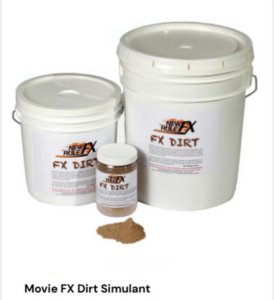
“Dirt’s dirty,” Johnson laughs. “Every good fight scene you need a little bit of fake dirt on the body, so when the contacts happen, all the puffs of dirt fly up. It’s great for dressing an old set to make it look dusty. It’s much better controlled than real dirt, and it’s a lot safer too.”
The company’s artificial dirt is safer, easier to control, and designed to produce those satisfying clouds of dust audiences subconsciously associate with every great fight scene. It’s also machine washable. Your wardrobe department will thank him.
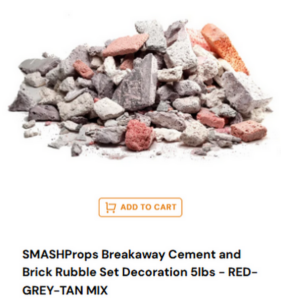
NewRuleFX also sells brick and cement rubble, made from a foaming plaster that cures into something that looks heavy but is feather light and fragile.
“It’s very lightweight and kind of foamy, so it breaks very easily,” he explains. “There’s a whole lot of cement and brick rubble in five pounds.”
Whether blood, broken teeth, shattered concrete, or flying dirt, every product exists for the same reason—to make audiences believe what they’re seeing while keeping everyone on set safe.
Inside the Northridge Shop
Walking through NewRuleFX reveals a company that’s equal parts fabrication shop, engineering lab, and artists’ studio.
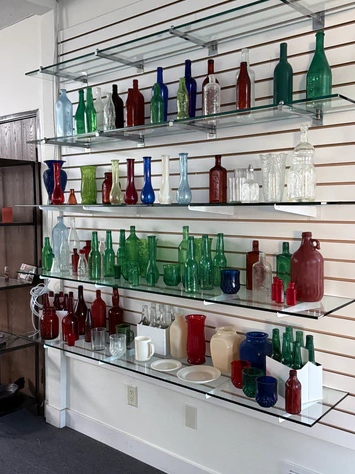
Beyond the public gallery, NewRuleFX opens into a series of specialized workspaces, each dedicated to a different stage of the creative process. One room hums with 3D printers steadily transforming digital concepts into physical reality. Nearby, Derek oversees the foam department while Michael Simpson and Andrew move between molding and fabrication projects. Oscar tends to the company’s signature breakaway glass creations before Camille applies paint and finishing touches. Finally, Brian performs what Johnson jokingly describes as “a daily game of three-dimensional Tetris”, packaging some of the industry’s most fragile creations for shipment around the world.
Tucked away is another room that reflects Johnson’s filmmaking roots—a dedicated media room where every major breakaway can be photographed, filmed, and, most importantly, tested.
“If it’s a breakaway, of course we’re going to test that,” he says. “We’re going to make sure it breaks.”
The shop occasionally produces head and body castings as well, though Johnson is careful not to compete with longtime friends working in prosthetic makeup.
“If it feels more like prosthetic makeup,” he says, “I’ll usually suggest other partners.”
That collaborative mindset surfaces repeatedly throughout the conversation. Whether talking about his own crew or fellow artists elsewhere in the industry, Johnson consistently focuses less on competition than on making sure each project ends up in the right hands.
Watching the team at work, it’s easy to understand why rebuilding after the fire wasn’t simply about replacing equipment. Every room reflects years of accumulated experience—knowledge that couldn’t be purchased with an insurance check or rebuilt overnight.
Every Prop Tells a Story
Spend enough time talking with Ryan Johnson and one realization becomes impossible to ignore.
He doesn’t see himself as someone who simply builds props. He sees himself as someone helping tell stories.
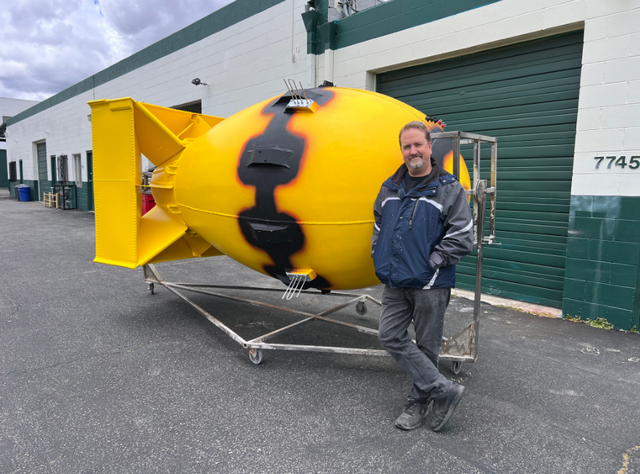
As Johnson researches a historically accurate Fat Man atomic bomb replica for the Wendover Airfield Museum, engineers a twelve-foot mirror ball for an H&M event, fabricates perfect replica cocktails for John Taffer’s Tavern, or designs an electronic cigarette now widely embraced by stage theaters, he approaches each project with exactly the same question.
“How is this little prop going to tell its piece of the story?”
That philosophy explains why every project receives the same obsessive attention, regardless of size.
Sometimes that story is told by a giant mirror ball suspended in downtown Los Angeles.
Sometimes it’s told by a crystal goblet that safely shatters over an actor’s head.
Sometimes it’s told by the perfect fake cocktail, complete with translucent “smoke bubble,” that looks exactly right in every Instagram photograph.

Cocktails & Dreams
For all the glass shards and blood buckets, one of Johnson’s most charming recent jobs involved something much more civilized: cocktails.
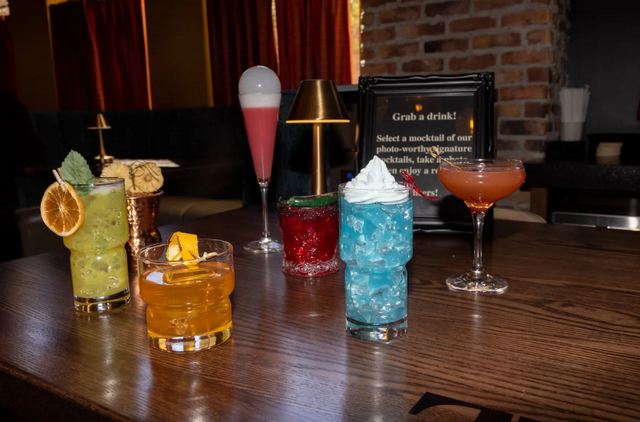
A die hard fan of John Taffer and “Bar Rescue” and his Taffer’s Taverns, I was beyond tickled to learn that John Taffer and his team came to NewRuleFX ahead of a grand opening. They wanted something very specific: photo perfect versions of Taffer’s signature cocktails that would look exactly right for Instagram and press shots, again and again, no matter who was on shift.
“They gave us the recipes,” Johnson recalls. “They sent us the exact same glasses they had in their bar and all the different things. We had to basically keep mixing and playing with all the plastics and resins and stuff like that until we got everything to look just like the real drinks, including the smoke bubbles they had over some of the drinks.”
Those “smoke bubbles” turned into an engineering problem of their own.
“We had to create fake bubbles of smoke,” he says. “Those were actually glass and plastic spheres filled with a translucent white resin and mounted just so.”
It was, by his account, a pure delight.
“I really enjoy doing fake food,” Johnson says. “It’s one of those few props that you know when you’ve got it, because it looks just like the real thing and you can’t tell the difference. There are really no rules to what you can use or not use to put these things together. You end up just trying all kinds of crazy things to get something to look right. I really enjoy that process.”
It perfectly encapsulates Johnson’s approach to practical effects. Whether recreating a signature cocktail, a breakaway bottle, or a blood-soaked knife, success isn’t measured by how impressive the fabrication is.
Success comes when audiences believe it’s real.
Whatever the assignment, Johnson isn’t simply recreating an object. He’s helping create a believable world.
Tech In Service of Touch
Technology doesn’t replace craftsmanship. Technology accelerates craftsmanship.
If Johnson’s shop feels defiantly hands on—foam, plaster, silicone, glass—it’s also quietly high tech. The early days of his effects work were defined by library books and trial and error. The internet was in its infancy. There was no YouTube tutorial for how to make a safe breakaway bottle.
“Now things are completely different,” he says. “There’s a lot of information out there, a lot of bad information out there, too. So trying to find where the rubber really meets the road is the biggest challenge.”
He uses AI as a kind of research assistant, particularly when it comes to chemical formulations and material combinations. And the advent of reliable 3D printers has, in his view, been transformative.
“The advent of reliable 3D printers has given me the way to ideate props and projects quickly and build things,” he says. “I don’t have a huge CNC mill, but I can build similar type projects by designing it in a computer and sending it to a 3D printer.”
The benefit isn’t just in what he can make; it’s in how fast he can make it. He can print a prototype, hold it in his hand, adjust dimensions, and get it into mold making in a fraction of the time older methods required. In a world where pre-production timelines are constantly shrinking, that matters.
“Any kind of way that we can use to shorten the timeline from idea to product you hold in your hand is really something I’m always looking at,” he says. “The pre-production time for a lot of these projects just gets shorter and shorter…For departments that are dealing with prepping and designing and building, that lead time is extraordinarily important.”
Technology, in other words, isn’t replacing the tactile. It’s accelerating it. The prop is still something you can actually touch.
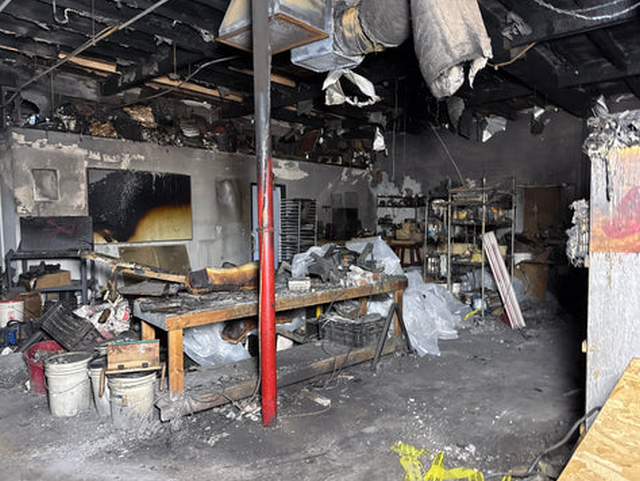
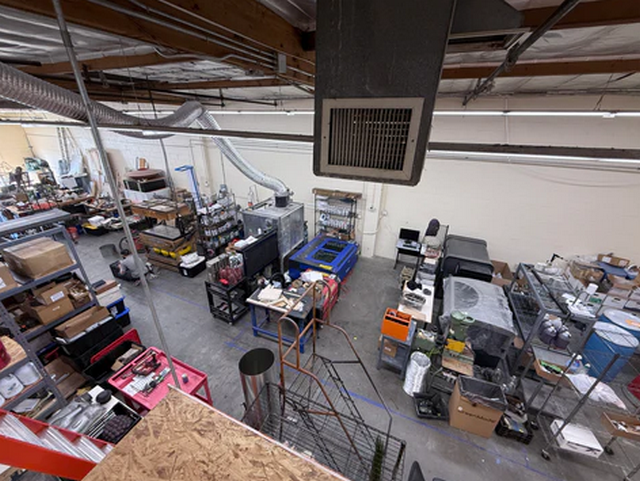
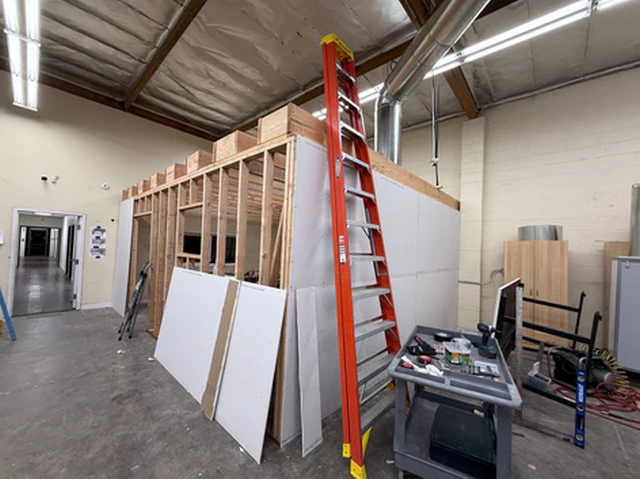
Fire Destroyed NewRuleFX’s building. It Didn’t Destroy Its Craftsmanship
Some nine months later, drywall is still being finished, shelves are still being restocked, and new molds are replacing those lost in the blaze. Yet Johnson is already thinking less about what burned than what comes next.
New products. New challenges. New ways to help filmmakers tell their stories.
He remains convinced that, regardless of how much technology changes filmmaking, audiences will always respond to something tangible.
“You can’t AI everything away.”
At the end of our conversation, I tell Johnson what seems obvious after an hour of walking through his world. “The service you provide is invaluable to the industry. NewRuleFX should be in every filmmaker’s Rolodex, especially for indie filmmakers who want to go practical, go economical, and they want everything to look good and not look like it came from a blue light special at Kmart after Kmart shut down.” He laughs, a little embarrassed, very grateful.
Before we hang up, Johnson extends an invitation. Come visit. Tour the shop. Break something.
“I want to come and break something!”, I tell him.
“You got it!” he laughs. “We’ll have something ready for you!”
Considering everything NewRuleFX has rebuilt from the ashes, I have no doubt he will.
by debbie elias, exclusive interview 07/31/2026
NEW RULE PRODUCTIONS/ NewRule FX is located at:
19416 Business Center Drive
Northridge, CA 91324
Phone: 818-387-6450
FAX: 866-395-6450
Main Email: admin@newrule.com
The props and FX showroom is open 9am- 5:00pm Monday through Friday.