By debbie lynn elias
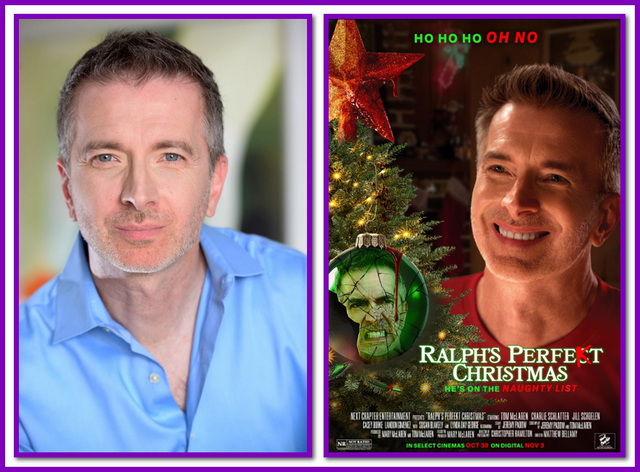
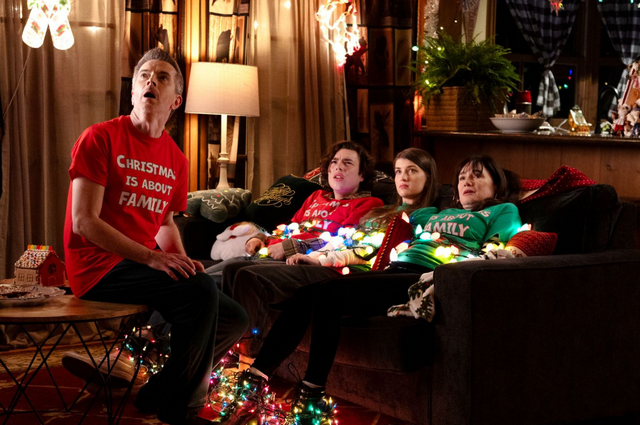
There are Christmas movies. There are Christmas comedies. There are Christmas thrillers. And then there’s RALPH’S PERFEKT CHRISTMAS, a deliciously unconventional holiday concoction that takes everything we love about the season, wraps it in colorful paper and a bright red bow, and then proceeds to turn the whole package upside down. A dark comedy with a decidedly twisted sense of humor, RALPH’S PERFEKT CHRISTMAS is as much a love letter to classic Christmas movies and television as it is an exploration of one man’s increasingly desperate pursuit of holiday happiness. And at the center of it all is actor, co-writer, producer, and co-director Tom McLaren, who brings an infectious enthusiasm for cinema, storytelling, and Christmas to both the screen and our conversation.
Along with his wife and creative partner Mary McLaren, Tom has spent years bringing this labor of love to fruition through their production company, Next Chapter Entertainment. Working with original screenwriter Jeremy Padow and director of physical production Matthew Bellamy, the McLarens have crafted a film that embraces the nostalgic warmth of Christmas classics while gleefully subverting expectations. What begins as an amusing, often outrageous portrait of a Christmas-obsessed husband determined to win back his wife gradually evolves into something far more complicated, with surprises best left for audiences to discover.

As Ralph Bailey, McLaren plays a man whose favorite movie is the fictional holiday classic The Alien Who Saved Christmas. Ralph celebrates Christmas 365 days a year, and his devotion to the holiday is rivaled only by his determination to restore his marriage. When he concocts a plan involving Kurt Fields (Charlie Schlatter), the former child star of his beloved Christmas movie, things take an increasingly unpredictable turn.
But for Tom and Mary McLaren, the roots of RALPH’S PERFEKT CHRISTMAS reach back to the holiday movies they grew up loving.
A LOVE LETTER TO CHRISTMAS CINEMA
For anyone who knows their Christmas movies, RALPH’S PERFEKT CHRISTMAS is a veritable treasure hunt of cinematic references. The Bailey family name immediately calls to mind George Bailey and It’s a Wonderful Life. Elizabeth Lane and John Sloan are borrowed from Christmas in Connecticut, while Susan Walker evokes the little girl at the heart of Miracle on 34th Street. These aren’t accidental similarities or casually tossed-in references. They are deliberate tributes, carefully woven into the fabric of the film, as Tom enthusiastically explained when I pointed out these connections.
“It was very important to me and my wife Mary that we pay homage to these classic Christmas films that we grew up with. And Miracle on 34th Street is my wife Mary’s all-time favorite film, and I discovered Christmas in Connecticut when I was a little boy. And Barbara Stanwyck and the whole crew and cast, they’re just so brilliant. I’m not a big rom-com guy, but that movie has such charm and magic, and so we wanted to pay tribute to these things and weave it in. And I love, love, love that you caught these references because we don’t know that everyone will, but it’s very important to us to have them there.”
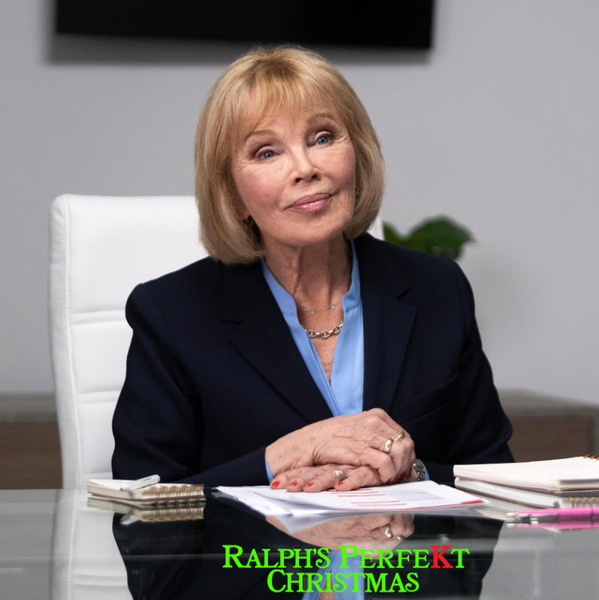
That attention to detail extends well beyond character names. Look carefully at the posters hanging in the office of Diane Bryce, the agent representing Kurt Fields. Played by the wonderful Susan Blakely, Diane sits surrounded by artwork inspired by Blakely’s own filmography, cleverly altered and repurposed for the fictional world of RALPH’S PERFEKT CHRISTMAS.
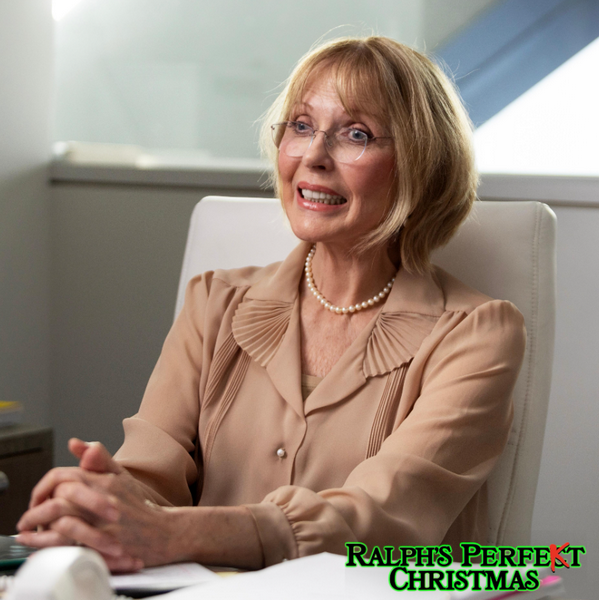
It’s the kind of affectionate cinematic Easter egg that might escape a casual viewer but is pure delight for anyone familiar with Blakely’s career.
“My wife Mary actually did graphic art to come up with those posters in Susan slash Diane Bryce’s office, and we had such fun with it. And we thought, well, we got to get enough wide shots so people can see this. But for those who know Susie, it’s like, okay, here’s your fun little references.”
Those posters also speak to the care invested in the film’s production design and visual storytelling. Even background details have a purpose, rewarding viewers who pay attention to the entire frame.
CASTING WITH HEART, HISTORY, AND A LITTLE LOST IN SPACE MAGIC
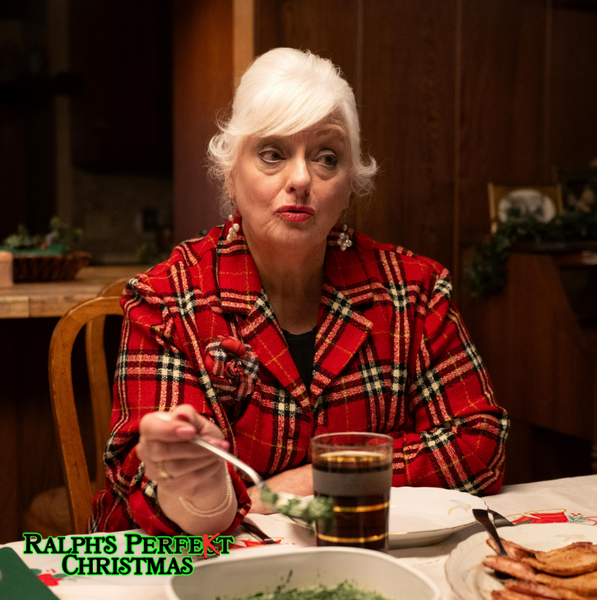
One of the most delightful aspects of RALPH’S PERFEKT CHRISTMAS is its casting. Alongside McLaren and Schlatter are Jill Schoelen, Casey Burke, Landon Gimenez, Lynda Day George, Susan Blakely, Nicholle Tom, Trevor Lissauer, and an especially wonderful reunion of three performers forever beloved by generations of television viewers: Marta Kristen, Angela Cartwright, and Bill Mumy.
Yes, the Robinson children from the original Lost in Space are together again!
For McLaren, whose childhood was shaped by the adventures of the Robinson family, bringing these three actors into the same movie was far more than a casting coup.
“That’s quite a coup. I mean, as you probably know, this is the first time all three of the Robinson children, Will, Penny, and Judy, are all in one movie together because when they did the Lost in Space feature film in 1998, they only got Marta Kristen and Angela Cartwright to come in and do those cameos. They didn’t get Bill Mumy at that time, so the three kids didn’t get reunited then. And then even in the Lost in Space Netflix TV series, they never got all three of them. They got Bill and Angela, and so yeah, it was a dream come true.
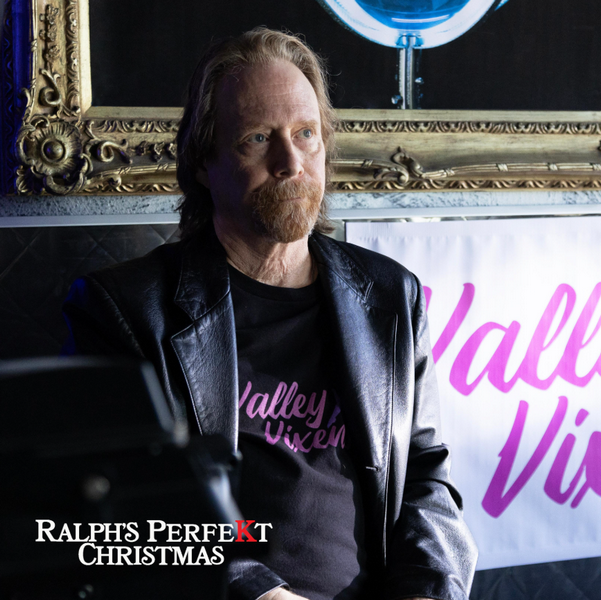
“Lost in Space is my all-time favorite show from my childhood. And when Mary and I came out here to Los Angeles in the 1990s, we got to know all of them. We became friends with all three of them, and so it was my dream from the very beginning. It’s like, okay, let’s get all of them in here, and oh, what a joy! I mean, it gives me goosebumps that it’s happened and it worked out.”
The connection goes even deeper. Bill Mumy’s musical talents became part of the film’s soundtrack, with his song “I’ve Got Some Presents for Santa” providing the inspiration for a particularly cheeky sequence.
“That whole idea for Bill being connected to our movie started with the song ‘I’ve Got Some Presents for Santa,’ which is sung by Sarah Taylor and performed by Bill. It was written by Bill. I knew of that song and I thought, oh, it’s kind of got that naughty, kind of dirty, sexy kind of Christmas feel to it. And I’m like, this is perfect for a strip club scene. So I asked him, can we use it? And he said yes. And I said, okay, part two of this is I’m going to write a little part for you that bookends it, so you’ll be at the beginning and the ending. And so he was all in.”
For McLaren, these casting choices were personal. He and Mary had developed friendships with many of the performers over the years, and the film offered an opportunity to celebrate actors whose work they had long admired.
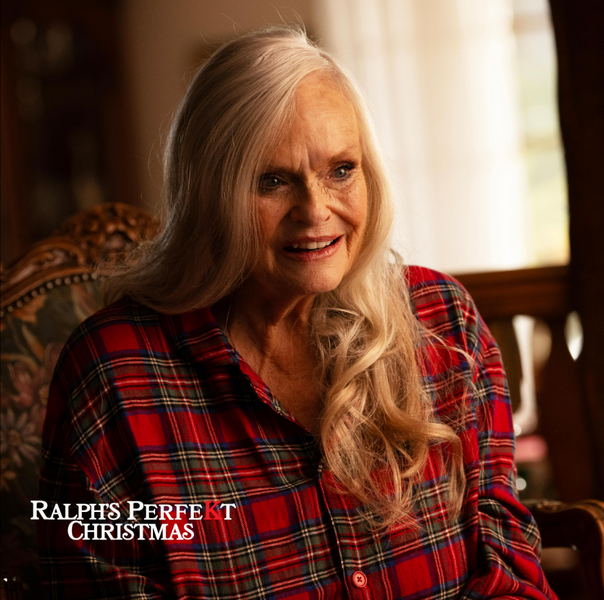
Among the most notable is Lynda Day George, returning to the screen after decades away from acting. Cast as Grandma, George brings a warmth and charm that McLaren was especially pleased to capture.
“This is her first movie in over 40 years. Her last actual appearance was an episode of the revival Mission: Impossible TV series in 1989. So she’s back, and we got her, and we are so, so grateful. She’s a sweetheart. She’s an angel. She’s a dear friend, and she trusted us to come back with this movie. We’re honored to have her there.”
Susan Blakely, meanwhile, was an equally important addition. “She’s a great comedic actress. Yes, we all know her, of course, from Rich Man, Poor Man, and The Towering Inferno, Over the Top, Report to the Commissioner, all these great movie and TV films and miniseries. But she’s done some sitcom guestings and she’s done some lightly comedic movies. She’s such a talent, and I thought that she was absolutely perfect in the part. She’s one of my closest friends, and she also trusted us and joined the movie. She, at the beginning of this process, said, ‘If you guys are doing a movie, I’m in. I don’t care what it is. I don’t care what the script is. I’m in. I’m going to do that for you as a friend.'”
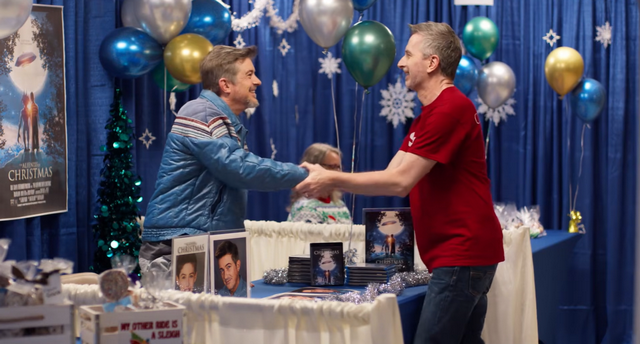
That same affection extends to Charlie Schlatter, who plays Kurt Fields, the former child star whose life becomes entangled with Ralph’s increasingly questionable plans. McLaren was particularly impressed by Schlatter’s ability to avoid the obvious interpretation of a washed-up actor.
“He got submitted by his rep, and he came in and he totally nailed the audition. And we’re like, okay, this is Kurt Fields. He’s got this quality. And for those of us who know him from his past projects, I know him from Diagnosis Murder. I know he can do comedy and drama, and he’s got this charming, likable personality. He was able to bring that to what could have been a stereotypical has-been child star who’s kind of bitter and nasty and down on his luck, and he hates the world. See, Charlie didn’t do that. He kind of did a different approach, which is actually likable and watchable.”
Rather than delegate casting to an outside casting director, Tom and Mary handled the process themselves, personally evaluating performers and making choices based on their understanding of the characters rather than the perceived commercial value of a recognizable name.
“Mary and I had a very strong creative vision for this project, and we didn’t want to farm the casting out to a third-party casting director who has their opinion of what they think we might want. Mary and I had a very clear view of all of these characters, and so we wanted to do it our way. We certainly auditioned the larger roles. There were a few offer-onlys that were put out to the star cameos, certainly, but we didn’t want to bring in just a name actor for the sake of having a name actor to put on the poster. A lot of indie filmmakers do that, and I think their film suffers for that reason. You have to have the right actor in the right role, and so we went through an extensive process.”
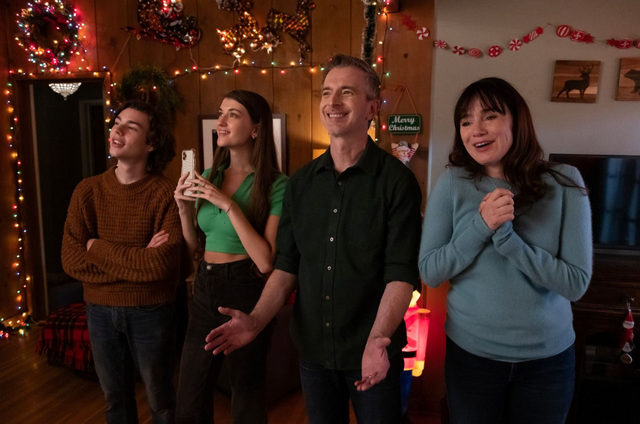
The results speak to McLaren’s commitment not merely to recognizable faces but to giving talented performers meaningful opportunities to work.
And the surprises don’t end with the faces on screen. Listen carefully for voice cameos by Judy Aronson and Anitra Ford, the latter lending her voice to a 911 operator. For McLaren, these appearances are yet another way of acknowledging the performers who helped shape his love of entertainment.
“I grew up on syndicated television. I grew up on reruns of TV shows and movies, and I love so many actors. I’m loyal to them. And for me to get a lot of my favorites, my own personal favorites in this movie, I’m just beyond grateful for that.”
FIVE YEARS, ONE MOVIE, AND A MOUNTAIN CALLED RALPH
Although RALPH’S PERFEKT CHRISTMAS feels like a deeply personal project, it began with a relatively simple ambition: Tom and Mary McLaren wanted to make a movie together.
Following Mary’s retirement from 20th Century Fox in 2019, the couple established Next Chapter Entertainment as a vehicle for their creative endeavors. At the top of their wish list was an independent feature in which Tom could star. The challenge was finding the right story.
“Mary retired from 20th Century Fox in 2019, and at that point, I had been acting for about seven years, and we sat down and thought, okay, well, we wanted to do something creative. We wanted to do a project together, so we created our production company, Next Chapter Entertainment, and we let that be an umbrella for whatever creative projects we wanted to do. “But at the top of our list, we wanted to produce a lower-budget independent film that I could star in, and we had a hard time finding a script and a screenwriter, to be honest. It’s not as easy to find these people out of the blue as you think. But Jeremy was someone that Mary had worked with at Fox, and he gave us an original pitch in 2020, and it was a great pitch. And we said, okay, go ahead, let’s write the spec script, and we’ll see where it leads.”
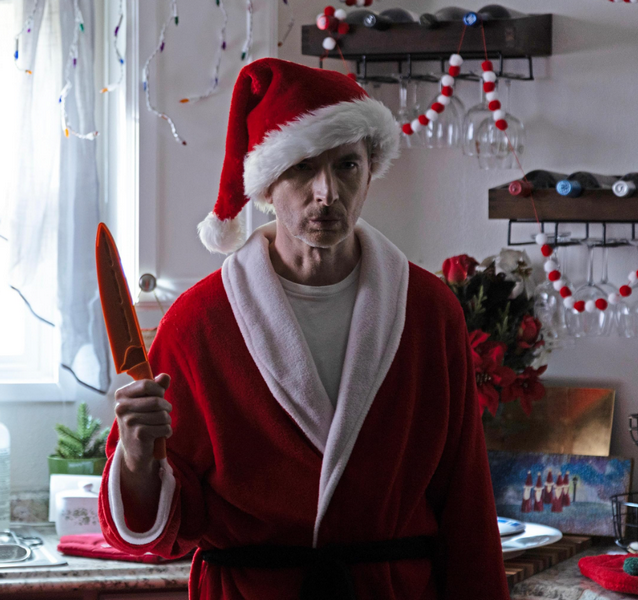
That initial pitch from Jeremy Padow became the foundation for what would eventually evolve into RALPH’S PERFEKT CHRISTMAS. But the writing process was far from quick, and the McLarens were involved in shaping the material from its earliest stages.
“It took about a year to get the first draft, and then it took another year to get the second draft. But Jeremy was very collaborative with us, so Mary and I both had input into the development and writing of the script, and so we kind of fine-tuned it, and we added little things here and there. And I would kind of steer it one direction, and Mary would steer it a different direction, and then Jeremy would start molding it. We optioned the script in 2022, and at that point, Mary and I kind of take ownership of the script. So I went in and started doing rewrites at that time. So I did adds, changes, moves, deletes, and we kept fiddling with it, and we did that all the way through production.”
Indeed, the film continued to change throughout shooting and post-production, with McLaren responding to what he saw in the performances and the evolving emotional trajectory of his central character.
“The script, the movie itself was like a living, breathing animal. It was never 100% really set in stone until Mary and I locked it. It kept moving and evolving and changing. I think I was very fortunate to be in the position to be a producer and a star. So during principal photography, I could kind of sense, how’s it going? Is this working? Is it a clear arc for Ralph? Is his intent clear? Is it clear why he’s made this decision or done this thing? And so I could often fine-tune it on the spot.”
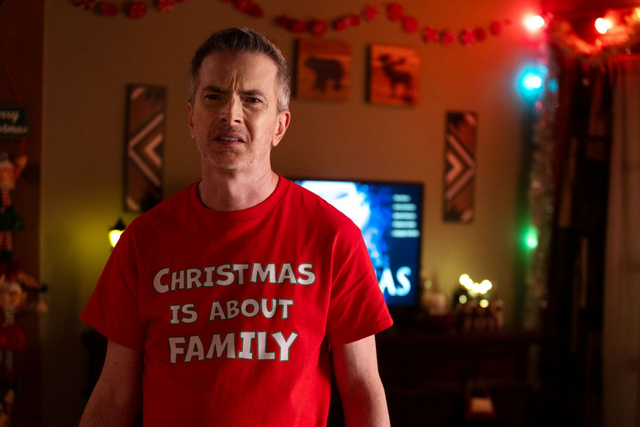
The original screenplay was approximately 93 pages. The completed film runs 119 minutes. That expansion reflects the McLarens’ determination to give Ralph’s psychological journey the time and dramatic weight they believed it needed. Particularly important were scenes that clarify the emotional pressures building within Ralph as his plans begin to unravel. Without revealing what happens, McLaren explained that material originally conceived as brief passages became substantially more developed during production.
“We had to establish that this regular guy has finally been pushed to his limits. So the attic scene was fleshed out, and then the actual finale, which has got thrills, chills, oh God, that was dramatically fleshed out. We changed, we got some flashbacks in that final couple minutes that weren’t originally in the script, where Ralph’s kind of seeing his life. It gives me goosebumps to think about it because Mary and I tried so hard to make it special.”
From the original pitch in 2020 to the locked film in 2025, the journey took approximately five years.
“I call the project Mount Everest because it was such a big animal, and to climb this mountain, it really pushed Mary and I to our mental and physical limits. But we’re very proud of it. We’re very grateful that it played out, and now it’s out there in the world for everyone to see. You give birth to this passion project, and you hope it resonates. It is truly a lot of blood, sweat, and tears to make this happen.”
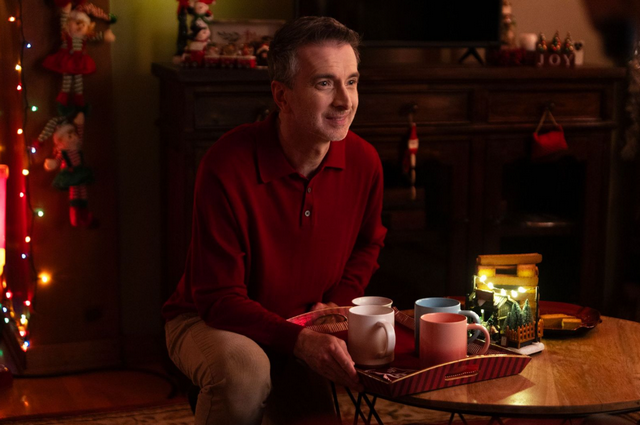
THE TWO SIDES OF RALPH BAILEY
At the heart of RALPH’S PERFEKT CHRISTMAS is a deceptively complicated character.
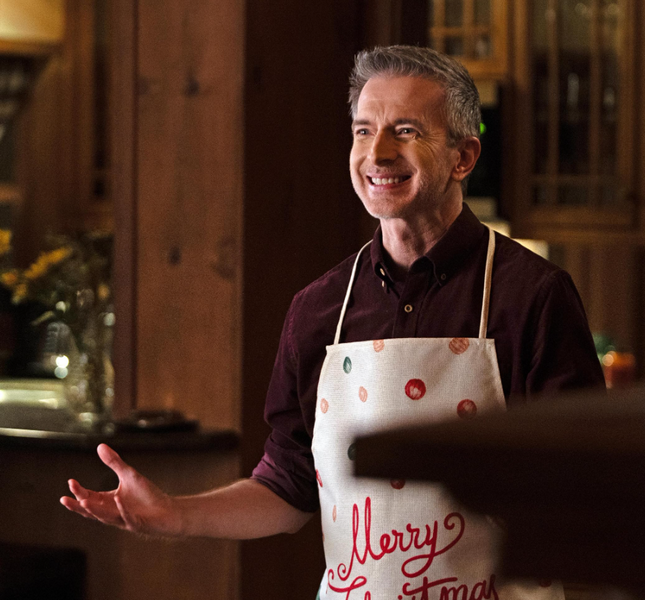
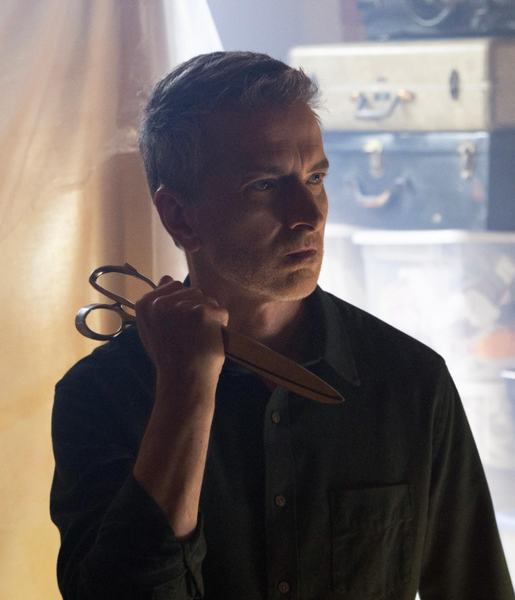
Ralph Bailey initially appears to be an affable, Christmas-loving husband whose enthusiasm for the holiday borders on obsession. His frequent direct addresses to the camera invite audiences into his world, establishing an intimacy that becomes increasingly disconcerting as the distance between Ralph’s perceptions and reality grows.
McLaren understood that the success of the film depended on audiences remaining uncertain about Ralph’s true nature. Is he simply a good-hearted man whose judgment has gone terribly wrong? Is something more troubling lurking beneath that cheerful exterior?
The film leaves room for interpretation.
“I really wanted him to be kind of the regular guy, but with quirks. Perhaps there’s too much quirks, but he kind of goes down this path, and then it raises the question, we all think we’re normal and average and coping and all that stuff, but what happens when we get pushed too far? I think that’s the essence of Ralph, and for all of us, we can’t truly answer that question until we’re pushed. So Ralph gets pushed to extreme limits. Bad things happen, certainly accidents, but he’s got bad decisions and bad judgment. It’s open to interpretation. Is he cracked? Has he got a form of mental illness? What is it? Is it innocent or not? I don’t know.”
Rather than telegraph Ralph’s darker possibilities, McLaren deliberately resisted playing him as an obvious villain.
“When I was playing him, my key to playing this character was: don’t play him as a bad guy, don’t make him a villain. Let that be subject to interpretation. Let people decide. We’re starting to hear feedback where one person said, ‘Oh, there’s a sinister tone from the very beginning.’ I’m like, okay. One person said, ‘Oh, it’s like a Jekyll and Hyde. I can’t believe that he flipped.’ And okay, so I love hearing this. I want people to not really know what’s going to happen next. Ralph seems like an affable guy. Join him on this journey and decide for yourself. That’s my hope as an actor and a filmmaker, that people can kind of explore and decide. Good guy or bad guy, naughty or nice. It’s up to you.”
That uncertainty is one of the film’s greatest strengths. Even as the narrative moves into darker territory, the audience is left to wrestle with its own interpretation of Ralph’s actions.
CHRISTMAS IN LIVING COLOR: CINEMATOGRAPHY AND PRODUCTION DESIGN
Visually, RALPH’S PERFEKT CHRISTMAS is an unabashed celebration of holiday color.
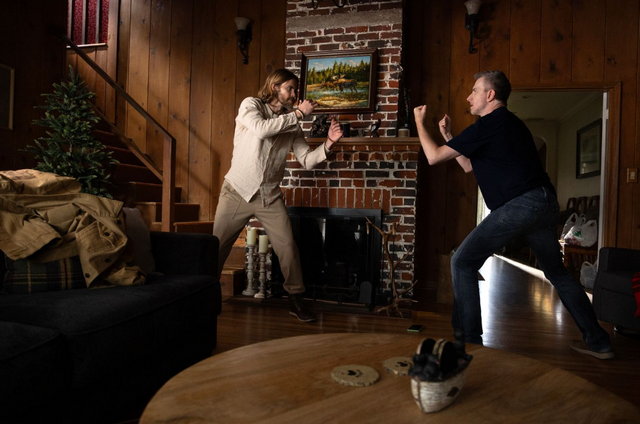
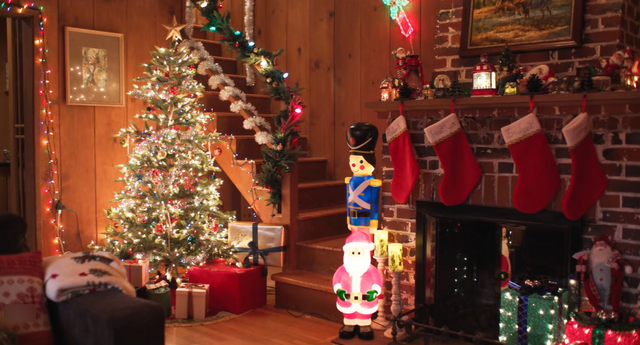
Working with cinematographer Christopher Hamilton, the McLarens have created a world of saturated reds, greens, golds, whites, and blues. Christmas sweaters, decorations, glowing lights, and carefully composed interiors maintain a cheerful visual atmosphere even as the story grows increasingly unsettling.
The Big Bear cabin is particularly striking. Warm wood-paneled walls and darker recesses are offset by the constant illumination of the Christmas tree, with its hundreds of tiny white lights adding depth and texture to the compositions. Hamilton’s framing makes particularly effective use of this practical illumination, creating an inviting environment that stands in sharp contrast to the escalating emotional and psychological tensions within it. As McLaren explained, that contrast was intentional.
“The cinematography and the production design were very important in a film like this. And just because the film kind of goes, in its two-hour arc, light to dark, comedic to dramatic, it’s important to have that kind of tone established. You want some consistency throughout, but you do want to kind of show the two sides. In the last half when we get up to the cabin, it’s got the wonderful wood on the walls and all that, and some of it’s kind of dark, especially in the attic. But we still offset it with Ralph’s Christmas love and the lights and the decorations. So it’s kind of both sides of the equation there, and it was very important for us to establish that.”
Achieving that visual balance required considerable attention in post-production, particularly during color correction.
“Mary and I worked very hard on color correction during post-production on this. We spent months on color correction, making sure that you could see the actors’ faces because some of it is in shadows, some of it’s backlit, but you’ve got the Christmas lights that are glowing, and so it’s a challenge to bring that all together. We love production value. A lot of low-budget independent movies don’t spend the time, effort, and money to do stuff like that, and it makes such a difference. I watch a lot of low-budget indies, and often they’re just shot in one location, and they have no real production design. Mary and I said no. We’re gonna do everything we can to make this look like a bigger-budget movie. And it was an effort to do that, and it takes time and effort and money. But we invested in this from the beginning. We didn’t do this casually.”
That commitment extended to the production schedule itself.
Rather than attempt to shoot the film in the seven-to-twelve-day window increasingly common among microbudget productions, the McLarens allocated 24 days for principal photography, followed by three additional days for pickups and reshoots.
“We shot this in 24 days of principal photography, and that’s a lot for a low-budget film, or lower-budget film, as I like to call it. Most low-budget indies are shot in about half the time. Some of them even shoot in a week now, like seven or eight days. For Mary and I, because we were aiming really high and we wanted value on the screen, we took the extra time and money to do the 24 days, and then we went back with our full crew and cast and did three additional days of reshoots and pickups, so there’s 27 days in this movie.”
The extended schedule also provided greater flexibility in the editing room. With an estimated 20 hours of raw footage, McLaren had the opportunity to select performances and shape scenes rather than simply accept whatever had been captured under time pressure.
“When you do that many days, you can do a lot of different takes. You can try a lot of things, and so I made sure when I was doing my takes as Ralph that I always got at least one or two that felt particularly right just to me, and in a lot of cases that’s what we ended up using. I think the payoff is you have those choices.”
For McLaren, the lesson was simple: independent filmmaking may require compromises, but the ending of a film, its performances, and its essential dramatic material should not be sacrificed merely because the clock is running out.
TAKING CONTROL OF THE CREATIVE VISION
With McLaren appearing in so much of the film, directing himself while simultaneously managing the production would have been an enormous challenge. Matthew Bellamy handled the direction of physical production, while Tom and Mary maintained creative oversight throughout the process.
Their involvement continued well beyond principal photography, including rewrites, additional photography, editing, and post-production.
“What we did was he was the director of physical production, and I was kind of with Mary at my side, gauging, okay, this one needs to be fleshed out more. We need to change this. We need to do that. We need to expand this. And so we were in a great position to be able to do that. And then once we got through principal photography, Mary and I were able to steer the ship ourselves. And so we shot reshoots and pickups, and we did editing. We were so hands-on. I basically re-edited this film from the first cut.”
The experience reinforced McLaren’s belief that independent filmmakers must be willing to assume multiple responsibilities if they want to preserve their creative intentions.
“I think the lesson for independent filmmakers is, if you want to make a lower-budget movie and you want it to be your creative vision, you’re going to have to roll up your sleeves and you’re going to have to do a lot of these functions. It’s two reasons. One, you’ll save a lot of money certainly by doing it yourself, so you keep the budget down, but number two, it becomes your view of what the movie should be. When you get involved in filmmaking, and this is probably true whether it’s an indie film or a studio film, you’re going to be hit with a barrage of people telling you how to spend your money making your movie, but their way. And so you have to stand firm and say, okay, I hear you, but if I’ve got a different opinion and it’s a very strong opinion, then we’re going to do it our way.”
It is an approach that demanded enormous personal investment, but it also allowed the McLarens to make the film they wanted to see.

PRACTICAL MAGIC, MUSICAL MEMORIES, AND THE PEOPLE BEHIND THE CRAFT
Among the film’s many pleasures is its embrace of practical effects, including alien makeup associated with the fictional “The Alien Who Saved Christmas”.
The involvement of Academy Award-winning makeup effects artist Howard Berger was particularly exciting for McLaren. Berger provided the alien mask used in the movie-within-the-movie, adding another layer of authenticity to the lovingly constructed fictional Christmas classic.
“Howard Berger. What an A-list! And the mask that we used for our movie within the movie, The Alien Who Saved Christmas, it’s utterly perfect. It’s just stunning. I pinch myself that we got Howard to let us use that mask.”
The film also benefits from the work of stunt coordinator Alex Kingi, part of a family with a distinguished history in the stunt profession. Kingi is the son of legendary stuntman Henry Kingi and actress Lindsay Wagner, whose longstanding friendship with the McLarens made this collaboration particularly meaningful.
And for viewers paying particularly close attention, the poster for “The Alien Who Saved Christmas” contains two more surprises: Wagner’s name among its fictional credits and the unmistakable Jupiter 2 spacecraft from Lost in Space.
“We had hoped that she was going to be able to do a cameo in the movie, but it didn’t unfortunately work out. But we brought Alex in to be our stunt coordinator. Look at the movie poster for ‘The Alien Who Saved Christmas’. Two great nods on there. First, look at the credits. You will see Lindsay Wagner’s name in that movie. So that’s our nod to her. We asked if we could use her name on the poster as an Easter egg, and she said yes. And then look also at the poster. One enhancement that I put in at the end, which got added. That spaceship, it’s the Jupiter 2 from the TV series Lost in Space.”
The practical effects become particularly important as the story takes its darker turns. McLaren was enthusiastic about keeping those effects tangible rather than relying on digital spectacle.
“Practical effects were very important to us. We didn’t have studio money to do the fancy CGI where the Empire State Building falls down. But I think what we have with a little bit of blood and gore are some practical effects that are very effective. So I’ll let people see that when it kicks into the movie a little bit later.”
And then there’s the duct tape. Yes, duct tape.
Without revealing precisely how it figures into the proceedings, suffice it to say that RALPH’S PERFEKT CHRISTMAS demonstrates a wonderfully inventive appreciation for this most versatile of household essentials. McLaren laughed when I confessed my own cinematic affection for its many uses. “I think duct tape is the answer to everything.”
Music is equally integral to the film’s tonal identity. Composer Alexandre Côté blends an original score with familiar holiday music, allowing the soundscape to reflect the shifting emotional undercurrents of the story. McLaren was particularly pleased that Côté supplemented his electronically produced material with live musicians for selected dramatic moments.
“Alexandre is so talented. He did bring in some live musicians to supplement the music. Some of what you’re hearing there is done the way musicians work nowadays with keyboards and computers and all that kind of stuff. They create their magic at their studio, but he did do one day with live musicians. At the end of the attic scene in the final arc of the film, as Ralph exits the attic, those sounds that you hear, those are live musicians to have that dramatic impact as he’s actually walking out of the room. It was so important to us to have this special feel, and we were in sync with Alexandre about this. We were very grateful to spend that time to actually bring in a real score.”
The soundtrack also features music by Bill Mumy, a performance by Jill Schoelen, and Susan Anton singing “Jingle Bells” over the end credits. Schoelen’s recording of “Have Yourself a Merry Little Christmas” became an especially emotional addition to the film, arriving after production had wrapped.
“That was not originally planned either, and after we had wrapped the film, Jill, who’s a singer and has done a Christmas album, sent us this song. And the minute I heard it, I said, oh my God, I know exactly where this is going to go in the film. For a long time, when Mary and I were editing the project, when Jill’s song would cue and come in, Mary and I would tear up and we’d start to cry. And it took a long time, and Mary still tears up to this day when she hears it. There’s just sometimes this little magic goosebump feeling where something just feels so right.”
It is that emotional connection, perhaps more than anything else, that explains the McLarens’ extraordinary investment in this film.
WHAT MAKES A PERFEKT CHRISTMAS?
For all its wild humor, unexpected developments, affectionate cinematic references, and increasingly dark twists, RALPH’S PERFEKT CHRISTMAS ultimately springs from a simple love of movies, characters, and the emotional connections that make stories memorable.
McLaren has little interest in creating a conventional holiday romance whose outcome can be predicted before the opening credits have finished rolling.
“We want to connect with characters, and so we tried to make a movie that we wanted to see, and we hope that there’s others who still have a place in their hearts for this kind of movie. There’s more to life than DC and Marvel franchises, and there’s more to life than these cookie-cutter formula movies where you know exactly what’s going to happen. You know, at the end of that Hallmark Christmas movie, they’re going to kiss under the mistletoe. We didn’t want that. We wanted something different.”
And different is precisely what Tom and Mary McLaren have delivered.
But after five years of production, countless creative decisions, a remarkable collection of performers, and a Christmas movie that turns holiday expectations on their head, there was one question I simply had to ask.
We’ve seen Ralph Bailey’s idea of a perfect Christmas. What is Tom McLaren’s perfect Christmas?
His answer couldn’t have been more endearing.
“I’m a simple guy, and it doesn’t have to be fancy, but my perfect Christmas is just spending time at home with my wife Mary, my two cats Cleo and Amber, who pop up throughout the movie, incidentally. That’s my happy place. And so for me, I just want to spend the day with them, and have our Christmas music playing and watch our Christmas movies. And Mary’s a great cook; she does a Christmas dinner, so it’s kind of just a special day, just at home with my family. So I guess I’ve got that in common with Ralph. I really just love my family, and that’s my happy place.”
No elaborate schemes. No kidnapped former child stars. No Christmas catastrophe waiting around the corner.
Just Mary, Cleo, Amber, a wonderful dinner, and the Christmas movies that started it all. Now THAT sounds like a perfekt Christmas.
RALPH’S PERKEFT CHRISTMAS is now available On Digital.