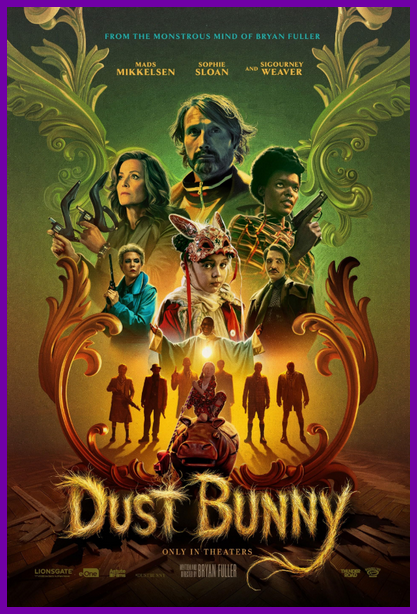
Somewhere between a fairy tale, a Saturday morning cartoon, and a childhood nightmare you weren’t quite ready to name yet, DUST BUNNY scampers gleefully into view — candy-colored, mischievous, and quietly profound. This is a film where imagination is not only encouraged, it’s weaponized, and where monsters are less about what lurks under the bed than what lives inside us.
There is a particular kind of cinematic joy that comes from watching a filmmaker finally let their imagination run free — not recklessly, but with intention, discipline, and decades of creative muscle memory behind them. DUST BUNNY, the feature directorial debut of visionary storyteller Bryan Fuller, is exactly that kind of film.
It is, quite honestly, a sumptuous visual feast — a candy-colored, fairy-tale nightmare that revels in whimsy, danger, and emotional truth. Every frame feels designed, yet nothing feels artificial. This is a film that understands that imagination isn’t an escape from reality — it’s one of the ways we survive it.
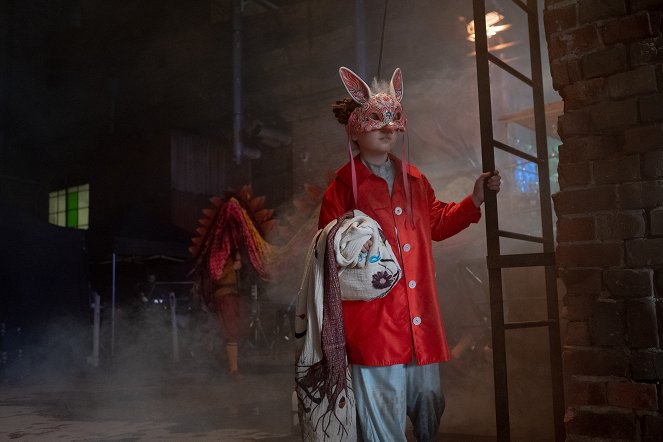
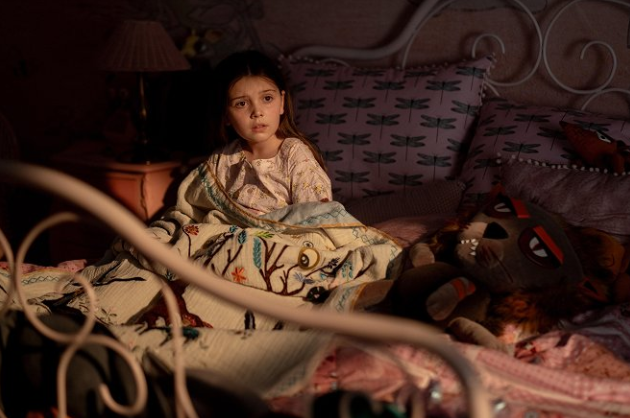
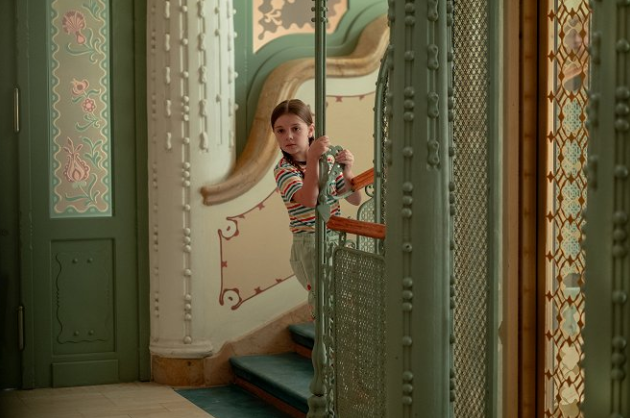
At the center of DUST BUNNY is ten-year-old Aurora, played with pitch-perfect precociousness by Sophie Sloan, in a performance so assured it feels almost miraculous. The camera absolutely loves her, but more importantly, the film trusts her. Aurora believes a monster has eaten her family. So she does what any resourceful child might do: she hires a professional.
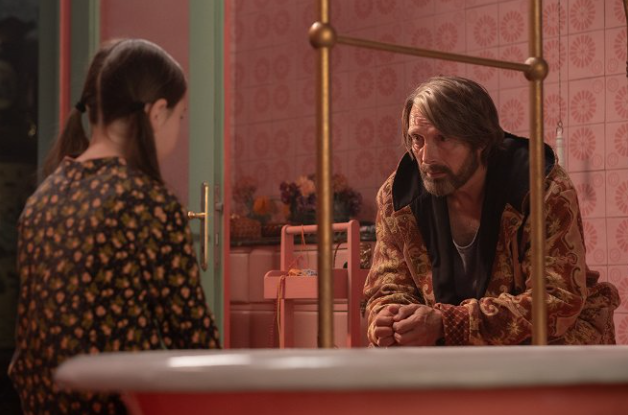
That professional is “The Neighbor,” a hitman for hire played by Mads Mikkelsen, whose deadpan comic timing here is nothing short of exquisite. The chemistry between Sloan and Mikkelsen is pure magic — the kind you can’t manufacture. Their first scene together, in which Aurora attempts to hire him to kill the monster under her bed, is one of the film’s highlights.
Aurora has $27.42, stolen from the church collection plate. Is it enough for his services?
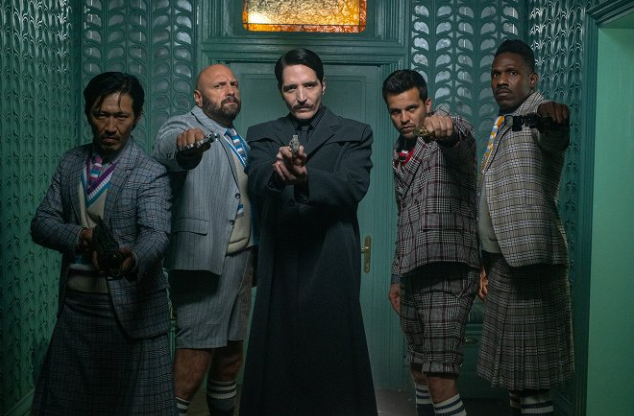
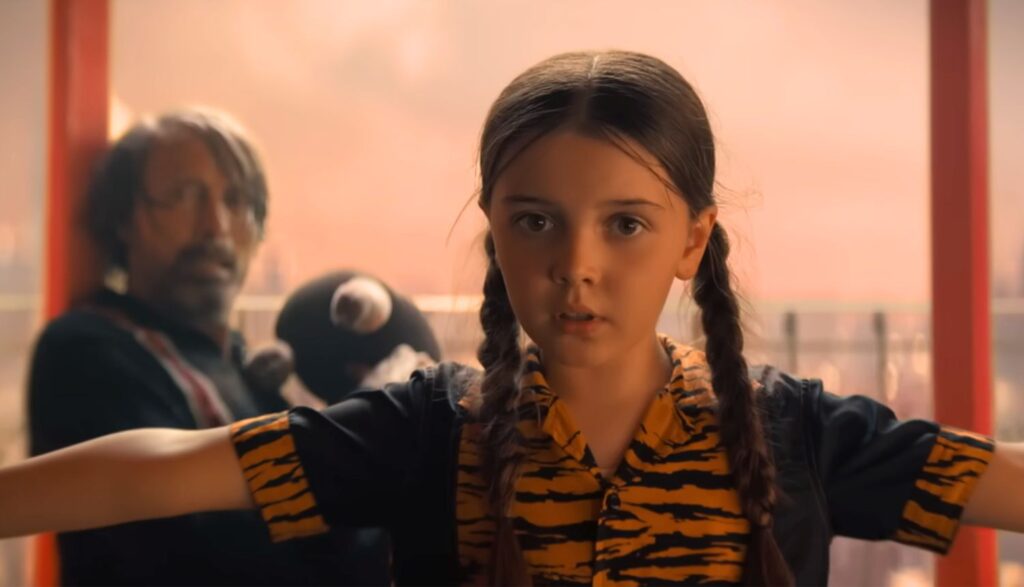
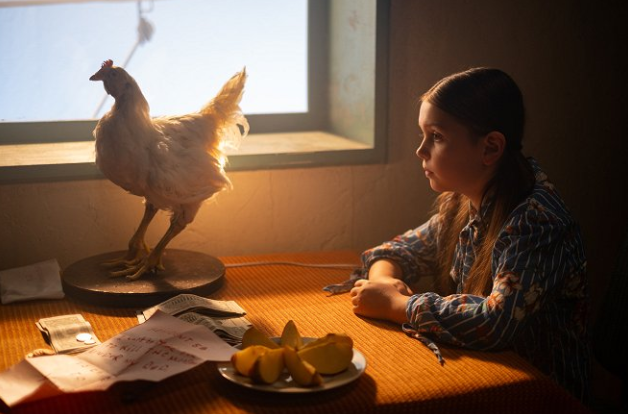
They negotiate solemnly, seriously, with a stuffed chicken lamp between them — Aurora clicking it on and off every time he speaks. Neither breaks stoicism. It’s absurd, funny, and weirdly tender all at once. Fuller stages the moment with absolute confidence, letting the humor come from restraint rather than mugging. It’s a masterclass in tonal control.
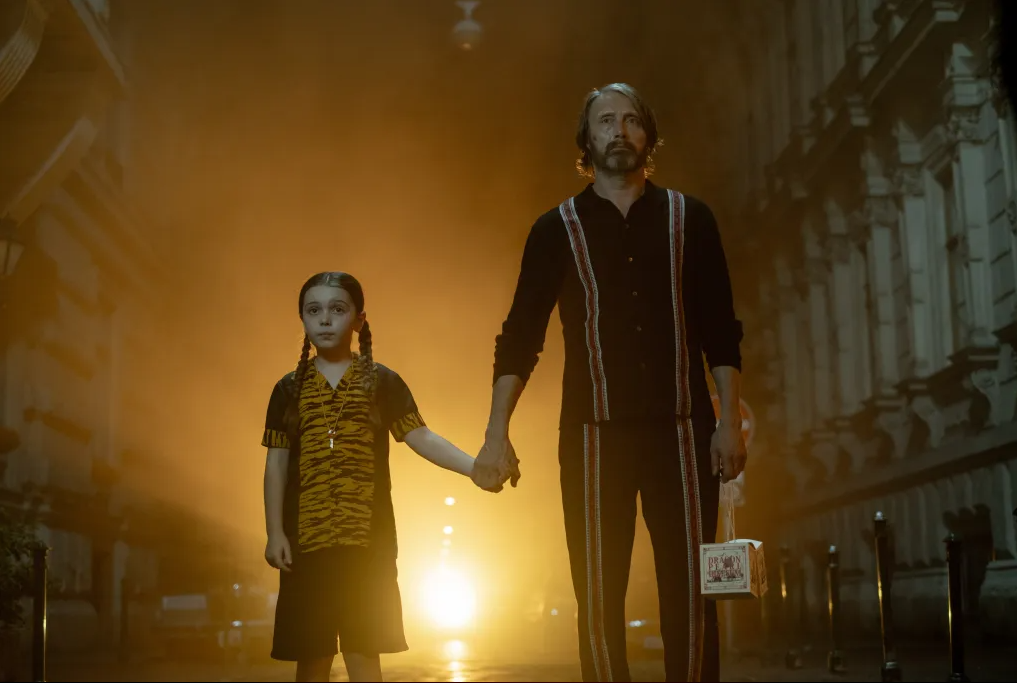
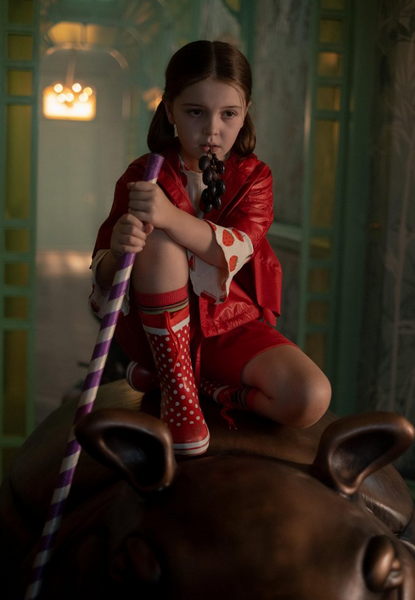
That church heist, incidentally, is paired with a needle drop of “The Lord’s Prayer” by Sister Janet Mead, one of several inspired musical choices that underline Fuller’s playful sense of juxtaposition. Another comes at the film’s end with “Tiger,” perfectly matching Aurora’s inspired outfit — complete with tiger-stripe touches — and the film’s final emotional release.
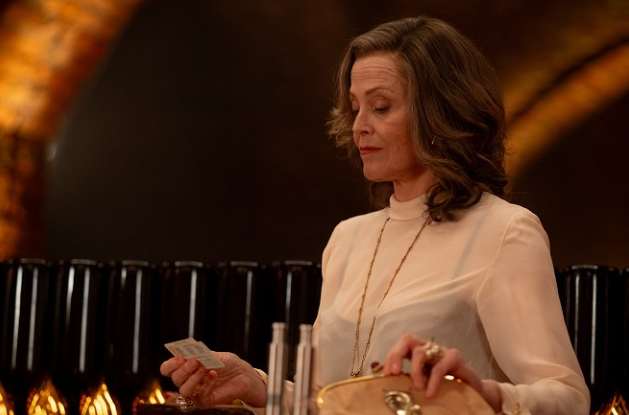
As “The Neighbor’s” glamorous handler Laverne, Sigourney Weaver is sublime. Draped in fashion-forward elegance, she weaponizes four-inch stilettos that quite literally turn into guns. (And yes — suddenly Maxwell Smart’s shoe phone feels very quaint.) Weaver understands exactly what film she’s in and pitches her performance accordingly: heightened, stylish, and deliciously controlled.
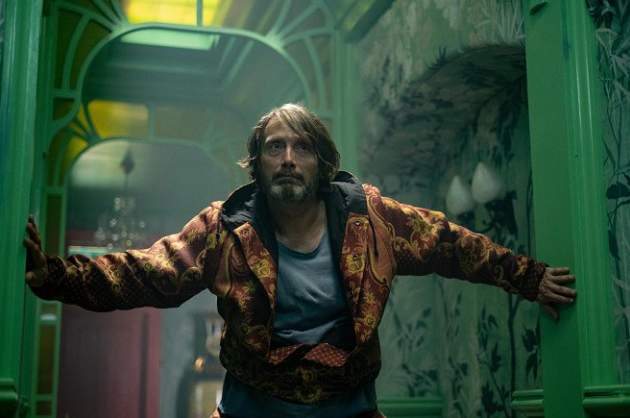
Strong supporting turns come from Sheila Atim as FBI Agent Brenda and David Dastmalchian as the memorably named “Conspicuously Inconspicuous Man,” both of whom add texture without ever pulling focus from Aurora’s emotional journey.
One of Fuller’s smartest choices is restraint. For all of the film’s monsters — including a Chinese dragon and the feral, Sendak-esque creatures surrounding Aurora’s bed — the central monster remains largely unseen until late in the film. We don’t fully see it until roughly the one hour and twenty-three minute mark, allowing dread, imagination, and Aurora’s inner life to do the heavy lifting. When the monster finally reveals itself, it feels earned — not as spectacle, but as emotional culmination.
Visually, DUST BUNNY is a triumph of collaboration. Production designer Jeremy Reed, cinematographer Nicole Hirsch Whitaker, and costume designers Olivier Bériot and Catherine Leterrier work in perfect harmony, creating a heightened fairy-tale world where undulating wallpaper, gilded elevators, lush luncheons, aquarium restaurants, and storybook textures coexist effortlessly. Color is king here — golds, greens, pinks, and reds form a palette that feels both comforting and unsettling, a kind of “candy-coated therapy” that allows horror to be experienced without brutality.
Whitaker’s camera language — rooted firmly in Aurora’s POV with floor-level and under-the-bed angles — keeps the film grounded in childhood perspective, even as the visual grammar pushes boldly into stylization. That grounding is key. Because the performances remain emotionally truthful and restrained, Fuller earns the right to go big everywhere else.
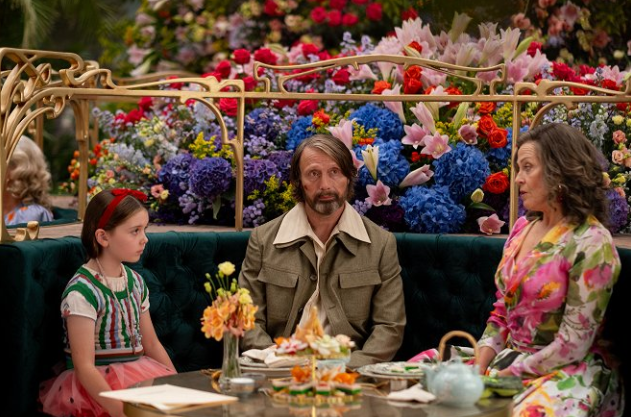
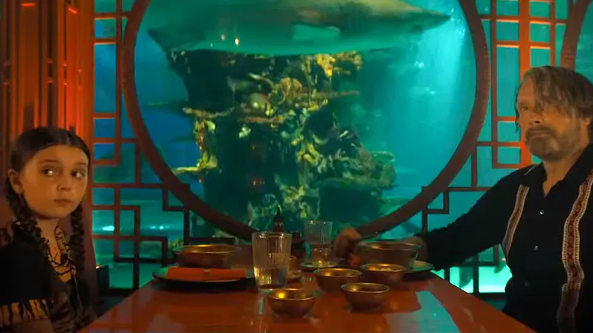
Tonally, the film draws deeply from Amblin-era “gateway horror” and classic Looney Tunes logic — danger that feels real, but buoyed by rhythm, color, and humor. Fuller understands that fear, when filtered through imagination, can become something empowering rather than paralyzing. The result is a film that is intense but playful, macabre yet oddly comforting — a “safe place to be scared.”
For a first feature, DUST BUNNY is astonishingly assured. But then, Bryan Fuller has been preparing for this moment his entire career — building worlds, shaping tone, and trusting audiences to follow him into strange, beautiful places. With DUST BUNNY, he doesn’t just arrive as a feature director. He arrives fully formed.
In the end, DUST BUNNY reminds us that monsters don’t always need to be slain — sometimes they need to be understood, carried, and lived with. And in giving imagination full permission to become physical, Bryan Fuller delivers a film that is as comforting as it is unsettling — a twisted bedtime story that lingers long after the lights come up.
Written and Directed by Bryan Fuller
Cast: Sophie Sloan, Mads Mikkelsen, Sigourney Weaver
by debbie elias, 11/25/2025