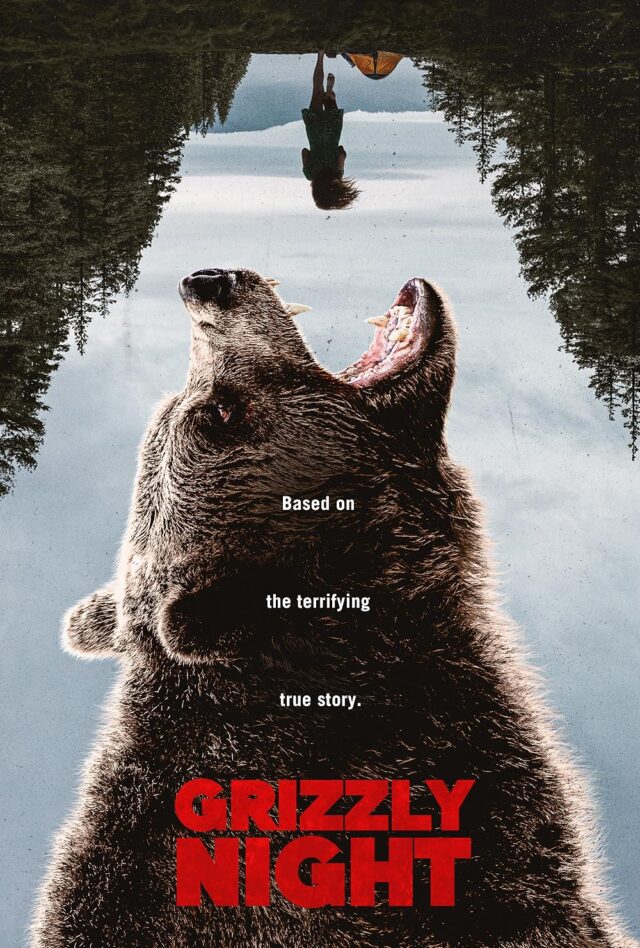
There are movie nights that are scary because a filmmaker wants them to be, and then there are nights that are scary because history already wrote them that way. GRIZZLY NIGHT draws from the terrifying grizzly attacks at Glacier National Park—an incident so consequential it reshaped how we think about wildlife, wilderness, and our own responsibility within it. In the aftermath, the country was forced to confront not just what happened that night, but how casually humans had been inviting danger into wild spaces—and how close we came to erasing the grizzly altogether in the panic that followed.
The true story behind GRIZZLY NIGHT is the kind of material that doesn’t need embellishment: the infamous August 12, 1967 grizzly attacks at Glacier National Park—two fatal incidents nine miles apart in the same night—followed by a crisis that forced park staff and civilians to make impossible decisions in the dark as a rookie park ranger is thrust into the fight of her life when Glacier National Park becomes the scene of deadly grizzly attacks. As various groups of hikers spread over a multi-mile radius encounter grizzly attacks, panic spreads, and communication breaks down, forcing Ranger Joan Devereaux to lead the group of frightened strangers through the darkness, confronting both the untamed wilderness and her own fears.
It’s a situation built for suspense, and director Burke Doeren’s film understands one crucial thing right away: you don’t “juice” reality like this for entertainment without losing what makes it powerful.
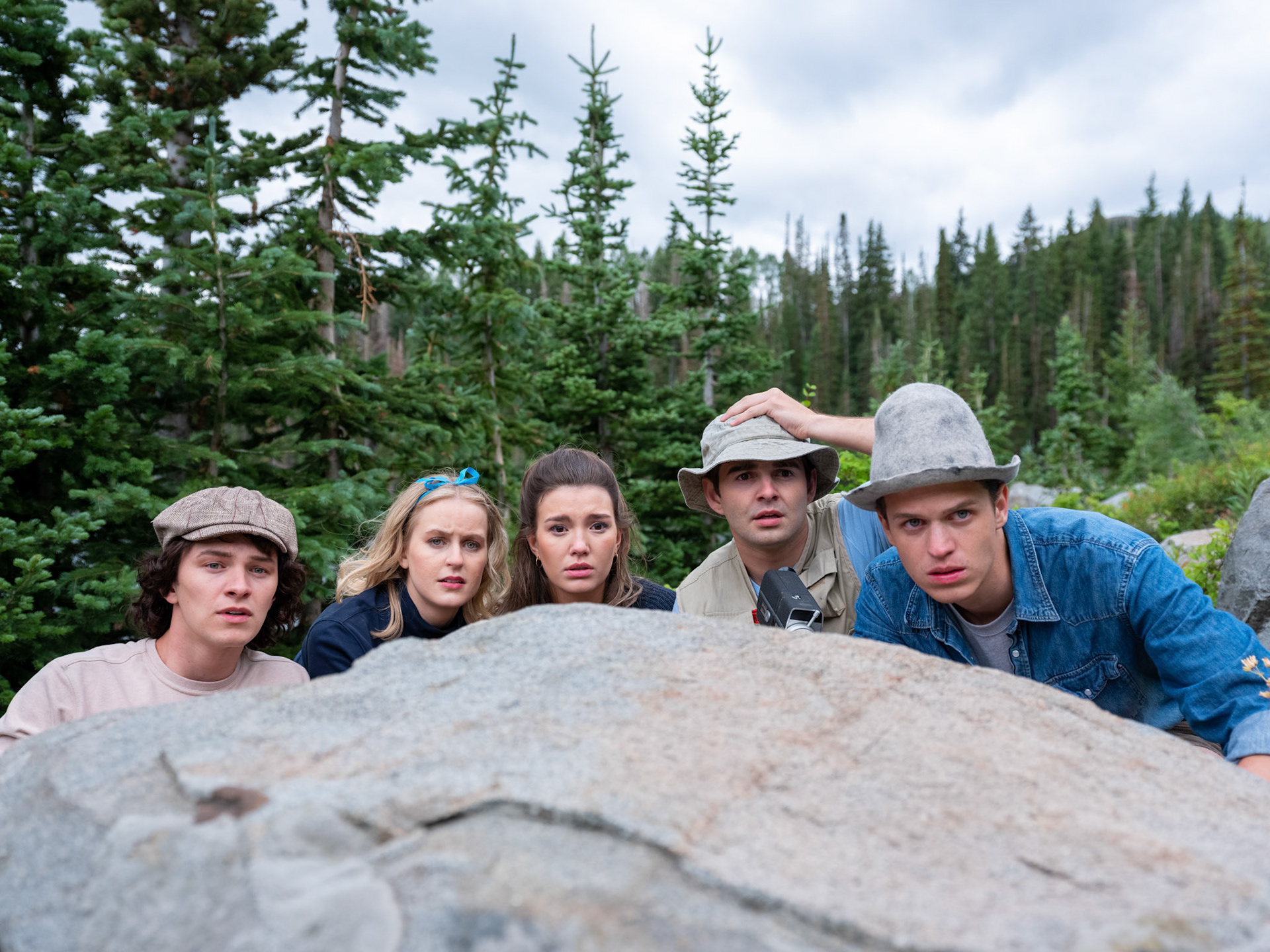
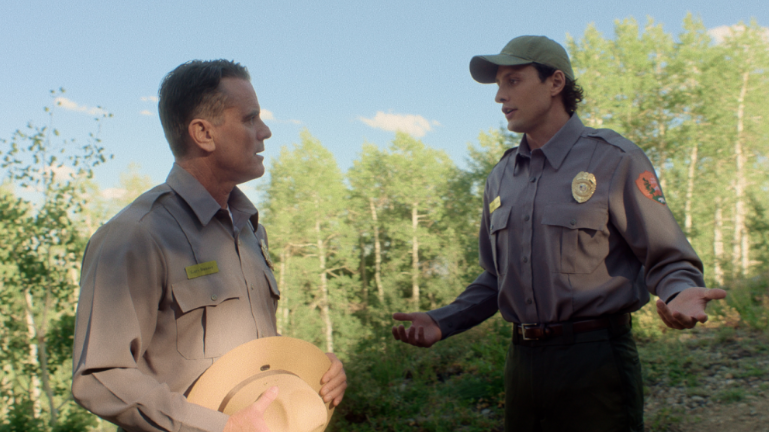
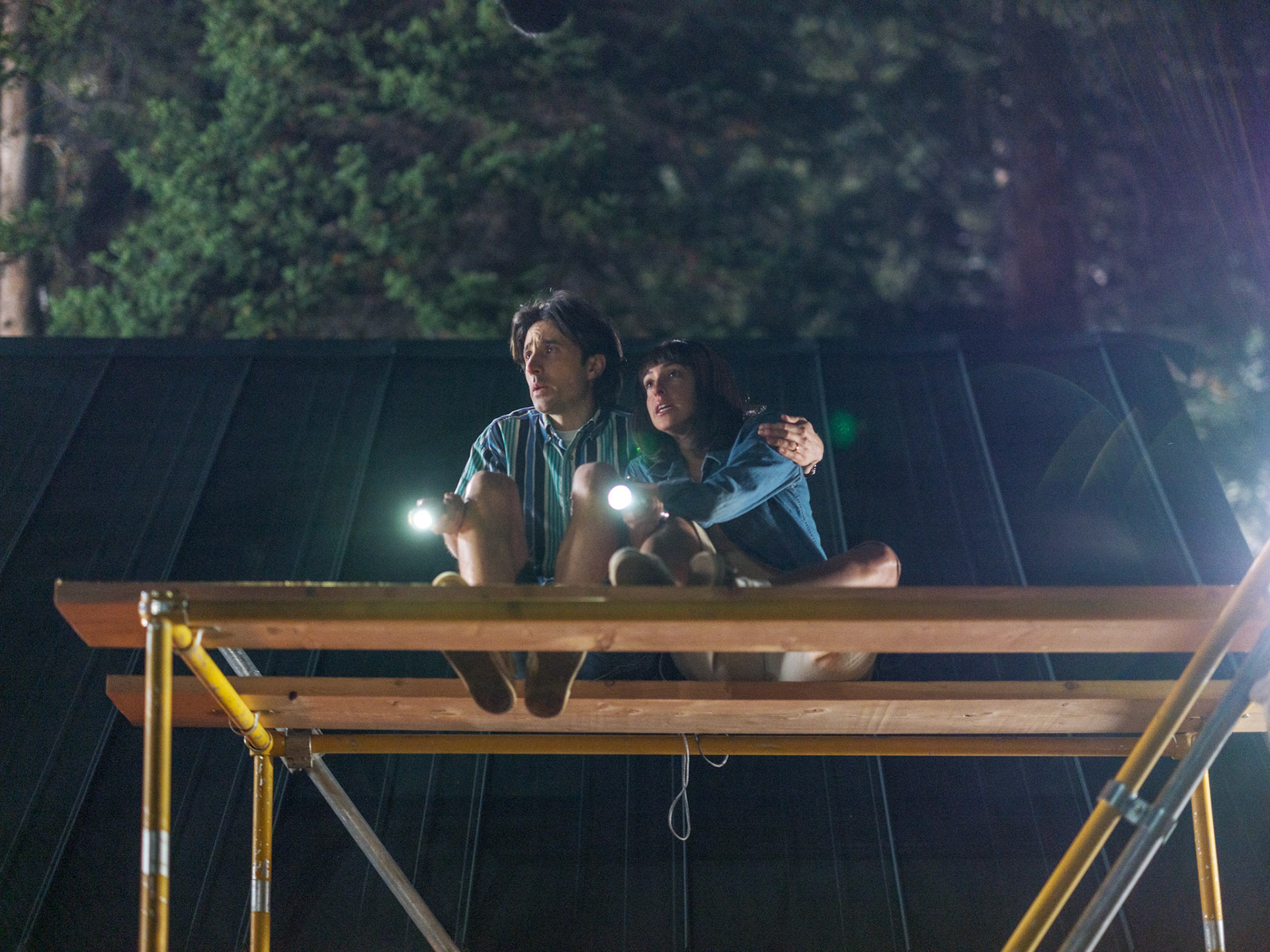
Doeren calls the film “a dramatic historical thriller with horror elements,” and that intent is visible in his restraint. GRIZZLY NIGHT generally avoids the cheap adrenaline of creature-feature sensationalism. Instead, it plays tension as a slow tightening knot: silence, distant movement, a creeping presence you can’t place, and the horrible split-second when “something out there” becomes “right here.”
At its best, GRIZZLY NIGHT works because it treats the wilderness like a character—not a backdrop. The film’s strongest scenes are built on atmosphere and proximity rather than gore, creating a dread that feels less like a genre trick and more like a warning.
Doeren’s craftsmanship is most impressive in two departments: visuals and sound.
Visually, he and his team chase a period-flavored “1967” grammar—stable compositions, intentional movement, and a look shaped by lens choice and texture rather than flashy modern gloss. Just as importantly, his staging choices reveal a safety-first intelligence: when the bear is “close,” it’s often movie magic. The fear is engineered through perspective and editing rather than risk.
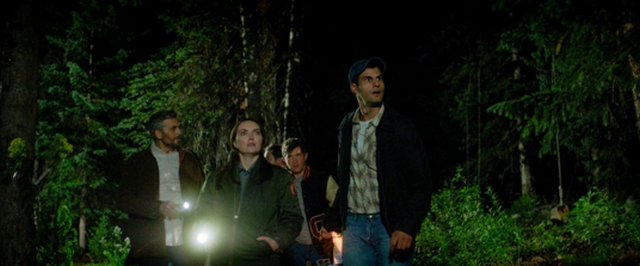
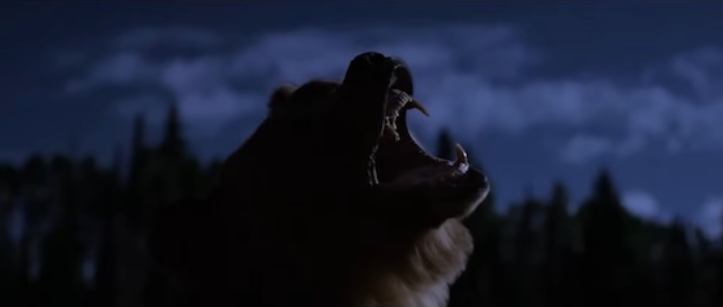
For much of the film, cinematographers Brian Mitchell and Ian Start keep the camera “very stable and thoughtful and intentional in how it moves or doesn’t move”, echoing historical dramas. In bear encounters, they break that calm with frenetic, subjective POV, and we feel as if we are in the POV of the hikers being chased by the bear or lying beneath it. Aerial night shots done in a helicopter are thrilling and chilling, while interstitials of the beauty of Glacier National Park shot for this film showcase the majesty and wonder of the region. A nice contrast against the ursine terror.
At night in the real woods, it is complete darkness. No ambient city light, no spill. It’s an ideal canvas for unseen horror. Thanks to gaffer Steve Lundgren, the lighting that was brought in was rigged so that DPs Mitchell and Start could maintain deep, naturalistic darkness with selective pools of light. Daytime celebrates the natural light of the sun, the reflections of a fresh water lake, the pristine snow-capped mountains in the distance, lush foliage, and blue skies.
But it’s the sound that does the heavy lifting. GRIZZLY NIGHT is sonically driven: silence as suspense, the smallest ambient details as alarm bells, and carefully layered cues that tell you more than the camera will. In scenes where other films might cut to carnage, this one often stays with breath, fabric, and off-screen violence—letting audio carry the horror while the visuals remain judicious. The result is often more unsettling than explicit imagery.
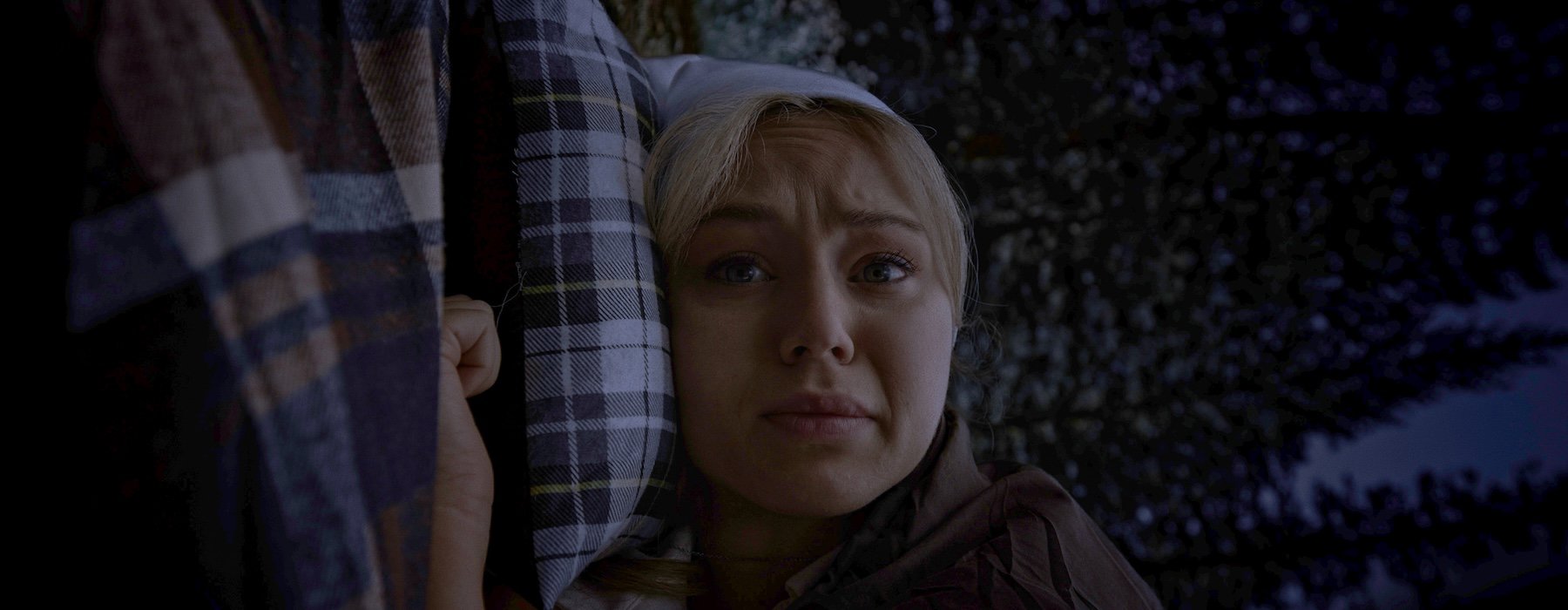
GRIZZLY NIGHT begins in near silence—burned out campfires, midnight woods, no civilization hum. Then come subtle approach sounds: soft footfalls, sniffing, breathing, fabric movement, the weight of the bear “above” the sleeping bag. Only then does Doeren allow full screams and chaos, often paired with minimal imagery—fluff from a torn sleeping bag, a single blood spot—so the audio carries most of the horror. The pattern becomes, we hear silence, we hear growls, then we hear screams – a consciously Hitchcockian rhythm that uses what you hear and don’t hear to ratchet tension.
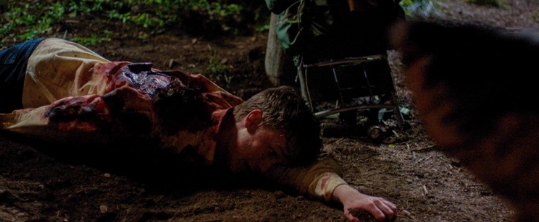
With so much detail in the bear and nature soundscape, Dan Reckard’s score had to be woven carefully around it. Sonically structured so that we really “feel the bear” and the environment first, Reckard then builds a score of eerie harmonica, dobro, guitar textures, piano, and folk-tinged elements that fill the space but don’t compete with the sound design or ambient sound. Dialogue remains clear—a must in an ensemble where every voice matters to the historical record—while leaves, distant storms, stealthy footfalls, and ripping fabric are preserved with just as much importance. Mixed for Dolby 5.1 after extensive iteration, the final track uses restraint, real-world recordings, and spatial detail to tell us, in sound alone, exactly how close we are to the edge.
The problem is that GRIZZLY NIGHT doesn’t always know what it wants to be, and audiences feel that uncertainty. It gestures toward multiple films at once: historical drama, survival thriller, cautionary tale, park-system commentary, even a character-led portrait of a woman navigating authority in a crisis. It’s not that “multi-genre” is inherently bad—Doeren openly embraces that label. It’s that the film doesn’t consistently commit to any one mode strongly enough to fully land its emotional payoff.
And that matters most when it comes to Joan Devereaux, the park ranger at the story’s center. Lauren Call gives the role steadiness and conviction, and the film clearly wants her to read as capable and inspirational. But the narrative too often treats Joan as a functional anchor – someone who keeps the group moving—rather than fully excavating her interior experience as a woman carrying the weight of leadership in a moment that would break most people. The plot stays near her point of view, yet her deeper story remains at arm’s length.
That’s the film’s most frustrating near-miss: it has a protagonist with built-in complexity and historical significance, but it only sketches the outline when the material begs for depth.
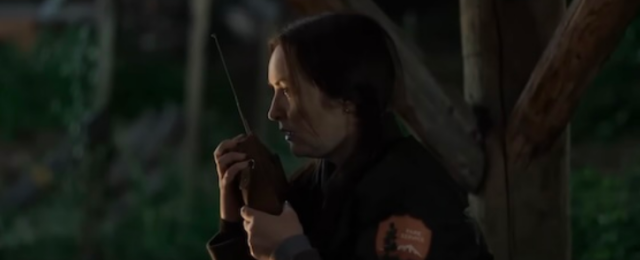
Again, the biggest hurdle GRIZZLY NIGHT faces isn’t the bear—it’s definition. Watching the film, you can feel it reaching toward several different versions of itself at once: historical drama, survival thriller, cautionary tale about tourism and the park system, even a character-driven portrait of Ranger Joan Devereaux. Burke Doeren embraces that multi-lane approach, grounding it in an authentic retelling that feels real at every turn. And that’s a valid intention. The issue is execution. The film doesn’t fully commit to—or consistently land—any single mode strongly enough to give audiences a clear emotional roadmap. And because the true events hinge not only on the attacks but on the heroic crisis leadership that followed, that tonal uncertainty has a cost: it blunts the film’s most compelling human engine.
For an indie, the ensemble is sizable, and when the film leans into human dynamics under pressure, it gains texture. Oded Fehr’s presence is especially grounding; he’s the kind of actor who can stabilize a scene with minimal fuss, and his calm competence becomes a welcome counterweight to panic. Brec Bassinger stands out as Julie, one of the bear’s victims, sustaining a collapsed lung and multiple maulings over her body, all brought to life by special effects makeup artist Abigail Steel as we see blood and tissue “balloons” form with each breath Julie attempts to draw.
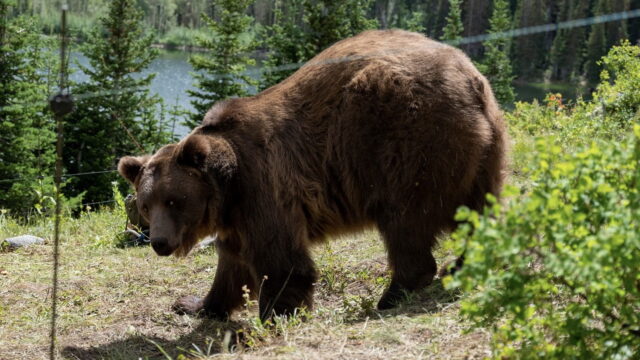
Not to be overlooked is a bear named Tag who does his menacing best, albeit at a distance from the actors when he is being filmed, to keep us on our toes and scared to death.
GRIZZLY NIGHT delivers real tension and impressive craft—especially in its sound design and atmosphere—but it never quite chooses its identity with the confidence the story demands. The night itself is unforgettable; the film, at times, feels like it’s still deciding what kind of movie it wants to be.
Directed by Burke Doeren
Written by Katrina Mathewson, Tanner Bean and Bo Bean
Cast: Charles Esten, Oded Fehr, Lauren Call, Joel Johnstone, Josh Zuckerman, Matt Lintz, Ali Skovbye, Sophia Gray with Brec Bassinger and Jack Griffo
by debbie elias, 01/26/2026
GRIZZLY NIGHT is now available on VOD and Digital.