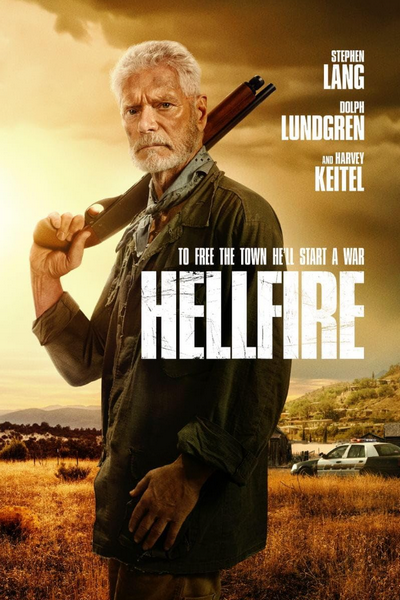
Isaac Florentine’s 1988-set Southern Gothic Western takes its time building the town’s moral rot before it lights the match — and that patience is the film’s defining virtue. In an era where action movies often mistake velocity for tension, HELLFIRE earns its violence by first making you care about what the violence means. It doesn’t sprint. It stalks.
Stephen Lang plays Nomada, a haunted ex–Green Beret drifter who wanders into a small Southern town run by crime boss Jeremiah Whitfield (Harvey Keitel) and a corrupt sheriff (Dolph Lundgren). Nomada isn’t the “guns blazing” version of Lang audiences might expect. He’s quiet. Watchful. Controlled. Florentine frames him in the tradition of Eastwood’s mythic strangers — the kind you can’t quite categorize as man, ghost, or something in between.
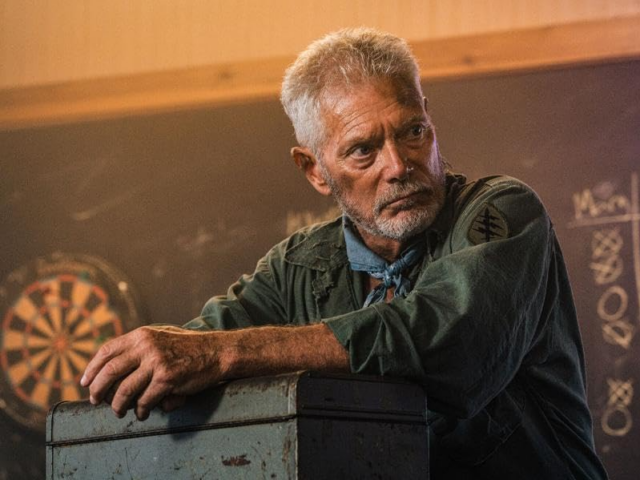
Thanks to screenwriter Richard Lowry, together with Florentine’s directorial vision, from the start, we slowly meet the townsfolk, starting with Lena (Scottie Thompson) and her father Owen (Chris Mullilnax), owners of the local saloon, and quickly followed by Whitfield’s son Clyde (Michael Sirow) and his mafioso type friends, and ultimately others in the town who are tormented by the Whitfields and their illegal operations. And being in Rondo, Texas, near the border, you can guess what those operations may be.
Much of HELLFIRE is about faith, doubt, and an “angel” figure (Lena’s arc, her necklace, the Vietnam trauma, the bathtub scene), but it never unnecessarily hits us over the head. By the time we reach the third act the violence feels like a spiritual and emotional reckoning — not random carnage. Nomada’s brutality reads as an answer to the injustice we’ve watched accumulate, with the action crystallizing the film’s themes of faith, retribution, and whether “an angel”, or redemption, can come in such a bloody form.
That mystery becomes the film’s slow-drip engine. Early scenes let Nomada exist in mundane space — fixing things, observing, withholding. The movie plants hints in posture and stillness long before it delivers the proof of the grip of hell under which everyone survives, with Lena and Owen being two of those who seek an end to it all. But how?
Florentine doesn’t keep us in the dark long about the happenings in Rondo and delivers local color and ambience at a steady flow, thanks in large part to the local brewery owned by Whitfield at which almost everyone works.
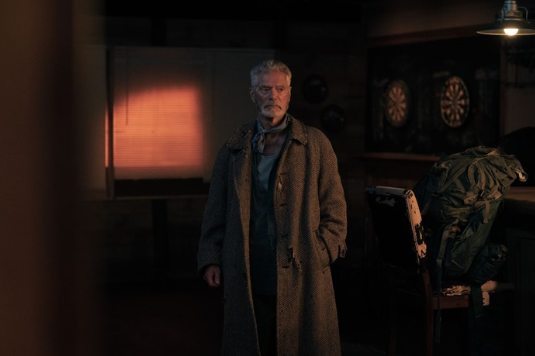
Stephen Lang’s Nomada lets Florentine lean fully into the Eastwood-style “mysterious stranger” archetype while still grounding the character in flesh and blood. An homage to High Plains Drifter and Pale Rider, playing in that space where “you don’t know if the character is a ghost… or is for real,” even wondering aloud if Nomada might be “a real angel”, Lang’s quiet, underplayed performance—his posture, the controlled way he walks, sits, and watches—plants the sense that there is far more to this drifter than meets the eye, long before the third act violence confirms it. Even his costume becomes part of the mythology; the old jacket and hat were Lang’s idea, which are likened to Eastwood’s poncho in Fistful of Dollars, turning Nomada into a figure who feels both haunted and iconic the moment he steps on screen.
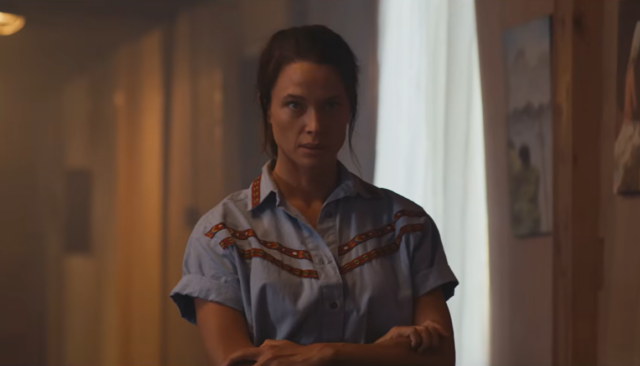
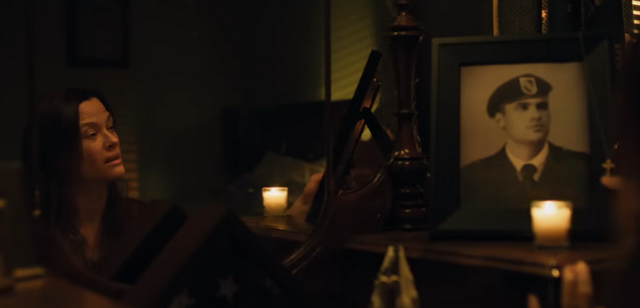
The emotional anchor is Scottie Thompson as Lena, a Vietnam War widow whose grief gives the film its spiritual undercurrent. Her arc isn’t hammered into speeches; it lives in small visual emphasis (a necklace, a held look, a silence that lasts a beat longer than comfort). It’s a smart choice — the film’s “angel” idea works best as an undercurrent, not a billboard — and Thompson carries Lena’s emotional journey as she goes from grieving, doubting war widow to someone tentatively open to the possibility that an “angel” might walk into her life. The vulnerability, faith, and physical resilience we see on screen are all anchored in that authenticity. And Thompson is as adept at action as emotional gravitas.
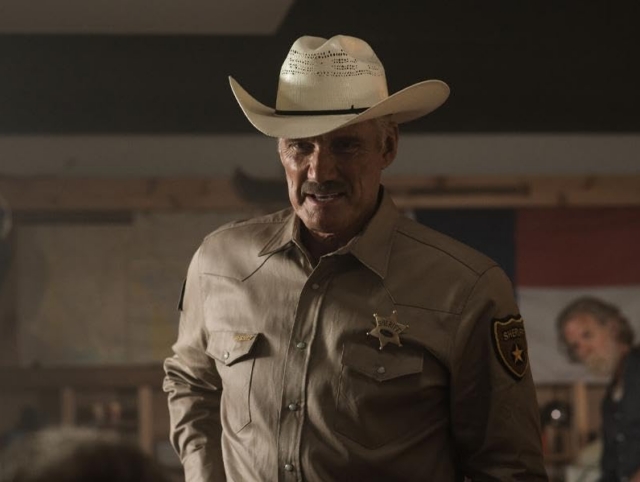
Casting Dolph Lundgren as Sheriff Wiley is one of Isaac Florentine’s smartest against-type moves in HELLFIRE. Audiences are conditioned to see Lundgren as the dominant heavy or steely hero. Even I would have expected him to be cast as Jeremiah Whitfield over Harvey Keitel, but given Florentine’s long history with Lundgren, he knows of his intelligence and great sense of humor. With that in mind, Florentine seized the chance to have him play a slightly buffoonish, redneck lawman, complete with a mustache that feels more small-town than mythic, and delivering lines like “something’s brewing and it doesn’t taste good” with a straight-faced gravity that walks a fine line between foreboding and dry absurdity.
The result is a performance that undercuts the usual Lundgren persona just enough to be surprising and slyly funny, yet still believable within the film’s dusty, morally corrupt world; Wiley becomes another “real person” in Florentine’s gallery of flawed small town figures, not a hulking genre cliché dropped in for name value.
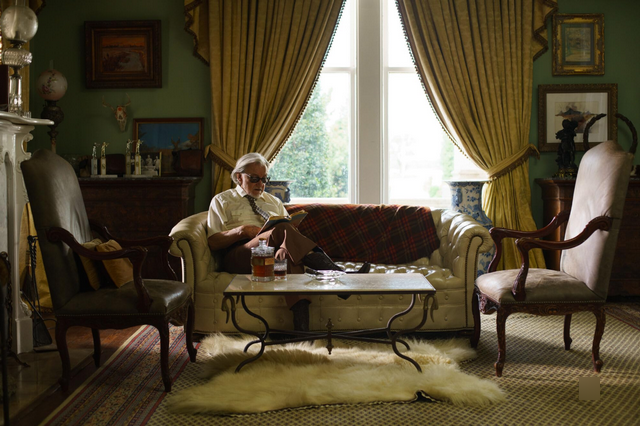
As Jeremiah Whitfield, Harvey Keitel gives HELLFIRE the kind of flinty moral and emotional anchor only a performer of his weight can supply, which is crucial given how much of the film’s tension runs through Jeremiah’s toxic relationship with his “lame ass” son Clyde, expertly played by Michael Sirow. Keitel is perfect as Jeremiah and brings an onscreen ease that translates into a performance that feels lived-in rather than showy. Jeremiah is at once patriarch, tyrant, and decaying small town kingpin, a figure whose presence justifies the fear and resentment swirling around him and whose downfall makes the story’s spiritual reckoning land with extra force.
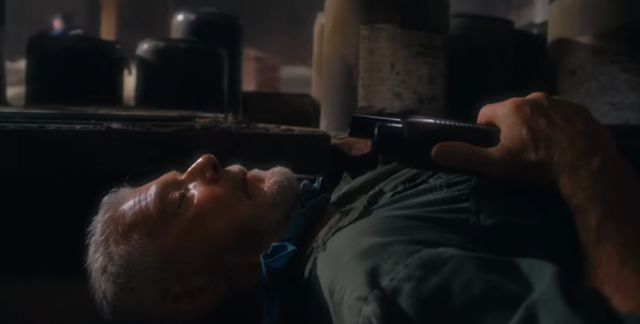
When the action finally detonates — particularly in the third act brewery set-piece — it lands as payoff rather than interruption. Florentine stages violence as revelation. Nomada’s physical competence isn’t “cool,” it’s confirmation. Styles vary. Space matters. The choreography feels tied to character history and hierarchy, not just choreography for choreography’s sake. Nomada’s fighting style — efficient, controlled, varied — communicates history without exposition. Each movement reinforces the sense of a man who has survived multiple wars, internal and external. And Stephen Lang does the majority of his fight sequences himself. The violence becomes spiritual punctuation.
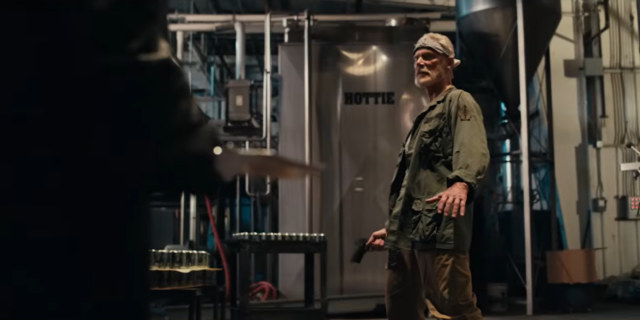
Due to budgetary constraints, Florentine handed off the lensing of second unit car chase exteriors to Randy Hall, and the fights were largely choreographed and prepped by Johnny Yong Bosch and Hall, both of whom were crucially chosen because their style is seamless with Florentine’s.
Visually, Florentine and longtime DP Ross W. Clarkson squeezed scope from modest means. Classic wide-screened Western action framing gives the town a mythic weight, while close wide-lens work makes faces feel carved into the screen. Even limited locations become expressive — a silo sequence, in particular, uses 360-degree space to keep the imagery constantly reorienting. The silos become a showcase for Clarkson’s camera operating – moving through 360-degree spaces, while embracing Florentine’s love of wide lenses in close – faces, bodies, and architecture all dynamically interacting.

Flashbacks to Nomada’s time in Vietnam are bright, sunlit, with foliage heavy, and visually distinct from the stark oppressive present. They are cut rapidly, almost abstractly, with “psychological editing”. Structurally, these flashbacks connect Nomada’s trauma to Lena’s loss and give weight to the idea that he may be an “angel”, or a ghost of that war, walking through yet another battlefield. The soundscape (helicopters, bullets, etc.) makes the flashbacks feel larger than their modest production scale, intensifying the mythic sense around him. By the time we hit the final fight, those brief glimpses have reframed Nomada as someone whose violence is rooted in deep history, not just genre convention
Paul Harb’s editing does quiet heavy lifting — stitching flashbacks and present-day moments into a psychological rhythm that suggests trauma as an ever-present echo rather than a neatly contained “backstory.” Standout sequences of a brewery fight, bathtub intercuts, and credit dissolves, all sustain the ambiguous, almost spiritual tone right up through the credits. And the film’s final editorial choices resist over-explanation, leaving you with mood and moral residue instead of tidy answers. He sustains tonal balance so that violence never overwhelms the film’s spiritual undercurrent and quiet moments never stall momentum.
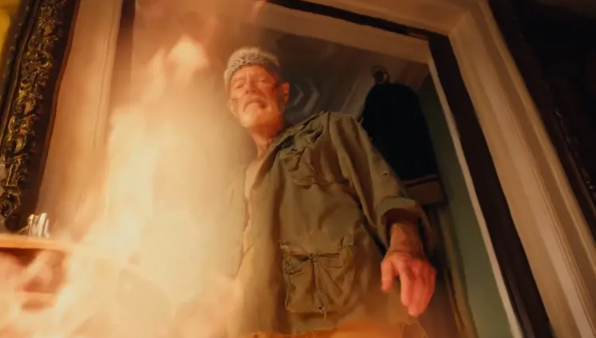
If HELLFIRE has a drawback, it’s that the deliberate first-half build may test viewers looking for immediate propulsion. But for anyone willing to let the town’s corruption steep — and let Nomada’s mystery simmer — the late-film ignition feels earned.
Florentine delivers an old-school satisfaction here: a Western-shaped moral reckoning, executed with craft, patience, and a controlled burn that turns to true hellfire exactly when it should.
Directed by Isaac Florentine
Written by Richard Lowry
Cast: Stephen Lang, Harvey Keitel, Scottie Thompson, Dolph Lundgren, Michael Sirow, Chris Mullinax, and Kim Estes
by debbie elias, 02/06/2026
HELLFIRE is available on Digital and On Demand on February 17, 2026.