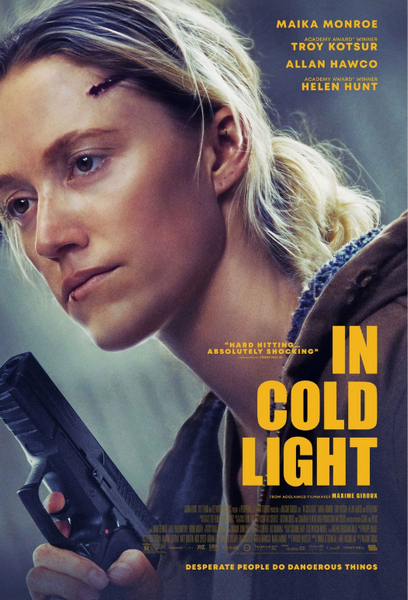
There’s a quiet confidence to IN COLD LIGHT — the kind that doesn’t rush to grab you by the collar, but instead asks you to watch carefully, listen with your eyes, and settle into a rhythm that reveals itself gradually. Working from Patrick Whistler’s screenplay, director Maxime Giroux builds his crime drama from image, silence, and restraint, trusting that if you lean in, the film will eventually hit the accelerator — and when it does, it doesn’t let go.
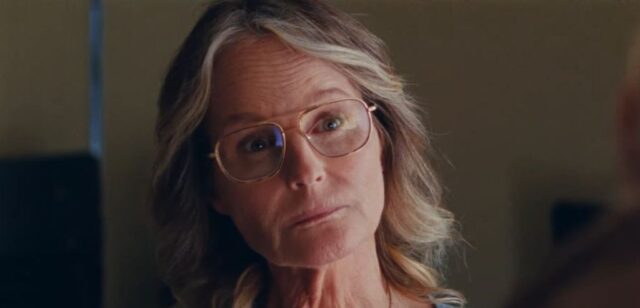
Fresh out of prison and intent on reclaiming control of her fractured drug operation, Ava (Maika Monroe) re-enters a world that has already moved on without her. What unfolds over the next 96 minutes is a tightly contained, real-time descent — one that takes place largely over a single night — as Ava finds herself framed for a killing and hunted by both the police and a ruthless crime boss, Claire, played with icy authority by Helen Hunt.
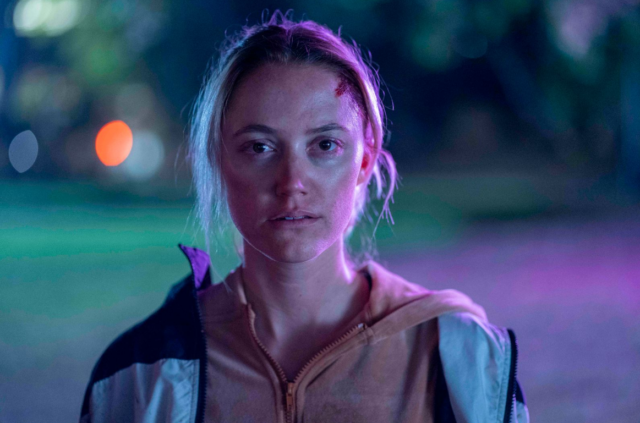
Giroux delivers a slow-burn crime thriller that privileges observation over exposition, building tension through image, silence, and restraint. Anchored by Maika Monroe’s fiercely internalized performance as Ava, the film takes its time establishing a fractured criminal world before erupting into a high-intensity second half. It’s a patient, craft-driven experience — one that rewards viewers willing to lean in and trust where it’s going.
Giroux is not interested in spoon-feeding exposition or rushing through setup. The first half of IN COLD LIGHT is deliberately measured, even withholding. We’re given the lay of the land: the syndicates, the shifting alliances, the family dynamics that define Ava’s internal world. For viewers who prefer crime films that announce their stakes early and loudly, this patience may test endurance. But for those willing to sit with what lies beneath — the unspoken histories, the internalized trauma, the silent calculations — the groundwork proves essential.
Much of that early engagement rests on craft. Giroux’s longtime collaborator, cinematographer Sara Mishara, gives the film a striking “film noir in color” aesthetic — neon-tinged, imperfect, and intentionally raw. The look is the opposite of immaculate streaming-era polish. Handheld camerawork keeps us locked into Ava’s point of view, while lighting functions as a narrative force rather than mere illumination. Even when the film feels restrained, it never feels inert.
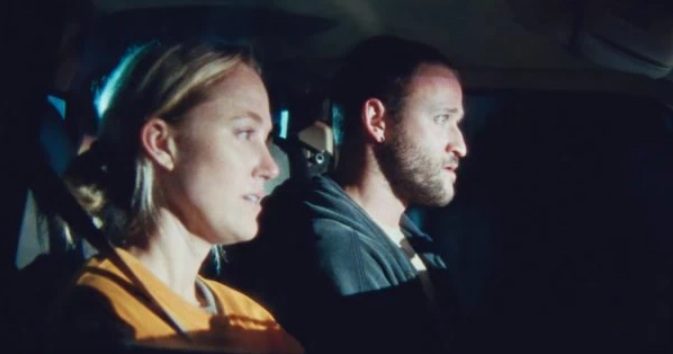
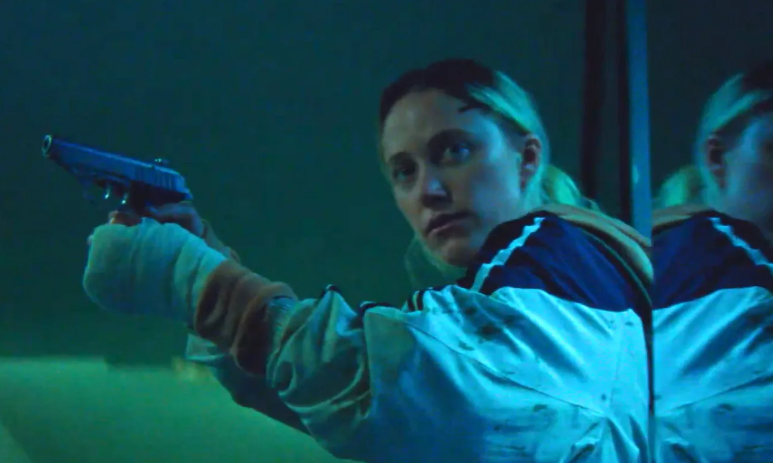
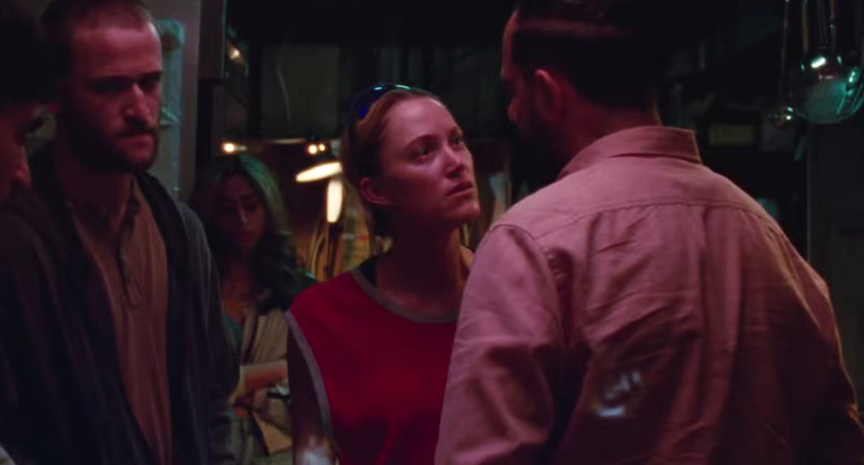
A crucial turning point arrives around the 40-minute mark, when the film finally puts the pedal to the metal. From here on out, IN COLD LIGHT becomes a sustained chase — physical, emotional, and psychological — with Ava dodging threats from all sides. The visual grammar that Giroux and Mishara establish early suddenly clicks into overdrive. Cutting tightens, lights flare and collapse, and the world begins to feel oppressive in a way that mirrors Ava’s own unraveling control.
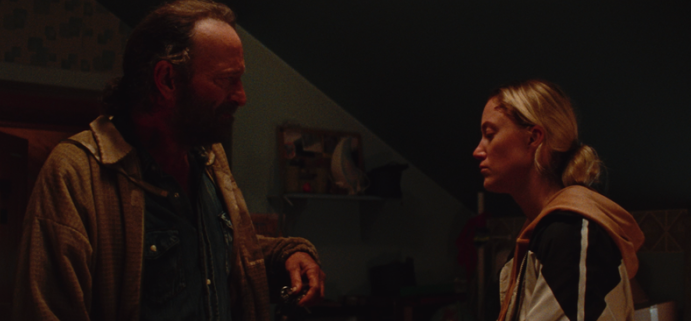
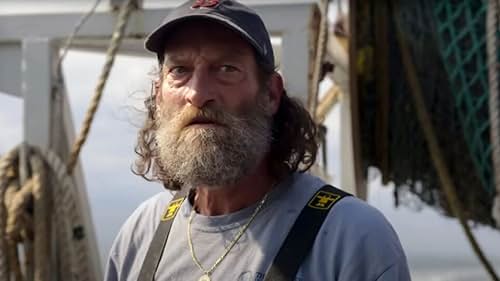
One of the film’s most powerful assets is its emotional recalibration following the casting of Troy Kotsur as Ava’s father, Will. Will is deaf — a choice not present in the original script — and that single change reshapes the film’s emotional language. Communication becomes fragmented and visual; silence becomes charged rather than empty. Ava’s tendency to internalize everything, to observe rather than verbalize, takes on deeper resonance. The camera adapts accordingly, favoring mid-shots that allow sign language to remain legible and emotionally present.
This choice culminates in a quietly devastating backyard scene between Ava and Will, where a motion-sensor light flickers on and off as they communicate in ASL. The light becomes a metaphor — illumination, interruption, collapse — mirroring both familial breakdown and Ava’s own fractured inner state. Technically intricate and emotionally precise, the scene marks a tonal shift for the film and a pivot point for Ava herself.
Giroux further grounds the film’s chaos through visceral imagery: extreme close-ups of blood pooling on the ground, reflections that literally embed characters inside the violence they inhabit. A real rodeo sequence — shot at Ponoka Stampede outside Calgary during an actual event — injects raw, uncontrolled energy into the film, echoing Ava’s spiraling night. Nothing here feels staged for comfort.
Editing by Mathieu Bouchard-Malo is key to making the film’s structure work. The real-time 24-hour conceit severely limits traditional editing fixes; scenes can’t be shuffled or discarded without breaking narrative logic. Instead, the rhythm evolves organically. The opening observes. The middle accelerates into cacophony. And then, unexpectedly, the film slows down again.
That ending is one of IN COLD LIGHT’S quiet triumphs. Rather than offering redemption or spectacle, Giroux and Bouchard-Malo hold on stillness. The roller coaster is over. Ava is left to inhabit the aftermath of where she’s landed. It’s a final act of restraint — and one that feels earned.
IN COLD LIGHT may test the patience of viewers who prefer their crime films fast and loud from the jump, but for those willing to sit with its shadows, the payoff is undeniable. By the time the roller coaster finally slows and the film holds on its final images, Giroux has delivered something rarer than a simple thriller — a nocturnal reckoning that lingers long after the lights go out. It doesn’t shout its intentions. It watches – and waits – until it’s ready to strike.
Directed by Maxime Giroux
Written by Patrick Whistler
Cast: Maika Monroe, Helen Hunt, Troy Kotsur, Jesse Irving, Allan Jawco
by debbie elias, 01/19/2026
IN COLD LIGHT is in theatres January 23, 2026.