A glasshouse should offer clarity. In MISDIRECTION, it does the opposite — reflecting, refracting, and distorting truth until every face becomes suspect. Director Kevin Lewis, with script by Lacy McClory, sets his sleek neo-noir thriller inside a space that promises transparency, then weaponizes it, turning glass, marble, and open space into instruments of paranoia over the course of one long, unforgiving night as Sara and Jason are planning one final heist before leaving their life of crime behind. Everything goes smoothly until things don’t. Their target, wealthy lawyer David Blume, returns home unexpectedly and stops their escape in its tracks. But Blume is neither the easy mark they thought him to be nor the person they thought he was.
MISDIRECTION marks a striking tonal shift for Lewis, trading overt genre mechanics for a performance-driven, tightly contained thriller that unfolds almost entirely within a modern glass house. Over the span of a single evening, three characters are trapped in a space designed to reveal everything — and yet, it’s riddled with secrets. Tension emerges not from spectacle, but from faces, reflections, and the lies people tell themselves when they believe they’re justified.
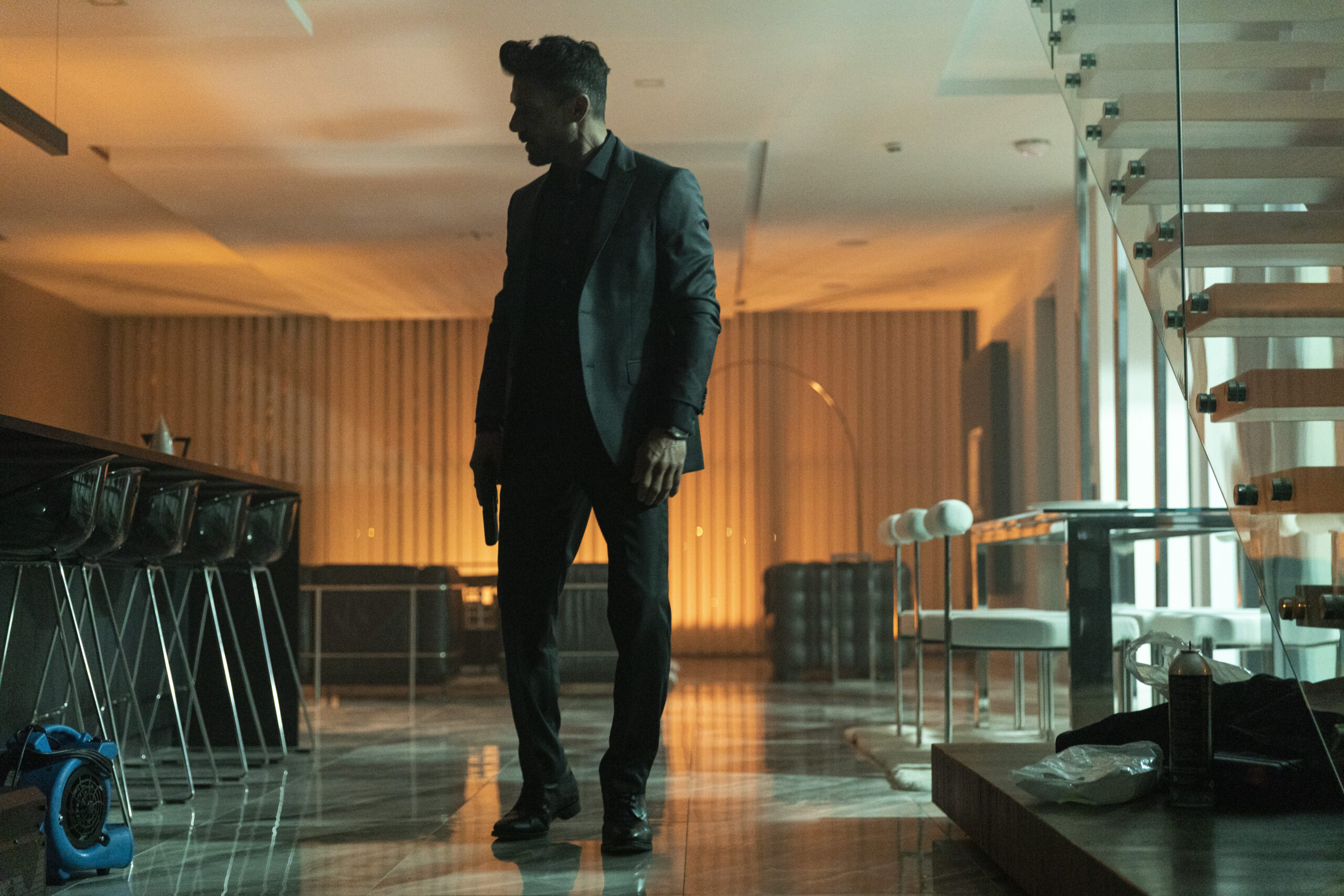
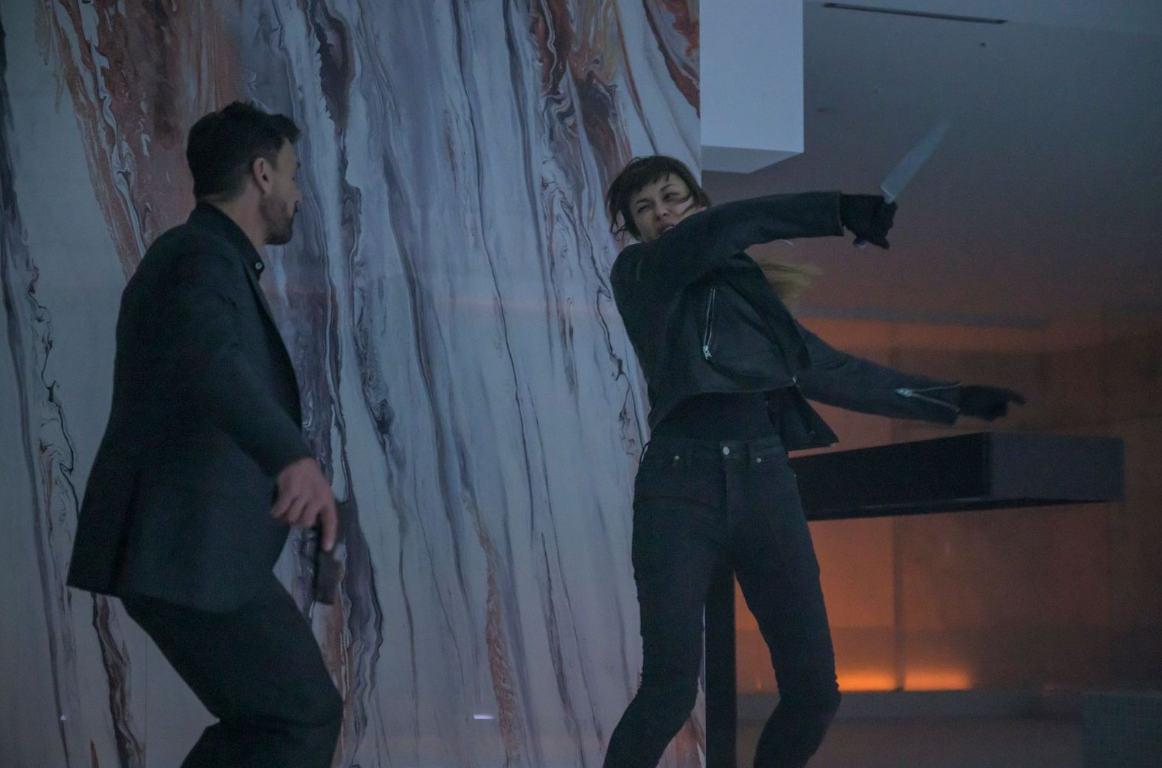
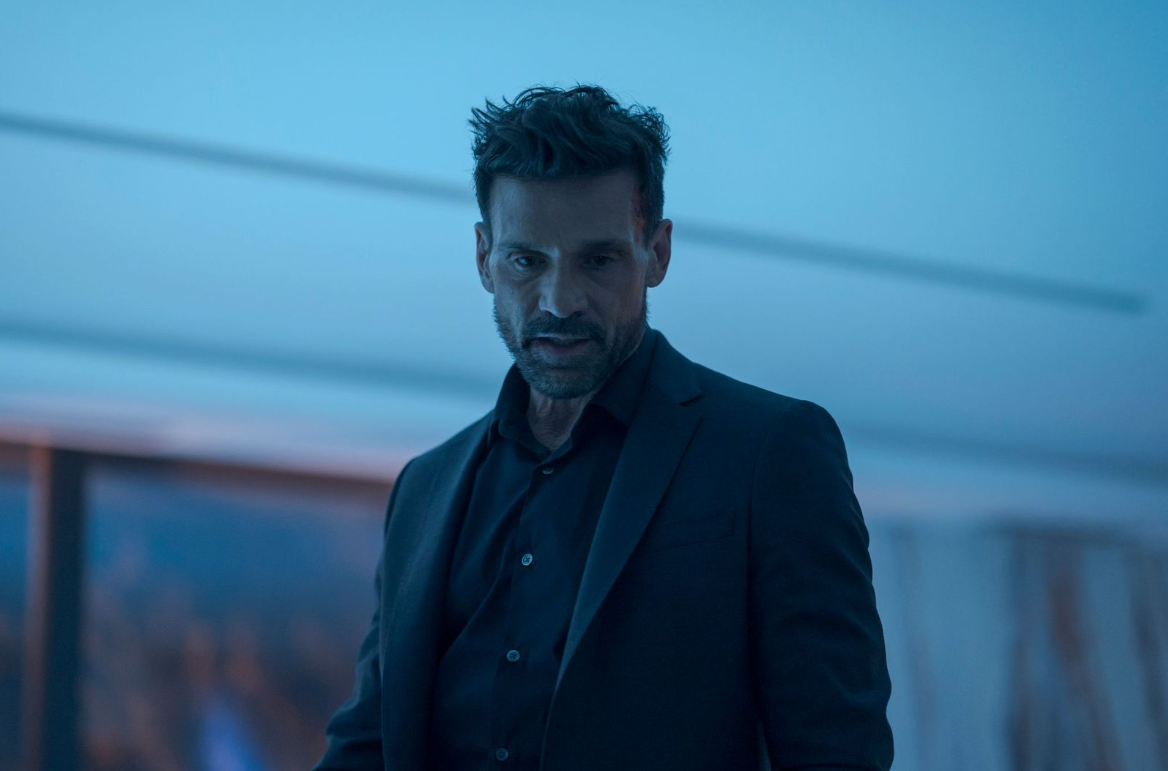
Lewis turns the film’s primary location into its most active character. The glass house isn’t merely a backdrop; it dictates the film’s entire visual grammar. Walls, windows, and glossy marble floors transform into mirrors, doubling faces and fracturing trust. Characters are constantly reflected, reframed, or partially obscured, reinforcing the film’s central anxiety: you may think you’re seeing everything — but you aren’t.
The reflective marble flooring, in particular, becomes a quiet visual weapon. Lewis and cinematographer Matti Eerikainen repeatedly exploit the floor’s sheen to capture distorted reflections of movement, blood, and bodies — images that register before the characters fully process what’s unfolding. These moments aren’t decorative flourishes; they’re psychological cues, reminders that consequences ripple outward even when the truth hasn’t caught up yet.
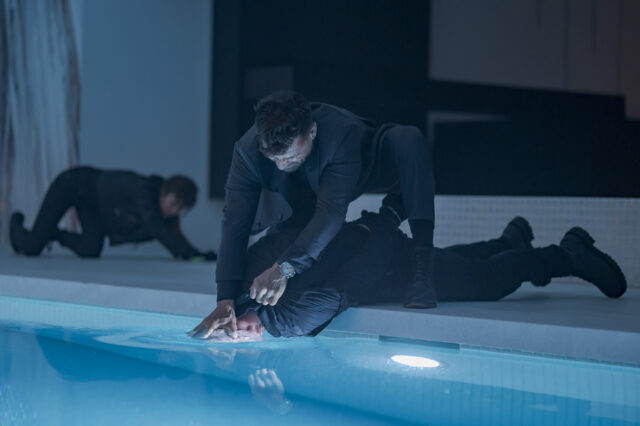
What makes MISDIRECTION especially effective is its disciplined use of negative space. Early wide compositions leave large portions of the frame seemingly empty — glass corridors, open stairwells, darkened corners — daring the audience to search for danger that may or may not arrive. As secrets surface and loyalties shift, those spaces begin to close in, the camera inching closer until faces dominate the frame.
Lewis draws from a Hitchcockian playbook here, weaponizing what the audience can’t quite see. The openness of the house suggests safety and control; instead, it becomes camouflage. Transparency, the film quietly reminds us, is not the same thing as honesty.
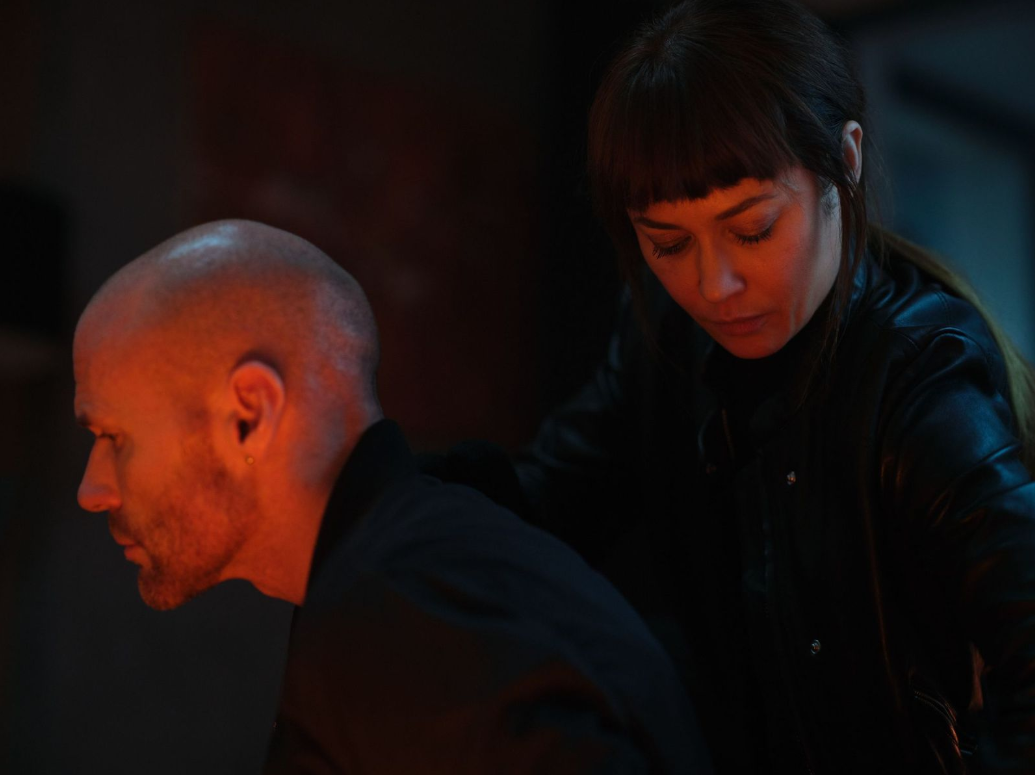
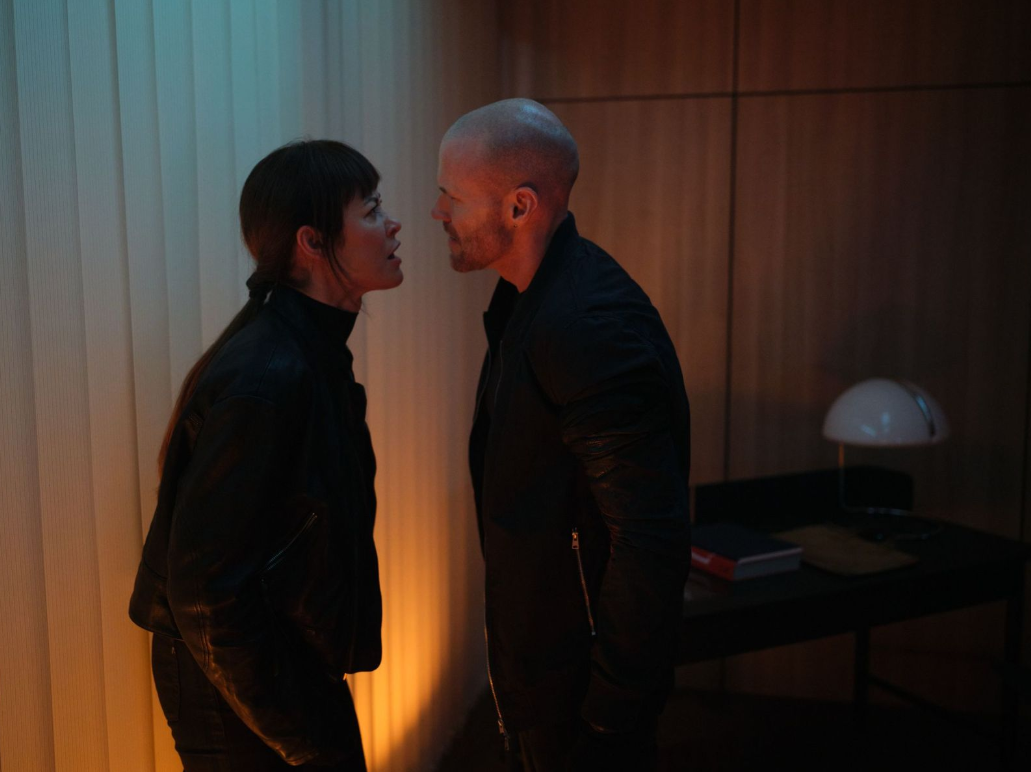
This visual strategy only works because of Lewis’s commitment to handheld camerawork. The camera never calls attention to itself, but it breathes with the characters — adjusting, hovering, reacting in real time. The slight instability keeps the audience locked inside the moment, creating the constant sense that everything is one bad decision away from tipping into chaos.
Handheld movement also allows Lewis to exploit angles a locked-off camera never could: low gliding shots across reflective floors, tight framings that pin characters against glass, and subtle shifts in perspective that mirror emotional reversals. The result is immediacy without showmanship — tension that feels earned rather than engineered.
While MISDIRECTION contains bursts of bruising, hand-to-hand violence, it remains resolutely performance-driven. Lewis prioritizes faces over spectacle, pushing into tight close-ups that capture micro-shifts in expression — suspicion curdling into fear, control slipping into panic.
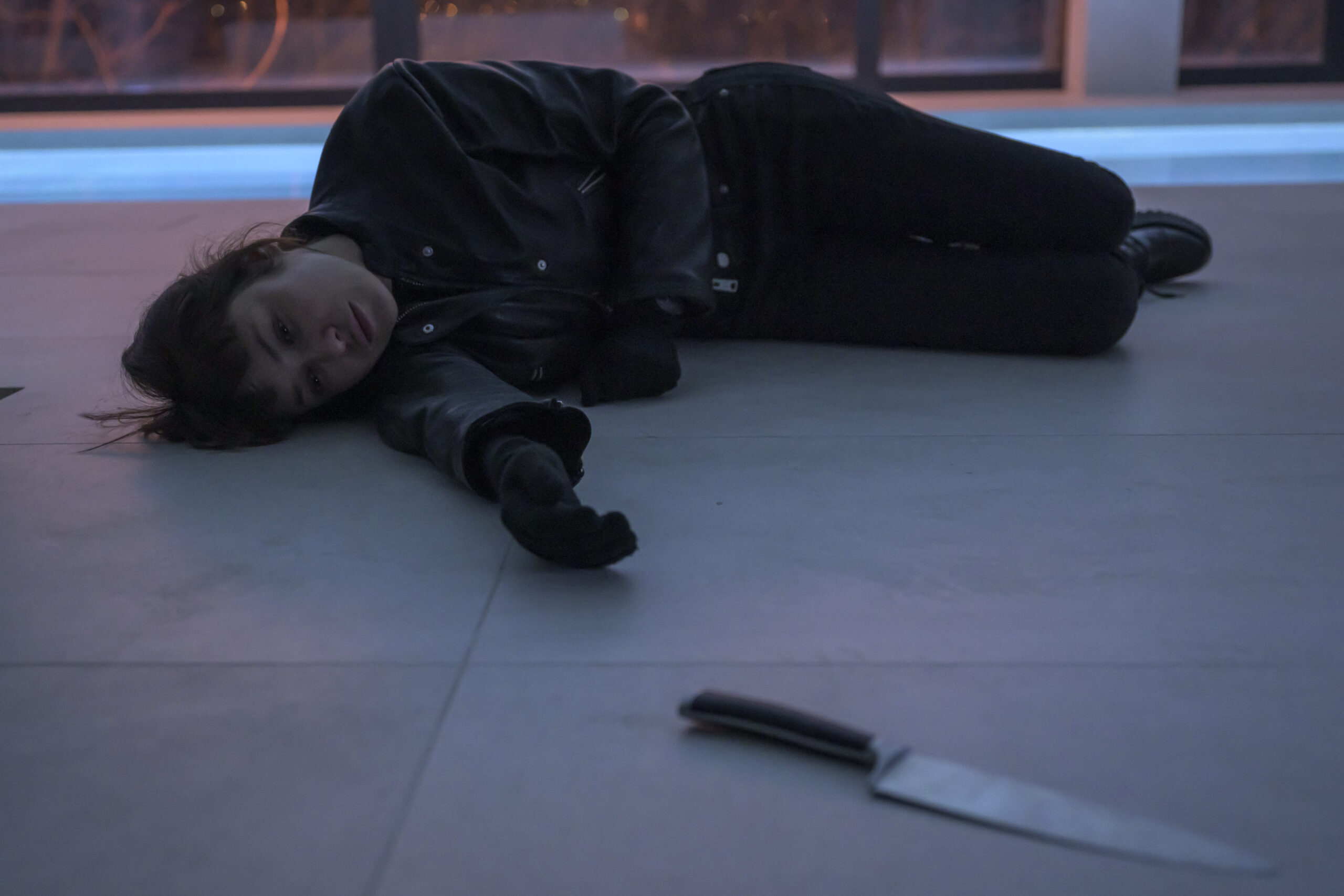
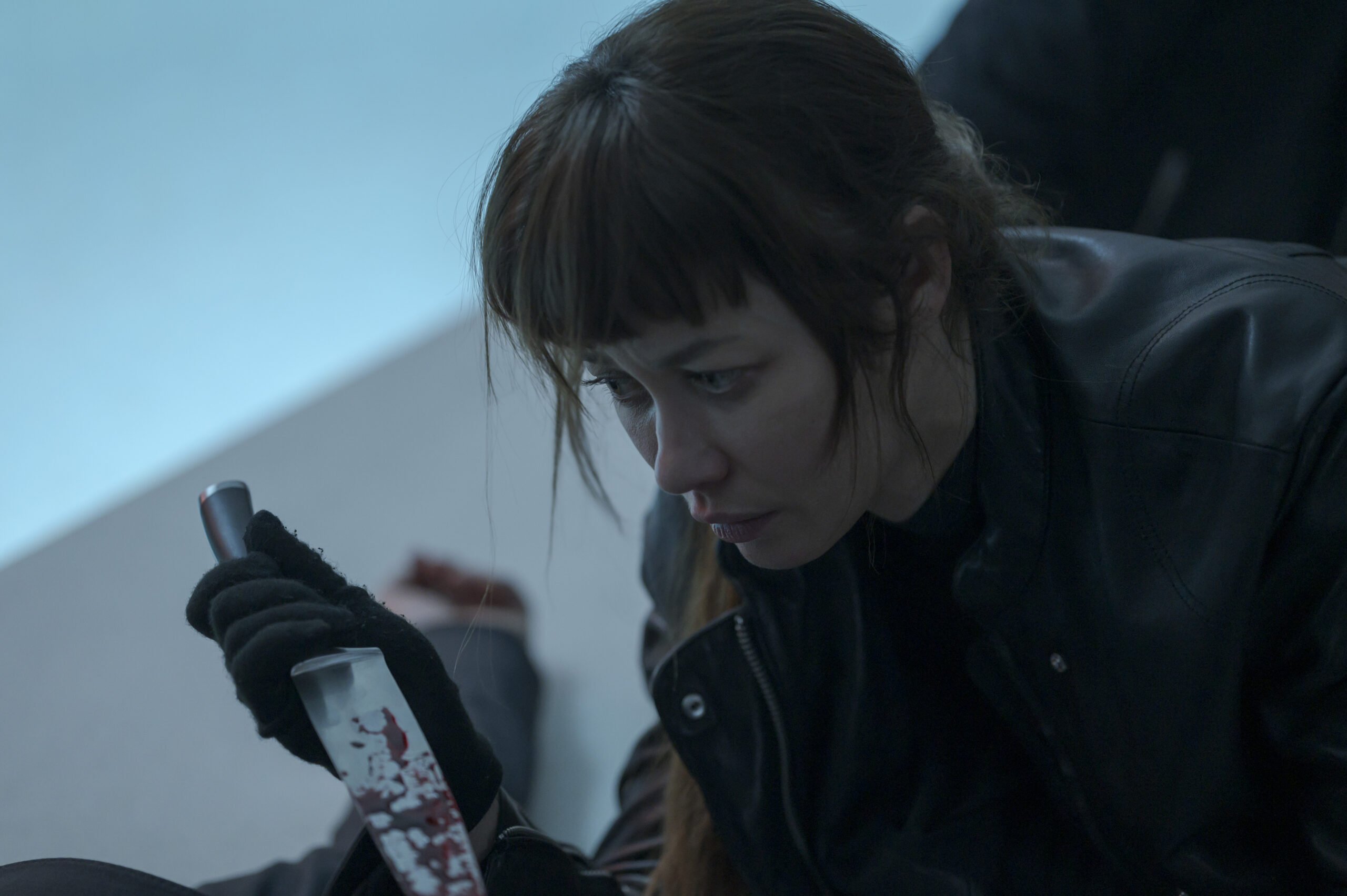
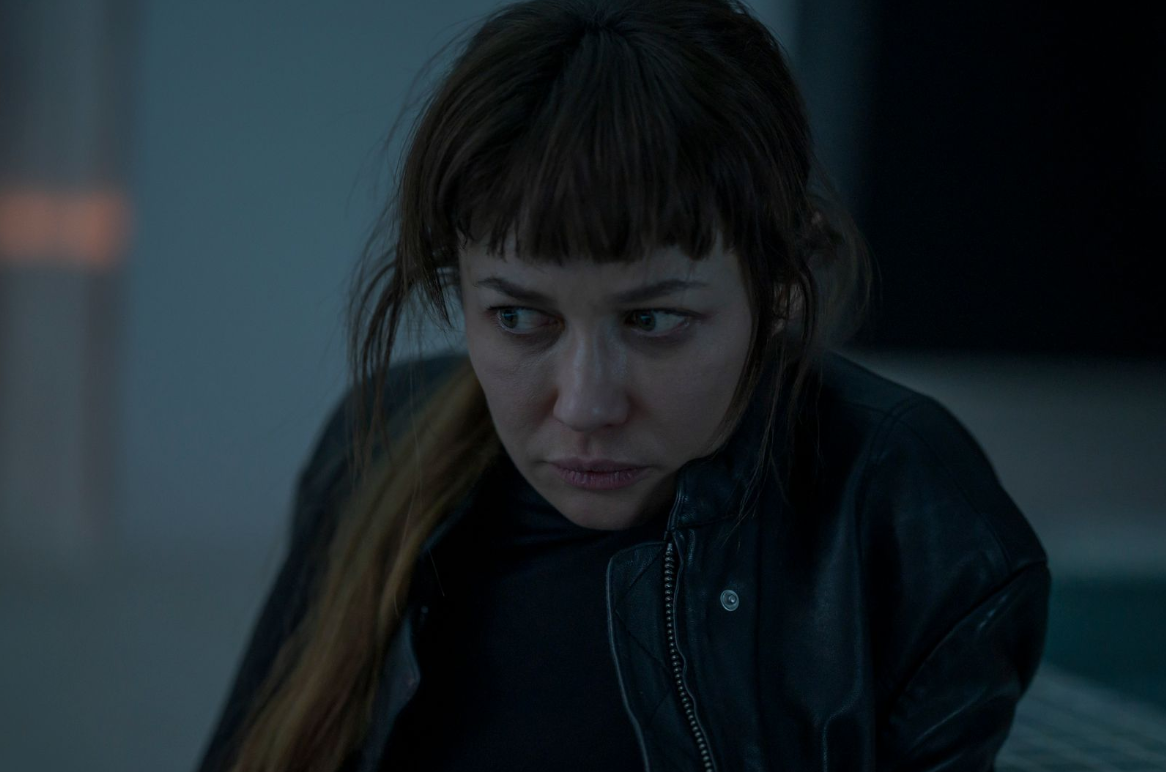
Frank Grillo brings his signature coiled intensity to David, a man whose sharp verbal precision feels perpetually on the verge of erupting into violence. Oliver Trevena, also a producer on the film, complicates the triangle as Jason, layering charm, wounded pride, and unpredictability in ways that keep audience allegiances in constant flux. Olga Kurylenko, stripped of glamour and protective artifice, anchors the film as Sara, allowing guilt, resolve, and vulnerability to play openly across her face.
Here, action is never the point; it’s the release valve. Violence arrives only when emotion has nowhere else to go.
Lewis and long-time editor Ryan Liebert structure the film as a slow, deliberate tightening of the screws. Early sequences allow space and uncertainty to breathe. As the night progresses, the cutting grows more aggressive, the compositions tighter, the rhythm increasingly unforgiving.
Repeated inserts of a digital clock turn time itself into a pressure element — every choice narrowing the exits. In the final stretch, sound design takes on heightened importance, layering ambient noise, reverberation, and sudden silence into a disorienting auditory landscape that mirrors the characters’ unraveling psyches.
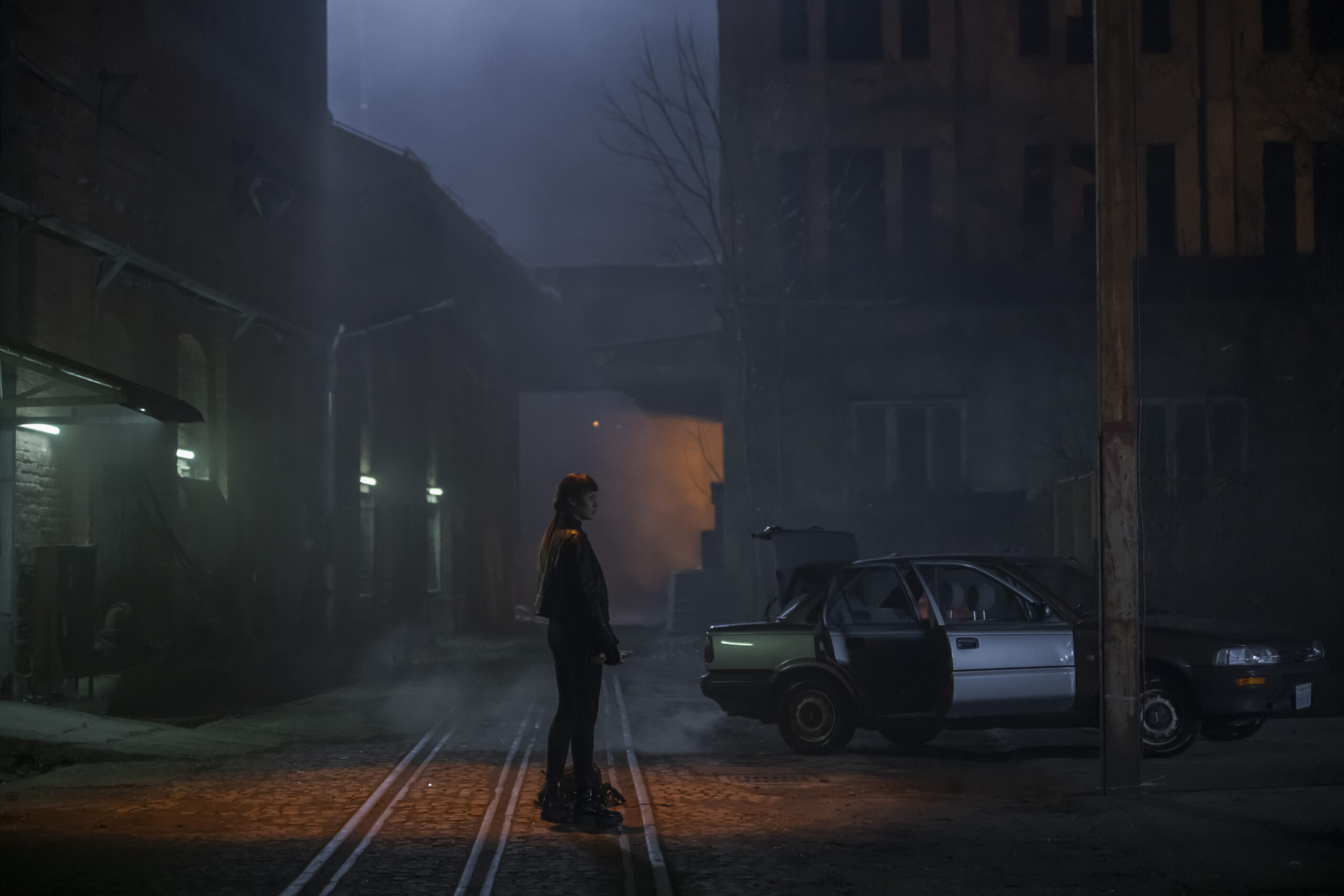
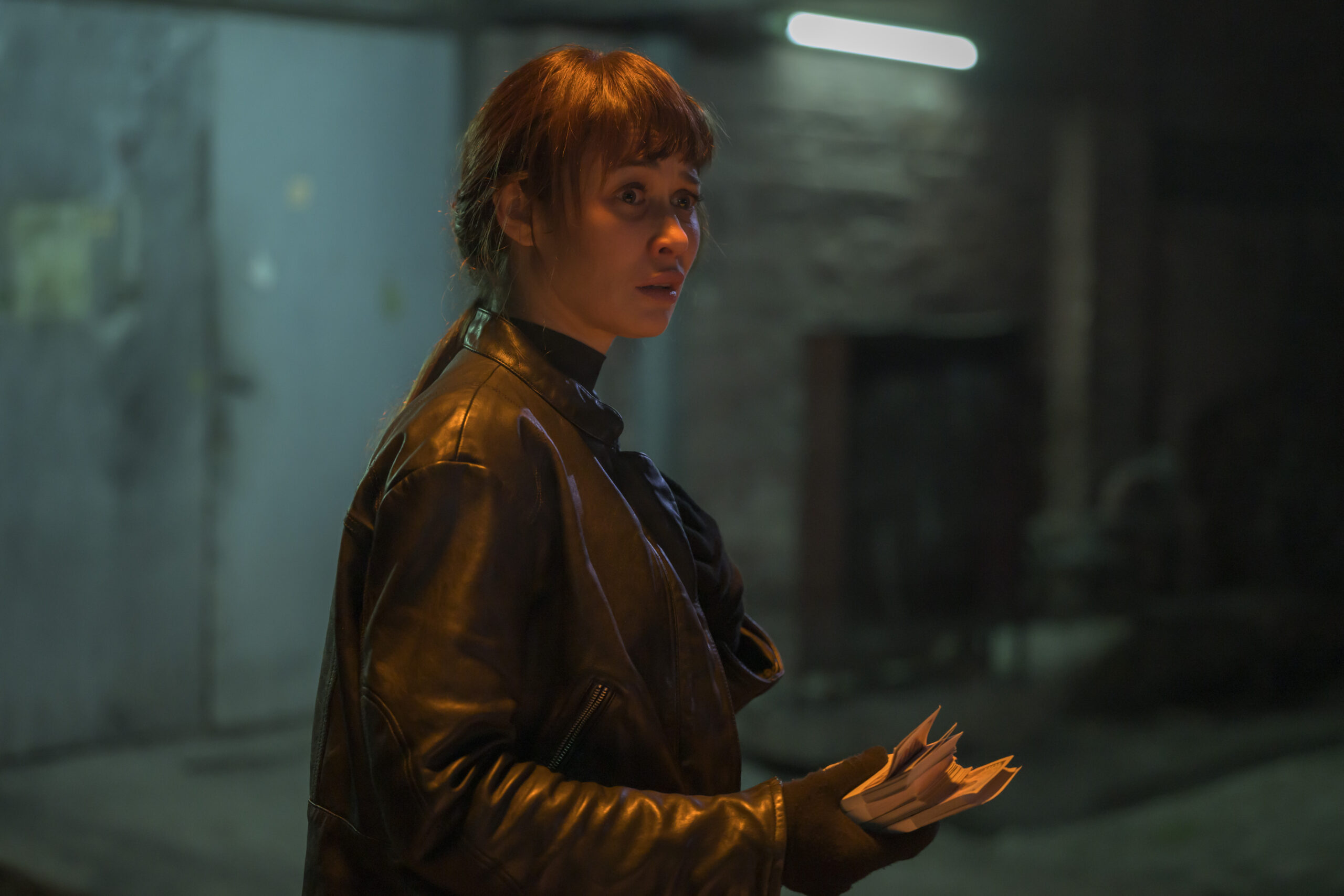
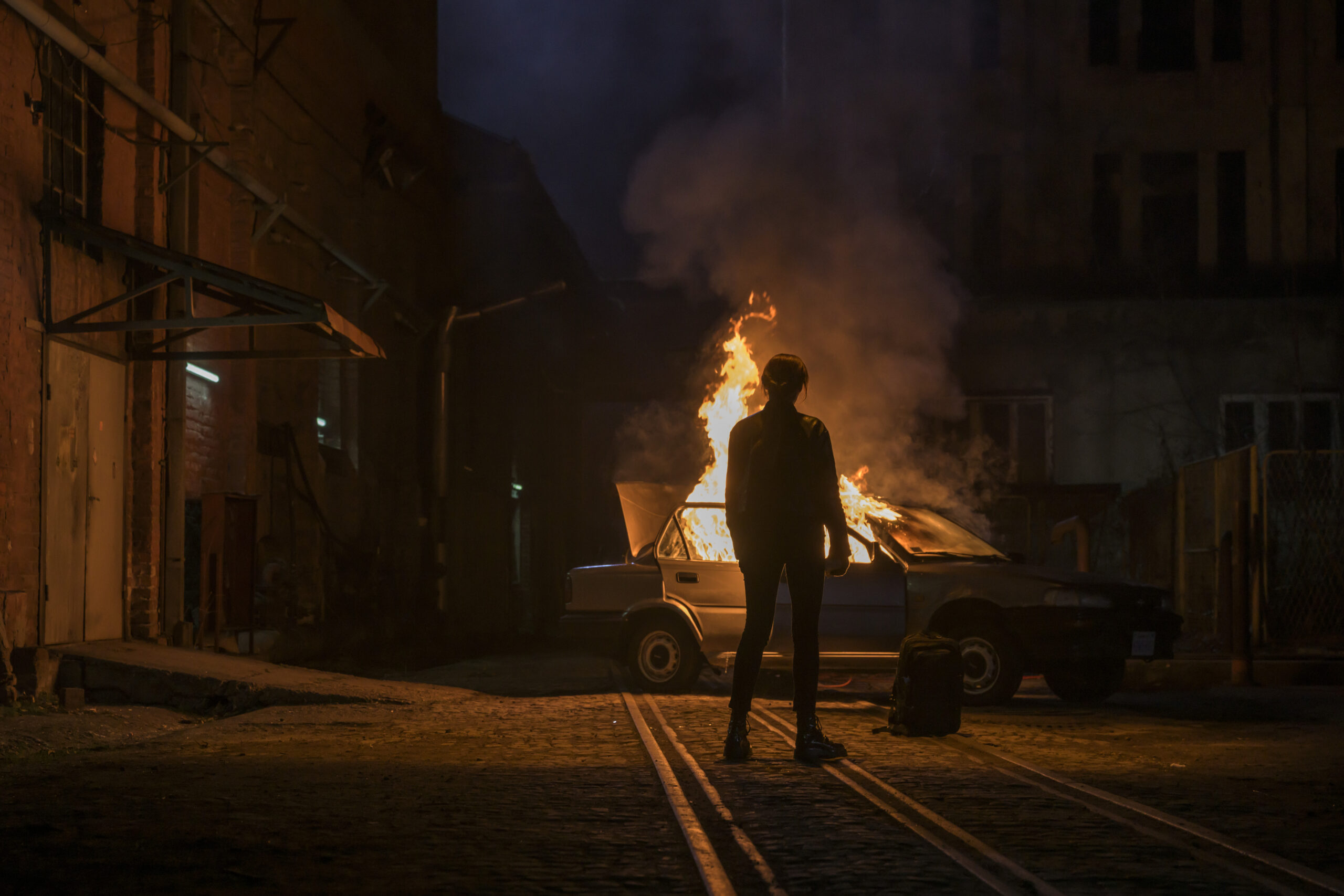
Without venturing into spoiler territory, MISDIRECTION delivers its most devastating emotional beat not through violence, but through loss. One small, seemingly innocuous object becomes a silent emotional ledger — a reminder that love, loyalty, and damage often coexist, and that some consequences can’t be undone. Lewis doesn’t underline the moment or ask the audience to grieve aloud. He simply lets it sit — trusting that we’ll feel it, and understand exactly what it says about the life one character has already burned down.
MISDIRECTION isn’t loud, and it isn’t interested in easy catharsis. Instead, it’s a study in spatial tension, visual restraint, and moral ambiguity — a thriller that finds menace in reflections, silence, and the space between people.
For Kevin Lewis, it’s a confident reminder that genre has less to do with labels than with control. Here, he proves that sometimes the most unforgiving trap isn’t a haunted house or a funhouse of horrors — it’s a room full of glass, where everyone is convinced they’re telling the truth… and absolutely isn’t.
by debbie elias, 01/26/2026
MISDIRECTION is available on digital on February 10, 2026, from Cineverse.