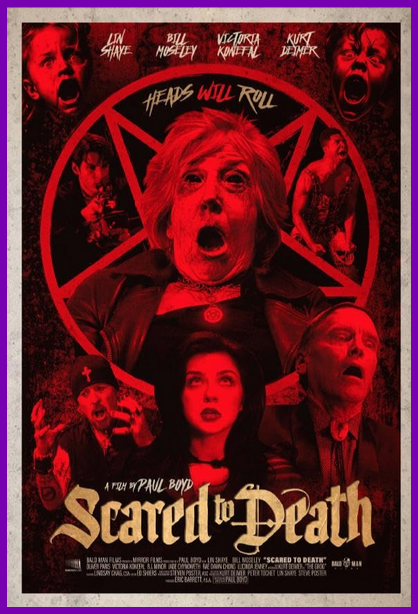
Director Paul Boyd may be best known to many for his iconic music videos, but with SCARED TO DEATH, he delivers a sly, affectionate genre mash-up that doubles as both a haunted-house spookshow and a meta love letter to horror movies—and to the film business itself. Set in a gorgeously timeworn Altadena mansion that feels soaked in memory and ghosts, the film follows a ragtag crew of filmmakers staging a seance in a supposedly haunted orphanage, only to find that belief and reality might be far more entangled than they think.
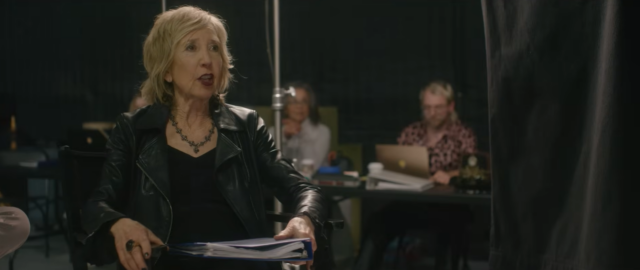
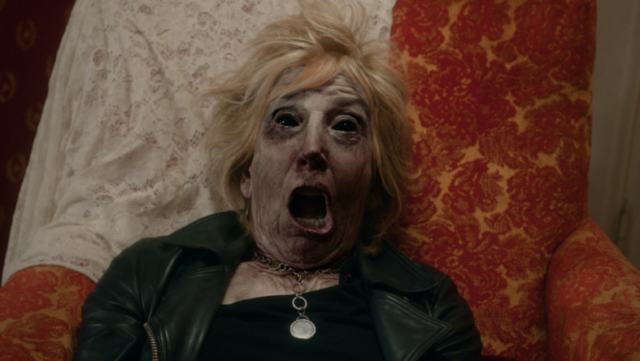
The film’s secret weapon is its casting and character work, starting with horror icon Lin Shaye. Instead of playing yet another medium, Shaye specifically asked Boyd to let her be “the horrible boss,” and he happily obliged. Drawing on her fearless comedic chops from There’s Something About Mary and Kingpin, Shaye chews the scenery as Max, a monstrously demanding director whose authority and arrogance mask deeper wounds. She’s not just performing; she’s collaborating. (Notably, in my conversation with Boyd, he credits Shaye with helping shape both the dialogue and the story, including the choice to leave the film more open-ended and mysterious, rather than neatly tying up every supernatural loose end.)
If Shaye is the film’s ferocious id, Kurt Deimer is its heart. As “The Grog,” a veteran character actor who’s been in “200 movies,” Deimer essentially plays a heightened version of himself: that beard, those clothes, that easygoing warmth—they’re all real. The Grog is the only one without an agenda. He loves movies, loves the work, and cares about the people around him. When panic sets in, he’s the one trying to “right the ship,” insisting there must be a rational explanation even as the evidence piles up against him. It’s a funny, grounded turn, and Deimer’s off-screen roles as investor, executive producer, and musician fold neatly into the character; he even delivers the rousing end-title song, “Scared to Death,” and is cheekily carrying the persona into his music career with an upcoming album titled “A Grog Is Born”.
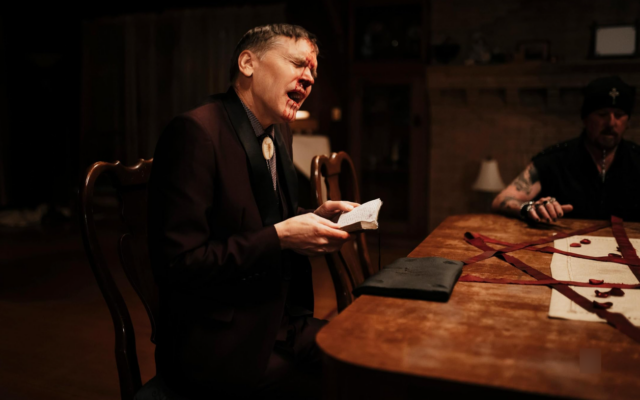
Bill Moseley brings his familiar horror cred with a twist. As Felix, the seance’s resident showman and storyteller, he’s a charismatic Carney with a glint in his eye and a scorpion on his neck—untrustworthy from the moment he appears, yet irresistibly entertaining. Moseley gets to play more trickster than straight-up monster, injecting dark humor before eventually sliding into more traditional horror territory as things explode in the third act.
Then there’s Olivier Paris, whom Boyd has described as a “young De Niro.” As Max’s long-suffering assistant, Jasper, he begins as a seemingly harmless PA, all nervous energy and quiet competence. By the final act, after wardrobe and hair shifts and the psychological toll of the night’s events, he looks and feels like a different man—haunted, fragile, and suddenly ambiguous. Paris is a rising star and impressed Boyd enough to be cast in Boyd’s upcoming film, Relapse.
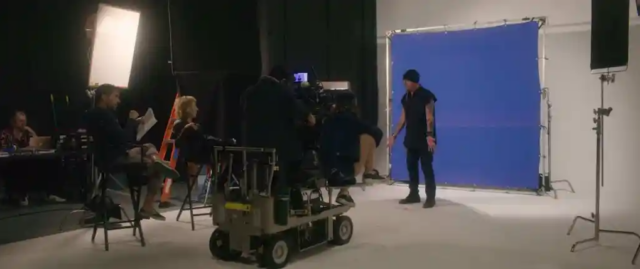
Visually, SCARED TO DEATH is far more cinematic and considered than many low-budget horror outings. Boyd smartly stepped back from his usual role as his own DP and brought in veteran cinematographer Stephen Poster, ASC (Donnie Darko, Southland Tales, second unit on Close Encounters of the Third Kind). Poster, along with legendary gaffer Jim Plannette (whose lineage stretches back to It’s a Wonderful Life and High Noon), gives the film a rich, classical look that foregrounds both faces and architecture.
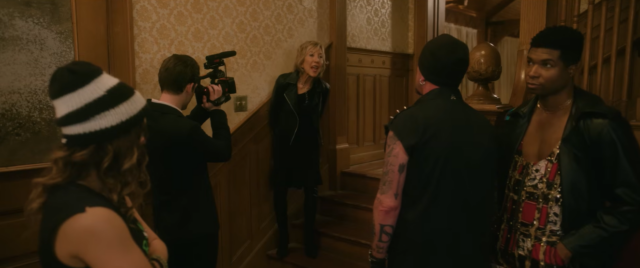
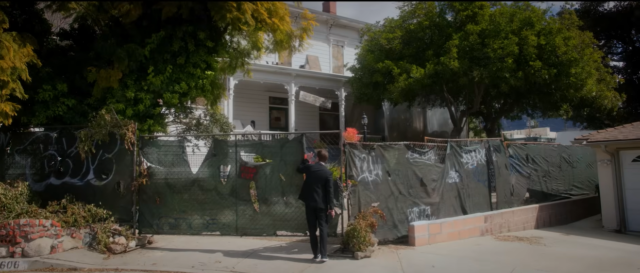
The Altadena house itself functions as a full-fledged character. Surviving the devastating fires in 2025 that destroyed many of its neighbors, this wood-paneled Craftsman—filled with staircases, landings, a vast living room, a basement, and an attic—looks like it has absorbed a century of secrets. Buildings hold “resonance and memories,” and that sensibility seeps into every frame. The wood tones become the film’s base color palette: warm browns and mid-tones that feel realistic and lived-in rather than drenched in cliché horror reds. The attic is visually distinct—more subdued and isolated—so that each return upstairs feels like crossing a threshold. Negative space is embraced and celebrated.
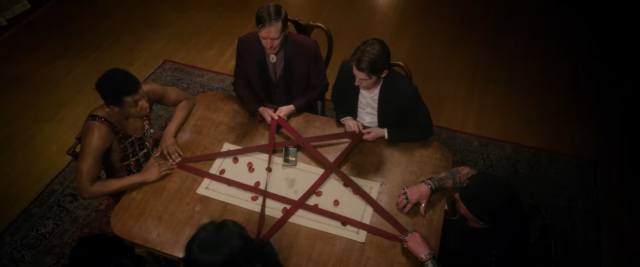
Instead of covering every moment in relentless close-ups, Boyd and Poster rely heavily on master shots with four or five characters in frame, especially around the seance table. The result is a movie that feels more like Clue crossed with a haunted-house chiller: you always see the dynamics between people, and you always feel the geography of the house. Close-ups and ECUs are saved for when they count—doll heads rolling down hallways, eerie faces emerging from bathtubs, and terrified reactions that punctuate the escalating chaos of the third act.
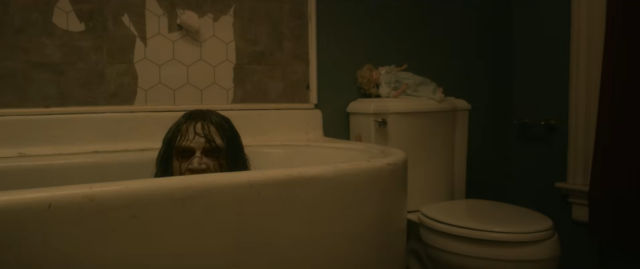
The color and lighting strategy is equally thoughtful. With the wood providing a dark but warm canvas, the team focuses on lighting faces and preserving clarity rather than plunging everything into murk. Costumes do a lot of character work with most of the ensemble in neutral or dark tones, while Felix’s more colorful wardrobe (with its ominous red accents) screams “do not trust this man.” Lin Shaye’s look is a highlight—Rachel Olsen and her makeup team evolve Max from a powerful boss to something much more grotesque and heightened, with cool gray tones playing spectacularly against a black leather jacket. Boyd has admitted they weren’t afraid to go a little “Evil Dead–absurd” with her later-stage makeup. The film is heightened and satirical, and the design embraces that.
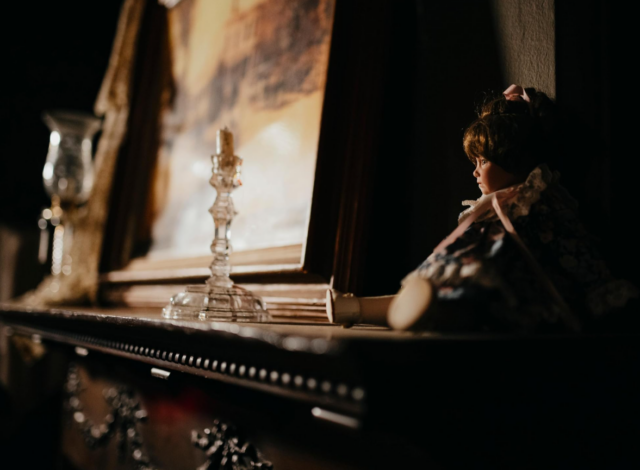
Boyd’s music video roots are everywhere, but not in the way you might expect. Instead of MTV-style frantic cutting, editor Ed Shiers—a drummer by background—gives the film a strong, controlled sense of rhythm and tempo. Together, Boyd and Shiers spent a long time in the editing room wrestling with how to balance scares and laughs. They experimented, retooled, and refused to fall in love with early cuts, treating the edit as a living, breathing process. You feel that care in the way the movie cross-cuts between the living room exposition and the upstairs disturbances, drip-feeding clues about the orphanage, the five dead children, and the unresolved history of the house.
The sound design is often wickedly funny. A standout sequence sees one character calling 911 in a moment of crisis—only to be put on hold. As they move through the house, discovering ever more disturbing sights, we hear the syrupy hold music and the maddeningly calm, “Please don’t hang up, we’ll be with you shortly,” looping under the action. It’s absurd, but also uncomfortably real, and Boyd leans into that tension between real-world frustration and horror-comedy payoff.
Composer Misha Segal supplies a score that deftly straddles both genres. It has the requisite creepiness for a haunting story and the agility to support Boyd’s satirical tone, never overwhelming the film’s naturalistic palette or tipping it into parody. Then, as the credits roll, Kurt Deimer’s song “Scared to Death” kicks in, giving the film a muscular, anthemic send-off that feels entirely in character for The Grog.
And then there are the end credits themselves, which you skip at your peril. Boyd and editor Stiers have laced them with a gallery of fake posters from The Grog’s supposed filmography—movies he jokes about throughout the film, such as Robo Grog, Count Grogu, House of 1000 Grogs, and a hysterical Big Broccoli creature feature. The artwork is genuinely delightful, the titles are clever, and the whole sequence functions as both character-building and a spoof of horror marketing and manufactured mythologies. With the posters symbolizing the different films that The Grog talks about during the film, it suggests that The Grog’s legend continues long after the story fades to black. Stay through the song, stay through the posters, and you’re rewarded with one final audio stinger after the last credit—a little chill that sends you out of the theater still wondering what, exactly, you just experienced.
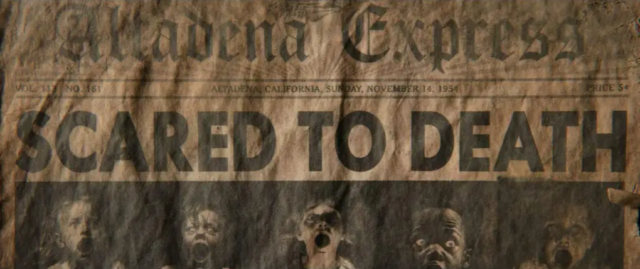
Underneath the laughs, pratfalls, and posters, SCARED TO DEATH is quietly wrestling with deeper ideas: belief versus skepticism, the masks people wear, and the scars of generational trauma. The origin of the film lies in Boyd’s own experience buying a house once owned by Charlie Chaplin and being told, only after signing, that it was haunted by a murdered prostitute named Mary. That story became the seed for the film’s central notion, “believing is seeing.” Whether or not ghosts are real, the stories we accept shape the realities we inhabit. The house in the film is an abandoned orphanage where children were “scared to death,” and the adult characters—filmmakers all—bring their own wounds, egos, and belief systems into the space until the line between performance and reality starts to dissolve.
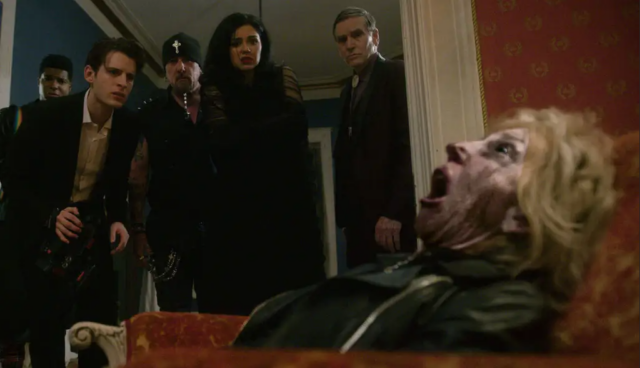
Boyd also threads in his personal history—growing up in Scotland surrounded by myths and legends, and growing up without a father—into a story where missing parents, abusive figures, and damaged authority loom large. Max represents an older, toxic Hollywood, all hierarchy and bullying; the younger characters, from The Grog to the PA, embody different ways of surviving and processing that legacy.
What ultimately makes SCARED TO DEATH so engaging isn’t just that it’s fun—it’s that you can feel a filmmaker stretching and trusting himself. Boyd has admitted he went into post-production afraid, unsure how to get the horror–comedy balance right. Over time, and especially through responses from perceptive viewers, he realized he needed to question himself less and trust his gut more. He learned to loosen his grip on the reins, allow collaborators like Lin Shaye, Stephen Poster, Ed Stiers, Rachel Olsen, and Kurt Deimer to leave their fingerprints all over the movie, and accept that the film would evolve beyond the “neat bows” of his original script.
Boyd himself has described filmmakers as antennas—people who pick up frequencies, stories, and emotions and translate them through their own lenses. SCARED TO DEATH feels like exactly that: a transmission of Boyd’s lifelong love of horror, his music-video-honed sense of rhythm, his fascination with belief and the supernatural, and his commitment to making personal, idiosyncratic genre work rather than chasing anonymous studio fare.
It’s scary enough to satisfy horror fans, funny enough to charm comedy lovers, and cine-literate enough to delight anyone who’s ever rolled their eyes at set life or sat in a dark theater thinking, “If this house could talk…” In SCARED TO DEATH, it does—and you’ll want to listen all the way through the final, chilling echo after the credits fade.
Written and Directed by Paul Boyd
Cast: Lin Shaye, Kurt Deimer, Bill Moseley, Olivier Paris, BJ Minor, Victoria Konefal, Jade Chynoweth, and Rae Dawn Chong
By debbie elias, 03/07/2026
SCARED TO DEATH is in theatres on Friday, March 13th.