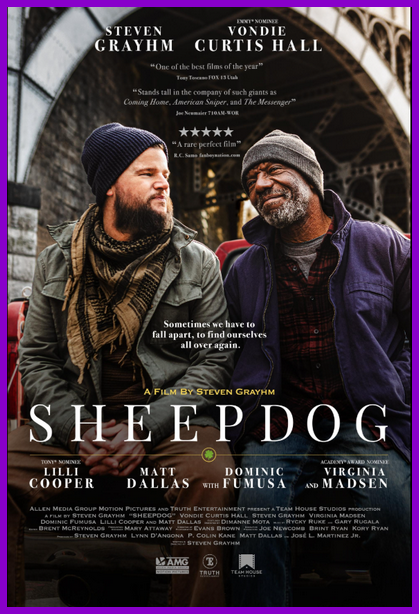
SHEEPDOG is not interested in spectacle, nor does it rely on narrative shortcuts to announce its importance. Instead, it commits to something far more difficult: patience. Writer/director/actor Steven Grayhm approaches PTSD not as an event, but as a condition that reshapes time—stretching the past into the present and pressing quietly on every relationship in its orbit. It is authentic and honest, intimate and personal.
The film follows Calvin Cole, a decorated Army combat veteran years removed from his last deployment and court-ordered into treatment. This temporal distance is crucial. SHEEPDOG refuses the immediacy of crisis-driven storytelling and instead examines what happens after survival becomes routine—when the world expects normalcy, but the body and mind have not caught up. Calvin’s struggle is not explosive or erratic; it is internal, persistent, and deeply familiar to anyone who understands trauma as something that accumulates rather than resolves.

Grayhm’s performance is marked by restraint. Calvin is not written or played as volatile, but as emotionally constricted—guarded, exhausted, and quietly overwhelmed. The film trusts the audience to recognize what isn’t said. His silences carry more weight than monologues ever could, and the choice to avoid overt dramatization keeps the character grounded in lived experience rather than cinematic shorthand.
One of SHEEPDOG’s most effective decisions is its generational framing. The arrival of Calvin’s father-in-law, Whitney—a Vietnam veteran recently released from prison—introduces a parallel history of neglect and systemic failure. Through Whitney, the film acknowledges how long these cycles have existed, and how often they repeat. The contrast between generations is not accusatory; it is mournful. Progress has been made, the film suggests, but not enough—and not evenly.
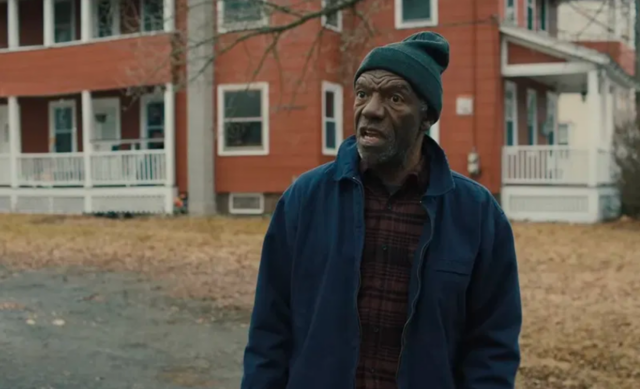
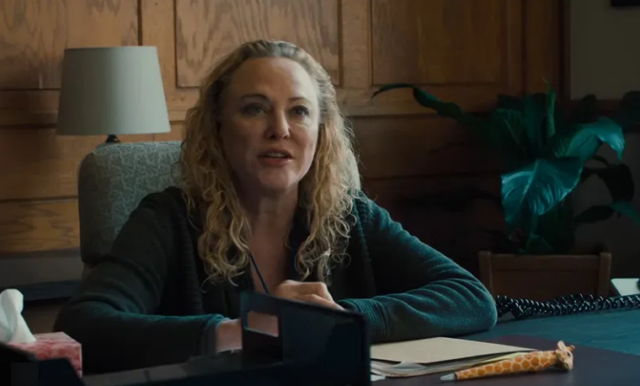
The supporting performances reinforce this perspective. Vondie Curtis-Hall brings a quiet gravity to Whitney, a man shaped by decades of unresolved trauma and institutional indifference. Virginia Madsen’s therapist character resists the trope of the all-knowing clinician; instead, she is present, measured, and human—an embodiment of care rather than cure. Together, the ensemble reinforces the film’s central idea that healing is not solitary. Trauma ripples outward, and so does recovery.
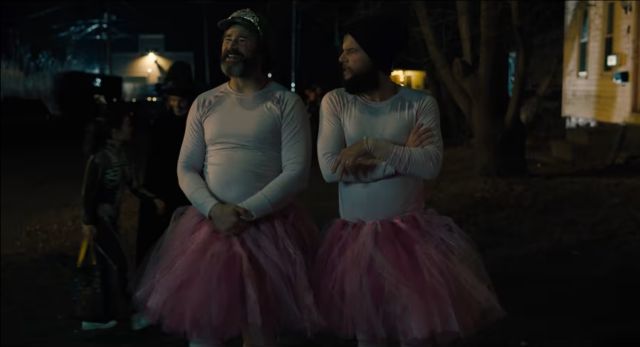
As Grayhm’s partner-in-crime on the SHEEPDOG journey, Matt Dallas delivers a jaw-dropping performance as Calvin’s best friend and brother-in-arms with emotion that is deep-seated, heartbreaking, and profound.
Formally, SHEEPDOG is intentionally unobtrusive. The cinematography favors stillness and classical composition, resisting the impulse to visualize PTSD through distortion or chaos. This choice proves effective. By keeping the camera steady and increasingly intimate, the film places emotional responsibility squarely on performance rather than technique. The audience is not instructed how to feel; they are invited to observe, sit with, and gradually understand.
Editing and sound design further this restraint. Silence is used not as absence, but as space—allowing ambient shifts, breath, and hesitation to register. Music enters sparingly and purposefully, often to underline connection rather than pain. The cumulative effect is a film that feels internally calibrated, where visual language, pacing, and sound operate in quiet alignment.
What ultimately distinguishes SHEEPDOG is its articulation of hope—measured, specific, and earned. The film does not suggest that PTSD can be overcome through willpower or love alone. Instead, it foregrounds treatment as process: EMDR, prolonged exposure, art therapy, and other modalities appear not as cures, but as tools. By showing therapy on screen without sensationalism or stigma, the film makes a subtle but radical statement—help exists, and seeking it is neither weakness nor failure.
Importantly, SHEEPDOG never confuses hope with optimism. There is no promise of resolution, no neatly tied emotional arc. What it offers instead is something closer to truth: the possibility of movement, of connection, of learning to live alongside what cannot be erased. In that sense, the film’s title becomes its thesis. The danger has passed, but the vigilance remains—and learning how to stand down, even partially, is its own act of courage.
SHEEPDOG may not satisfy audiences looking for catharsis or closure. What it provides is quieter and more lasting: recognition and hope. For veterans and their families, that recognition may feel deeply personal. For others, it serves as an invitation—to listen longer, judge less, and understand that survival is often only the beginning.
Written and Directed by Steven Grayhm
Cast: Vondie Curtis Hall, Virginia Madsen, Lilli Cooper, Dominic Fumusa, Matt Dallas, and Steven Grayhm
by debbie elias, 12/16/2025
SHEEPDOG opens in theatres on January 16, 2026.