There are films that announce their intentions loudly, and then there are films like STOP TIME, which are so quietly assured that their power reveals itself only if you’re willing to meet them at their own pace. Written and directed by Paul Schwartz, STOP TIME is not a film that rushes to meaning. It allows meaning to surface, slowly and deliberately, through craft.
Shot in luminous black and white, STOP TIME tells the intertwined stories of Peter de Vries, a photographer suspended in grief after the death of his wife, and Adrianna Maier, a theatrical lighting designer carrying her own quietly weighted history. Over the course of a single day in New York City, their lives orbit one another until they finally meet at the opening of Peter’s gallery show—a convergence that feels less like plot mechanics than emotional inevitability.
What distinguishes STOP TIME is how completely its formal choices are motivated. The black-and-white cinematography is not an aesthetic affectation or nostalgic gesture; it is the film’s emotional grammar. Peter exists in a monochrome world because grief has stripped his life of saturation. Color appears only in memory—in dreams, in fleeting recollections of his wife, in Super 8 home movies—and later, with exquisite restraint, in the possibility of emotional reawakening. When color finally begins to bleed back into the frame, it does so tentatively, mirroring the fragility of healing itself.
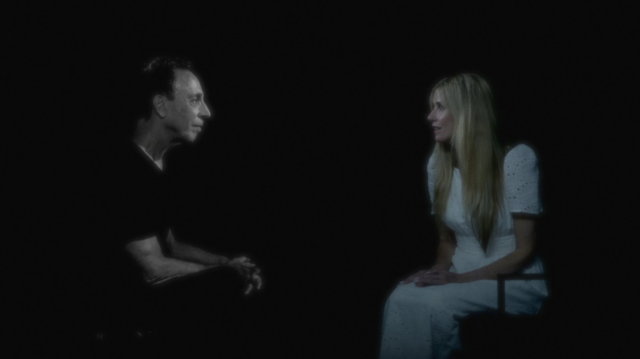
Schwartz’s images are shaped by light and movement rather than spectacle. The restrained palette allows the viewer to feel texture: the grain of walls, the softness of faces, the contrast between shadow and skin. The effect is intimate, tactile, and deeply human. There is a quiet confidence in the refusal to overstate, a trust that the audience will lean in rather than be pulled forward.
Editing plays a crucial role in sustaining that trust. STOP TIME favors dissolves, superimpositions, and temporal overlaps over hard cuts. Moments do not collide; they drift into one another. In a beautifully orchestrated sequence, Peter prepares his gallery while Adrianna dresses for the evening, their separate actions unfolding simultaneously through layered imagery. The scene plays less like conventional montage and more like choreography—movement, pause, and rhythm guiding emotion forward without dialogue ever having to explain it.
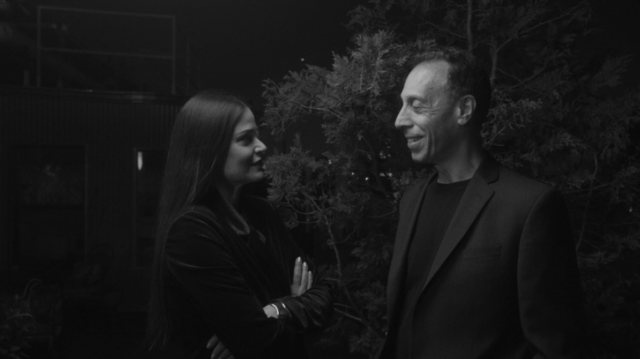
Memory is given physical weight through Schwartz’s use of actual Super 8mm. Rather than digitally approximating the past, the film leans into the flicker, grain, and fragility of antiquated stock. These images don’t merely represent memory; they feel worn, vulnerable, and impermanent, as though the past itself is being projected, frame by frame, always at risk of burning out.
Sound design operates with the same sensitivity. Ambient noise—waves at Coney Island, street sounds, clinking glasses at a dinner table—never overwhelms, but it is never incidental. Each element is carefully balanced, turning environment into emotional texture. The score, built around intimate jazz piano, glides beneath scenes rather than sitting on top of them, reinforcing feeling without announcing itself. It is a producer’s approach to sound: modulated, breathable, and precise.
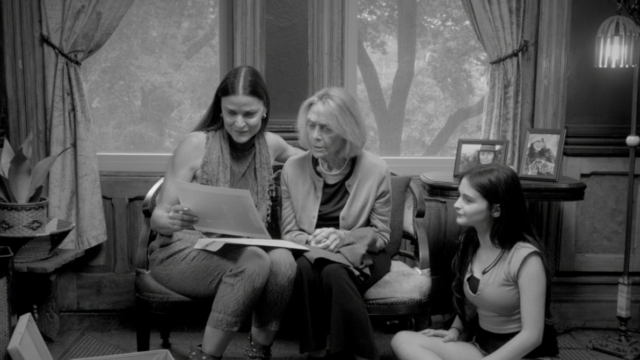
The performances reflect the film’s aesthetic discipline. Nothing is pushed. Nothing reaches for catharsis prematurely. Even moments of emotional exposure are handled with restraint, allowing silence and stillness to carry as much weight as words. The casting of Patty McCormack as Adrianna’s mother is particularly inspired, bringing gravity and lived-in truth without ever tipping into sentimentality.
STOP TIME is a film about grief, but it is equally a film about attention—attention to light, to sound, to rhythm, to emotional honesty. It understands that healing is not an event but a gradual shift, often imperceptible until it’s already underway. Time does not stop in this film so much as it softens, allowing two lives to briefly align in a shared, suspended moment.
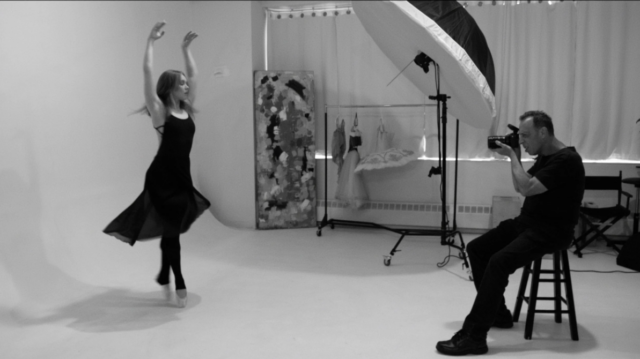
In an era where independent films often feel compelled to declare their importance, STOP TIME does something far more difficult: it trusts its craft. And in doing so, it earns its emotion.
Written and Directed by Paul Schwartz
Cast: Nelson Avidon, Tara Westwood, Patty McCormack, Kelly Deadman, Christina Toth, and Catherine Quirico
by debbie elias, 01/13/2026
STOP TIME has its World Premiere at Dances With Films NY on January 17th and is currently on the festival circuit.