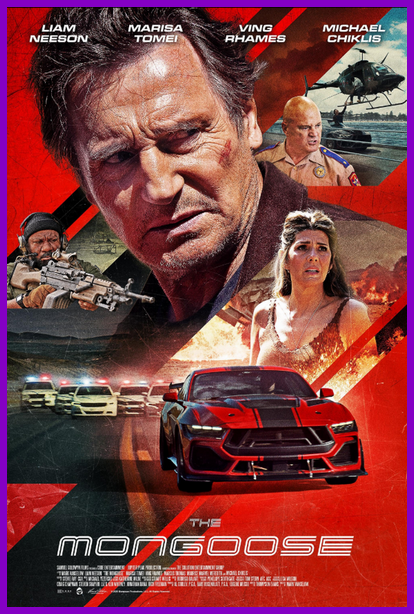
Buckle up! Mark Vanselow is taking audiences on one hell of a ride with THE MONGOOSE, a high-octane action thriller that delivers everything one could want from a Liam Neeson movie and then some. Spectacular practical stunts, exhilarating car chases, helicopters, explosions, and a Shelby Cobra that deserves its own screen credit are just the beginning. What sets THE MONGOOSE apart is the emotional story driving the action, a story of brotherhood, loyalty, guilt, and the lasting scars of war. And making his feature directorial debut, Vanselow proves himself a formidable storyteller who understands that the best action isn’t simply about spectacle. It’s about giving that spectacle purpose.
A longtime stuntman, stunt coordinator, second-unit director, and Neeson’s former stunt double, Vanselow brings decades of practical filmmaking experience to THE MONGOOSE, his first feture film directorial. That experience is evident in every chase, every stunt, every precisely choreographed piece of vehicular mayhem. But equally impressive is his command of the film’s emotional and visual language, allowing the story to unfold through imagery, performance, sound, and editing rather than relying solely on exposition.
Neeson stars as Ryan “Fang” Flanagan, a decorated military veteran accused of a crime he didn’t commit. With law enforcement pursuing him across the country, Fang takes to the road in a Shelby Cobra, determined to stay ahead of capture while confronting a past that refuses to remain buried. As the pursuit intensifies, fellow veterans rally to his cause, public sentiment begins to shift, and the chase becomes something far more consequential than one man’s attempt to evade arrest.
But before the engines roar and the tires scream, Vanselow offers something unexpected. Tranquility.
Ocean waves roll gently across the screen as Neeson’s distinctive voice recites poetry. Cinematographer Tom Stern captures the serenity of the water, allowing the imagery and spoken words to establish a contemplative tone. Extreme close-ups and carefully selected details invite audiences into Fang’s world before editor Rodrigo Balart abruptly shifts gears. And suddenly, we’re off!
A Shelby Cobra tears along the highway, police vehicles in pursuit, a spike strip threatening to bring everything to a screeching halt. The contrast is immediate and exhilarating, establishing the visual and emotional duality that will define the film.
And Fang isn’t entirely alone on the road.
Meet Helene.
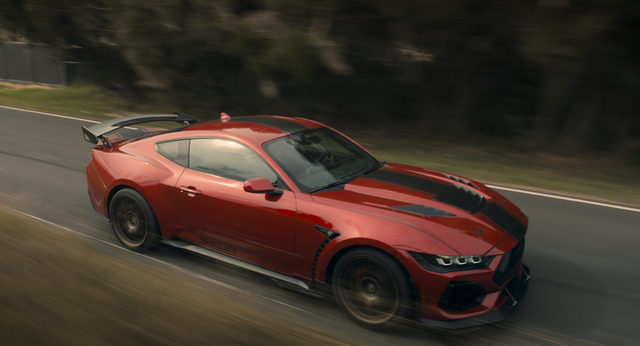
More than a sleek Shelby Cobra, Helene is an anthropomorphic automotive companion with a voice, a personality, and a rather remarkable relationship with her driver. Voiced with wonderful character and personality by Stella Stocker, Helene talks to Fang, guides him along his journey, and becomes something of a trusted confidante as the pursuit intensifies.
It’s a delightful touch that gives THE MONGOOSE an unexpected dimension of humor and heart. Helene is more than transportation or a mechanical means of escape. She’s a character in her own right, her conversations with Fang bringing warmth, wit, and a welcome sense of companionship to an increasingly perilous journey. And thanks to Stocker’s engaging vocal performance, the relationship feels surprisingly natural within the film’s heightened action-thriller world.
This is where Vanselow’s understanding of action as storytelling becomes particularly apparent. The chase sequences are not simply inserted to maintain momentum. Each one escalates the stakes, revealing more about Fang, his determination, his resourcefulness, and the forces converging against him.
And what sequences they are!
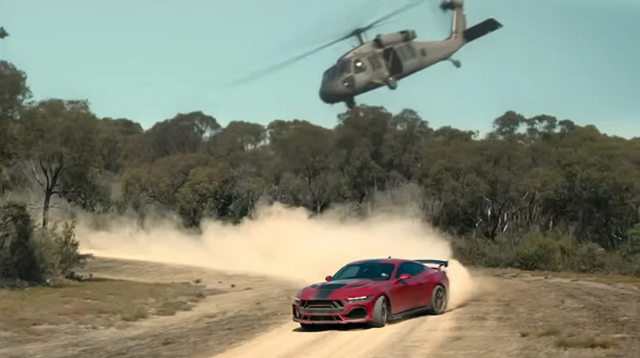
From high-speed pursuits and spectacular vehicle maneuvers to an extraordinary stunt involving a train, THE MONGOOSE delivers a succession of practical-action set pieces that are thrilling in their execution. Vehicles careen, collide, and tumble. Helicopters sweep overhead. The choreography is precise, the camera placement immersive, and the editing maintains a clear sense of geography even when the action reaches a fever pitch.
That clarity is essential. Too often contemporary action films sacrifice spatial coherence for rapid cutting and visual confusion. Not so here. Working with Stern and Balart, Vanselow allows audiences to appreciate the mechanics of the action while remaining connected to the character at its center.
Stern’s cinematography is particularly noteworthy for its versatility. Sweeping aerial photography captures the expansiveness of Fang’s journey, while intimate close-ups reveal the emotional toll beneath his outward determination. The Shelby Cobra becomes a visual extension of Fang himself, a vehicle of freedom, defiance, and survival, photographed with an appreciation for both its beauty and its power.
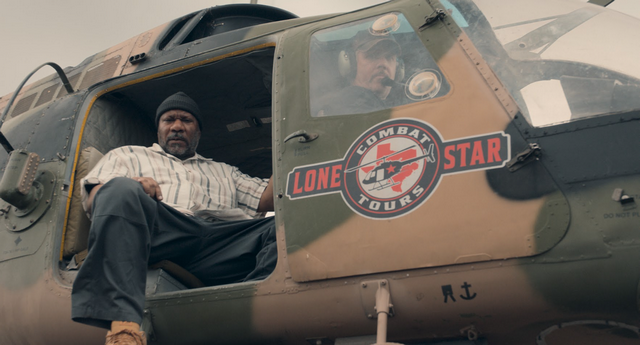
Equally striking is the film’s treatment of Fang’s memories of Afghanistan.
Rather than falling back on the familiar bleached-out or sepia-toned imagery so often employed to distinguish wartime flashbacks, Vanselow and Stern develop a different visual palette. Carefully composed frames, selective close-ups, and beautifully realized superimpositions create a sense of memory intruding upon the present. These are not simply flashbacks inserted to provide background information. They are fragments of experience that continue to shape Fang’s every decision.
Balart’s editing is instrumental in making those transitions work. Moving between past and present, between Fang’s solitary journey and the growing number of people following his pursuit, he creates a rhythm that allows the narrative to expand without losing its forward momentum.
And the emotional underpinnings of that narrative are substantial.
Fang is a man carrying guilt, grief, and the weight of promises made to those who served alongside him. As memories surface and relationships are revealed, the film gradually exposes the personal consequences of war and the bonds that endure long after military service ends.
Vanselow approaches these elements with sensitivity, allowing the characters’ actions and reactions to speak for themselves. The veterans who follow Fang’s journey are not merely supporting players in an action thriller. They represent a brotherhood forged through shared experience, sacrifice, and an understanding of burdens that outsiders may never fully comprehend.
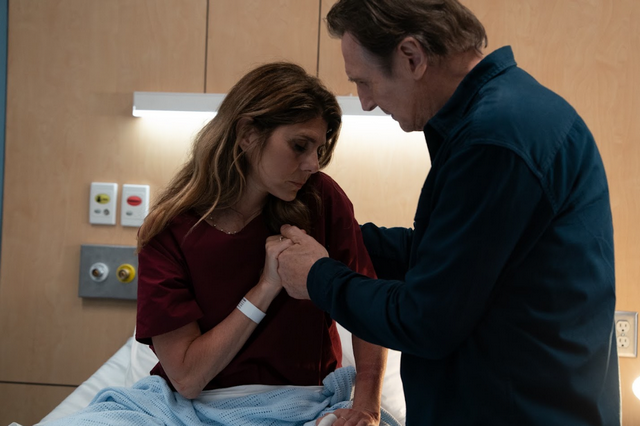
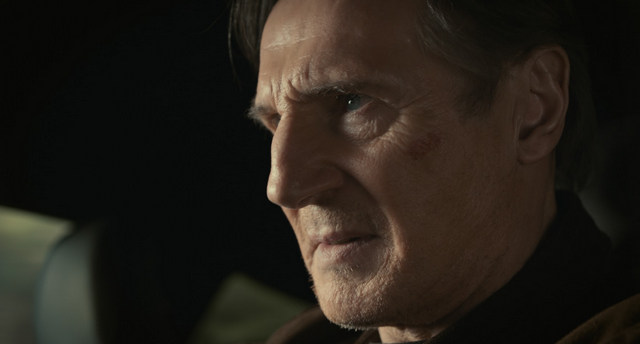
Neeson brings considerable emotional depth to Fang. His physical presence and commanding screen persona make him a natural fit for the action, but it is the quiet moments that give the performance its resonance. A look, a pause, or a subtle shift in expression conveys the anguish and determination of a man who has endured more than he can easily articulate.
Marisa Tomei is wonderful as Tara, Fang’s ex-wife, a woman whose relationship with him may have ended in divorce, but whose love for him clearly has not diminished. There is an unmistakable emotional connection between them, a tenderness and familiarity that speak to a shared history neither has entirely left behind. Tomei brings warmth, intelligence, and emotional authenticity to Tara, while her scenes with Neeson reveal a softer, more vulnerable side of Fang. Their chemistry makes it abundantly clear that whatever circumstances separated them, the feelings that brought them together have never truly disappeared.
Equally important are Fang’s brothers-in-arms: Wiz (Ryan Morgan), Munch (Marcus Thomas), and Tanker (Ving Rhames). Having served together in Afghanistan, these four men share a bond forged through combat, sacrifice, and experiences that continue to shape their lives long after returning home. Their camaraderie and unwavering loyalty provide much of the film’s emotional backbone, reminding us that although Fang may be the man behind the wheel of the Shelby Cobra, he is never truly alone in his fight.
And as the pursuit unfolds, the strength of those relationships becomes increasingly apparent, giving THE MONGOOSE a depth and humanity that elevate it beyond the conventions of a straightforward action thriller.
But among those determined to bring Fang’s flight to an end is Michael Chiklis as Major Walter Pope, a nasty, egomaniacal Texas law-enforcement officer whose determination to control the pursuit is matched only by his inflated sense of his own importance. Chiklis makes Pope a particularly aggravating presence, a man whose arrogance and obsession with authority frequently threaten to overshadow the very investigation he is supposed to be conducting.
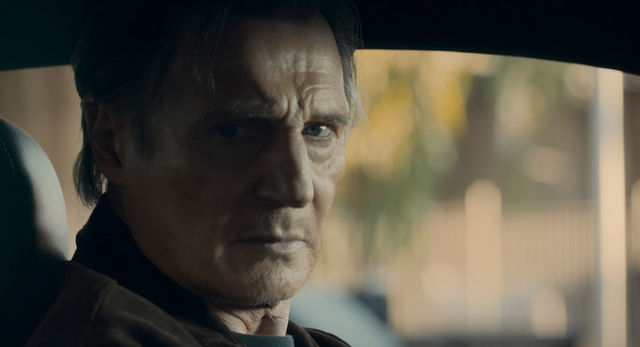
Providing a fascinating counterpoint is Maurice Marvel Meredith as Major James Tilton of Arkansas law enforcement, whose jurisdiction is where Fang’s pursuit begins. Tilton’s evolving perspective becomes one of the film’s most satisfying supporting arcs. As the chase unfolds and crosses state lines, Tilton begins to recognize the larger picture, looking beyond the immediate objective of capturing Fang.
And Tilton and Pope do not get along.
Their increasingly contentious relationship gives rise to some wonderfully entertaining jurisdictional disputes over who is actually in charge of the pursuit. The clash between Pope’s ego-driven insistence on control and Tilton’s growing awareness of the broader circumstances adds both dramatic tension and moments of welcome humor. More importantly, their conflict underscores one of the film’s recurring themes: the difference between blindly exercising authority and understanding the human consequences of one’s decisions.
Meredith makes Tilton’s evolving perspective especially compelling, giving the character a satisfying arc without telegraphing where that journey will ultimately lead.
And as Fang’s journey captures national attention, Vanselow adds another intriguing dimension through the film’s use of television news coverage, social media, and public reaction.
What begins as a law-enforcement pursuit becomes a widely followed spectacle. CNN reports track Fang’s movements. Veterans express their support. People gather along highways, holding signs and cheering him on. The changing public response provides both a narrative counterpoint to the authorities’ efforts and a reflection of how quickly individual stories can become national causes.
Yet even as the scale of the pursuit expands, Vanselow never loses sight of Fang’s personal journey.
Then there’s the sound. Composer Michael Yezerski delivers a score that supports both the film’s propulsive action and its quieter emotional passages. Music becomes an essential part of the storytelling, heightening tension, underscoring memory, and reinforcing the shifting emotional currents.
And the needle drops? FANTASTIC! The musical selections are particularly effective in establishing tone, sometimes injecting unexpected energy or attitude into the action, at other times providing an emotional counterpoint to the imagery. The sound design complements the music beautifully, from the roar of engines and the thundering presence of helicopters to the sharp impact of collisions and the quieter moments when silence becomes just as expressive.
But let’s talk about the practical stunts. HOLY HELL!
Working with Chris Weir as stunt coordinator and second-unit director, Vanselow stages some truly jaw-dropping action. The film’s vehicle work is exceptional, with precision driving, elaborate crashes, and beautifully coordinated sequences that demonstrate the extraordinary skill involved in making practical action look both dangerous and effortless.
One sequence involving a train is an absolute showstopper, a breathtaking example of choreography, timing, and the sheer audacity of practical stunt filmmaking. And just when you think Vanselow has exhausted his bag of tricks, he raises the stakes again.
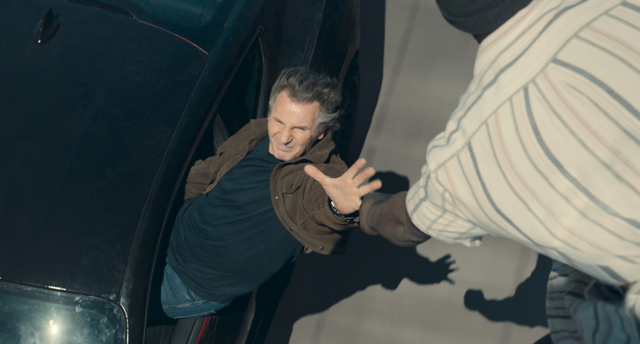
The film’s spectacular car-to-helicopter transfer is a JAW-DROPPING achievement, combining the precision of aerial coordination with the physical demands of practical stunt work. With aerial coordinator Craig Hosking helping realize the film’s helicopter sequences, the action reaches an astonishing level of complexity. The timing, coordination, and sheer spectacle of the transfer are extraordinary. And knowing that Neeson himself participated in the stunt only makes the achievement more impressive.
These are the kinds of sequences that remind audiences why practical filmmaking remains so thrilling. There is a tangible physicality to the action, a sense of weight, speed, danger, and consequence that cannot be replicated simply by filling the screen with digital effects.
Yet Vanselow never allows the spectacle to overwhelm the story. Even at its most outrageous, the action remains tied to Fang’s journey and the increasingly desperate circumstances surrounding him.
There is also a welcome sense of humor running through THE MONGOOSE. Amid the tension, Vanselow finds opportunities for sharp dialogue, playful exchanges, and moments of unexpected levity. These touches provide welcome breathing room without undermining the dramatic stakes.
And in a particularly satisfying piece of visual storytelling, the ocean imagery that opens the film returns, creating a poetic bookend to Fang’s journey. Without revealing the circumstances, the return to those images reinforces the emotional themes established at the outset, giving the film a sense of visual and thematic completion.
For a first-time feature director, Vanselow displays remarkable assurance. His command of the practical action is hardly surprising given his extensive background, but his sensitivity to character, visual composition, emotional pacing, and the collaborative contributions of his cast and crew demonstrates an understanding of filmmaking that extends far beyond the stunt world.
THE MONGOOSE is exciting, entertaining, occasionally funny, and unexpectedly moving. It has the muscle of a first-rate action thriller and the heart of a story about people whose service and sacrifices continue to shape their lives.
And with Liam Neeson behind the wheel of a Shelby Cobra, a helicopter overhead, and Mark Vanselow calling the shots, one thing is certain: WHAT A RIDE!
Directed by Mark Vanselow
Written by Thompson Evans
Cast: Liam Neeson, Marisa Tomei, Ving Rhames, Marcus Thomas, Maurice Marvel Meredith and Michael Chiklis
by debbie elias, 09/22/2026
THE MONGOOSE opens in theaters October 30.