
Surprise! It’s a bonus episode of BEHIND THE LENS!
So many terrific interviews of late with some very energetic and enthusiastic filmmakers, and all rather lengthy, that I can’t fit them all in on our weekly Monday show. And because of the fun and enthusiasm of these filmmakers, I want you to hear and enjoy that enthusiasm rather than read a written feature. So you’re getting some bonus episodes, and this is one of them as I chat with director and editor JOSH DRAGOTTA and Tiki mug collector and film subject DOUG “FINI” FINICAL about the documentary CABALI AND THE TIKI MUG OBSESSION. CABALI made its Los Angeles premiere at Dances With Films last month.
What a fun, fun film and what passionate and engaging guys. I, for one, have always admired the artistry of tiki mugs, but until this film, never knew the history of the Tiki culture. CABALI AND THE TIKI MUG OBSESSION fills that void as it examines the history, artistry, and resurgence of Tiki culture through the collectors, artists, and enthusiasts who helped preserve it during a period when much of the culture was disappearing. And did you know that the Tiki culture, as it’s called, started right outside of LA in Venice, California?
Directed by JOSH DRAGOTTA who is a veteran editor specializing in commercial production, trailers and documentaries, along with editing on projects tied to La La Land, Bullet Train, Severance, and Percy Jackson and the Olympians, CABALI marks his feature directorial debut. Focusing on the evolution of Tiki mug collecting from a niche hobby into a worldwide community rooted in design, craftsmanship, nostalgia, and preservation, the film also follows Doug “Fini” Finical, a longtime Tiki collector whose extensive collection of over 1000 Tiki mugs inspired the creation of Cabali, a modern speakeasy-style Tiki bar in Oro Valley, Arizona.
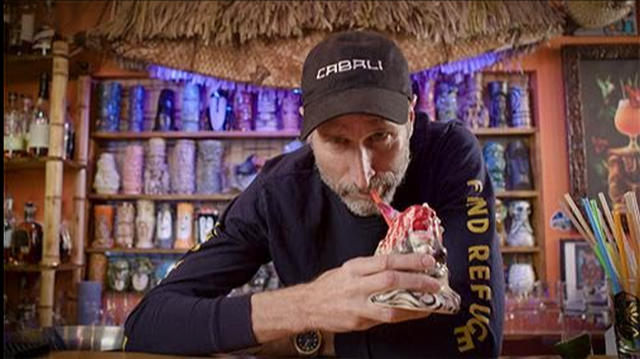
By way of history, by the early 1990s, many classic Tiki bars had closed, while ceramic Tiki mugs were often relegated to thrift stores, swap meets, and flea markets. In Venice Beach and throughout Southern California, however, collectors and artists began rediscovering these objects and documenting the larger culture surrounding them. Boutique publishing, conventions, and early internet forums helped fuel renewed interest in Tiki history and aesthetics.
With emphasis on California’s role in shaping the original Tiki movement, from the mid-century explosion of Polynesian-inspired restaurants and bars across Los Angeles and Orange County to the artists and collectors now preserving that legacy. I’ve been to a few Tiki bars in Las Vegas and in LA, including Tonga Hut in NoHo and Tiki Ti on Sunset, which are still open, along with Trader Vic’s, which is global and supposedly returning to LA in 2026. They are entertaining, just like this documentary and these filmmakers!
Hand in hand with this exploration of the Tiki culture and its artistry, we follow Fini’s journey as he tries to build his dream – Cabali, a Tiki bar in Arizona. From location to color to decor to Tiki carvings to a lava wall (which is beyond cool), we hear from the architects and contractors as they meet the many, many challenges of Fini’s dream project. So determined to build Cabali, Fini even sold his house to get money for the build.
Over 100 interviews were conducted for this documentary, including appearances by actress and comedian Kate Flannery, who is a Tiki devotee, Rock & Roll Hall of Famer Todd Rundgren, painter, designer, and illustrator Shag, and a wide range of artists, collectors, musicians, and Tiki historians connected to the culture’s ongoing revival.
With a mix of interviews, archival materials, film, home movies, photos, vérité footage, and stylized cinematography, CABALI AND THE TIKI MUG OBSESSION goes beyond the collectibles themselves and looks at the community that formed around them.
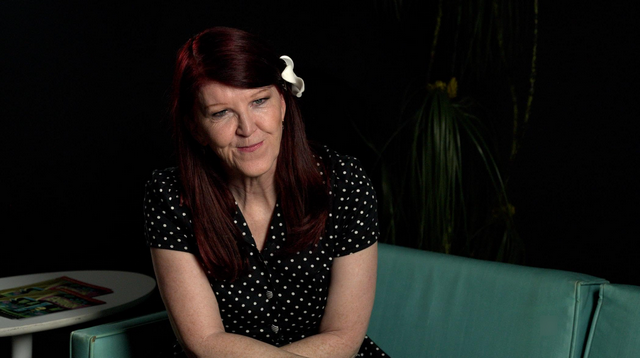
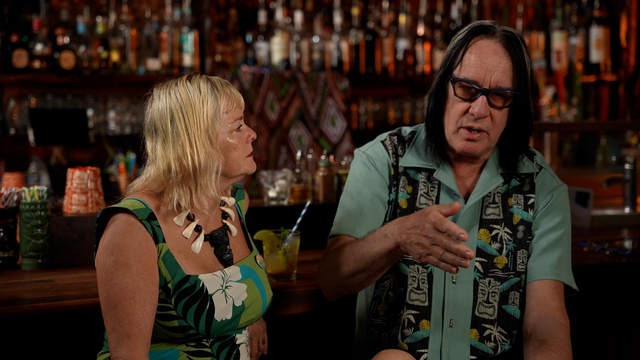
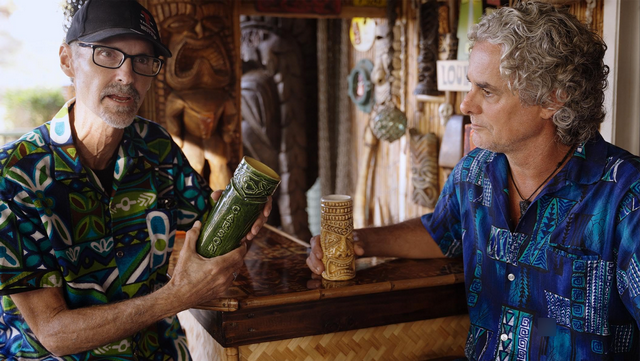
As you’ll hear in this interview, CABALI was a multi-year project with an unknown outcome. Josh breaks down the challenges and creative process behind editing the film, noting his background as an editor and the very deliberate choice to intertwine two narrative threads: the broader history of Tiki and the specific story of Cabali’s creation. He discusses how the visuals, including vibrant cinematography by Ryan Mihalyi and expert color work by David Taylor, were designed to immerse viewers in the world of Tiki, paralleling the artistry of the mugs and bar with the film’s own visual style. The use of dynamic camera angles, close-ups, and color was discussed as a way to highlight the craftsmanship involved in both the mugs and the bar’s construction.
As comes as no surprise, we spend a good deal of time touching on the editing process, with Josh revealing that he cut two separate linear films—one about Tiki history and one about Cabali’s construction—before merging them into the final non-linear narrative, noting the difficulty of deciding when to stop filming and interviewing, and acknowledging that some interviews took years to secure. Important to Josh was to include a wide range of voices from the Tiki community while condensing a visually and historically rich story into a tight runtime.
We also delve into the film’s sound design and music, with special mention of Silas Hite’s main title score and Tony Marsico’s contributions, which blend surf rock, Polynesian influences, and jazz notes to evoke the mid-century era when Tiki culture flourished. The music is not only energetic but also propels the narrative. And something that tickled me to no end is the film’s opening titles with Hite’s title score.
Vibrant, bold, and alive, the film’s opening titles, which were inspired by the legendary Saul Bass and created with the help of Emily Eckstein, Silas Hite, and Ralph Smith, represent a shared aesthetic sensibility and collaborative approach to animation and design, as was the intention to create a visually striking introduction that sets the tone for the film.
Fini joins the conversation to share his perspective on the organic development of the project. He recounted how his initial idea for a DIY-style documentary about building a bar evolved once Josh saw his extensive Tiki mug collection, realizing there was a deeper story about the artists and the subculture. Fini emphasized his initial reluctance to be the film’s subject, preferring the focus to be on the artists, but acknowledged that his role as an enthusiastic collector helped humanize the story and make it accessible to a wider audience.
And, of course, we talk money and financing as the boys describe the logistical and financial challenges of making the film, including the need to travel to various Tiki hotspots and the dual task of funding both the bar’s construction and the documentary. Josh is generous with his praise of the film’s executive producers and a tight-knit group of supporters for making the project possible. As part and parcel to the financial threads of this doc and the building of Cabali is the collaborative nature of the bar’s construction, with artists and craftsmen contributing unique skills, often at personal financial sacrifice, driven by passion for the project.
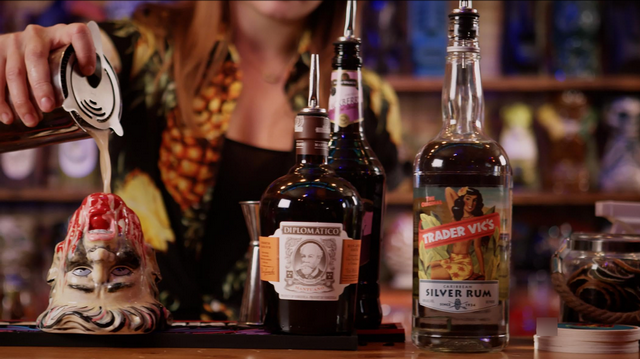
Now I’m sure you’re all asking yourselves the big question – what about the drinks? Those beautiful fruity, umbrella-wearing drinks that are served in those gorgeous Tiki mugs? Don’t worry. I’ve got you covered, as those were two of my big questions when it came to the film’s content. We do get to see some beautiful drinks poured and served. We see a glimpse of a “cocktail menu”, but no drink recipes are shared. I know. Perish the thought. But on pressing the boys with suggestions for a collector’s edition DVD, both Josh and Fini acknowledge the importance of cocktails and hinted at the possibility of including recipes and additional content as DVD extras in the future. I’m looking for custom Cabali mugs, too.
It’s a fun, fun interview, and Josh imparts so much wisdom about his feature directorial experience and the challenges faced in making CABALI AND THE TIKI MUG OBSESSION that all of you filmmakers and aspiring filmmakers will glean something that might aid you in your passion projects, as this truly became a passion project for Josh as well as Fini.
For more information on CABALI and upcoming festival screenings and distribution news, go to cabalidoc.com. And if you’re in Southern California, you can catch CABALI AND THE TIKI MUG OBSESSION on July 18th at 5pm at the Bay Theatre in Seal Beach.