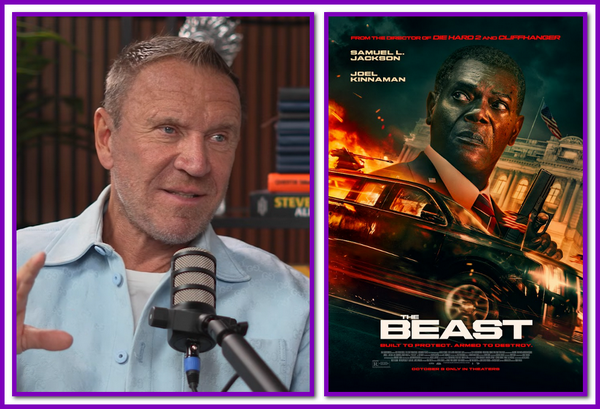
For more than four decades, RENNY HARLIN has been blowing things up.
Planes, buildings, mountains, vehicles, city streets—few filmmakers have embraced the sheer visceral possibilities of action filmmaking with Harlin’s enthusiasm. But with THE BEAST, starring Samuel L. Jackson and Joel Kinnaman, Harlin faced a rather different challenge. For much of the film, two men are trapped inside the armored confines of the Presidential limousine while a coordinated attack erupts around them.
The challenge wasn’t simply how much Harlin could destroy outside the vehicle. It was how much humanity he could discover inside it.
And ironically, accomplishing that required an extraordinary amount of technology.
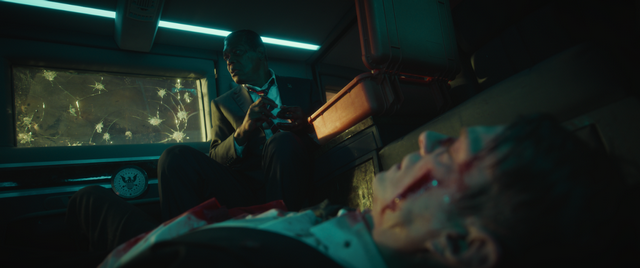
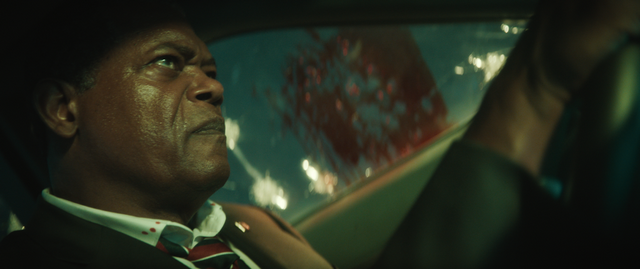
THE BEAST is an action film in the truest sense of the word, starting quietly with the faint tapping of computer keys before erupting into destruction and barely taking its foot off the pedal from there. But within the gunfire, explosions, rockets, helicopters, car crashes and relentless forward motion is something far more intimate. The President, played by Samuel L, and badly wounded Secret Service Agent Taft, played by Kinnaman, are essentially hermetically sealed together inside the Beast, dependent upon one another for survival.
The camera is trapped in there with them. So are we.
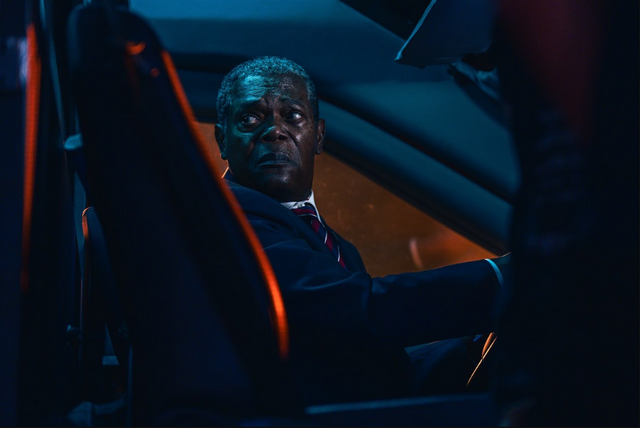
Outside, the city is exploding. Inside, memories of Vietnam intrude upon the President’s consciousness. Fingers perform a seemingly inexplicable exercise. Radio voices fight through static.
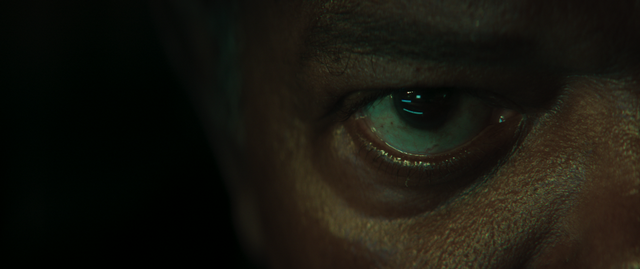
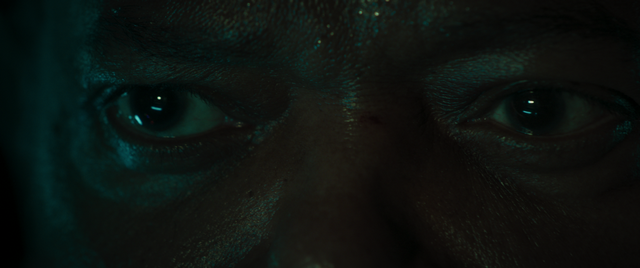
Projectiles strike armor. The Beast’s engine growls and accelerates beneath them. Harlin and cinematographer Jacques Jouffret search seemingly every inch of the vehicle with the camera, pushing into faces and eyes while editor Alex Rodriguez moves effortlessly between the massive action outside and two men talking inside.
And as the night progresses, something curious happens.
The technology begins to disappear. The President becomes Oscar. Taft ceases being merely the Secret Service agent assigned to protect him.
And the deeper we travel into THE BEAST, the more human the film becomes.
How Harlin got there is a story that begins not with an explosion, but with champagne. And a wedding anniversary.
“This movie fell on my lap like a gift from heaven,” Harlin tells me. “I had spent the year before in Europe, and particularly in England, prepping another movie that had taken a long time to prep and didn’t really come together, and I was sort of at my wits’ end, frustrated because I, as you know, I love to work. I love to make movies, and any year without making a movie, it feels like I’m wasting time. I’m wasting precious time. I’m not creating something.
“So I was frustrated, and it was right around now, to be exact. It was September 17 weekend, and we were living in London. And then I took my wife to Paris for the weekend because it was our wedding anniversary, and we went to a fabulous hotel in Paris, enjoying ourselves and drinking champagne.
“And all of a sudden, the phone rings, and my old friend Rob Van Norden says, ‘I’m doing this movie called THE BEAST, and we have a situation. Would you be interested in reading the script? And if you like it, could you jump right in? Because we need a director.’
“And I said, ‘Well, let me put my champagne glass down and take this.’ I downloaded the script, and I’ll get back to you. So that canceled our romantic dinner. But I read the script and I called Rob back two hours later after a very quick conversation with my wife, and I said, ‘I love the script and I’d love to do this. What’s your plan?’
“This was Saturday night in Paris, and he said, ‘Can you be in Madrid on Monday morning?’
“And I said, ‘That’s really fast, but of course I can.’”
So much for the anniversary weekend.
“Sunday morning we left Paris, took the train to London, went to our apartment where we had been living for probably four or five months, packed our things, packed our baby, and booked a ticket. And literally, early Monday morning we were at the airport, and sometime Monday morning we were in Madrid.
“I didn’t even have time to go to the hotel. Johanna with the baby went to the hotel, and I went directly to a location scout and started working on the movie. So it happened quickly, but I was super happy and excited.”
And just like that, the anniversary weekend was over and Harlin was standing in Madrid facing a movie whose central filmmaking problem had yet to be solved.
“And then the technical conversation started in terms of how we’re going to do this movie. You obviously can’t put a camera in a car with actors and drive through exploding things on real city streets. We didn’t want to do blue screen, and so we decided to start leaning toward volume screen.”
That decision also placed THE BEAST at a fascinating point in the evolution of filmmaking technology. Harlin is acutely aware of just how quickly today’s innovation can become tomorrow’s laser disc.
“The technology changes so quickly that two years ago people were saying, ‘Oh my goodness, volume screen is just the greatest invention ever, and now we can save so much money and time and everything, and it’s just the best.’ And they were building them everywhere. They are pretty much everywhere in the world because everybody decided collectively that that’s the future of moviemaking.
“But I dare to say that if we were making this movie today or tomorrow, I think that everybody would say, ‘Forget about volume stage. We’re going to put the car in a gray box, and all the outside stuff is going to be AI.’ That’s what I think people would say already today. So that’s how rapidly technology is changing.
“First there was whatever before CG, and then CG was the answer to everything, and then everybody said, ‘Oh, but now volume stage is really going to help so much with everything.’ Everybody decided to go with that technology. It’s almost like talking about laser discs. So anyhow, thank God we were able to still live in a time when we could use a volume screen.”
But using one and knowing how to make this particular movie with one were two very different things.
“I knew quite a bit about the technology already, but there were a lot of people who didn’t, and now we had to bring together everybody. And I had to find a DP. There was no DP yet.
“Then I found Jacques, who had never worked on volume screen, which was not a good thing, but Jacques was otherwise a brilliant DP, but didn’t really, in all honesty, know a lot about shooting on volume screen, which created its own technical challenges.
“So we started a very crash course for everybody about volume screens.”
And that crash course was only the beginning.
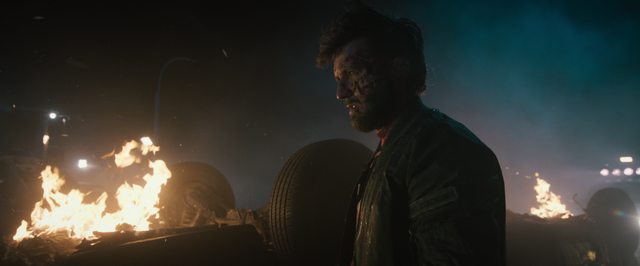
Before Harlin could put Jackson and Kinnaman inside the Beast on a stage, he needed the world that would ultimately surround them. That meant creating the exterior action on the streets of Madrid first, with the Spanish locations standing in for the film’s American setting.
“We got to find the locations. We got to get the permit. We got to figure this out. We got to get a camera car from somewhere. We got to attach eight cameras on it to shoot every possible direction, and we have to decide what cameras are technically the right cameras, what lenses, how it’s all technically going to be done so that it’s compatible to what we’re going to shoot on stage.
“It sounds simple, but it was a technical puzzle of giant proportions.”
Even more counterintuitive for Harlin was the manner in which he had to photograph those sequences.
“It was really bizarre to me to work against every instinct of an action director, which is all about setting up a scene and finding the most effective camera angles, the low angles, the lenses, the cranes, the drones, the whatever, to capture the action and the missiles flying and the explosions and the car crashes and whatever.
“And I had to do the opposite, which is I don’t set up cameras at all.”
“I put cameras on the camera vehicle on sort of normal Presidential limousine eye height, and those cameras are looking every which way, even pointing right up. And then we just drive fast through the action. I say, ‘Action,’ and it starts happening, and people are firing guns, and things are exploding, and cars are driving in and hitting each other.
“All this is happening without actors, without anything except that this camera car we have is going to, at the right moment, drive through it very fast. Sometimes it might stop and then start again, but it’s just a camera car with just cameras.
“So we did that and it was bizarre and it was weird, and we did that for, I think, three weeks covering all the action, and then we did the actual physical scenes where Sam is actually outside the car, doing what he’s doing. So all the exterior work was done in Madrid.
“And then we went to Canary Islands, where we desperately started testing. We already had a different crew there doing tests on the screens. We had to figure out the darkness, the lightness, the brightness of the screens, and how they are positioned, how they are angled, how they are lit. Can we use smoke? Can we not use smoke? How do we do this technically, and how far from the screens the set has to be?
“And we’re still building the set, and it’s going to be on a hydraulic platform, so it can react to the things that are going on. And the set is basically—it doesn’t even look like a car. It looks inside like a car, but from outside it just looks like a weird box. And it has to be designed to my specifications of where the camera is going to be and what the camera can do and what kind of camera moves I can make.”
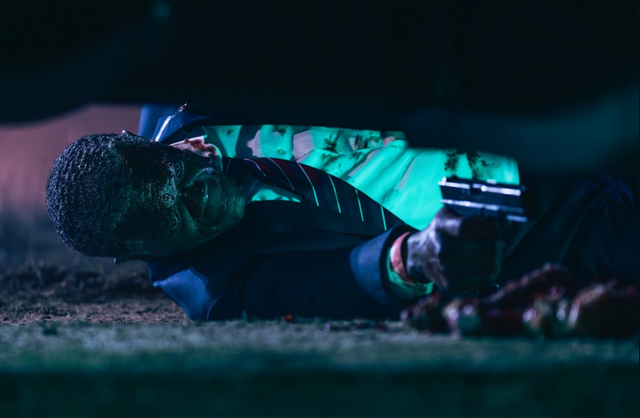
What appeared on camera as the interior of the Presidential limousine was, from the outside, something else entirely—a specially constructed set mounted on a hydraulic platform, surrounded by a 270-degree LED Volume Screen. But the screen itself was only one component. Harlin’s solution depended upon creating depth between the actors and the Madrid footage playing behind them rather than simply placing Jackson and Kinnaman in front of a screen.
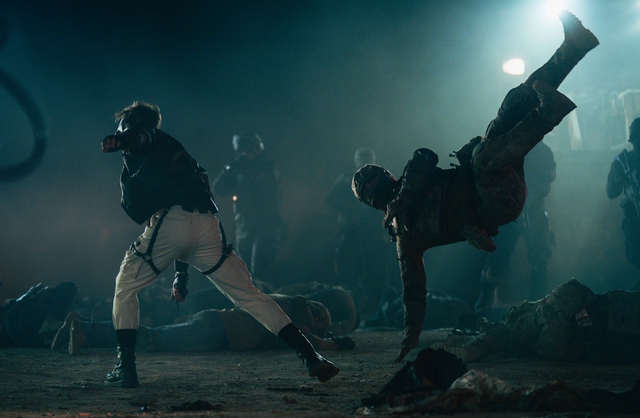
“Then we have to design the middle ground, which is between the set and the screen, because that’s the secret: how to hide that it’s actually a screen, and how to create action with stunt people and explosions and debris flying and all kinds of things that can happen there between the set.
“And so there’s three layers. There’s a camera in the car shooting Sam Jackson over him through the windshield. That’s the first layer. Second layer is all the stuff that is happening in the midground, and then the third layer is the background with the screens.”
Watching the film, I had diagrammed essentially the same construction in my notes as three concentric visual planes: the Beast and its occupants in the foreground; a practical middle ground in which bodies, debris and action could move around the vehicle; and beyond them, the 270-degree LED Volume Screen carrying the exterior footage shot on the streets of Madrid. What I hadn’t known was just how complicated synchronizing those three planes had been.
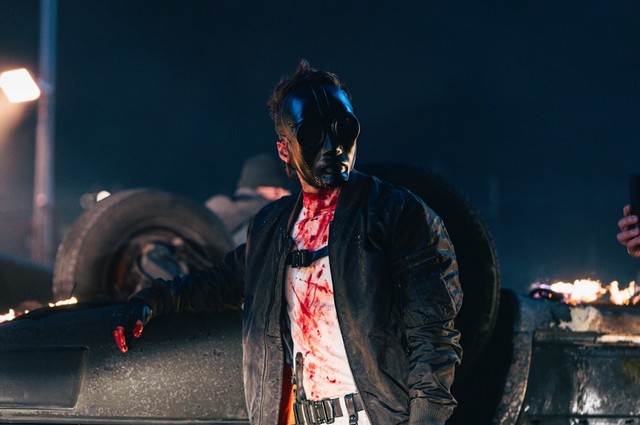
“Everything has to be—lighting for every layer has to be coordinated and balanced, and the images on the screen have to be exactly right angle and right size, and everything has to be synced with the side windows and the front windows and the rear windows and all this stuff. So we have ten computer programmers working behind the screen in rows and programming everything and adjusting everything, and we have color timers and editors and everything.
“So it looked simple in the end, but it was unbelievably technical and complex. And there were days when we couldn’t shoot anything because something didn’t work, and then days when we shot 15 pages because we were just running through the scenes and everything was perfect and the backgrounds—it felt to the actors like they were on the streets driving, and for the camera, same thing. It was just magic.”
That magic also allowed Harlin to shoot the Beast material largely chronologically, tracking the accumulating physical damage to the vehicle and its occupants while Jackson and Kinnaman could perform within an environment that surrounded them rather than against an abstraction.
And for all the new technology at his disposal, Harlin never stopped approaching the film as a filmmaker—storyboarding, shot-listing and working with Jouffret to determine the visual language of a story largely confined to one vehicle.
“We give the movie a certain language and a certain look and we make it feel like the camera is really like a character representing the audience inside the car, and that it feels real and visceral, and that we capture the drama and the acting and the emotion and the humor and all those things. And that was the photographic part of it, and then there was the sound part…”
Anyone who has heard Renny Harlin and me talk about filmmaking knows that eventually we are going to get to sound.
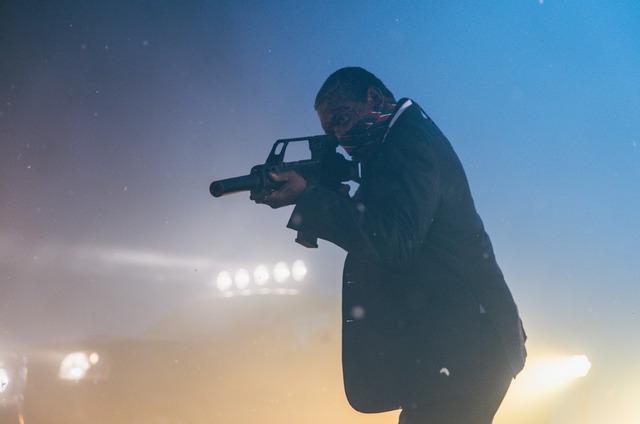
Once again working with supervising sound editor Oriol Tarragó and sound editor Willy Vila, both of whom collaborated with Harlin on DEEP WATER (and who are again working with him on BLACK TIDES), along with re-recording mixer Nicolas De Poulpiquet, Harlin didn’t merely need to create the cacophony surrounding the Beast. He needed to establish two distinctly different aural worlds separated by only a few inches of armor.
“I wanted to be really faithful to the fact that when we are inside the car, it’s like this hermetically sealed environment where you hear the outside, but it’s muffled. But it can’t be too muffled because then people are not experiencing the action properly, but it has to be muffled enough that there’s a real clear difference to when we finally go outside.
“When you close the door, it’s like sealing yourself in the coffin. Open it, it’s all of a sudden—though you can’t smell in the theater—but you can kind of smell the fresh air coming in and the world opening up when you step out of it.”
And then there is THE BEAST itself. Not simply the title of the film or the nickname for the Presidential limousine, the Beast is a character with a voice all its own.
“We worked extremely hard on the car and the environment and the sound of the car. They recorded everything from Rolls-Royce to Bentley to sports cars to Mercedes to big cars to smaller cars to faster cars, and mixed animal sounds with it and everything to create one sound for the Beast that gives you the feeling of acceleration and presence and size and weight and all those things. And then really, like, how does all the action outside the car sound and what does it sound inside the car? And the projectiles hitting the car and the radio messages and where are they coming from and how unclear or clear they are.”
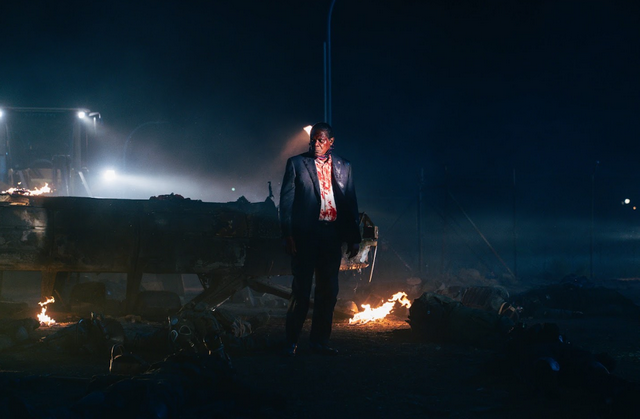
“There’s different kinds of people talking. There’s the normal control center contacting him, and then there’s the special person who is advising him, and then there’s the medical personnel, and then there’s the car when the car is talking to him, and then there’s the highest command that comes on the line in the end of the movie, and they all have to sound different and feel different.”
Just as Harlin and Jouffret constructed the image in planes—THE BEAST in the foreground, practical action surrounding it and the filmed environment beyond—the sound design operates in layers.
There is the immediate world of Oscar and Taft inside THE BEAST; the impacts and mechanical threats striking its armored shell; and beyond that, the larger battle raging through a city Oscar can hear but cannot fully see. Even the voices reaching him arrive from different places within that architecture.
And underneath it all is music. Working with composer Tuomas Kantelinen, Harlin was determined not to fall back on the expected orchestral language of the conventional action movie.
“Instead of going with what could have been a classical action score, I felt like this movie should be modern, but at the same time kind of retro. And so I used SORCERER and Tangerine Dream and that kind of ’70s, ’80s movies as an example of wanting an electronic synthesizer score to really drive the movie.
“Every movie is complicated. Every movie needs all these things coming together. But that was, sort of, in broad strokes the journey that we took in trying to create this.”
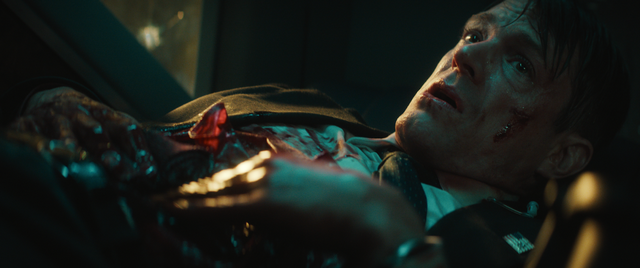
For all the machinery required to create THE BEAST, however, Harlin never loses sight of the two men trapped inside it. And perhaps that is where all of that technology ultimately proves its worth.
Inside this hermetically sealed environment, titles begin to disappear. The President becomes Oscar. The Secret Service agent protecting him becomes Taft. President and protector become two wounded men trying to keep one another alive through a seemingly endless night. Humor surfaces between explosions. Stories are told. Memories intrude. Vulnerabilities emerge. And with each technological safeguard that fails around them, Harlin strips away another layer separating these men from one another—and us from them.
It was the detail within those confines that fascinated me: the constant repositioning of Harlin’s camera within what would ordinarily be a visually restrictive space; the way Jouffret’s lens searches faces and eyes; Rodriguez’s editing finding the rhythm between action and conversation; the President’s concern over every life being lost outside the Beast; his stories of Vietnam; the simple story of bread crusts that tells us something about a man that no Presidential biography ever could.
Harlin was touched that those details had registered.
“As always, you notice all the little things and all the stuff that we are trying to do, and it’s that alone confirms to me that it’s worthwhile doing it. Because it would be sometimes easy to get jaded when people say, like, it’s whatever, and feel like, you know, who am I kidding? Is this some kind of an ego trip that I do all this tiny little detail work, and I think that it’s such an important thing to do, and it doesn’t really matter in the end to anybody?
“But when I hear one person like you pointing out these things, and that you notice what we did and why we did and how we did, it just validates. That’s enough for me that I did it and it’s there and you notice it.”
But those details ultimately exist in service of character.
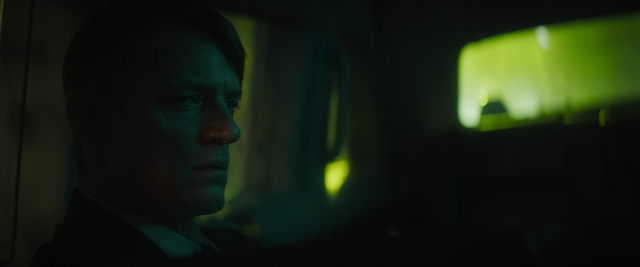
“I think the script is really beautiful, and what those guys do with that material. First of all, it’s not easy to be in Joel Kinnaman’s shoes next to Sam doing the scene and owning that car and being the President, you know, to hold your own in that company, in that situation. It’s intimidating. But he’s really able to bring incredible humanity to his character, not self-pity, but kind of sardonic black humor. And them together, I think it really forms a beautiful bond and a beautiful relationship of two men who have been stripped of all the pretensions and all the usual stuff, but now they are just human beings.”
Just human beings.
It is there that THE BEAST finds its heart.
And for Samuel L Jackson, the emotional line between actor and character became still more personal. Rosa, the woman Oscar is desperately trying to get home to, is played by Jackson’s real-life wife, LaTanya Richardson Jackson. For Harlin, watching those scenes being performed carried an emotional resonance beyond anything on the page.
“It was really moving, you know, seeing Sam do those scenes because you knew that he was talking about himself and his wife, who plays his real wife, plays Rosa. And they went through that. Sam was an addict and Sam was on a very dark path in his life, and it was his wife who pulled him out of that with her love.
“Their love story is incredible, and Sam fully credits her for saving his life and creating this whole career, and when he was talking about that stuff in the car, it was so touching.”
There is something particularly poignant about that convergence of actor and character. Oscar is fighting to get home to Rosa while Samuel L is playing those moments opposite the woman with whom he has built his own life. And behind the camera is Harlin, whose own journey to THE BEAST began with Johanna and a romantic anniversary weekend in Paris that disappeared the instant opportunity called.
None of that needs to be stated by the film.
It’s simply there.
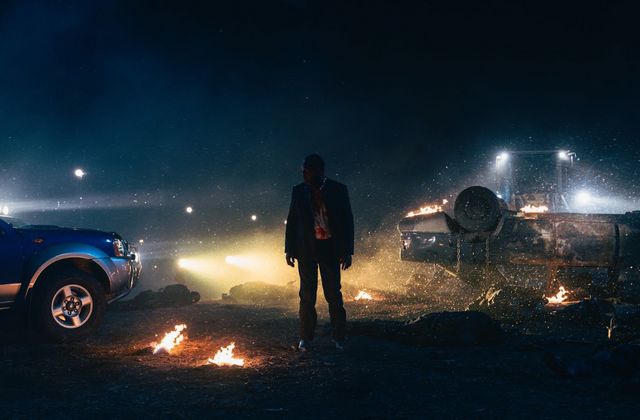
As THE BEAST begins to die around Oscar, so does the illusion that technology is going to save him. Systems fail. The vehicle is battered beyond endurance. Taft is grievously wounded. Oscar, having earlier described the psychology of a soldier who keeps going until he simply cannot and then “crumbles,” finally does exactly that.
He crumbles.
And it isn’t another weapon, another command from SATCOM or another piece of technology that brings him back.
It is Rosa.
“To hear them do that final scene where she’s telling him that he can do it and he better get up and all that stuff, without giving away the whole ending of the movie, to me that’s golden. And how many action movies can really say that they have the real humanity instead of like, okay, we succeeded on the mission and everything is fine and the nuclear device didn’t blow up?
“But that it’s really, in the end—even if it sounds corny—it’s really about love. And it’s really about people, you know, people doing something for each other.”
The technology is dying while the human being comes back to life.
Rosa tells him to get up. Oscar gets up.
And once he does, Harlin gives him one tiny gesture that may say more about the man than anything else in the film. Before continuing home to Rosa, Oscar ties his tie.
I told Renny it was one of the sweetest moments in the film.
“Thank you. I love that you noticed that because that was my idea. I said to Sam, I said, like, ‘Hey Sam, what do you think if you tie your tie before you go? Is it because you’re the President or is it because you’re going to meet your wife?’
“He was like, ‘Yeah, that’s a good idea.’
“And it’s those little details that I think just do so much more than anything, and it’s moviemaking. It’s not somebody says, like, ‘I feel like this, so I’m going to do that.’ Right now I’ve been doing a lot of writing recently, and I try to remember always that it’s like, how do I tell things visually instead of people laying it all out in stupid speeches? How do I do just a little gesture that tells it all?
“And I’m glad you noticed that because I love that about my job, that I can come up with those little things when I’m watching the scene develop, and they actually end up making a little bit of a difference.”
A little bit? I told him I got teary and had to reach for tissues.
“Good!” Harlin said.
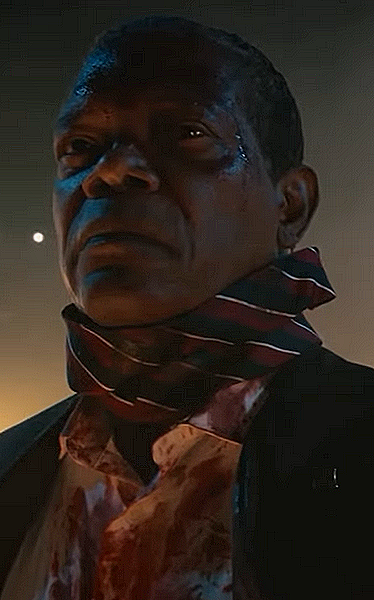
Maybe Oscar ties the tie because he’s the President. Maybe he ties it because he’s going home to his wife. Maybe it’s both.
After all, Oscar has not ceased being the President. He has simply rediscovered the man inside the office.
And watching that man emerge brought me back three decades to another Renny Harlin film and another Samuel L Jackson character.
THE BEAST marks Harlin’s fourth film with Jackson, but I told him I haven’t seen this much character development and humanity in one of Samuel L’s characters since Mitch Hennessey in THE LONG KISS GOODNIGHT, opposite Geena Davis. There, too, two people get to know one another through danger, humor and revelation, each discovering something about the other—and themselves—along the way.
Watching Samuel L and Joel together in THE BEAST, we learn about Oscar and Taft almost incidentally over the course of this horrific night. Harlin never stops the movie so that either man can deliver his biography to the audience. Character develops because these men talk, argue, joke, remember, hurt and try to keep one another alive.
I told Renny I believe it is the best character work he has done since THE LONG KISS GOODNIGHT.
“I hope that both Sam and Joel would get some positive notices because if somebody wants to say, like, ‘Oh, it’s just Sam Jackson being Sam Jackson,’ I would feel bad for him if people don’t notice that I think it’s some of Sam’s best work in many movies. He’s not just being some funny guy or over-the-top something or Nick Fury. He’s actually, you know, a really complex human being.
“And Joel, I would wish that this could be some kind of a mini-breakthrough for Joel, where people go like, ‘Wow, who’s that guy? It’s kind of familiar, but I don’t quite know who that is,’ and people would take notice.”
There is another evolution taking place in THE BEAST, however, and it isn’t Oscar’s.
I’ve known Renny Harlin for more than three decades. And during our conversation, I told him something I have increasingly seen in his work: life has caught up with him in his filmmaking. As what he values in his own life has changed, more of that has begun finding its way onto the screen.
There is more heart there now.
Which made one question irresistible.
After talking about Paris and Madrid, eight-camera vehicles and 270-degree LED Volume Screens, hydraulic platforms, explosions, practical stunt work, computer programmers, cinematography, editing, sound layers, animal sounds, electronic synthesizers, Samuel L, Joel, Taft, Vietnam, Rosa and one perfectly tied tie, I asked Renny what aspect of making THE BEAST stood out to him.
What was he most proud of? Besides, of course, getting out of Paris and being in Madrid within 24 hours.
His answer had nothing to do with technology.
“I’m most proud of the character work. About being able to tell a breakneck action story that, to me, has deeper character relationships, and where I feel like I know and relate to and root for the characters more than in most action movies without literally stopping for numerous ‘let me tell the mystery of my life’ kind of monologues. I feel like it naturally and organically blends into the course of the very tense story. So that’s what I’m proud of—the character work.”
And he should be. Because THE BEAST may be constructed with an extraordinary amount of technology, but Harlin uses every bit of it to bring us closer to the people inside.
He puts cameras everywhere. Builds the world outside THE BEAST around them. Surrounds them with a 270-degree LED Volume Screen. Puts their world on hydraulics. Creates layers of practical action between them and the screen. Builds another architecture entirely out of sound. Gives THE BEAST itself a voice.
And then, piece by piece, takes it all away. Until what remains is a wounded man, the memory of everything that brought him there, and the voice of the woman he loves telling him to get up and come home.
President. Oscar. Man.
Technology gets him through the night. Love gets him home, just like it gets Renny Harlin home with a winning film.
By debbie elias, exclusive interview 09/30/2026
THE BEAST is in theatres on October 9, 2026.