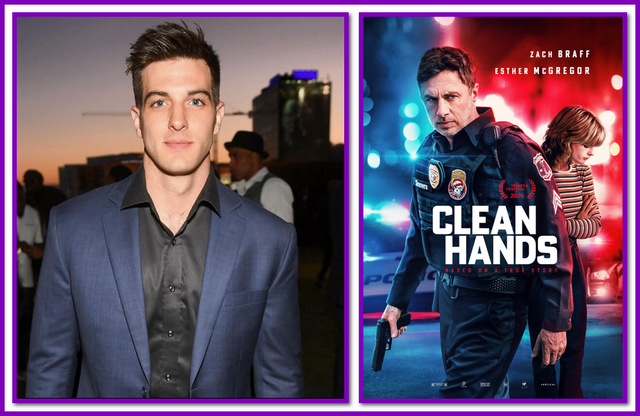
For writer/director JAKE ALLYN, filmmaking is about more than telling a story. It’s about finding a story that matters, one that speaks to something greater than what appears on the screen. With his second directorial feature, CLEAN HANDS, Allyn has found just such a story. Inspired by the real-life experiences of Maryland narcotics officer Kevin Simmers and his daughter Brooke, CLEAN HANDS explores the devastating realities of opioid addiction, the complicated relationship between a father and daughter, and the often blurred lines between law enforcement, compassion, and recovery.
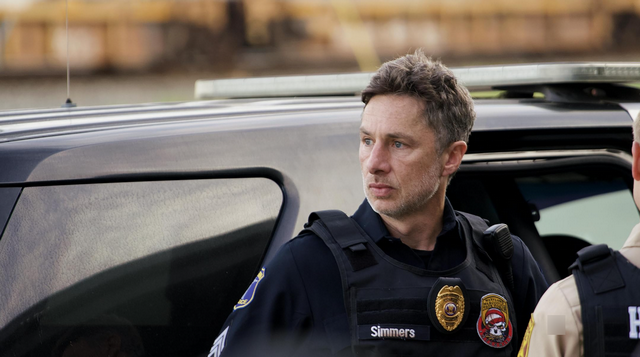
Starring Zach Braff as Kevin Simmers and Esther McGregor as his 19-year-old daughter Brooke, with Abigail Spencer, Lucas Till, and Holt McCallany, CLEAN HANDS is a deeply personal story that also speaks to a national crisis. But for Allyn, whose earlier film RIDE already demonstrated an affinity for emotionally grounded storytelling, the challenge was never simply making a movie about addiction. It was finding the humanity within the headlines, the emotional truth within the statistics, and the cinematic language to bring that truth to life.
Having admired Allyn’s work on RIDE, as well as his performance in NO MAN’S LAND, I was particularly interested in the growth evident in his filmmaking with CLEAN HANDS. And during our exclusive conversation, Allyn proved just as thoughtful and passionate about the creative process as he is about the people whose lives inspired the film.
The story came to him during the COVID pandemic, at a moment when he was questioning his own purpose as a filmmaker.
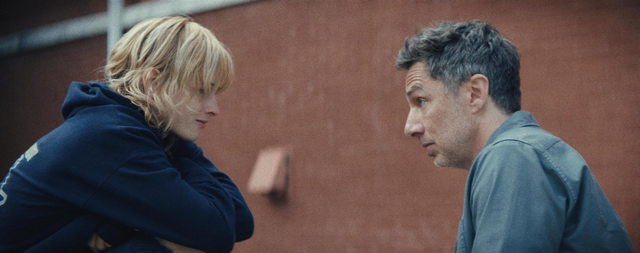
“I found this story, or this story found me during COVID at a time in my life when I was kind of struggling with what I was going to do next in the world and what I was here for,” Allyn recalls. “I thought I was here to tell stories, and then COVID strikes and you can’t do anything.”
That uncertainty led to a personal resolution. “Man, if I get to make another movie, it’s going to matter. And if it only matters to me, that’s fine. And I’ll just trust that what I care about, other people will care about too.” Then he discovered a short video piece from The Atlantic about Kevin and Brooke Simmers.
“I was crying by the end of it, and I slid into Kevin Simmers’ DMs. I Facebook messaged him, and I just asked him for an interview. I didn’t email him asking for his life rights or anything. I just kind of wanted to talk to him.”
What happened next sounds like the beginning of a movie in itself.
“Kevin, being Kevin, as you can imagine from the guy in the movie, he called me like six minutes later. I about peed my pants, and luckily I had the guts to pick up that phone.” The two talked for approximately 45 minutes, followed by additional conversations. Eventually, Kevin issued something of a challenge. “Man, if you want to tell a story about this, you gotta get your ass over here.” Allyn accepted.
He traveled from Los Angeles to Hagerstown, Maryland, spending weeks immersed in the world of Kevin Simmers and Brooke’s House, the women’s recovery organization founded by Kevin. “Kevin walked me through his daughter’s whole life, their entire journey. I sat in the circles at Brooke’s House with all the women there.” It was during those experiences that Allyn began to recognize the larger significance of Brooke’s story.
“That’s really when Brooke became, oh wow, she’s more than one person. This girl could be a symbol for everyone facing addiction.”
That realization informed his approach to the screenplay. While the film encompasses drug addiction, law enforcement, questions of criminality versus compassion, police misconduct, treatment facilities, insurance obstacles, and the financial realities of recovery, Allyn was determined not to lose sight of the central relationship. And that was no small undertaking.
“I do too. I do too,” he readily admits when I suggest that some of those secondary issues, particularly insurance barriers and the financial complexities of addiction treatment, could have supported further exploration.
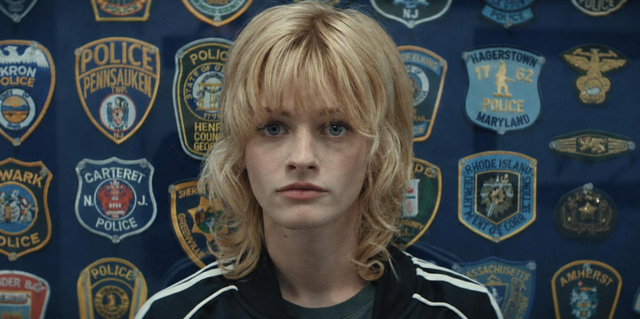
“That’s the struggle with a true story, and one as big as this. There’s so much. You could have made a whole movie just about Kevin trying to raise the money for Brooke’s House. You could have made a whole movie just about him going after a dirty cop. You could have made a whole movie just about all the different 28-day houses that Kevin tried to get Brooke in.”
His solution was to maintain a singular narrative focus.
“I just tried to hit as many as I could while only telling one story. I’m so fearful of this movie becoming just like a series of events. But those topics are all real and important.”
One particularly frustrating incident involving Brooke’s access to a Vivitrol injection because of insurance delays was not invented to heighten the drama. “I didn’t make that up to serve a point. That’s what happened to Brooke. I wasn’t saying, ‘Oh, what would be good for my movie is if she tries to get the shot and can’t.’ That’s just what happened. It happens to a lot of people.”
For Allyn, the truth of the experience was often more compelling than anything he could invent. “I really can’t take credit if anybody gives me a screenwriting compliment. I’m very quick to say I was standing on the shoulders of a gigantic, amazing true story, and my job was just to serve it, get out of its way.” But translating that true story into a cinematic experience required considerably more than simply recording events.
With a budget of less than $2 million and a narrative spanning approximately two years, Allyn faced substantial production challenges. And he was determined to surround his actors with the authenticity of the world he was depicting.
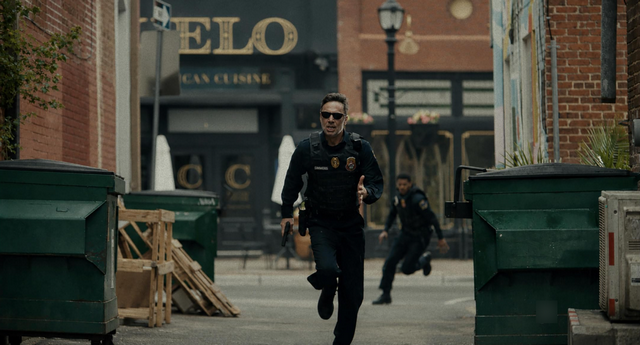
“We had an amazing crew. Half of our crew were the real police officers that served with Kevin. They were all there on set. All the other cops in the movie were Kevin’s real task force.” The involvement extended well beyond law enforcement.
“The women in recovery in the movie are all real Brooke’s House graduates, and Brooke’s real drug counselor was in the film.”
For Allyn, the presence of those individuals wasn’t simply a matter of production authenticity. It carried a responsibility. “When you surround a movie with that type of reality, it keeps me in check, and I know it motivated and grounded all the actors, just to remind them every single day how real this story was.” That commitment to authenticity became the foundation of the film’s visual grammar.
Reuniting with cinematographer Keith J. Leman, who collaborated with him on RIDE, Allyn developed a visual approach that rejects many of the familiar cinematic conventions associated with drug addiction. Rather than employing distorted imagery, blurred lighting, or exaggerated visual effects to suggest intoxication, CLEAN HANDS confronts the physical and emotional realities of addiction head-on. Extreme close-ups place the audience in uncomfortable proximity to Brooke’s suffering while also revealing the obsessive nature of Kevin’s police work. And those visual parallels are entirely intentional.
“Authenticity, authenticity, authenticity,” Allyn emphasizes. “If you do nothing else, that usually does end up being cinematic.”
He discovered that the more closely he adhered to actual events, the more compelling the filmmaking often became.
“The amount of times I changed a piece of dialogue to just be what was really said, or changed a blocking of a scene to what really happened, the amount of times that ended up being more cinematic than whatever movie thing I came up with was astounding.”
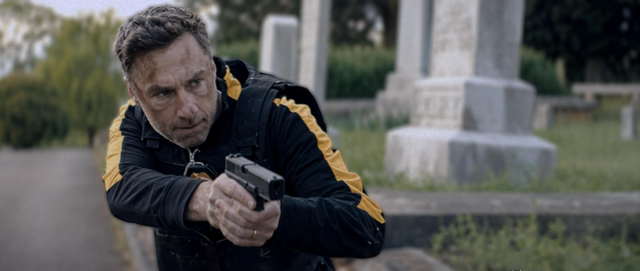
Equally important was recognizing the compulsive behavior shared by father and daughter. “Remembering that Kevin and Brooke are both addicts, and addiction is just this circle.” Allyn points to a line spoken by Abigail Spencer’s Dana Simmers about the cycle in which Brooke runs away and Kevin attempts to save her, only for the pattern to repeat.
For Allyn, addiction is about much more than the physical act of taking drugs. “This was a heart problem and a soul problem for both of them. That was very paramount to me.” He had no interest in creating a film built around stereotypical images of substance abuse. “I did not want to make a movie that just had a girl wandering around endlessly with needles, needle inserts, and fuzzing the light so that she looks all wasted. For me, that does not tell the story of an addict.” Instead, he wanted to examine the pain beneath the behavior.
“The drugs, the alcohol are just things to try to cover your real pain. That’s all it is.” That philosophy extends to the cinematography itself.
Leman’s camera is frequently restrained, allowing the performances to unfold without intrusive movement or unnecessary visual embellishment. The resulting intimacy can be startling, particularly in scenes depicting Brooke’s withdrawal and physical distress. Allyn credits both his actors and cinematographer for understanding when the camera should simply observe.
“When you’ve got somebody like Esther McGregor and Zach Braff just spilling their guts, sometimes literally, for a scene, the challenge with the camera is to just be there, and the audience will feel it.” That restraint was deliberate. “We wanted the movie as real as possible, so you’ll see that lack of moves on purpose.”
Although principal photography took place in Atlanta, Allyn and his team also filmed in Hagerstown, ensuring that the real Maryland setting remained part of the film’s visual identity. “We certainly shot principal in Atlanta, but then we went to Hagerstown as well to make sure we got the real place.”
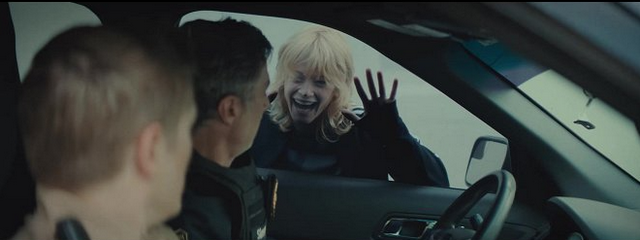
Equally essential to shaping the film was editor Owen Jackson, another returning collaborator from RIDE.
With the narrative unfolding across approximately two years, Jackson faced the considerable challenge of balancing multiple chapters of the story while moving between Kevin’s perspective and Brooke’s experiences. “He’s such a wonderful editor,” Allyn says. “It was hard because you’re telling a story that took place over two years. There’s different chapters, but it all needs to be one movie.”
The competing perspectives created additional challenges. “Are we following Kevin as he’s seeing his daughter’s addiction, or are we with Brooke experiencing her addiction with us? And both were so freaking important. But you can’t get lost in one or the other.” Sometimes, withholding Brooke’s whereabouts allowed the audience to experience Kevin’s uncertainty. At other times, the film needed to follow Brooke directly into situations her father could not witness. “Sometimes it was more powerful to be with Kevin and have no idea where Brooke was, and sometimes it was more powerful to go, okay, this is our moment. We do need to see Brooke. We do need to see what that first night in jail was like.”
One particularly striking sequence follows Brooke through a prison yard and into her cell, with elevated camera placement and Jackson’s editing creating a powerful sense of isolation. When I compliment Allyn on what appears to be an impressive crane or drone shot, he laughs. “I’m just really proud that you thought we had a crane.”
It’s a wonderfully revealing moment. With limited resources, Allyn and his collaborators achieved imagery that suggests a production considerably larger than its budget. But no amount of visual or editorial craftsmanship can compensate for casting that fails to capture the emotional complexities of the story.
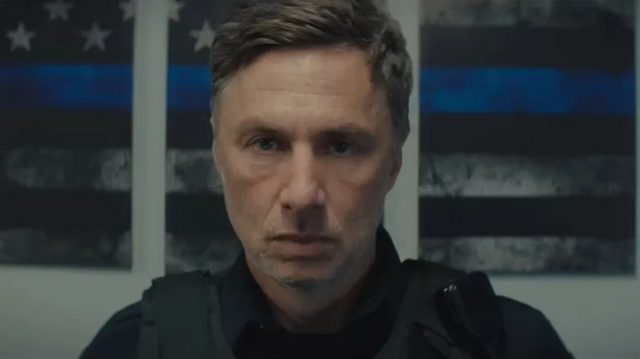
And for Allyn, the casting of Zach Braff as Kevin Simmers was central to everything. “Kevin Simmers is the last person that you would expect to have a daughter struggling with addiction,” he explains. “Kevin’s the last person that you would expect not to know what to do. He’s a drug cop.” Braff, perhaps not the most immediately obvious choice for the role, possessed qualities Allyn believed were essential to the character.
The director was familiar with some of the personal losses Braff had experienced, but it was the actor’s emotional openness, humor, and warmth that particularly appealed to him. “This movie, as you know, is some really tough subject matter and some really harsh material. But if you can’t laugh a little bit, you often end up laughing in your most dark times.”
Allyn recalls Braff questioning why he had been chosen. “I remember Zach asking me, ‘Why me?’ Basically, and I was like, ‘Your heart, man. I just see your heart every time you act. That’s what we need for this movie.'” Braff became much more than the film’s leading man. He was the first actor attached and also served as an executive producer and creative collaborator.
Finding the right Brooke was equally important.
Working with casting director Laray Mayfield, Allyn initially envisioned a nationwide search involving potentially hundreds of auditions. Then Esther McGregor submitted a tape.
“The very first tape that came in was Esther, and we were like, ‘Well, I guess the search is over. I guess we didn’t need to do all that.'” McGregor immediately impressed the filmmakers, and a subsequent Zoom callback with Braff confirmed the potential for their on-screen relationship.
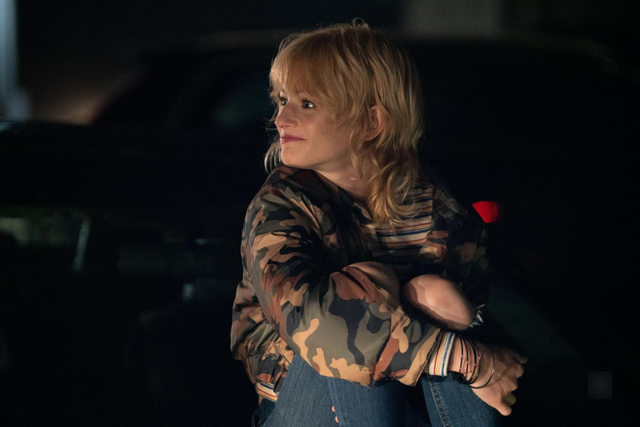
But it was during their first scene together that Allyn recognized just how naturally the actors had connected. The scene involved Kevin and Brooke walking up stairs toward a dam. Without prompting, Braff and McGregor turned the walk into a race. “On their own, they raced up the stairs. They raced each other.” The spontaneous moment captured something essential about the real Kevin and Brooke’s relationship.
“Kevin and Brooke were always ribbing each other. They were always messing with each other and competing.” Allyn recognized that the actors were finding details that hadn’t necessarily been written into the screenplay. “The first take, the first scene, they were able to get that Kevin and Brooke quality, even though that wasn’t in the script.” And that relationship remained the heart of his film. “It’s a cop story for sure. It’s an addiction story for sure. But at the end of the day, it’s a father-daughter film.”
The supporting cast brought additional dimensions to the narrative. For the role of Deputy Dormer, Allyn credits Mayfield with suggesting Lucas Till, an actor whose work he already admired. “I will 100% give Laray Mayfield credit for that.” Till’s character required considerable nuance, particularly given the presence of actual individuals connected to the events being dramatized. “He’s a wonderful human being, and really took on a tough role on and off screen. It’s a tough role to step into on set, surrounded by all the real people.”
Allyn is equally enthusiastic about Ursula O. Robinson, whose performance as Rosa provides welcome humor and warmth amid the film’s darker material. Robinson’s seemingly effortless comedic instincts proved especially valuable opposite Braff. “She torched it, made Zach laugh uncontrollably. She was going toe to toe with Zach in improv. That’s really hard to do.”
For Allyn, that spontaneity was an important part of the collaborative process, particularly when it remained true to the personalities of the real people.
But CLEAN HANDS also taught him something significant about his own responsibilities as a director. Having now completed his second directorial feature, Allyn has come to recognize the importance of trusting his instincts, even when surrounded by experienced collaborators. “I’m a quiet person. I’m a football guy, so I’m like a team player, and you want that. When you bring in Zach Braff, if he has a shot idea, you should look at it. He knows what he’s doing.”
But collaboration doesn’t mean surrendering creative leadership. “I’m also constantly reminded that even Zach Braff wants to be directed, and you can’t be too quiet.”
For Allyn, that lesson became especially important when considering the editing process. “Trust that you’ve done the work. Trust that it’s possible that you are right. And when you’re in the edit room, there’s nobody else.” He knows that the shots he doesn’t get during production are the shots he’ll be missing when he sits down to assemble the film. “So on set, when people are saying you don’t need that shot, I think we can move on or whatever, I always remember, well, it’s going to be me in the editing room having to deal with it. So get what you think you need.”
Interestingly, the real Kevin and Dana Simmers frequently reinforced Allyn’s instincts. There were occasions when Allyn would stage a scene according to what felt dramatically appropriate, only to have Kevin and Dana confirm that his interpretation was remarkably close to what had actually happened. “Those were usually the times Kevin and Dana came over and said, ‘That’s exactly what it was like.'”
That same authenticity extended to Braff’s improvisations. As Braff became more comfortable working around the people whose lives were being portrayed, Allyn encouraged him to experiment. “The more I was like, ‘Just riff this one, man,’ the more they would come over and be like, ‘Oh yeah, that’s exactly what Kevin would say.'”
Braff’s contributions continued into post-production. He organized a Los Angeles screening for filmmaker friends to provide feedback on the film, something Allyn admits made him nervous. But even that experience couldn’t compare with watching the movie privately with Braff at the actor’s home, pausing frequently to discuss individual scenes.
“I spent one night just me and Zach watching the movie at his house, and to watch the movie with your lead actor, pausing it every couple minutes to talk about each scene, that was brutal.” Braff even asked how nervous Allyn was. “Very, very nervous, Zach.”
Yet for all the pressures of directing, financing, editing, and ultimately releasing CLEAN HANDS, the most profound experience for Allyn came from the relationship he developed with Kevin and Dana Simmers.
The film took years to bring to fruition. And during that time, Allyn carried the emotional responsibility of doing justice to their family story. Then, approximately four years into the process, Kevin and Dana called him. They weren’t calling to ask about financing, production schedules, or whether the movie was finally going to happen. They wanted him to know that their relationship with him mattered more than the film. “We just wanted you to know we don’t care if the movie gets made. You’ll still be in our life, and we still love how hard you tried.” Allyn was deeply moved.
“That was like a weight lifted off my shoulders, and quite frankly, made me want to make the movie even more than ever.”
And when CLEAN HANDS was accepted into the Tribeca Festival, Allyn couldn’t wait to share the news with them. He expected their first thoughts might turn to Brooke’s legacy or the increased visibility for Brooke’s House. Instead, they were thinking about him. “The first thing they said was like, ‘Oh wow, that’ll really help your career, right? That sounds like it’ll help you get another job.'”
Even recounting the moment, Allyn becomes emotional. It’s a testament to a relationship that grew far beyond the usual filmmaker-and-subject dynamic.
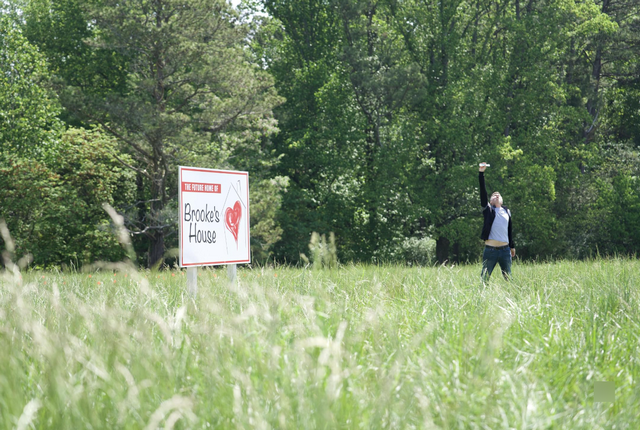
And in one final expression of that commitment, Allyn and his production partners structured the film’s financing so that Brooke’s House holds a one-third ownership interest in the movie. “We organized the finances of this movie for one-third of it to be owned by Brooke’s House.”
For Allyn, that arrangement was an essential part of ensuring the film could make a tangible difference beyond the screen. “This movie talks the talk and walks the walk.” And he wants audiences to understand that their support for the film can also support the organization at the heart of its story. “Every time someone rents this movie, buys this movie, shares this movie, they are actively supporting recovery, Brooke’s House, women in addiction, and I’m really proud to say that.” It’s an extraordinary intersection of storytelling, filmmaking, and real-world purpose.
For Jake Allyn, CLEAN HANDS represents not only a significant step forward in his evolution as a filmmaker but also the fulfillment of the promise he made to himself during the uncertainty of COVID: that his next film would matter.
With its emotionally demanding performances, authentic connection to the people whose lives inspired it, and carefully considered cinematic approach, CLEAN HANDS reflects a filmmaker increasingly willing to trust both his instincts and the power of the story itself.
But perhaps its greatest accomplishment lies in the relationships forged along the way and the continuing support it offers to women seeking recovery.
As our conversation draws to a close, Allyn jokes that after the long journey of bringing CLEAN HANDS to the screen, he’s ready for a well-earned rest. “I’m going to sleep for about three months straight, and then I’ll start working on the next one.”
Given the passion and commitment he’s brought to CLEAN HANDS, I’m already looking forward to seeing what that next one will be.
by debbie elias, exclusive interview 10/08/2026
CLEAN HANDS in theatres and On Demand on October 16, 2026.