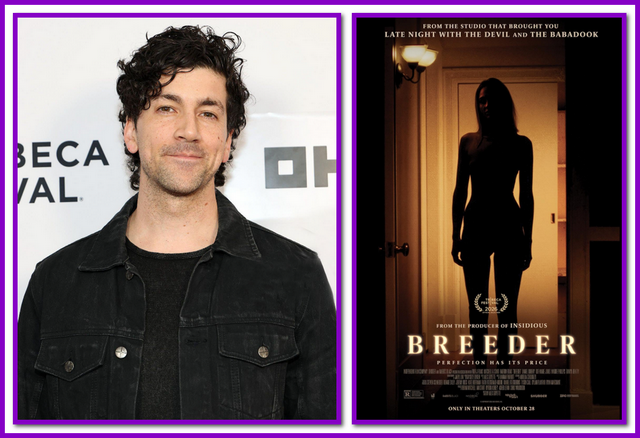
Sometimes the most unsettling horror stories begin with the most ordinary of encounters. For writer/director/editor Alex Goyette, the seeds of his deliciously disturbing thriller BREEDER were planted by two decidedly bizarre real-life experiences: an unexpected interrogation about his genetic history and an encounter with a dog breeder whose obsession with controlling her animals took a frightening turn. Add a healthy dose of inspiration from MISERY, a commanding performance by Dot-Marie Jones, and an imaginative team of cinematic artisans, and the result is a film that takes the pursuit of perfection to some very dark places.
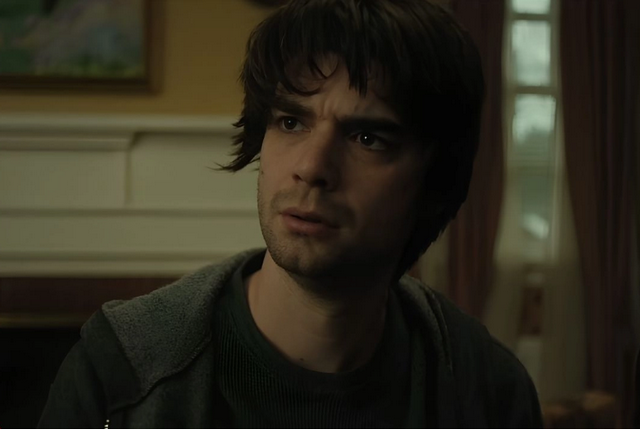
BREEDER stars Daniel Doheny as Russell, a college student seeking research funding who crosses paths with Patti, a champion poodle breeder played by Dot-Marie Jones. Patti has devoted herself to producing exceptional dogs, but her ideas about breeding and perfection have extended into considerably more troubling territory. What begins as an unusual proposition develops into a psychological nightmare that raises uncomfortable questions about genetics, obsession, control, and the value society places on perceived perfection, while confronting the disturbing implications of the ideas associated with eugenics and the belief that certain human traits are inherently more desirable than others.
For Goyette, the idea began with an experience that was initially more awkward than terrifying.
“It comes from a really bizarre personal experience that I had,” he explains. “I was on set directing something, and there was a client that was asking me all these really bizarre questions. She was asking if I had any allergies, if I had any history of cancer in the family. I just kind of chalked it up to bizarre behavior. I wasn’t really sure what the line of questioning was.”
The significance of those questions became clear only later.
“It wasn’t until she invited me out to this comedy show where she did a bit about how she was looking for a sperm donor that had no allergies and no history of cancer in the family, and I began to get very uncomfortable as I realized that she had been vetting me with these questions.”
Goyette had attended the show hoping to make professional connections, not to discover that he had apparently been evaluated as prospective genetic material.
“I was there to network. I was there to schmooze with some people, maybe get the funding for the project I was working on. But I could not face her because I didn’t want her to see that I saw that she saw that I was uncomfortable with that situation.” It was precisely that discomfort that sparked his imagination.
“On the drive home, I started to think about how do I bottle up this feeling, turn it into a horror film. I know there’s something here, and that was sort of the impetus for the Patti character, and thinking about this person that’s obsessed with genetics and the pursuit of perfection.”
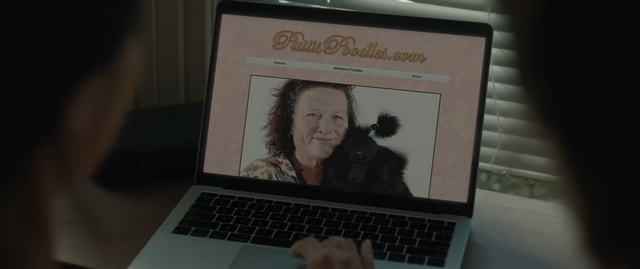
But how did champion poodles enter the equation?
As it turns out, Goyette’s family had experienced its own encounter with a breeder whose behavior was considerably more alarming than a few intrusive questions.
“My family got a goldendoodle back in the day, and they had a very bizarre experience with the goldendoodle breeder. This woman was upset that my mom had not neutered or spayed the puppy during a certain period. She had a rule where you had to neuter the dog, the puppy, before what would be considered safe by a veterinarian.”
When his mother declined to follow the breeder’s instructions, the situation escalated. “My mom wasn’t willing to do that, and this woman believed that my mom might have been a competing dog breeder. So she flew off the handle and was sending my mom death threats, and it was just this insane exchange over email.”
The two experiences eventually converged in Goyette’s imagination. “I can’t remember where those two ideas got connected, but part of the writing process is just finding little pieces that connect in an interesting way. And then obviously MISERY, the movie with Kathy Bates, was a huge inspiration for this. Clearly, just an absolute ten-out-of-ten movie.”
Those inspirations find their most formidable expression in Patti, a woman whose emotional landscape is as tightly controlled as her breeding program.
And bringing Patti to life required an actor capable of projecting enormous authority while revealing the unsettling absurdity beneath the character’s convictions. Enter Dot Marie Jones.
Although Jones has demonstrated remarkable versatility throughout her career, her performance in BREEDER is unlike the warmth and humanity that often exist beneath even her toughest characters. Here, Patti can be almost monumentally impassive. Her rare smiles and bursts of laughter feel disturbingly unnatural, while her matter-of-fact pronouncements become all the more unnerving because she sees absolutely nothing peculiar about them.
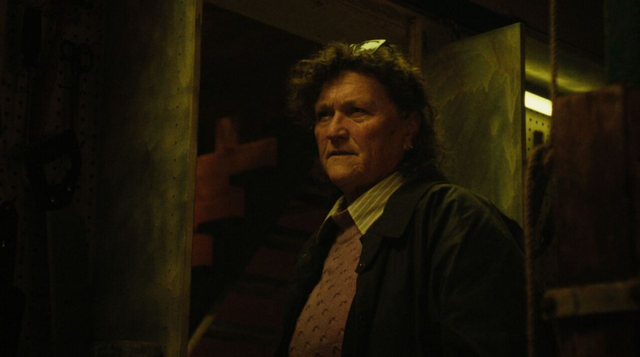
Goyette couldn’t imagine anyone else in the role.
“If she had said no to this, I don’t know what we would have done. She’s truly a one of one.”
He particularly appreciates Jones’s ability to uncover humor without undermining the character’s menace. “She has the comedy chops, and she’s also just got such an incredible way of bringing these characters to life. She has this imposing presence, but also has this incredible knack for mining the comedy out of every situation. So yeah, could not have found a better person to bring this character to life.”
Jones’s commitment to BREEDER began long before cameras rolled. “We got her a script about four years before we actually were able to roll cameras on it, and she stuck around throughout the years. Got a lot of emails from her where she was like, ‘Is this thing gonna happen? Is it still happening?’ And I was like, ‘I promise you, we will find a way, one way or another, to make this movie happen.'” That persistence proved invaluable when Goyette finally brought the production together.
But his challenges weren’t limited to getting the film financed. Approximately one month before principal photography, BREEDER was running $100,000 over budget, forcing some difficult decisions about what could remain on screen.
One particular item was nonnegotiable: Patti’s taxidermied poodle.
“We were going through it. It was all the producers on this Zoom call, and we were like, ‘How the hell are we going to cut down this budget?’ And there were all of these items. Like they wanted to cut my taxidermied poodle. No, not the poodle! I had to have my taxidermy poodle on screen.”
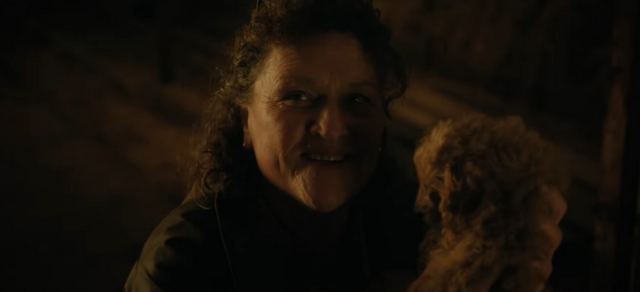
Rather than surrender the prop, Goyette found savings by assuming additional responsibilities himself.
“Through my experience with YouTube and wearing a lot of hats, I do my own motion graphics and VFX and editing. I knew that I was capable of doing a lot of the jobs that were line items on this budget. So we took out the motion graphics guy. That’s going to be me. We took out the editor. That’s another $40,000. I’ll do the job.”
The decision ultimately gave Goyette something beyond a more manageable budget: greater control over the film’s storytelling. “It was a bit of a win-win scenario for me because I got to put more money on the screen, I got to have my taxidermied poodle, and I got to be really close with the film in the edit.”
Editing became an extension of his directorial vision rather than simply a postproduction necessity.
“They say that you write a movie three times: once with the script, once on set, and once with the edit. And I’m really glad that I got to be so close with that process because I think that there’s no one that’s going to care about your movie more than you do. You live with it. It’s your life’s pursuit to do something like this.”
Goyette approached the footage with painstaking attention. “I put a lot of time and energy into watching every single take. I didn’t just watch the circle takes. I really went through frame by frame in this thing with the edit, and I think that it is better because of that.”
So valuable was the experience that he now hopes to edit his future films as well.
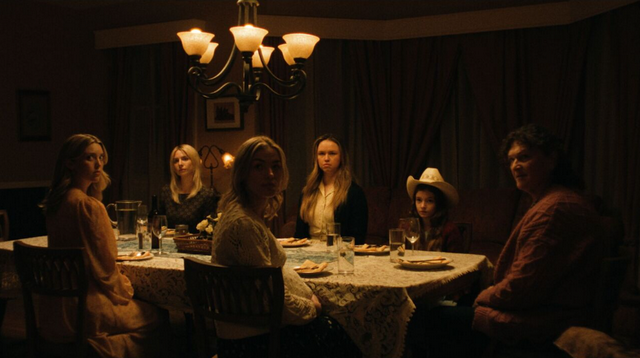
That editorial mindset also shaped his approach on set. Working with limited shooting days and resources, Goyette concentrated on capturing the material necessary to construct the finished film rather than accumulating coverage that might never be used.
“We kept a really lean shot list for this. We didn’t really shoot anything beyond what we needed for the edit, and that was out of necessity because we didn’t have a lot of money. So, very few days to shoot this. We shot for the edit, which is in a sense we’re just picking up the puzzle pieces that are necessary to make this thing connect together.”
Knowing how those pieces would fit together allowed him to devote more attention to his actors and the scenes that mattered most.
“If you have a lot of experience editing and you are directing, then you’re able to see the edit in your head. And I think that’s a very valuable skill because you aren’t experimenting with the camera and getting angles that will never end up in the edit. It will make your days more efficient, and that will give you more time to get the really important stuff, which is extra takes with your performers.”
For Goyette, filmmaking under financial constraints demands clarity about priorities. “Knowing which hills to die on, knowing what’s important for the end product, because I find that if you aren’t going through that budget and the schedule with that efficiency in mind, then you can very easily spend precious resources on things that will never end up on the screen.”
That sense of purpose is apparent from BREEDER’s opening sequences.
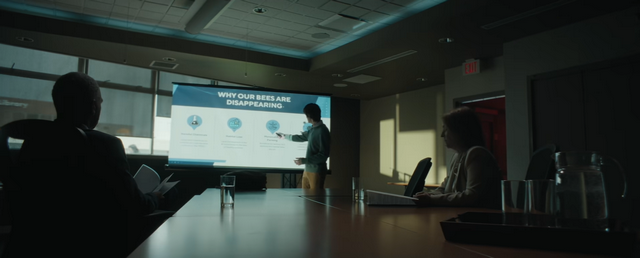
Rather than immediately introducing the film’s title, Goyette allows approximately fourteen minutes and forty-two seconds of increasingly unsettling storytelling to unfold before the opening credits appear. By then, Patti’s world has already begun to exert its peculiar hold on the audience.
Interestingly, the placement wasn’t predetermined in the screenplay. “That was something that was decided on later in the edit. It wasn’t something in the script that we put the titles there, but I think that it is, in a way, the beginning of the horror film. The horror begins on that road up to Patti’s ranch. So it seemed like an appropriate place to sort of say, ‘All right, here we go, buckle in.'”
And buckle in we do.
An essential component of that journey is the cinematography of Jaryl Lim, whose carefully controlled lighting and color palette create a striking separation between Patti’s ranch and the outside world. Goyette is effusive in his praise.
“Jaryl is a bona fide genius. I’m so lucky that I got to work with him. He really is just—he takes a lot of risks. He finds really interesting ways in order to create intrigue in the frame, and a lot of that comes down to color contrasts, finding opposing colors.”
The barn, in particular, presented opportunities to make the lighting feel both natural to its surroundings and psychologically expressive.
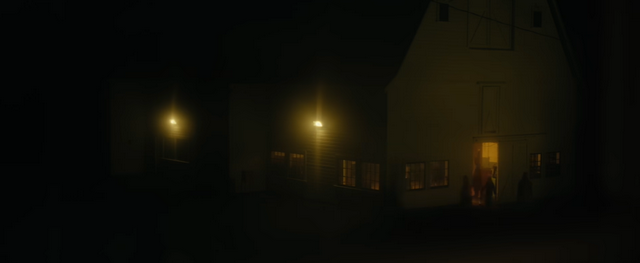
“We were dead set on finding some way to inject some practical lights into this barn setting, and we were like, ‘What lights would you have in a barn?’ And specifically, we were really trying to find things that were specific to our film, and we ended up coming up with this idea of these heating lamps that would heat the puppy pen, and those would throw out this amber light.”
That amber illumination became part of a broader visual strategy.
“That’s another rule that we had in the film, was that on Patti’s ranch there’s this warmer amber hue, and it comes through in all of these different ways on the ranch. No moonlight. There’s no moonlight in the film at all. Anytime we were doing night exteriors, it was always the sodium-halide security lighting.”
The distinction between locations is deliberate. “We really wanted to hammer home that Patti’s ranch has this heightened amber hue, and then the outside world has this more neutral, cooler hue that feels safer and less heightened.”
Working with a colorist, Lim developed four separate LUTs, or look-up tables, governing the interior and exterior imagery for both the ranch and the world beyond it.
The preparation was extensive.
“Jaryl made a twenty-page cinematography bible with lighting diagrams. I want to say we probably had like fifty or sixty Zoom sessions where we were going through together, creating the shot list together. He scanned all of our locations.”
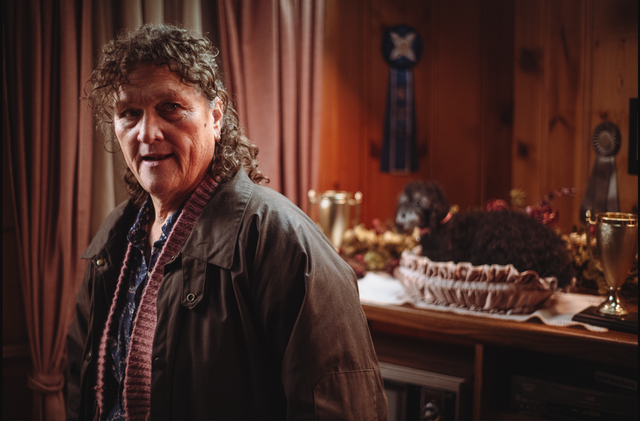
The resulting visual grammar does more than distinguish settings. It creates the sensation of crossing a threshold into a place where familiar rules no longer apply.
“When we do cut out to Haley in the apartment, it almost feels like, ‘Oh my gosh, we’re in a whole different environment here.'”
Equally important is BREEDER’s aural landscape, in which silence can be as disquieting as the sounds that interrupt it.
Composer Hannah Parrott and sound designer Ryan Marchant were tasked with creating an auditory world that belonged specifically to Patti’s ranch.
“With the score in particular, we wanted a lot of diegetic sound. We wanted sounds that felt like they belonged on the ranch. So there’s sort of like the wailing of dogs can be heard in the soundtrack. There’s also a lot of tactile elements that feel like they belong in the scenes.” Parrott’s composition incorporates recurring motifs that connect sound to character.
“Hannah is incredible at creating those motifs. And speaking of motifs, there are certain characters where anytime they appear, we get these little soundscapes that represent them. And so there was a lot of thought that went into creating a soundtrack that felt like it was specific to Patti’s world.”
Among Goyette’s references was ARRIVAL, particularly its use of sounds that seem to emerge organically from an unfamiliar environment.
“Some of the references that I gave her early on were from ARRIVAL, which has a lot of diegetic sounds. It sounds like an alien language being spoken. There’s sort of like it sounds like this large entity is making that sound, and she really incorporated a lot of that into Patti’s score.”
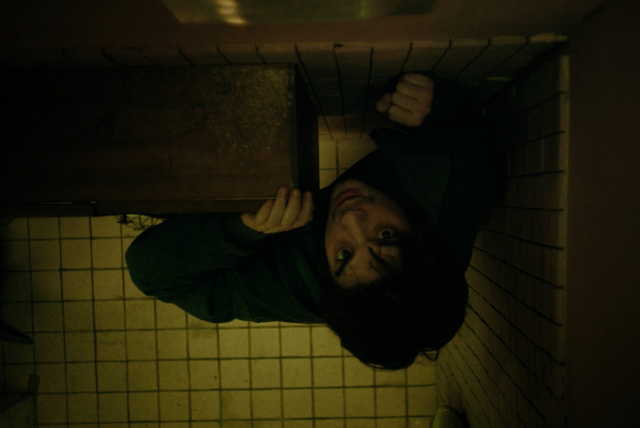
Marchant expanded on those ideas through sound design, creating an immersive environment in which ordinary sounds acquire an unsettling quality.
Goyette was particularly impressed by one of Marchant’s creative decisions near the film’s conclusion. But recognizing that discussing it would reveal too much, he stopped himself before disclosing the detail. What he could share was his reaction to hearing the finished mix. “When he showed me his mix, I was like, ‘Fucking incredible,’ and I was so blown away.”
For Goyette, the guiding principle throughout production was specificity. “Whenever I’m approaching a project, the question that I continue to ask myself is, how do I make this specific to this film? What is there that we can do where it feels like it could be part of no other film?”
That same philosophy extended to the production design of Skye Dyken, whose transformation of Patti’s house is one of BREEDER’s most distinctive visual accomplishments.
The house had almost no personality when the production first entered it.
“That house was a blank slate when we went in. It was just white walls, and there was no texture anywhere. There was no furniture. We furnished the whole thing and put in all of that wallpaper, all of that gak in order to build out Patti’s world.”
One particularly memorable detail is the patterned wallpaper lining the staircase, its green figures suggesting an almost whimsical procession of dancing dogs.
The inspiration came from an unexpected source.
“Those are from Graceland. It’s a wallpaper from Elvis’s house. We were able to—it got cleared somehow. For whatever reason, we had access to it and we were able to use it royalty free.”
Finding the right production designer was essential, particularly given the film’s financial limitations. “We didn’t have the budget for it. I think we interviewed twenty different production designers, and when I got on the horn with Skye, I knew she was going to get in the trenches with us and pull this off.”
Dyken’s work reinforces the impression that Patti inhabits a world entirely of her own making, one where the décor, lighting, sounds, and even the most innocuous objects reflect her singular personality.
It is that cohesion of storytelling and craftsmanship that makes BREEDER so intriguing. The film’s unsettling premise may have emerged from Goyette’s personal experiences, but its realization depended upon a collection of artists finding inventive ways to translate obsession into images, sounds, performances, and spaces.
And beneath the film’s outrageous circumstances lies a provocative question about the pursuit of perfection, one that reaches into the troubling history and continuing implications of the ideas associated with eugenics. Who gets to decide what constitutes an ideal human being? Who determines which genetic characteristics are desirable and which are deemed deficiencies? And what happens when the desire to improve humanity becomes an obsession with controlling it?
For Goyette, the goal was never simply to reproduce familiar horror conventions. It was to construct something unmistakably its own.
“When you lead with that, you can come up with some things that draw your audience in because they feel like they’re in good hands and they feel like they’re watching something that couldn’t be from any other film.”
With BREEDER, Alex Goyette has certainly accomplished that. And given the fertile imagination responsible for Patti and her terrifying pursuit of perfection, one can only wonder what seeds he’ll plant next.
by debbie elias, exclusive intervfiew 10/26/2026
BREEDER opens in theatres on October 28, 2026.