
By debbie lynn elias
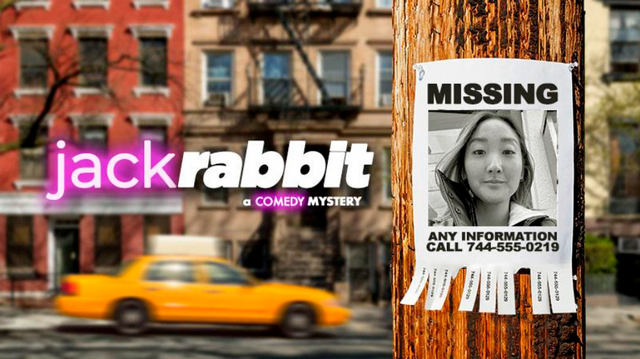
Take two women who couldn’t be more different, throw them together in a New York City apartment, add a missing best friend, a snake-obsessed potential suspect, a collection of gloriously eccentric characters, and a mystery that keeps twisting in unexpected directions, and what do you get? JACKRABBIT! A deliciously entertaining blend of comedy, mystery, and thriller from writer/director Ballard C. Boyd that proves opposites don’t simply attract. Sometimes they have to solve a crime together first!
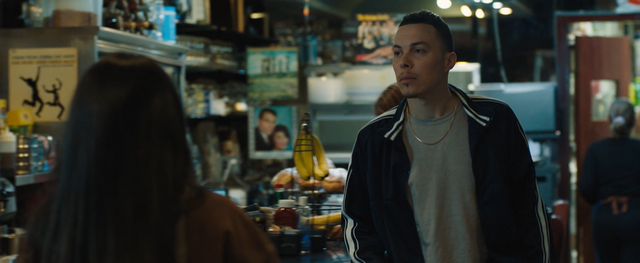
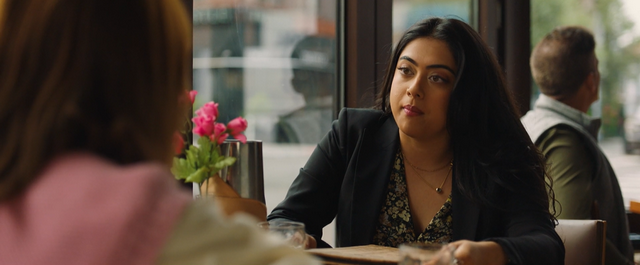
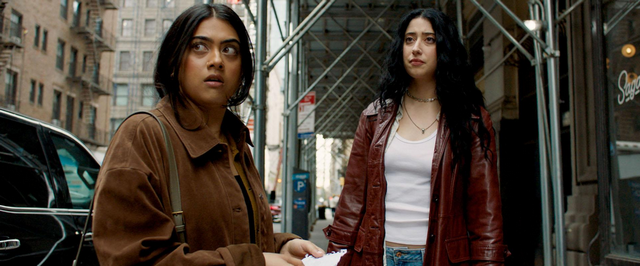
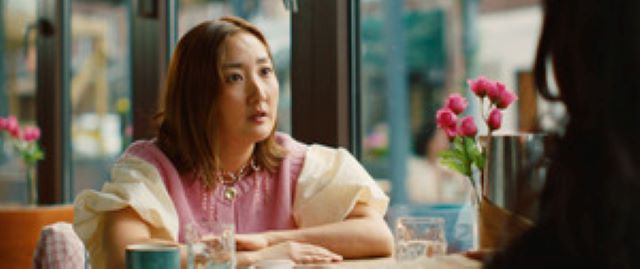
At the heart of JACKRABBIT are Avery and George, brought to life with impeccable comedic timing by Taylor Ortega and Kuhoo Verma, respectively. Avery is a street-smart, sharp-tongued struggling actress, while George is a wide-eyed, aspiring investigative journalist whose intelligence occasionally gets ahead of her practical experience. They’re the quintessential odd couple, but perhaps a better comparison is oil and vinegar. Initially resistant to blending, the more they’re stirred together, the smoother and more flavorful the combination becomes.
And stirring things up is precisely what Boyd has in mind.
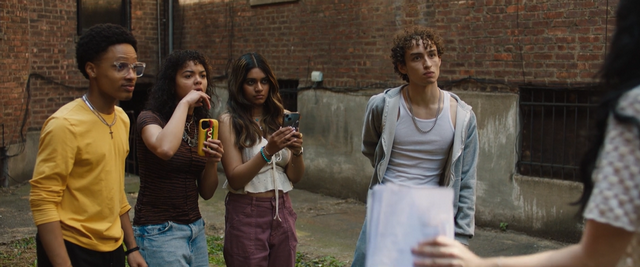
When their mutual friend Trish (Soojeong Son) mysteriously disappears, Avery and George must put aside their mutual irritation and join forces to discover what happened. But as their investigation takes them deeper into Trish’s life, they discover that almost nothing—and almost nobody—is quite what it seems.
For Boyd, the relationship between these two women was the starting point. The mystery came later.
“I really started with I wanted to write a comedy around two women who were enemies who became friends. I know so many funny women and phenomenal actors that I started with that nugget. But you can put a lot of different movie engines on that premise, and so I ran down a few other ideas before kind of landing on this crime thriller engine that kind of started off of a shared friend that, even though they don’t like each other, goes missing.”
It was an idea that brought together two of Boyd’s longtime creative interests: character-driven comedy and the mysteries he had loved since childhood.
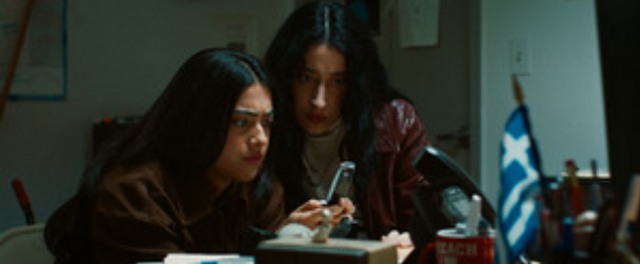
“I grew up watching mystery movies and mystery TV shows a ton with my mom. And when I was a little kid, the two things I wanted to be when I grew up were either a [magician] or a private detective. So the fact that it took me this long, when I had an initial idea of wanting to make a movie of two people who hated each other who became friends, I was surprised it took me a little while to figure out, like, oh, let’s do mystery! Yes! I love mystery!”
And while Boyd’s childhood fascination with mysteries helped shape JACKRABBIT, another film from his youth provided a particularly delightful creative touchstone. And, laughing, he admitted that a few of its jokes were simply too good to leave behind.
“I was also really inspired by this movie called OUTRAGEOUS FORTUNE from 1987, starring Shelley Long and Bette Midler. That’s nowadays not as well-known of a film, but has a really similar dynamic. There are two women who are sleeping with the same guy, and then he supposedly is killed, and they find his body and realize it’s not his body, and think that he’s out there somewhere, and they have to team up and work together to figure out what happened to him. And then there’s some twists and turns in there, and they’re just so charming, and it’s all set in New York, and it was just such a fun adventure. I really liked that movie when I was a kid, and kept thinking about it when I was trying to break JACKRABBIT. And then, as you can with making movies, I just took three jokes from OUTRAGEOUS FORTUNE, whole cloth, and put them in JACKRABBIT because they’re great. They’re still great gags. Great artists steal!”
But what makes JACKRABBIT particularly entertaining is that Boyd isn’t simply alternating between comedy and mystery. He’s allowing the relationship between Avery and George to develop as the mystery grows increasingly complicated. Each revelation about Trish forces the women to reevaluate their assumptions—not only about their missing friend, but about each other.
That thematic idea became essential to Boyd’s screenplay.
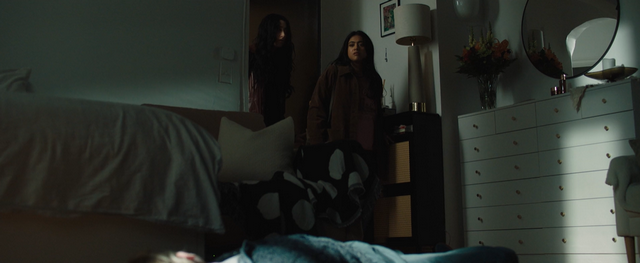
“Trying to break a mystery takes a long time. Because for me, the mysteries that I like the most, you think one thing is happening, oh, but it’s really a second thing. Oh, but it’s really a third thing. And all the information has to track across all those scenarios. And you need to have the audience have a whole lot of ideas that could be happening, and hopefully, once they figure out the real answer to the central question, it’s both surprising and inevitable that all the clues were there and setups, and it pays off.”
And when the writing became particularly challenging, it was the characters themselves who kept Boyd engaged.
“I definitely hit a wall a few times where I just didn’t necessarily know where the story was going. It’s just hard to build something that intricate. And the thing that kept bringing me back to the table was scenes where the characters would go in and constantly be like, ‘I know what’s going on. Stay out of my way. Just follow the rules.’ And then it was always something different, and often more wholesome and understandable than they thought. That was the thing that was really fun. I like to believe that things not being necessarily what they seem, and trust, and why we keep secrets, is interesting to audiences.”
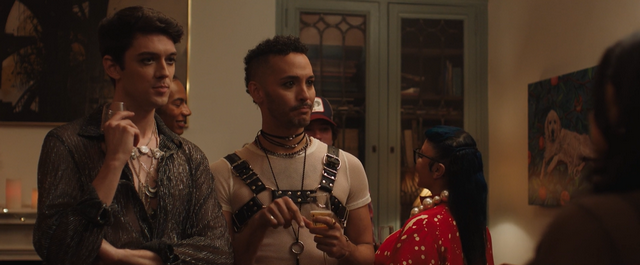
That fascination with appearances extends to the film’s supporting characters, particularly Mark Gessner’s Tony, a seemingly genial fellow with an unsettling fascination with dangerous snakes. Tony can be funny, warm, and faintly threatening, sometimes within the same scene. Boyd found inspiration for that ambiguity in the work of character actor John Carroll Lynch, whose performances in ZODIAC and FARGO demonstrate an extraordinary ability to move between menace and warmth.
“He could be a warm goofball, or he also could be incredibly dangerous, and we don’t know. It’s a real impressive dynamic with an actor to be able to embody both of those elements, where they can feel dangerous, and then once there’s a spotlight on them, you also are like, I don’t know, they could be dangerous, or they could be the nicest, most trustworthy person in the world. It’s impressive to find an actor that can balance both those.”
A Comedy That Gradually Slips Into Noir
While the screenplay continually shifts expectations, Boyd and cinematographer Evan Jake Cohen were equally deliberate in determining how the film should look.
Rather than adopting the gritty, handheld aesthetic often associated with low-budget independent thrillers, Boyd wanted JACKRABBIT to feel composed, polished, and visually accessible. As the mystery deepens, however, the lighting and framing gradually introduce darker, more threatening elements.
“We talked a lot when we were coming to the look of the movie. Early on, it should feel, for lack of a better term, a little more studio, a little bit more polished and accessible. And as it progresses, we kind of leaned into it being a little bit more noirish and threatening, and a lot more shadowed as the movie progresses. Basically, the idea that, in my eyes, tonally it feels like a comedy, and it becomes a thriller, and then eventually is still a comedy again.”
Budgetary limitations made that visual ambition particularly challenging. But Boyd and Cohen refused to let those limitations dictate a less thoughtful aesthetic.
“For shooting a movie this low-budget, there’s a traditional way to do it, which is like, we’re just going to go handheld and it’s going to feel gritty. And Evan and I decided early on, no, we want this to feel composed. We want to be able to use the frame. There’s a lot of shots where the camera’s low, looking up at the ceiling, which also is kind of inspired by a lot of noir stuff. We’re not doing crazy cameras flying over. There’s no drone scooping up for objects or anything like that. It really was, what did the story need? The visuals should serve the story, but we still wanted it to feel composed and controlled.”
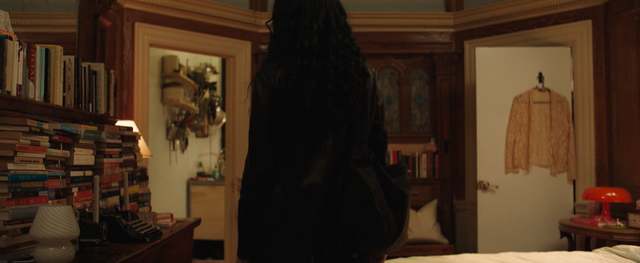
The film’s locations became indispensable to that approach, particularly Trish’s extraordinary apartment, with its wood paneling, faux stained-glass windows, and octagonal bedroom beneath a vaulted cathedral ceiling.
“That was someone’s apartment. We did very little dressing in there. It happened to have wood paneling, faux stained-glass windows, an octagonal bedroom with a vaulted cathedral ceiling. That’s a bonkers location to find! And it was one of the things when we were looking at it, there was a brief moment of, is this too weird? I mean, it’s gorgeous, but I’m a very visual storyteller, and screen direction makes sense to me. As a director, I like the audience to be able to stay visually oriented where they are in the room. I don’t want anyone to get lost as to where people are and where the camera is and where the actors are based. And that place was just so unusual. Is this going to pull focus for the scene?”
Ultimately, Boyd embraced the apartment’s eccentricity, even incorporating George’s reaction to the unusual space into the screenplay.
Maggie Mahlock and the Magic of Making Something Out of Nothing
If the locations provided JACKRABBIT with its distinctive visual personality, production designer Maggie Mahlock and her team transformed those spaces into believable, character-rich environments. And nowhere was their ingenuity more apparent than in the basement of the Silk Shop, a crucial location that plays an important role in the film’s later developments.
Remarkably, the basement was completely empty just three hours before filming began.
“Maggie’s team are really kind of miracle workers. Again, low-budget picture, working with limited resources, working very quickly. There’s a basement later in the movie that, before we were shooting there on that day, was a completely empty basement three hours before we were shooting. And they were able to find all of the dressing in there, and all the texture, and all the world-building so quickly.”
But Mahlock’s team didn’t stop there. While Boyd and his actors were filming in the basement, the art department was simultaneously transforming nearby empty rooms into a police station and the back office of a diner. “They went to two other places nearby and essentially created a police station interior office and the back office room of a diner by painting rooms, pulling in buckets, putting things on the walls. You would never know that those spaces weren’t those real spaces. They were just kind of miracle workers to find what the audience needs visually to connect the dots.”
Even a single window with embedded safety wire became an essential component in selling the illusion of a police station, particularly when combined with carefully positioned uniformed extras glimpsed in the background.
For the Silk Shop basement, Cohen’s lighting completed the transformation. A simulated shaft of sunlight entering through two basement windows, supplemented by controlled practical lighting and atmospheric haze, created one of the film’s most visually striking sequences.
“They found so many things, a truck’s worth of items, and filled that space in. And Evan having controlled light and a little bit of atmosphere in that space, so there’s some haze to it. That’s one of my favorite scenes. One, it’s an incredible performance scene for all the actors in there, and that’s kind of the climax, the emotional climax of the whole storyline. And to have that be also what I feel is the most incredibly photogenic sequence in the movie is pretty cool.”
The result is production design that does considerably more than decorate a frame. It establishes character, provides visual information, and allows the audience to understand each new environment without unnecessary exposition.
Seventeen Days, Thirty Locations, Two Cameras—and One Extraordinary Wife
As if creating a visually polished comedy-mystery on a limited budget weren’t challenging enough, Boyd and his team shot JACKRABBIT in just seventeen days, covering thirty locations across three New York City boroughs.
Two cameras were essential to maintaining the pace, while Boyd’s extensive experience as both director and editor allowed him to anticipate how the material would ultimately fit together.
But the most remarkable production story has little to do with cameras, lighting, or locations. It involves paternity leave.
For years, Boyd had worked as a segment director and producer on THE LATE SHOW WITH STEPHEN COLBERT, balancing his television career with the development of JACKRABBIT. When the film was finally ready to shoot, he requested a leave of absence from the show. The request was initially denied. Complicating matters was the fact that Boyd and his wife, Kelsey Fox Bennett Boyd, had recently welcomed their second daughter. They now had a newborn and a five-year-old at home. The solution came from Kelsey.
“I had a long conversation with my TV show about, could I take a leave of absence to shoot this movie? And after a long conversation, unfortunately, the answer initially was no. I only was trying to do it in nine weeks, which was still an incredibly tight schedule—basically prep it for five weeks, shoot it for three, again seventeen days, and then a week to not be a husk of a person afterwards. And we weren’t able to work it out there. And I really didn’t want to leave my job because my wife and I, she was having our second daughter.”
Fortunately, the show’s parental-leave policy, together with New York State’s family-leave provisions, offered another possibility. “What we were able to figure out was my show was like, I can’t give you leave, but you can do whatever you want with your parental leave. And I got a very generous leave through both CBS and New York’s family-leave policy that I basically used half of my leave to shoot this movie.”
Kelsey took their daughters to Colorado to stay with her mother, where she would have additional help caring for the children while Boyd made his film. “We had, I think, a three-month-old daughter and, at the time, also a five-year-old, another girl. And my wife took the two of them to her mom’s in Colorado for extra help for about three and a half weeks so that I could shoot this movie. And I want to, on this call, give the grandest of shout-outs that I will never be able to shout loud enough to my wife, Kelsey Fox Bennett Boyd, for being the MVP of this movie. It was her idea to basically use the leave to make the movie, and it wouldn’t have happened without her and the ability to still stay at Colbert. She’s really incredible and the best partner, and such an incredible champion of this movie. I feel so grateful to be with her.”
It’s a story that says as much about the personal sacrifices involved in independent filmmaking as it does about the determination required to get a movie made. And even after seventeen days of shooting, Boyd’s challenges were far from over.
Finding the Film in the Editing Room
With JACKRABBIT finally in the can, Boyd expected to take his time editing. After all, he had been directing and editing his own work for years and understood the material intimately. But his producing partners had other ideas. They wanted the film ready for festival submissions.
And suddenly Boyd found himself back at work on THE LATE SHOW, helping care for a new baby, and facing an enormous volume of footage generated by a two-camera shoot. There simply weren’t enough hours in the day.
Enter Robert Grigsby Wilson.
A longtime friend from Emerson College, Wilson was an accomplished editor whose credits included Sundance films and television projects for Netflix and Amazon. Although the two had known each other for twenty-five years, they had never worked together. That changed with JACKRABBIT.
“Rob was the only person that I actually knew and had been friends with for twenty-five years, and we’d never worked together. And he’s been a phenomenal editor for a couple of decades now. He’s cut a whole bunch of Sundance movies. He’s done shows for Netflix and Amazon. And he happened to be finishing up a show and reached out to me and said, ‘Hey, if you need some help, let me know.'”
Boyd had already cut approximately a quarter of the film when Wilson joined the project. “He came on and looked at the footage for that first quarter of the movie and read the whole script and basically said, ‘This is really fun. You’ve got great performances here. If you’ve got those performances for the rest of the movie, I think I can help.’ And he started at the midpoint of the movie and basically started and cut the next half. And by the time he was done, I had finished the next quarter, and then we kind of caught up and traded and polished each other’s work.”
Although they missed the earliest festival deadlines, the additional time ultimately benefited the film. Boyd and Wilson spent months refining the cut, tightening the pacing without sacrificing important story developments. Approximately twelve minutes disappeared between the early festival versions and the finished film.
“We had about an additional six months to test it and refine it and polish it, and it’s a significantly better, tighter movie than it was initially. I think the difference between our first kind of festival cuts and where the movie ended was about twelve minutes. And that wasn’t pulling out any necessarily huge plot points in the movie. It was just figuring out how to get the pace to really sing and make it feel really tight and efficient and lean and fun. There are moments where it pauses, but it really should keep barreling along as much as it can because that’s the type of movie it’s supposed to be.”
And barreling along is precisely what JACKRABBIT does.
The Unlikely Musical Discovery of Clarke Jaxton Motorbike
One of the film’s most delightful creative surprises is its score, which moves effortlessly between comedy, mystery, suspense, and outright playfulness.
The composer behind that musical personality is Clarke Jaxton Motorbike—a pseudonym belonging to an artist Boyd discovered in a most unconventional fashion. On YouTube.
Motorbike had been creating short, often comedic stories accompanied by music performed on small tabletop synthesizers. Boyd initially became a fan of the writing, only to discover that the music accompanying those stories was equally inventive.
“I found him on YouTube. He writes short comedy stories, almost like microfiction, and puts the text on the screen. And then the visual behind the text is his hands on a tiny tabletop with small tabletop synthesizers, and he’s almost like writing score to these little short stories that he’s writing. And he’s an incredible comedy writer. I came to this because the comedy writing was so funny, and I watched tons of his videos and thought to myself, you know, these songs in the background are kind of a jam.”
During editing, Boyd and Wilson began experimenting with Motorbike’s existing compositions as temporary score. The music worked so well that Boyd ultimately contacted the composer about licensing it for the finished film.
“Because he wrote so many short stories, a lot of them would be comedy, a lot of them would be strange or goofy little pieces, some of them would be little sci-fi moodscapes, and he would have much darker ambient sound music. Once we got late into the post process, Rob basically went on YouTube and pulled a whole bunch of his tracks as possible samples to lay in for temp score. And because he had so many varied styles of music on there, we had this huge palette to pull from.”
Motorbike responded enthusiastically, and the collaboration expanded beyond licensing existing compositions to creating original music specifically for JACKRABBIT. The resulting score combines approximately half preexisting material with newly composed cues, drawing inspiration from Thomas Newman’s electronic-heavy work on REAL GENIUS and the unmistakable 1980s musical sensibilities associated with Harold Faltermeyer.
“The vibe of the movie really became this combo of Thomas Newman slash Harold Faltermeyer, you know, BEVERLY HILLS COP, FLETCH sound. It’s phenomenal. It elevated the movie to such a crazy degree.”
For Boyd, the collaboration was especially satisfying because Motorbike provided individual musical stems, allowing the director/editor to manipulate and refine the placement of musical elements within scenes. “He was open to basically sending me stems, which are all the individual tracks isolated, and I could go in and basically re-edit some of his score to cue certain sounds at particular moments in the picture. Because I’m so used to being very hands-on as a director, being in the edit, it was wonderful for my working method. A lot of times I need to get in and noodle and massage certain moments. And I wasn’t wasting his time; I was wasting my time. But I could work with his phenomenal sounds, so it was a joy. I could talk about him for a whole hour.”
One Last Musical Victory: Vulfpeck and the End Credits
And then there are the end credits. Rather than allowing JACKRABBIT to simply fade away after its final scene, Boyd wanted the audience to leave on a musical high. His choice was “Outro” by the funk band Vulfpeck, a group he’d admired for years.
But obtaining the rights to the song was another challenge entirely.
“I’d been a fan of them for years, and in fact wanted some of their music in this movie from back when I was writing the script. But wasn’t really sure how to reach them. They have gotten bigger and bigger every subsequent year. But I really wanted their song ‘Outro’ for the end of this movie.” Boyd even planted a musical Easter egg in the screenplay: a code involving the numbers 1612, referencing another Vulfpeck song. Eventually, he contacted the band’s licensing representatives and wrote a personal letter explaining why the music mattered so much to him.
And then a connection from his television career came into play.
Louis Cato, bandleader for THE LATE SHOW WITH STEPHEN COLBERT, knew Vulfpeck’s Jack Stratton and had joined the band on tour. Boyd asked Cato to pass along his letter.
“I reached out to him and basically said, ‘Hey, I wrote this big letter to Jack Stratton. Would you be willing to pass it on to him?’ And I will never know if Louis Cato was the linchpin to getting approval to use that song. But I’m going to assume that it was him. And so I’m incredibly grateful to Louis and his help and Jack Stratton for letting us use the song.”
The clearance finally arrived approximately three weeks before the film’s sound mix. For Boyd, it meant preserving the ending he’d imagined from the beginning.
“That last closing song, I really wanted a Vulfpeck song, and I think we finally got it cleared like three weeks before we were going into the sound mix. It was such a relief because it was one of those things where, for me, I love how it feels for the end of the movie. It feels like New York. It’s such a banger of a song. It feels like such a great way to go out. I don’t have to rethink the end of my movie. I get to have the end of the movie that I wanted. It feels like the culmination of these characters and their relationship.”
Festivals, Audiences, and the Long Road Forward
JACKRABBIT made its world premiere at the Nashville Film Festival in September 2026, a particularly meaningful homecoming for Boyd, who grew up in nearby Franklin, Tennessee. Nashville had also been the first festival to accept one of his early short films when he was still in high school.
From there, JACKRABBIT continued to find enthusiastic audiences, playing the Soho International Film Festival in New York, Heartland in Indianapolis, Montclair in New Jersey, and Naples in Florida.
At Soho, the film was selected as the opening-night presentation and won Best U.S. Feature. By the time of our conversation, all but one of its festival screenings had sold out.
Yet despite that success, distribution remained uncertain.
“I think it’s just a fun, twisty ride. It’s a popcorn movie with a lot of entertainment that then surprises you as having a whole lot more emotion and depth and theme than I think people go into it. It’s a lovely surprise to have a lot more under the surface than just a little mystery ride. But it’s great for people who love mystery and comedy. We believe in this movie. Everybody did such a phenomenal job that we hope it finds a home and a wide audience.”
For Boyd, the uncertainty is familiar territory. Like so many independent filmmakers, he understands that completing a film is only one part of a much longer journey. He’s already considering his next project, including revisiting an older screenplay and developing several new ideas with his producing partners. But he also recognizes how much personal investment goes into getting an independent feature from page to screen.
“As you know, because I know you talk to a ton of filmmakers, especially indie filmmakers, it’s a vulnerable process. Because you’ve got to keep pushing that boulder uphill by yourself or with a small team for a long time. And especially these independent projects, a lot of times they’re passion projects and they mean a lot to you. And so when you get encouragement, it means a lot.”
And perhaps that’s the most fitting place to leave Ballard C. Boyd and JACKRABBIT.
A filmmaker who began with two women who couldn’t stand each other has created a story about the unexpected bonds that develop when people learn to trust one another. Behind the camera, that same spirit of trust and collaboration made the film possible—from the actors and craftspeople who brought the story to life to the editors, musicians, producing partners, and, above all, the wife who helped make seventeen days of moviemaking possible.
Sometimes it takes a village to make a movie. Sometimes it takes a little paternity leave. And sometimes, if you’re Ballard C. Boyd, it takes both—and one very entertaining JACKRABBIT!
exclusive interview 11/06/2026
JACKRABBIT is currently on the festival circuit!