By debbie lynn elias
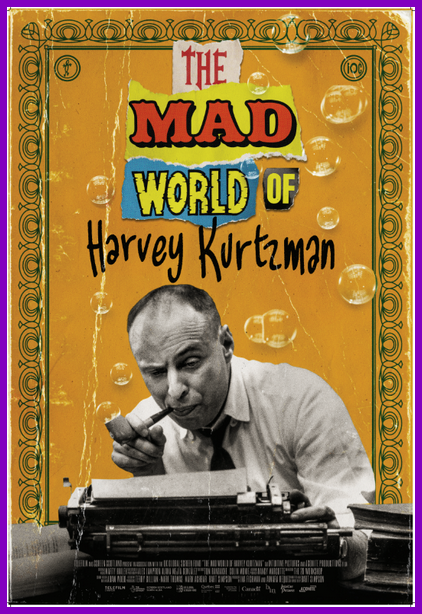
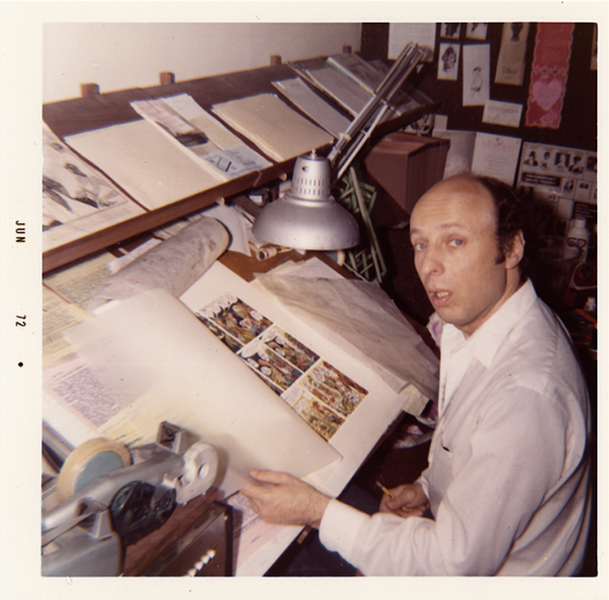
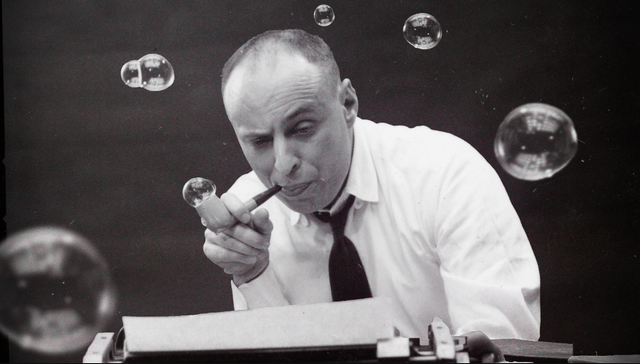
Before The Simpsons, before Monty Python, before irreverent satire became an accepted part of American popular culture, there was Harvey Kurtzman. A cartoonist, writer, editor, and creative visionary whose influence extended far beyond the comic book page, Kurtzman helped redefine the possibilities of humor, illustration, and social commentary. With THE MAD WORLD OF HARVEY KURTZMAN, writer/director Bart Simpson explores the life, work, and enduring legacy of the man who created MAD magazine, delivering an engaging, informative, and frequently entertaining documentary that celebrates both Kurtzman’s artistic genius and the complexities of the man behind it.
Beginning with Kurtzman’s childhood in Brooklyn and following his journey through the burgeoning comic book industry, military service, war comics, publishing triumphs, professional disappointments, and creative reinventions, Simpson wisely adopts a predominantly chronological structure. It’s a straightforward storytelling decision, but an effective one, particularly given the extraordinary volume of material encompassing Kurtzman’s life.
From his early work and relationship with Stan Lee to his association with publisher William Gaines and the creation of MAD, Simpson charts the development of an artist whose imagination and perfectionism were simultaneously his greatest strengths and occasional professional liabilities. Kurtzman was never content simply to produce material. He wanted to challenge conventions, question authority, and push his artistic medium into territory that others had yet to envision.
The documentary also explores Kurtzman’s complicated professional relationship with Hugh Hefner, whose involvement at different stages of Kurtzman’s career reflects the changing circumstances of both men. Rather than consolidate these encounters into a single chapter, Simpson allows them to unfold naturally within the chronology, providing a clearer understanding of their evolving professional dynamics.
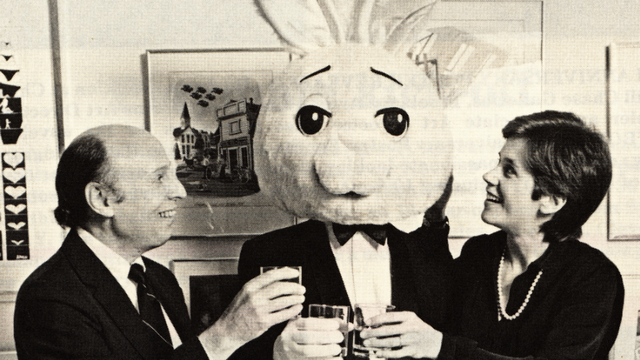
It’s this structural clarity that makes THE MAD WORLD OF HARVEY KURTZMAN particularly accessible. The film covers an enormous amount of history, but Simpson rarely allows the material to become confusing or unwieldy. The narrative moves steadily forward, punctuated by archival interviews, newsreels, original illustrations, historical photographs, and contemporary commentary.
Of particular interest is the visual treatment of Kurtzman’s artwork. Working with original materials preserved through the Kurtzman estate, Simpson and his animation collaborators bring the illustrations to life through carefully constructed animated sequences. Rather than recreating drawings in the style of Kurtzman, the filmmakers manipulate the artist’s actual work, introducing movement, transitions, and visual emphasis while preserving the character of the original illustrations.
The technique proves especially effective when tracing the evolution of Kurtzman’s artistic sensibilities, from black-and-white pen-and-ink drawings and war comics to the increasingly sophisticated use of color, composition, and visual satire. There is a wonderful sense of progression as the documentary moves through his various publications, including MAD, Trump, Humbug, and Help!, while also examining his celebrated Jungle Book.
The animation is lively without becoming excessively distracting, adding cinematic energy to material that might otherwise remain static on screen. Equally important is the filmmakers’ recognition that Kurtzman was as accomplished with words as he was with images. By selecting illustrative examples rather than attempting to reproduce entire text-heavy passages, Simpson maintains the documentary’s momentum while giving audiences a meaningful appreciation of Kurtzman’s wit.
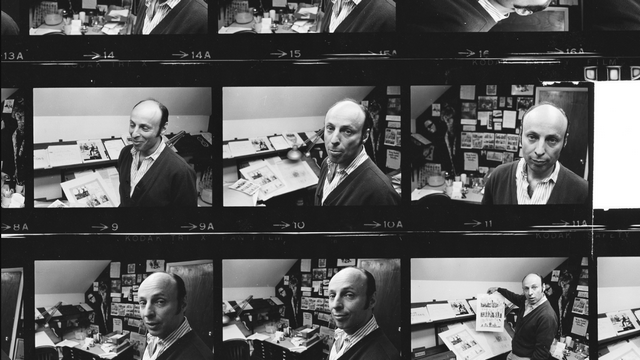
Cinematographers Alexander Lampron and Alana Mejia Gonzalez complement the archival materials with contemporary interviews and imagery that provide visual breathing room. Editors Colin Monie and Tom Randaxhe weave together the documentary’s varied elements with a generally assured sense of pacing, allowing the historical material and personal recollections to coexist without sacrificing narrative clarity.
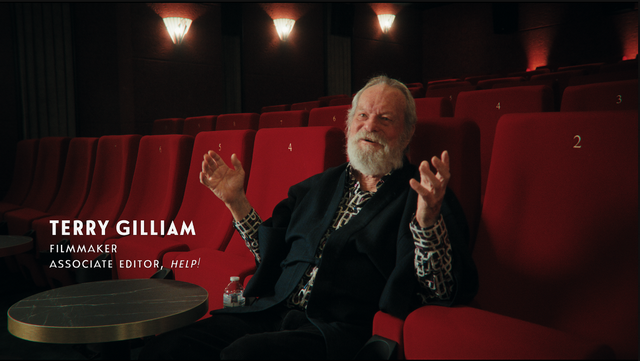
Among the documentary’s most enjoyable contributions are those of Terry Gilliam, whose enthusiasm for Kurtzman is infectious. Gilliam’s recollections provide a particularly valuable perspective on the influence Kurtzman exerted beyond the world of comics, most notably through Monty Python and Gilliam’s subsequent filmmaking career. His discussion of Kurtzman’s worldview illuminates the relationship between visual humor, satire, and the sometimes unsettling absurdities of human behavior.
Robert Crumb, Art Spiegelman, Matt Groening, and others further demonstrate the extraordinary reach of Kurtzman’s creative influence. Their participation provides a bridge between generations, showing how the innovations of one artist helped shape the sensibilities of those who followed.
But some of the documentary’s most affecting moments come not from celebrated artists or cultural figures, but from Kurtzman’s family. His wife Adele and daughters Nellie and Meredith offer a more intimate perspective on the man whose professional life was so thoroughly devoted to his work. Nellie, in particular, provides moments of humor, affection, and reflection as she discusses the responsibilities of preserving her father’s legacy.
One especially memorable sequence takes us into the family’s backyard, where recollections of Kurtzman’s final wishes unfold with an unexpectedly lighthearted, matter-of-fact sensibility. Photographed outdoors in beautiful natural light, the scene is touching without becoming overly sentimental, finding humor and humanity in a subject that might otherwise have been approached with solemnity.
It is precisely this balance between the public artist and the private individual that gives the documentary its emotional dimension.
And then there is the music.
Composer Marty Hailey delivers one of the documentary’s most distinctive creative elements, with an original score that captures the irreverence, energy, and restless imagination of Kurtzman’s artistic personality.
Drawing upon jazz, funk, and an instrumental sensibility reminiscent of the Beastie Boys, Hailey creates a musical landscape that feels entirely appropriate to a man who continually challenged artistic boundaries. Live instrumentation, including drums, bass, guitar, horns, and strings, brings texture and vitality to the score, allowing it to shift between playful exuberance and quieter emotional passages.
There is an almost improvisational quality to the music, reflecting the visual rhythms of Kurtzman’s illustrations and the spontaneity of his humor. The score never feels like a perfunctory accompaniment. Instead, it becomes an integral part of the storytelling, energizing archival passages and helping communicate the spirit of an artist whose personality is not always fully revealed through the surviving recordings.
Hailey’s work is sufficiently engaging that it deserves to be heard independently of the film.
For all its strengths, THE MAD WORLD OF HARVEY KURTZMAN is not a particularly groundbreaking documentary in terms of cinematic form. Its storytelling approach is largely conventional, relying on archival material, animated artwork, and interviews to construct a historical portrait. Nor does every chapter of Kurtzman’s extensive professional life receive equal attention. Given the breadth of his accomplishments, some compression is inevitable.
But the film’s traditional construction is also one of its assets. Simpson recognizes that the subject matter is sufficiently colorful, complicated, and historically significant without requiring unnecessary narrative gymnastics or stylistic flourishes. More importantly, the documentary succeeds in making Kurtzman’s contributions understandable to audiences who may recognize MAD magazine or The Simpsons without knowing the creative lineage connecting them.
At its heart, THE MAD WORLD OF HARVEY KURTZMAN is a portrait of an artist who refused to accept the limitations imposed upon his medium. His relentless curiosity, exacting standards, and willingness to challenge convention helped transform comics from disposable entertainment into a vehicle for sophisticated satire and cultural commentary.
Bart Simpson may not reinvent documentary filmmaking with this exploration of Kurtzman’s life, but he has assembled an affectionate, well-researched, and entertaining tribute to a man whose creative influence remains unmistakable.
And in a world that could always use a little more laughter, a little more irreverence, and a willingness to question the absurdities around us, Harvey Kurtzman’s particular brand of madness feels as relevant as ever.
THE MAD WORLD OF HARVEY KURTZMAN is written and directed by Bart Simpson, with cinematography by Alexander Lampron and Alana Mejia Gonzalez, editing by Colin Monie and Tom Randaxhe, and an original score by Marty Hailey.