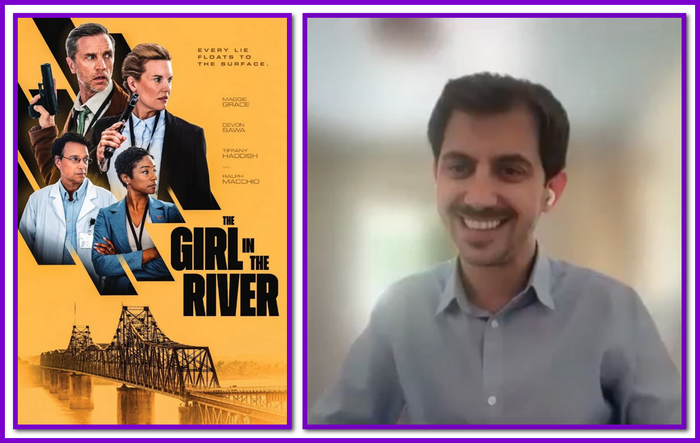
A river is never really still.
Even when its surface appears calm, something is moving underneath—currents shifting, water changing course, carrying with it whatever has been caught in its path.
There is something of that same restless movement running through first time writer/director Brando Benetton’s THE GIRL IN THE RIVER, a tightly constructed crime thriller in which virtually nothing remains quite as certain as it first appears.
A little girl is dead. Her twin sister is missing. And two outsiders—a seasoned criminologist and a young psychologist—are drawn into a remote Mississippi town where finding the missing child means unraveling the circumstances surrounding her sister’s murder. It is a race against time built upon questions of who knew the girls, who knew their movements, who understands the river—and who may be lying.
Suspects emerge. Assumptions change. Clues point in one direction before another piece of information alters what we thought we understood.
And Benetton doesn’t confine those twists and turns to his screenplay. He puts them in the camera.
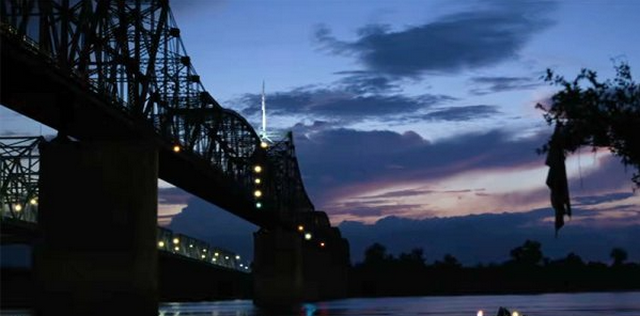
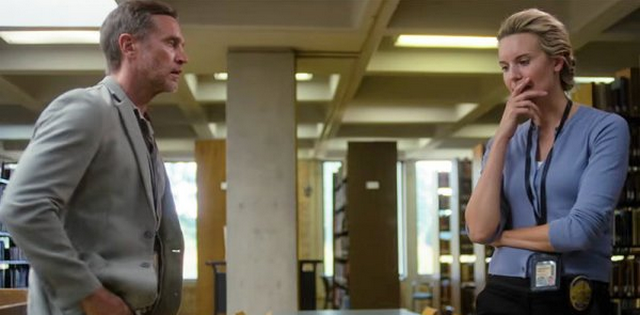
Working with cinematographer David Matthews, Benetton creates a visual grammar that is almost as restless as the mystery itself, continually changing our perspective on the people, places and information before us. It is particularly effective during the film’s dialogue-heavy investigative sequences, where conventional coverage could easily render scenes visually static. Instead, the frame keeps finding somewhere else to go.
Benetton, who wanted to avoid repeatedly returning to identical coverage notes, “In their mind, the scene itself is visually expanding the more time that’s going on. So I was really careful and passionate about the idea of getting as many different angles as we could.”
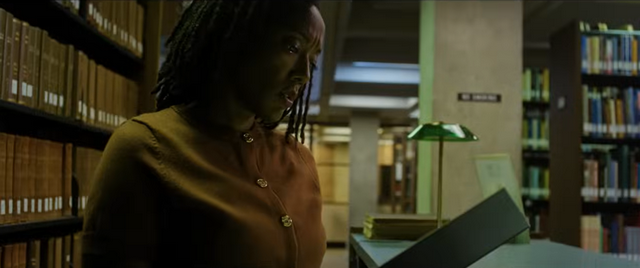
That expansion is evident throughout the film. A conversation in a library doesn’t simply bounce between predictable close-ups. Matthews and Benetton move us through the space—among the stacks, at tables, near the librarian’s desk, upstairs, downstairs, looking across balconies—continually changing our relationship to the scene even as the conversation continues.
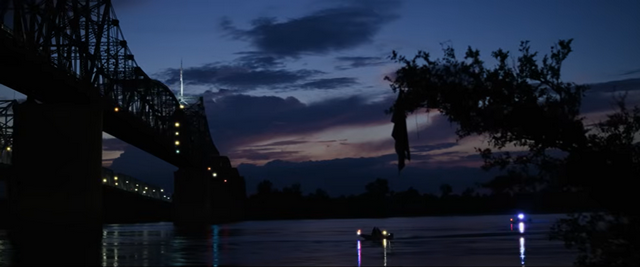
The same principle extends beyond interiors. Overhead and aerial views continually reorient us within the town, revealing different streets, neighborhoods and architectural personalities, while the river remains an almost elemental presence threading its way through the story.
Remarkably, the visual cohesion Benetton and Matthews achieve was born of a relationship that barely existed before production. “I didn’t know David until two weeks before we started filming,” Benetton admits.
Matthews came to Benetton through producers experienced in Mississippi production. Benetton immediately began looking at his work, including the striking imagery Matthews created for Travis Stevens’ JAKOB’S WIFE, and knew he had found an exciting collaborator. They also had very little time. THE GIRL IN THE RIVER was shot in just 15 days.
“On one end, we really have to do our homework within the time we have because we only had 15 days to shoot the movie, which is not a lot. And number two, when you don’t have these great toys like cranes and dollies and all these things, you need to find a way to make things as visually exciting… ”
Without the luxury of an arsenal of dollies, tracks, Steadicams and other equipment that can manufacture physical camera movement, Benetton and Matthews instead concentrated on creating movement through composition and coverage. Looking at work such as David Fincher’s MINDHUNTER, they studied how extended conversations could remain visually alive without the camera constantly announcing itself.
“It’s our job to kind of renew the visual language of the movie and create movement, not literally always through sliders or steadicams… but sometimes through jumping around with the coverage…”
It became less about moving the camera than about moving the audience’s eye. And that distinction is important.
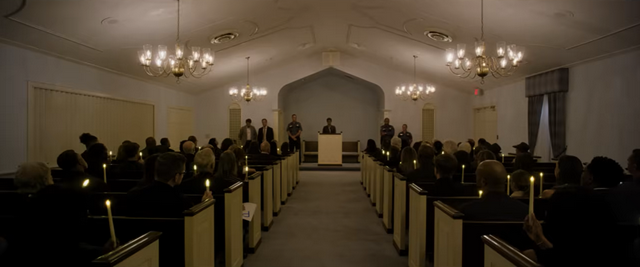
Benetton is also unusually judicious with close-ups. Rather than defaulting to increasingly tight coverage whenever a scene requires emotional emphasis, he and Matthews frequently remain wider, allowing both the actors and their environments to occupy the frame. There is a practical filmmaking philosophy behind that decision as well.
“If I was a production designer, it would drive me nuts if I put all these work into creating this beautiful room and suddenly you’re covering it with a 135, and I can’t really see it.”
For Benetton, withholding the close-up also preserves its power. If every reaction is presented intimately, intimacy ceases to mean anything. When the film finally does move tightly onto a face or detail, the change in visual proximity registers. But remaining wide accomplishes something else in THE GIRL IN THE RIVER. It allows us to see Canton. And Benetton very much wants us to see Canton.
A Town With a Filmography
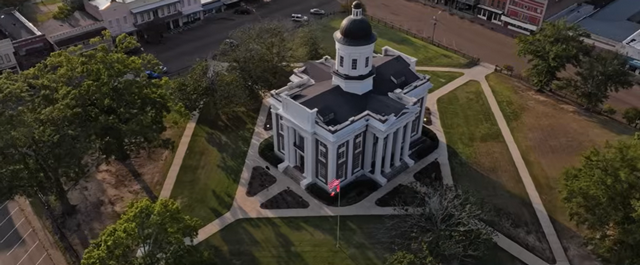
Canton, Mississippi, wasn’t simply where THE GIRL IN THE RIVER happened to shoot. It became one of the film’s greatest production assets—and one of Benetton’s most enthusiastic collaborators. When Mississippi was first proposed as the production base, Benetton knew that could mean any number of landscapes and architectural identities. Canton was the possibility he hoped for.
“I was really crossing my fingers,” he recalls.
Once there, he discovered a town capable of supplying remarkable visual variety within a remarkably compact area. With a 15-day production schedule, that mattered enormously. Rather than losing precious hours moving a company across great distances, Benetton could effectively treat several blocks of Canton as a working backlot, moving from one visual world to another while remaining within the same small geographic footprint.
Helping him unlock those possibilities was location manager John Read, whose familiarity with Canton and its long relationship with filmmaking gave Benetton access not simply to locations, but to the cinematic history embedded within them. And Benetton had no interest in running away from that history. Quite the opposite.
“Show me everything, and especially these great locations, because filmmakers before me have picked them for a reason,” he told Read.
It’s an illuminating attitude for a first-time feature director.
There was no need to reject a building because another filmmaker had already discovered it, no insistence upon finding something untouched simply for the sake of novelty. Benetton wanted to know what previous filmmakers had seen in Canton—and then discover what those same spaces could become within his film. Canton has given filmmakers plenty to see.
Robert Altman was shooting there in the 1970s. The Coen Brothers later brought cameras to town for O BROTHER, WHERE ART THOU? Locations and structures used for A TIME TO KILL remain part of its filmmaking legacy, while MY DOG SKIP occupies such an affectionate place in the town’s history that Canton maintains a movie museum preserving pieces of that production.
For Benetton, however, the value of that history goes beyond cinephile delight. It exists in the buildings themselves. “The history of the town itself is baked into, of course, the architecture.”
That architecture gives THE GIRL IN THE RIVER its Southern Gothic character without requiring the film to artificially manufacture one. Stately historic buildings coexist with more modest and weathered stretches of town. Brick storefronts, residential streets, civic spaces and interiors create a community that feels as though it existed long before Pembrock and Kramer arrived—and will continue after they leave.
But perhaps Benetton’s most interesting observation about Canton has nothing to do with what the town gave his production during those 15 days. It is what THE GIRL IN THE RIVER may someday give Canton.
Benetton found himself thinking about the buildings surrounding him and wondering which might still be standing hundreds of years from now. Earlier movies made in Canton already contain images of structures that have since disappeared. Those films have inadvertently become historical records—moving photographic documents of a town at a particular moment in its life.
Now THE GIRL IN THE RIVER joins them.
The town changes. Buildings disappear. People come and go. And the river keeps moving. But somewhere, captured within a frame, Canton remains exactly as it was when Brando Benetton and David Matthews pointed a camera at it.
The Evidence Is in the Details
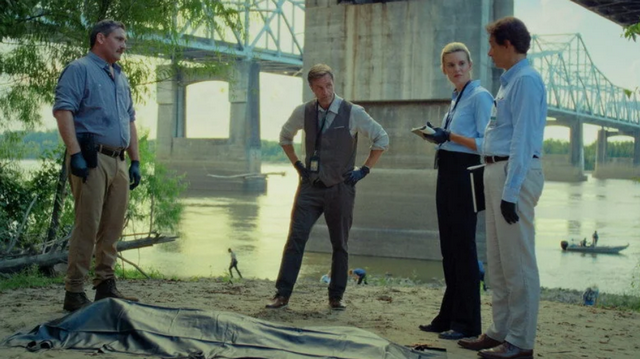
Canton’s physical history also gives production designer Julie Toche and her team something invaluable to work with: spaces that already have lives of their own.
Benetton is equally enthusiastic about Toche, saying she “and her team knocked it out of the park.”
And what Toche and her team have knocked out goes well beyond creating evocative rooms or dressing a small-town library. Her production design helps establish the very methodology of the investigation.
This is not a high-tech town. And this is not a high-tech investigation.
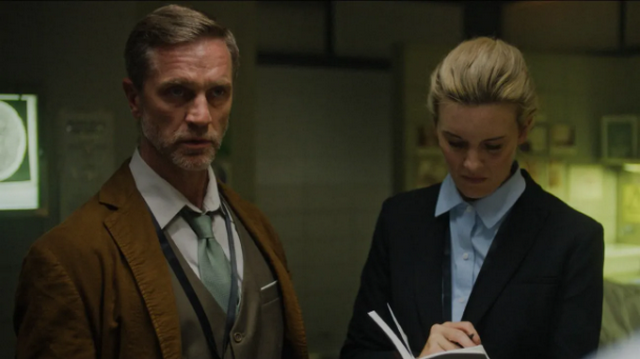
At the local library, Pembrock isn’t scrolling through digitized newspaper archives or summoning decades of information with a few keystrokes. She sits with bound volumes of old newspapers, searching through the town’s history page by physical page. Even the library’s checkout system is analog. And eventually, that becomes evidence.
Inside the back of one of those bound volumes is an old paper checkout card. The bottom signature has been torn away, apparently eliminating the identity of the last person who borrowed it. Until Pembrock has to return the volume herself.
Handed a pencil to sign the card, she realizes that while the previous borrower’s name may have been torn away, the act of writing it left something behind. She turns the pencil on its side and brushes the graphite across the area where the missing signature had rested. Slowly, the impression emerges. And with it, a name.
It is wonderfully simple, old-fashioned detective work. No forensic software. No miraculous database. No technological deus ex machina. A pencil. A piece of paper. And someone smart enough to recognize that absence can itself be evidence.
That moment crystallizes something Toche’s production design has been quietly establishing all along. The physical world surrounding these characters doesn’t merely provide atmosphere. It contains information. Paper matters. Books matter. Handwriting matters. The way objects have been handled matters. Even the impression left behind by something that has been deliberately removed can matter.
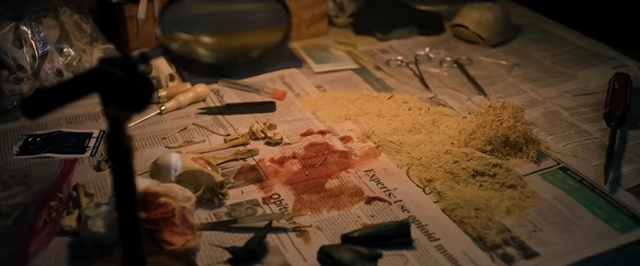
That tactile investigative language reaches its fullest expression inside Canton’s historic Petrolia Hotel, where Benetton and Matthews carry us from Kramer awakening from a nightmare rooted in his own personal trauma, through the wall and into Pembrock’s adjoining room. And then we see Pembrock’s world. “We were really lucky to get that scene…”
Her room has become an analog manifestation of her investigative mind: photographs, newspaper clippings, index cards, Post-it notes, pushpins and thread, with information spread across walls and floor as she tries to find relationships among seemingly disconnected pieces of evidence. Rather than telling us how completely the case has consumed her, the room lets us see it.
And the murder board is doing physically what Pembrock has been doing throughout the investigation—collecting fragments, examining relationships, moving pieces around and trying to see the connection that will turn information into understanding.
Toche isn’t merely decorating an investigation. She is giving the investigation something to investigate.
That makes Benetton’s resistance to excessive close-ups even more significant. Why build environments containing this much narrative information only to obliterate them behind faces and shallow focus? By allowing Matthews’ camera to remain wide when appropriate, Benetton gives us the opportunity to look around—to notice the rooms, books, papers and objects that define not only where these characters are, but how they think and work.
The Petrolia Hotel itself presented another kind of challenge. Because of the historic nature of the building, the production faced restrictions on what could and could not be touched or altered. Rather than fighting those limitations, “[with] these great crew members, like Julie, taking an extreme amount of care of preserving the location and that space specifically, we even had limitations about what we could and couldn’t touch which really informed the way we blocked the scene and shot the scene.”
Once again, the physical environment becomes part of the filmmaking process. There is something wonderfully appropriate about all of it.
A historic Mississippi town. Bound newspapers instead of digital archives. Paper checkout cards. Pencil graphite revealing an erased trail. A murder investigation mapped by hand across the walls of a hotel room.
THE GIRL IN THE RIVER uses nuts-and-bolts filmmaking to tell a nuts-and-bolts mystery. And Julie Toche’s production design makes sure we can see every piece of it.
Casting Suspicion
Of course, a mystery is only as compelling as the people who inhabit it. And Benetton has populated THE GIRL IN THE RIVER with one hell of a cast.
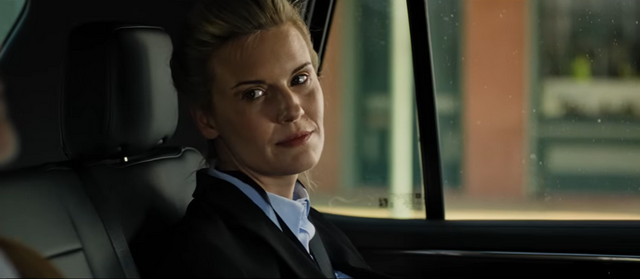
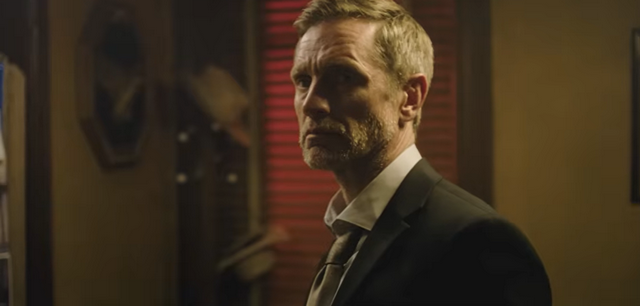
Maggie Grace, Devon Sawa, Tiffany Haddish, Andrew Stevens, Ralph Macchio and Darron Dunbar bring not only considerable talent to the film, but something particularly useful to a story built around suspicion and shifting perceptions: expectation.
“Casting really flavors the tone of a movie,” says Benetton. “We could have shot the same movie with the same performances, same cinematography, and all of it, but if you just change one or two cast members, the movie feels emotionally completely different.”
That understanding allows Benetton to play subtly with what an audience may already associate with a performer.
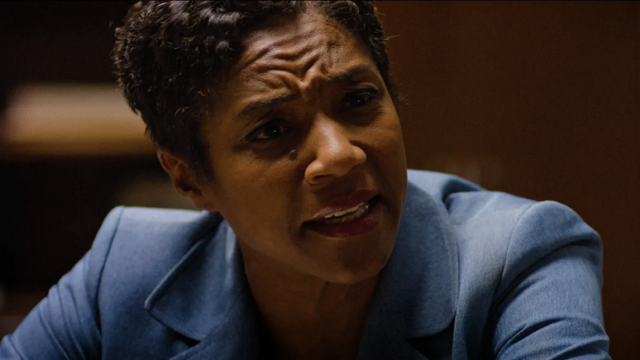
Grace brings an almost instinctive familiarity with the crime-thriller world, while Haddish arrives carrying an entirely different set of audience expectations. As Captain Graysmith, Haddish strips those expectations away, approaching the dramatic role with an authority and seriousness that Benetton knew might surprise audiences.
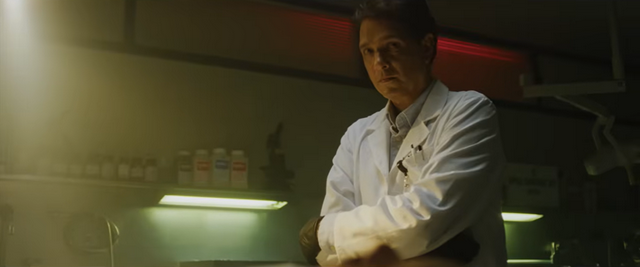
Then there is Ralph Macchio as Dr. Ripley. After years in which audiences have again embraced Macchio as Daniel LaRusso through COBRA KAI, Benetton relished placing him somewhere dramatically unexpected. “For the first time in years, this is such a 180 in the best possible way,” he says, particularly enjoying reactions from viewers who never anticipated seeing Macchio in this kind of role.
Andrew Stevens brought Benetton something different again.
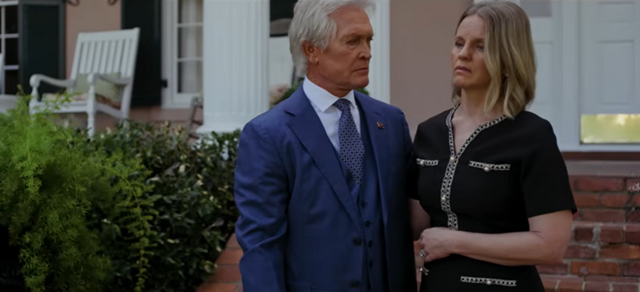
Appearing on screen while also serving as one of the film’s producers, Stevens came to THE GIRL IN THE RIVER with decades of experience not only as an actor and producer, but as a director. For Benetton, making his first feature, having that depth of practical filmmaking knowledge beside him proved invaluable.
“I admire him so much for the amount of work that he puts in,” says Benetton, who points to Stevens’ depth of experience not only as an actor and producer, but as a director.
What impressed Benetton was watching Stevens move almost seamlessly between those responsibilities—dealing with the logistical demands of production one moment, slipping into costume the next, performing for several hours, then immediately turning his attention toward the following day’s work. “I learned so much from someone like him,” Benetton says.
And he made certain he took advantage of the opportunity.
“We had many lunches, many dinners,” Benetton recalls, during which he could talk with Stevens and ask questions. Rather than feeling threatened by having someone with Stevens’ breadth of experience working alongside a first-time feature director, Benetton did what he repeatedly describes doing throughout the production: He became a sponge.
“I really was trying to be a sponge and creatively absorb all of this experience.”
That willingness to absorb rather than posture becomes increasingly significant when listening to Benetton talk about making THE GIRL IN THE RIVER. He arrived with a screenplay he had spent years developing and a clear idea of the film he wanted to make, but he didn’t confuse having a vision with having every answer.
With Stevens, sometimes the lesson was simply in watching.
But casting familiar faces against expectation isn’t simply stunt casting. In a mystery, familiarity can itself become another form of misdirection. We arrive carrying assumptions about actors just as we carry assumptions about characters—and THE GIRL IN THE RIVER continually asks us to reconsider both. Benetton knew that assembling the cast was only the beginning. Making his first feature, he felt a particular responsibility to connect the audience emotionally with these actors and make the characters believable.
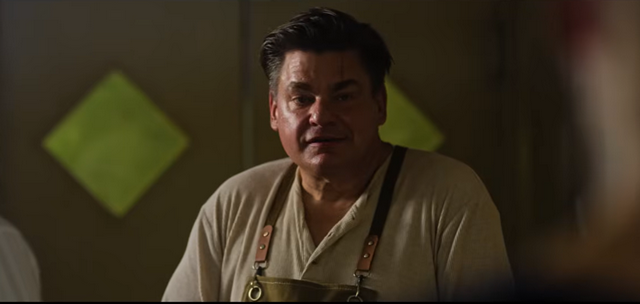
And surrounding those recognizable names is a wealth of regional talent, like standout Darron Dunbar as the local butcher. “We were blessed…We were lucky that we had an amazing local cast and local, not meaning Canton, Mississippi, but within the area. Some people were coming from Atlanta or Louisiana, but we were blown away and still blessed by these sometimes day players that would come in for a single day, which is extremely exciting.” They helped fill Canton with precisely what the mystery requires: possibilities. Because everyone is a possibility.
The missing girl’s disappearance and her twin sister’s murder immediately suggest knowledge of the community. Someone knows the girls’ routines. Someone understands the river and its currents. Someone knows the roads and pathways they travel. And everyone we meet potentially knows something that we don’t. That abundance of characters is deliberate. Benetton knows he has populated the town with plenty of suspects.
He knows that mystery audiences are experienced. Give viewers enough clues and enough suspects and somebody, somewhere, is likely to point a finger at the right person long before the filmmaker would prefer. Benetton isn’t particularly frightened by that prospect.
“You may foresee what’s gonna happen, but you’re not gonna foresee how is it gonna happen.”
And therein lies much of the pleasure of THE GIRL IN THE RIVER. Even if a viewer settles upon a suspect before Benetton is ready to provide the answer, the mystery doesn’t necessarily collapse. The question simply changes. How is he going to get us there? Benetton doesn’t disappoint.
The screenplay continually drops breadcrumbs while withholding the recipe. Suspicions migrate from one character to another. Behavior acquires different meaning as new information surfaces. And once the truth is known, Benetton believes the film invites another kind of investigation entirely—a second viewing in which the audience can revisit those same encounters knowing which characters have been lying from the beginning.
That’s where editor Zach Prichard becomes particularly important.
Finding the Turn
Like Matthews, Prichard brought both skill and a preexisting collaborative shorthand into Benetton’s filmmaking circle. Matthews and Prichard were already friends and had worked together, while Prichard’s visual effects experience gave Benetton something particularly valuable in post: an editor who could think beyond the cut itself.
“He rolled up his sleeves from the beginning and said, ‘Hey, we’re going to figure this out together.’”
That willingness became important because THE GIRL IN THE RIVER required more than simply assembling coverage. Prichard had to control information.
In a mystery, an edit can reveal too much merely by lingering where it shouldn’t. It can announce a clue by giving an object undue importance. It can make an innocent reaction look suspicious—or allow a genuinely suspicious one to slip past unnoticed. And because Benetton and Matthews had deliberately accumulated such varied coverage during production, Prichard had options. Lots of them.
The continually changing angles that keep the film’s dialogue scenes visually alive also become editorial tools for redirecting our attention. A cut can pivot our suspicion as easily as a new piece of evidence can.
Prichard’s visual effects background also allowed the filmmaking to continue evolving long after the cameras stopped rolling. One particularly important book becomes a key piece of evidence in the investigation. Its title wasn’t fully resolved during production. Prichard changed it digitally.
“Sometimes we had to figure out how to solve slight technicality with the visual effects… and I was just blown away. There’s one book in the movie that turns out to be a key piece of evidence… and Zach changed the title of the book with visual effects, and I could not believe, even when I saw it, because we were still figuring it out on set. To have someone who understands the both of them together [editing and VFX], bring ideas to the table… There’s sometimes small details you wish you could add in the very background as far as the balance of a frame… And to have someone like Zach, who is so hardworking, and says ‘not only I got the editing part covered, but let me help you out with some of these visual effects shots,’ was an extra treat. It was a way for us to continue to improve on the movie, even if filming had been wrapped for weeks, if not months.”
Other adjustments were subtler still: removing an unwanted car, adding an element to the background, making tiny changes that Benetton compares to balancing a painting—not because an audience will consciously notice every alteration, but because the frame feels better once they’re there.
For Benetton, that ability to keep refining the image after principal photography became another example of something he discovered repeatedly while making his first feature: the movie is never being made by only one person.
And sometimes the most interesting solution isn’t found in post at all. Sometimes you have to commit to it before the camera rolls.
No Place to Hide
For all the varied coverage and editorial possibilities in THE GIRL IN THE RIVER, Benetton and Matthews also embrace moments when cutting isn’t an option.
Benetton loves classic filmmaking techniques, and one of his particular pleasures is allowing a composition to evolve within a single shot. A wide becomes a medium as characters approach. Movement transforms the frame into a two-shot. The characters move away and the composition opens again.
Thirty seconds. No frantic cutting. No visual stagnation. The movement happens inside the frame.
“The thing about one-ers is that it forces you to be confident in the way you’re going to do it,” says Benetton. “You can’t edit your way out of a one-er.”
That confidence is evident in another sequence involving a character entering a private residence, where Benetton and his team incorporated a classic Texas switch—allowing performer and stunt double to exchange places invisibly within the shot. It’s the kind of technique Benetton readily admits he “nerds out on.”
But what excites him isn’t merely pulling off a trick. It’s solving the problem.
Where does the vehicle have to be positioned? At what angle? Where does the performer move? Where does the stunt team need to be? What happens when the location you found makes the solution you imagined on paper impossible?
““Oh, now it doesn’t work. Okay, we got to figure something else out.”
For a director making his first feature, those moments could easily become terrifying. Benetton talks about them with something closer to delight. Because every problem brings another department into the conversation. The stunt team has an idea. Matthews has an idea. Production has an idea. Someone sees something Benetton didn’t. And gradually the solution emerges.
It is the practical counterpart to everything we’ve already seen in Toche’s production design and the Petrolia Hotel: filmmaking not as the rigid execution of a predetermined plan, but as the continual solving of problems with the people and places actually standing in front of you.
They listen to the location. Adapt to it. Find the shot that exists with the room rather than forcing one upon it.
It is a small example of the philosophy Benetton would ultimately take away from the entire production.
But before he could articulate that lesson, there was another current running beneath THE GIRL IN THE RIVER. One we haven’t yet heard.
Music.
The Current Beneath the Story
If David Matthews’ cinematography gives THE GIRL IN THE RIVER its visual movement, composers Max Aruj and W.F. Smith Leithart give that movement an emotional current.
Coming aboard after principal photography, Aruj and Leithart developed two primary musical ideas for the film: an investigative theme heard during the opening titles and a more emotional theme tied to the relationships and human consequences surrounding the case.
“Music truly elevated everything,” says Benetton. “It is a layer of emotion.”
That layer is particularly important in a film as dialogue-heavy as THE GIRL IN THE RIVER. This is, after all, an investigation. People question, explain, theorize, challenge and interrogate one another, sometimes for extended stretches. Just as Benetton and Matthews sought ways to keep those conversations visually alive through continually changing perspectives, the composers and sound team faced their own balancing act: heightening tension and emotion without allowing the score to compete with the words carrying the investigation forward.
“It’s all about the environment,” Benetton says, noting how much sound can contribute to storytelling.
And the score moves through that environment much like the river itself—sometimes immediately perceptible, sometimes receding beneath dialogue and ambient sound, but always contributing to the emotional current of the film.
That balance is beautifully maintained in the final mix. Music never sits heavily on top of the dialogue or announces what we should be feeling. Instead, it ebbs and flows beneath the investigation, allowing Aruj and Leithart’s themes to heighten tension or emotion without calling undue attention to themselves.
Learning to Listen
By the time THE GIRL IN THE RIVER reached its final mix, Benetton had watched the film transform repeatedly.
The screenplay he began writing during the isolation of the pandemic became something different once actors inhabited the characters. Matthews changed the way Benetton saw the images he had written. Canton offered locations he couldn’t have imagined on the page. Julie Toche transformed those locations through production design. Zach Prichard reshaped their accumulated footage through editing and visual effects. Aruj and Leithart added an emotional language that hadn’t existed before music entered the film. Sound, color and the final mix altered it yet again.
For a filmmaker making his first feature, Benetton discovered that directing wasn’t about preventing those changes. It was about knowing which ones to embrace.
“I didn’t realize until we made this movie that the movie is going to change so much from the original draft that we wrote, the cast is brought in and they have amazing ideas. And if you try to resist the process, movie’s going to run you over.”
It is a lesson Benetton had unknowingly begun learning years earlier. While studying at USC, he spent considerable time working as a first assistant director, an experience that taught him the practical mathematics of filmmaking—how long scenes actually take to shoot, what can realistically be accomplished in a day, and how decisions made while writing can either help a production or “paint me in a corner” once those words have to become images.
But he also saw something else. He worked with directors who weren’t particularly good listeners. Ideas would come from crew members and other departments only to collide with a filmmaker so firmly attached to a predetermined vision that there was little room for anything—or anyone—to alter it. Benetton remembered that.
And then THE GIRL IN THE RIVER showed him why listening matters.
Listening, however, doesn’t mean surrendering authorship. Nor does collaboration require accepting every suggestion offered on a set. Benetton talks about the importance of stopping and listening to what both the movie and the people making it are telling you. That doesn’t mean accepting every idea. The director still has to recognize what belongs in this particular movie and what doesn’t.
An idea can be terrific. And still belong somewhere else. “It may be an awesome idea, doesn’t belong to this movie. I’m sorry.”
That distinction may be one of the most important a director can learn. The director still has to know what movie he’s making. But knowing what movie you’re making doesn’t require pretending you’re the only person capable of making it better.
We can see that philosophy operating throughout THE GIRL IN THE RIVER.
It is there when Benetton meets David Matthews barely two weeks before photography and begins building a visual language with him.
It is there when John Read opens Canton to him and Benetton responds not by rejecting locations other filmmakers have used, but by asking to see everything.
It is there when Julie Toche and her team work within the restrictions of a historic building and turn Pembrock’s hotel room into a physical manifestation of an investigation consuming her.
It is there when a stunt team helps turn something written on a page into a practical piece of choreography.
It is there when Zach Prichard discovers that an editorial or visual-effects solution can keep refining an image months after the camera has stopped rolling.
It is there when Max Aruj and W.F. Smith Leithart give the film another emotional current.
And it is there in Andrew Stevens, moving between acting and producing while Benetton watches, asks questions, shares lunches and dinners with him, and absorbs what decades of filmmaking experience look like in practice.
Benetton calls himself a sponge. It’s an apt description. Because throughout his first feature, he wasn’t simply directing people. He was watching them. Listening to them. .Learning what each could bring to the film that he couldn’t have brought alone. And rather than emerging from that experience depleted, Benetton sounds energized by it.
“Instead of feeling exhausted after making this movie, of course it was a lot of work, believe it, but it only made all of us so more excited to be like, okay, what’s next?”
There may indeed be a next chapter for these characters. Benetton already has ideas for other investigations that could bring members of this team back, whether through a sequel, a prequel or some other expansion of the world he’s created. THE GIRL IN THE RIVER even leaves enough narrative possibility behind to make us wonder where another case might take them.
But that depends upon audiences.
For now, Benetton has something more immediate: his first feature. And a film that demonstrates a degree of confidence that doesn’t come from having all the answers. It comes from knowing which questions to ask. Following the Current. A river is never really still. Neither is THE GIRL IN THE RIVER.
From the murder that begins the investigation to the missing child who gives it urgency, the story is continually moving. Suspicion changes direction. New information alters old assumptions. Zach Prichard’s editing controls when those pieces fall into place. David Matthews’ camera keeps changing the angle from which we see them. Canton changes character from one street to the next. Aruj and Leithart’s music moves beneath it all, an emotional current rising and receding with the story.
And through it runs Brando Benetton, making his first feature and learning something fundamental about directing in the process.
You can know where you want to go. You can prepare. You can study the route. You can choose the people you want beside you. But eventually, you have to enter the water. And once you’re there, you have to feel the current.
Benetton knows where he wants to take an audience. THE GIRL IN THE RIVER also taught him the value of listening when somebody beside him discovers another way of getting there.
For a filmmaker at the beginning of his feature journey, that’s not a bad current to follow.
by debbie elias, exclusive interview 08/28/2026
THE GIRL IN THE RIVER is available on digital and in theaters on September 4, 2026.