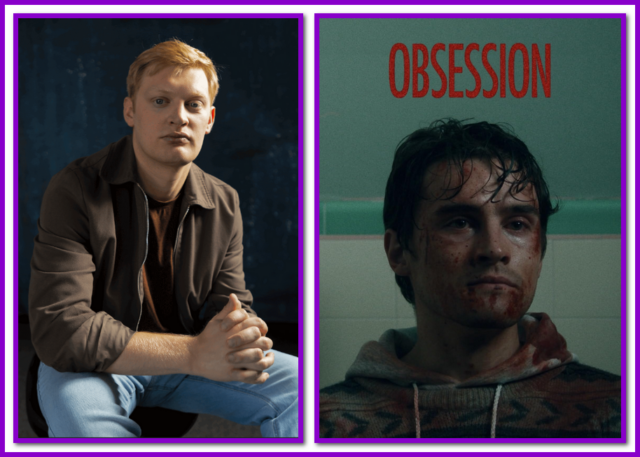
Sometimes the most terrifying ideas begin with the simplest question: What if a wish actually came true?
For writer/director CURRY BARKER, that question sparked the creation of OBSESSION, a clever, unsettling horror story about desire, consequences, and the dark side of getting exactly what you want. After premiering at the Toronto International Film Festival, the film now heads to theaters May 15, bringing Barker’s inventive blend of grounded storytelling, practical effects, and psychological horror to audiences.
In OBSESSION, a young man breaks the mysterious “One Wish Willow” in hopes of winning the heart of his crush. Instead, his wish unleashes a chain of increasingly disturbing events that blur the line between coincidence and supernatural consequence.
For Barker, the idea started with a familiar trope—but one he wanted to twist.
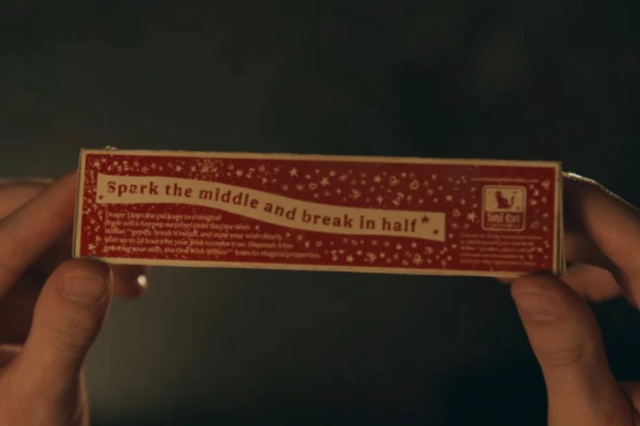
“I was watching an episode of The Simpsons that did a monkey’s paw story,” Barker recalls. “And I thought, what if you had a movie where a wish went wrong—but instead of going full fantasy, you grounded it and made it ambiguous whether the magic is real or not?”
That ambiguity became the key to the film’s tone. Rather than leaning into traditional slasher mechanics, Barker focused on psychological escalation and character-driven horror.
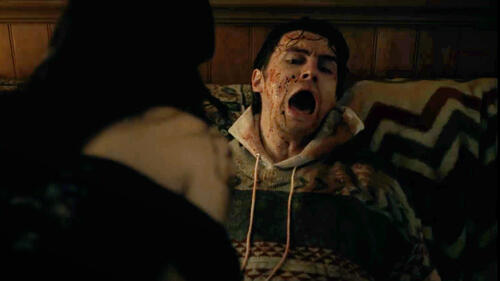
“The concept itself doesn’t beg for much horror,” he explains. “There’s a version of this movie that could have had three or four kills and been more like a slasher. But I didn’t want to do that. If there was going to be blood in this movie, it had to be earned.”
That restraint allows the tension to build slowly as the film explores jealousy, friendship, romantic longing, and obsession. The horror emerges organically from recognizable human emotions—making it all the more unsettling when things spiral out of control.
One of the film’s most striking elements is the performance of Inde Navarrette as Nikki, whose increasingly eerie behavior becomes the emotional engine of the story. At key moments, Nikki freezes into an unnerving smile that borders on the supernatural.
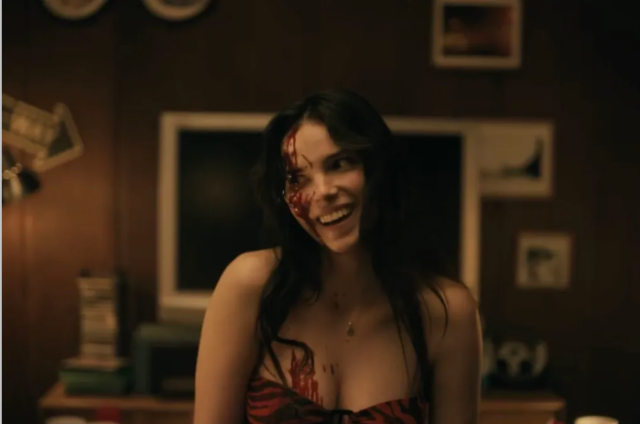
While the effect looks like it might be digital trickery, Barker says it’s largely achieved in-camera.
“It’s about 90 to 95 percent practical,” he explains. “Inde did a great job. There’s a little speed ramping here and there, but we didn’t freeze frames or do anything heavy with visual effects. She was just that good.”
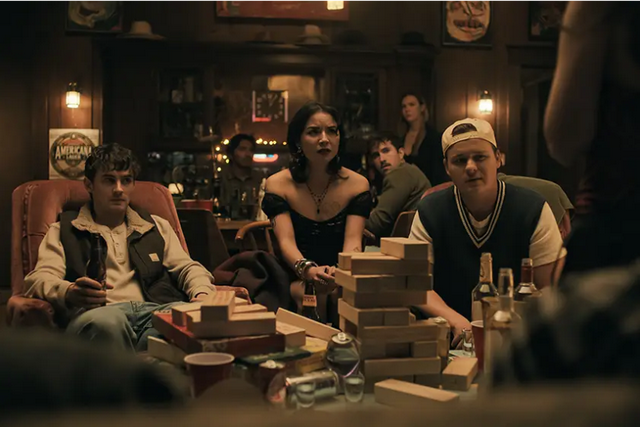
That commitment to practical filmmaking runs throughout OBSESSION. Working with cinematographer Taylor Clemens, Barker developed a very specific visual language for the film—one that favors center composition, careful framing, and controlled lighting to create a subtle but pervasive unease.
“We wanted everything to be center composed with a lot of headroom,” Barker says. “Taylor and I worked really closely to develop a style that felt very intentional.”
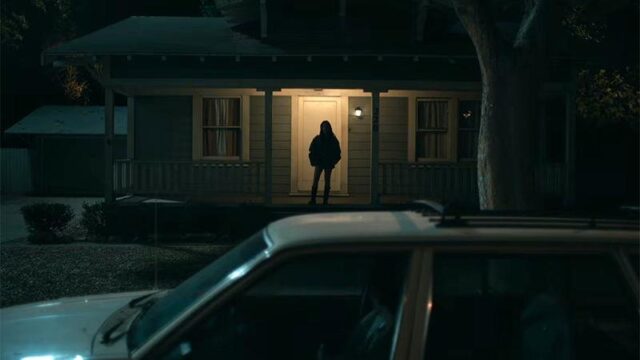
The result is a visual grammar that feels quietly unsettling without calling attention to itself. Even the lighting choices reinforce the film’s grounded tone. While many horror films lean into darkness and exaggerated shadows, Barker deliberately avoided that approach.
“I didn’t want anything to feel like a horror movie visually,” he says. “Even the magic shop where the One Wish Willow comes from—I didn’t want it to feel like a creepy shop with cursed objects. I wanted it to feel bright and normal.”
That shop, designed by production designer Vivian Gray, stands out as one of the film’s most vibrant locations. Filled with lush greens and warm tones, it feels inviting rather than ominous—making the consequences of the wish even more unsettling.
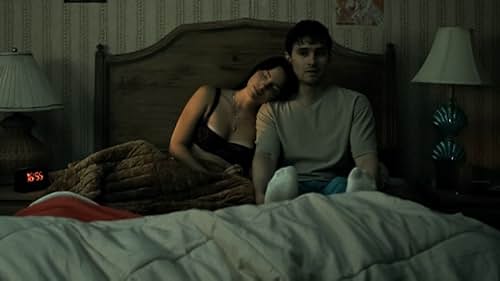
Gray’s work also plays a major role in Bear’s home, which subtly tells its own story through the environment.
“The house is actually his grandma’s house,” Barker explains. “You’ll notice the sewing machines, the pictures, the older furniture. Vivian took that idea and really expanded it.”
One particularly striking detail is the patterned wallpaper that appears prominently in the film’s later scenes—designed by Gray specifically for the production.
“She actually created that wallpaper from scratch,” Barker says.
For Barker, whose background includes years of editing and filmmaking experiments dating back to childhood, the film’s structure and visual rhythm were already forming long before production began.
“I’ve been editing since I was eleven or twelve,” he says. “So when I write a script, I’m already thinking about the cut.”
That approach allowed him to be extremely precise with coverage and camera placement during filming.
“I don’t like shooting a lot of coverage,” Barker explains. “I only want to cut to something if it’s motivated. I always ask, whose perspective is this? Why are we cutting here?”
The philosophy helped the production avoid one of the most common pitfalls in filmmaking: unnecessary shots meant simply to telegraph information to the audience.
“I see a lot of movies where they cut to something just to say, ‘Hey audience, look at this—it’ll be important later.’ I try not to do that.”
Even the film’s more technically complex scenes were approached with practical creativity. A tense third-act sequence inside a car looks entirely naturalistic, complete with fogged windows and rain-streaked glass. In reality, the scene was filmed on a soundstage using LED screen technology.
“That scene was actually shot on an LED screen,” Barker reveals. “The water and moisture helped sell the illusion of what was outside.”
Casting Nikki proved to be one of the film’s biggest challenges. Barker knew from the beginning that the role would demand an actor capable of balancing naturalistic dialogue with full-blown emotional intensity.
“It was really hard to find someone who could do both,” he says. “Some actors could do the scary stuff really well but struggled with the normal conversations. Others were great with the natural scenes but couldn’t quite reach the intense moments.”
Navarrette ultimately stood out during auditions with a scene that required both emotional vulnerability and explosive energy.
“It became pretty clear she was the one.”
Despite the dark subject matter, Barker maintains a light, playful atmosphere on set—something he believes is essential when actors are asked to perform emotionally extreme scenes.
“These actors have to make fools of themselves in front of a room full of people,” he says. “If something looks silly or weird, we laugh about it and try again. I think that’s better than forcing everyone into a dark, serious mindset.”
It’s a philosophy that reflects Barker’s own journey as both actor and filmmaker.
Now, with OBSESSION marking his first narrative feature, Barker has delivered a film that feels both confident and inventive—blending psychological horror, practical filmmaking, and a sly sense of humor into something refreshingly original.
And if the film proves anything, it’s that wishes—especially the ones we think we want most—can come with consequences far darker than expected.
by debbie elias, exclusive interview 09/02/2025
OBSESSION is in theatres nationwide on May 15th.