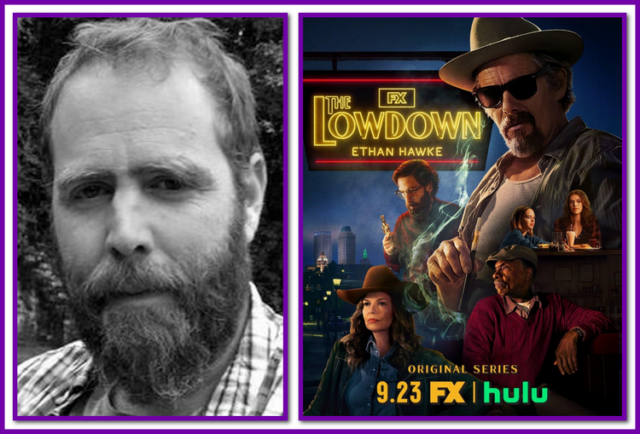
Sun, Sweat, and Sunshine Noir: Mark Schwartzbard Finds the Visual Pulse of THE LOWDOWN
For cinematographer MARK SCHWARTZBARD, THE LOWDOWN begins with something no lighting package can fake: Oklahoma itself.
FX’s Tulsa-set crime drama, created by Sterlin Harjo, folds dark humor, corruption, white supremacy, stolen art, and an “Oklahoma Illuminati” conspiracy into a world that feels at once eccentric, lived-in, and steeped in a dusty, off-kilter noir sensibility. But before Ethan Hawke’s Lee Raybon ever starts digging into the rot beneath the surface, the series announces itself visually through sunlight, atmosphere, and a very specific sense of place. And for Schwartzbard, who serves as cinematographer on Episodes 2, 3, 6, and 7, that authenticity is everything.
“That’s the beauty of actually going to the place you’re filming,” he says. “The greatest asset this show has is the sense of place. Well, there’s a lot of great assets. Greatest asset is Sterlin, but followed closely by Ethan. But the sense of place that Sterlin always does, by insisting we’re actually shooting in Oklahoma.”
That insistence matters. Schwartzbard has shot enough productions standing in for somewhere else to know that geography leaves fingerprints on an image. “You always get the L.A. light,” he notes of productions that fake location. Tulsa, by contrast, gives THE LOWDOWN its own visual identity. “The Oklahoma light is gorgeous. It’s gorgeous to the eye, too. It’s gorgeous just being here, but getting, you know, filming it, it just kind of does all the work for you.”
That “work” is apparent all over the series. The light in THE LOWDOWN is warm, hard, textured, and often unforgiving, wrapping the show in a nostalgic 1970s glow while still retaining the grime and sweat of hard-boiled crime fiction. Schwarzbard embraces the contradiction. This is noir, yes—but not the traditional kind cloaked in blue-black darkness. This is daylight noir.
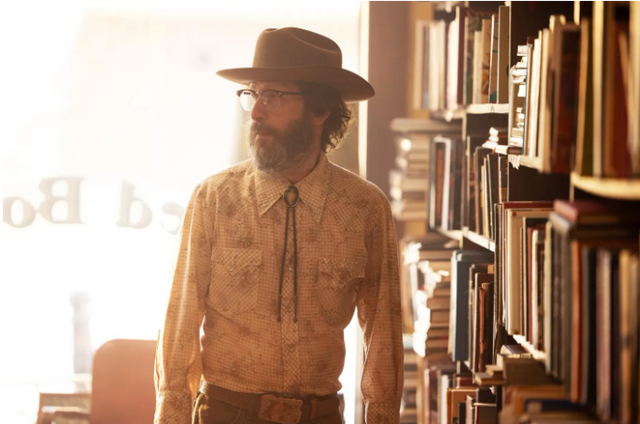
Working from the visual template established by cinematographer Adam Stone and Harjo in Episode 1, Schwartzbard leaned into the show’s references to 1970s neo-noirs, citing films such as The Long Goodbye, Night Moves, The Drowning Pool, and even Paul Thomas Anderson’s Inherent Vice. “Sterlin kept talking about this is the ‘70s neo-noirs,” Schwarzbard says. “Adam had kind of found a really good palette for it, and we just kind of followed that.”
A key part of that meant resisting the urge to overly refine exterior light. “We didn’t want to moderate the outdoor light very much,” he explains. “You didn’t want to put big overheads over things… you kind of want that rough, hard light. You want, you know, when you’re shooting at noon, it’s just terrible light. You kind of want that. You want it to be hot, when it’s hot.”
That choice proves crucial to the visual character of the series. Lee Raybon may be chasing corruption and conspiracy like a classic noir gumshoe, but he’s doing it under a punishing sun, with sweat, rumpled clothes, oily hair, and Ethan Hawke’s lived-in physicality doing as much storytelling as the dialogue. It’s a look that feels sunbaked rather than shadow-drenched, but no less mysterious for it.
Schwartzbard is quick to credit the surrounding departments for making that world credible. Production designer Brandon Tonner-Connolly, in particular, emerges as essential to the show’s tactile authenticity. “Everyone else was—the wardrobe, design, production, everyone kind of brings this kind of lived-in, kind of dirty, messy world to it,” he says. “When they get the look of it on camera, it’s all there.”
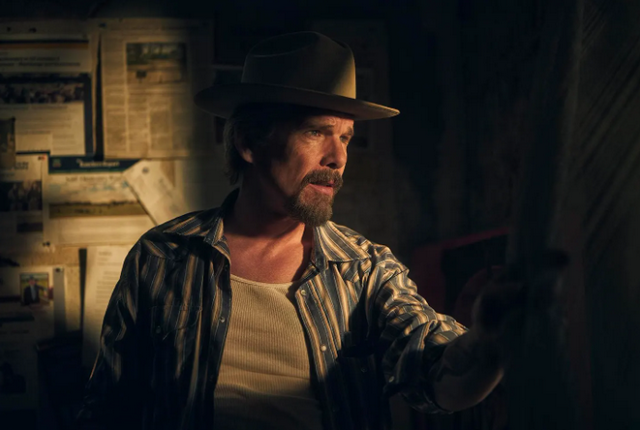
Tonner-Connolly’s work extends well beyond interiors. The bookstore, diner, and entire Main Street block anchoring Lee’s world are so convincing that passersby mistake them for functioning businesses. “People are always banging on the window, wondering why no one’s selling books in this place,” Schwarzbard laughs. “It looks to all the world like a bookstore.”
The same organic detail extends into more elaborate builds, including the forest compound in Episode 3. Schwartzbard marvels at the effort it took to create the location, noting that Tonner-Connolly “forklifted every vehicle into the clearing to build that whole thing, including a 50-foot-long houseboat.” Roads had to be built. Gravel had to be laid over thawing winter ground. The result, though, is seamless. Like the bookstore block, it never feels “designed” in a self-conscious way. It simply feels found.
That philosophy carries into the lighting as well. Schwartzbard favored practical spaces and practical fixtures whenever possible, especially in standing sets like the bookstore and diner. The bookstore ceiling’s fluorescent units were rigged with color-changeable LED tubes, but the goal was never to make the set feel overbuilt for cinematography. “We wanted them to feel very real,” he says. “I don’t want to have to avoid the ceiling because it’s all a bunch of movie lights.”
The approach speaks to one of the more revealing aspects of Schwartzbard’s work on THE LOWDOWN: a willingness to relinquish a degree of control in order to preserve vitality. It’s not sloppiness, exactly, but a carefully managed openness to imperfection, spontaneity, and movement.
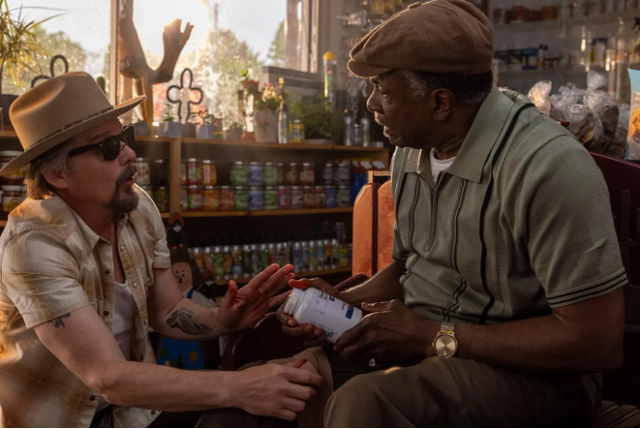
That mindset was reinforced by Steadicam operator Joe Hernandez, whose work Schwartzbard praises repeatedly. Coming off Reservation Dogs, where the visual style was more observational, longer-lensed, and physically distanced from the actors, Schwartzbard initially worried about maintaining the precision of the pilot’s closer, wider, more character-driven language. Then Hernandez stepped in with some simple advice. “The better version is… the show is all about Ethan’s energy and dancing with the camera,” Schwartzbard recalls. “Just put the Steadicam on me. I’ll wear it all day.”
That shifted everything. “It’s just this Joe and Ethan dance,” Schwartzbard says, and that dance gives THE LOWDOWN much of its restless, lived-in fluidity. Instead of over-planning every frame, Schwartzbard learned to trust the collaboration. “Sometimes this show, we really like it feeling alive,” he says. “That means letting the camera move. That means embracing the lighting imperfections, not kind of trying to dial everything in and get it perfect.”
That idea—allowing the work to stay alive rather than perfectly polished—extends to scenes of chaos and comedy alike. Asked about the funeral fight in Episode 2, Schwartzbard admits he liked making it feel “really sloppy.” But that looseness is intentional, part of a broader evolution in his own work. “Maybe this has to do with maturing and getting older and being willing to let go a little more,” he says. “I’m there to kind of allow things to happen.”
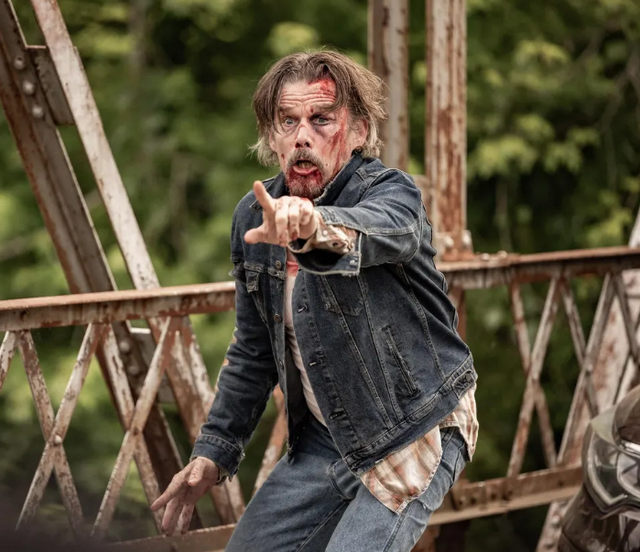
The tools, however, are anything but casual. Schwartzbard shot THE LOWDOWN on the ARRI Alexa 35 with rehoused vintage Cooke Panchro primes from the 1950s, lenses he clearly adores. “Those lenses got some weird voodoo in them,” he says. What he values most is the way they handle hard light. “For my money, you can put hard light on the face with these Cookes better than with any other lenses. They’re very tolerant of that brutal sun slapping people in the face.”
That combination of Alexa 35 latitude and vintage Cooke character proved ideal for the series, especially given the production’s fondness for zooms, available light, and weather contingencies. The Alexa 35’s light sensitivity allowed Schwartzbard to work fast and adapt as conditions changed, sometimes pushing the ISO as high as 6400 without concern, particularly once grain was added in post. “With these cameras, you can kind of just click the ISO awfully high up,” he says, a flexibility that becomes indispensable when using slower zooms or when weather forces a pivot.
And weather in Oklahoma is never theoretical.
Schwartzbard recounts a particularly telling moment during a church scene involving a large crowd and ambitious lighting through the windows. Anticipating storms and the possibility of a lightning delay, the crew pre-rigged both larger 4K units powered by generator and weatherproof LED fixtures running off house power. When the storm hit and the generator had to be shut down, the team simply switched over to the LED setup and kept shooting safely from inside the church. It’s exactly the kind of practical ingenuity that keeps a production moving without sacrificing the look.
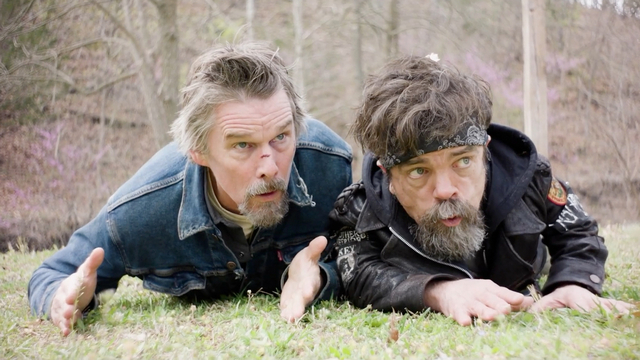
It also underscores just how collaborative Schwartzbard sees episodic television cinematography. THE LOWDOWN employs multiple directors and multiple cinematographers, with Harjo, Macon Blair, and Danis Goulet splitting directing duties, and Adam Stone and Chris Norr sharing DP responsibilities across the season. Rather than treat those transitions as obstacles, Schwartzbard describes an evolving visual conversation in which everyone borrows from everyone else.
“What I take from Adam’s pilot, and then what I add to it, and then Chris comes in, does his stuff, and I steal some of that,” he says. “We’re all kind of evolving together. It’s a weird kind of non-temporal collaboration as we all look at each other’s footage.”
That exchange becomes especially fruitful in Episodes 6 and 7, when Schwartzbard teams with director Danis Goulet. He notes that Goulet brought strong ideas of her own, including stylistic choices that stretched the show’s visual vocabulary in moments involving Ethan Hawke and Killer Mike. Those sequences, he says, pushed toward wider-angle work tied to the altered-state energy of the scenes. But even there, the overall fabric of the show remains intact because the world itself is so well established. Same actors, same sets, same hair, same makeup, same Tulsa sun. “It’s hard for us to really change the vibe so much,” he says.
And sometimes, when the cast includes Ethan Hawke and Kyle MacLachlan, that consistency is less about enforcing form than recognizing mastery when it appears in front of the lens.
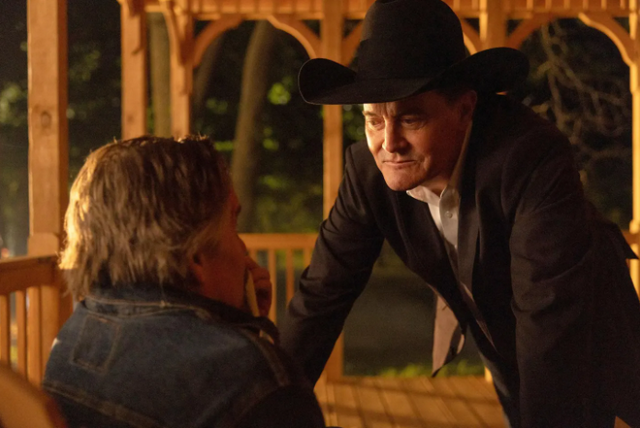
Schwartzbard lights up when discussing the scene in the gazebo in which MacLachlan punches Hawke—a moment that lands with startling precision and force. Though the sequence involved scheduling gymnastics, with MacLachlan’s availability requiring the gazebo to be rebuilt later in another location, Schwartzbard emphasizes how quickly actors of that caliber solve both the dramatic and technical demands of a scene. “Any two-hander between Ethan and Kyle was the easiest thing in the world to shoot,” he says. “They’re completely in the scene, but they also know which shoulder they’re supposed to be over.”
He is equally moved recalling Graham Greene, whose appearance in the series now carries even greater weight. Schwartzbard had previously worked with Greene on Reservation Dogs, and the affection is palpable. “Anytime he’s there, we all get very excited,” he says. “He was such a great man.” That warmth carries into the imagery itself, giving Greene’s scenes in THE LOWDOWN a quiet emotional resonance.
If all of this makes Schwartzbard sound like a cinematographer devoted as much to restraint as virtuosity, that seems exactly right. His work on THE LOWDOWN is technically assured, full of sophisticated decisions about light, lensing, camera movement, and location texture, but it never feels showy for its own sake. It serves story, character, and tone first. More importantly, it trusts that Tulsa, the cast, and the camera team will give him something truthful if he leaves enough room for it to happen.
That trust may be the most revealing thing of all.
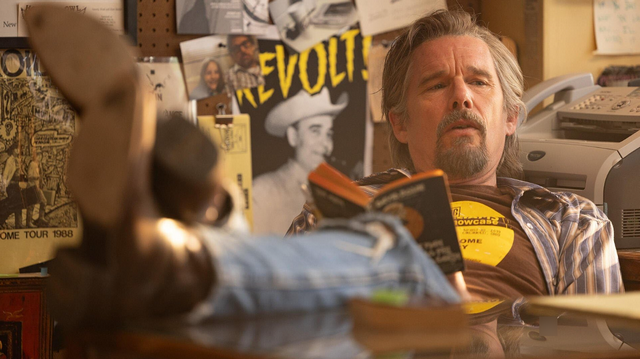
For Schwartzbard, THE LOWDOWN isn’t about imposing a visual scheme on the material. It’s about recognizing what the place, the performers, and the production are already offering and shaping it just enough to let it live on screen. In a series that thrives on eccentricity, menace, humor, and heat, that instinct feels exactly right.
Or, as Schwartzbard puts it with characteristic humility, “I’m trying to stay out of the way a lot more as this goes on.”
On THE LOWDOWN, that may be precisely why everything comes through so vividly.
By debbie elias, exclusive interview 04/16/2026
Season One of THE LOWDOWN is streaming on HULU and Disney+