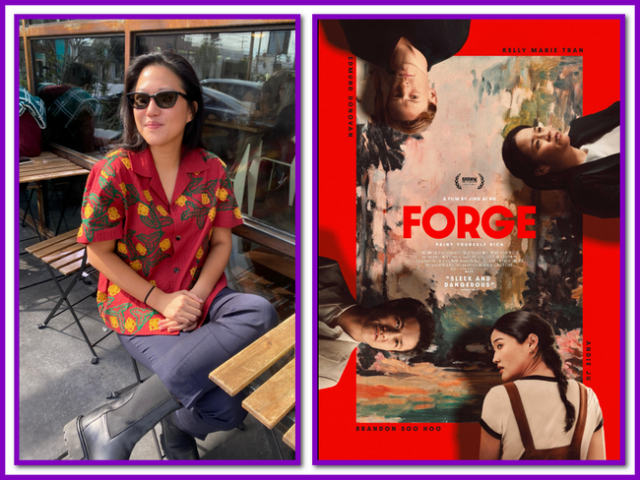
With FORGE, writer-director Jing Ai Ng takes the bones of a true-crime art-world scandal and transforms them into something far more psychologically textured than a standard forgery thriller. Inspired in part by the infamous Knoedler Gallery scandal — and particularly by the unresolved mystery of the Chinese forger who fled and was never fully heard from — Ng found the kind of narrative opening filmmakers dream about: a real-world crime with enough unanswered questions to allow imagination to step in.
“That really was a huge inspiration for the story,” Ng says, noting that the forger behind tens of millions of dollars in fraudulent art was Chinese and “was never interviewed — complete question marks.” For a filmmaker fascinated by art crime, identity, and deception, that ambiguity became “a great canvas and a great starting point.”
Set in Miami’s lush, moneyed art world, FORGE centers on siblings Coco and Raymond Zhang, played by Andie Ju and Brandon Soo Hoo, who operate an underground forgery business before being pulled into a larger scheme by disgraced millionaire Holden Beaumont, played with oily entitlement by Edmund Donovan. But what makes the film so compelling is not simply the mechanics of the crime. It is Ng’s decision to place the emotional weight of the story on Coco — an artist, a criminal, a dreamer, and, in her own warped way, a purist.
Ng knew the audience had to feel for her.
“We wanted to lend a softness to the main character,” she says. “She’s a villain, but we still wanted you to feel for her.”
That emotional investment is what elevates FORGE beyond the familiar rhythms of a heist or procedural. Coco may be committing serious crimes, but Ng frames her less as a stock antagonist than as a woman desperate to have her artistry seen. Her tragedy is that recognition comes through imitation, deception, and eventually exposure. In one of the film’s sharpest ironies, Coco’s dream of seeing her work displayed publicly does come true — just not in the way she imagined.
Visually, Ng and cinematographer Leo Purman treat forgery as an inherently cinematic crime.
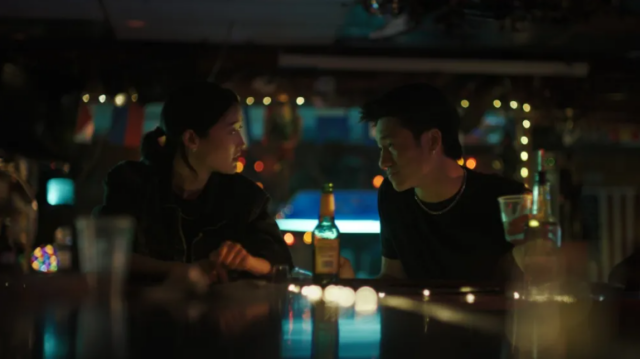
“Art forgery lends itself to being in a film because it’s such a visual crime,” Ng explains. “It’s really about the deception of what you can see and what you can tell and what you feel when you look at an art piece.”
Ng and Purman drew from crime and forgery films, including TO LIVE AND DIE IN L.A., but they also rooted FORGE in a very specific sense of place. The paintings seen throughout the film were influenced by South Florida landscape artists, and the production brought in a local Miami painter to create the original artwork.
“We did a lot of extensive research on the kinds of paintings and the art movements that came out of South Florida,” Ng says. The final look became a collaboration between Ng, Purman, production designer Arielle Ness-Cohn, the art team, and the painter himself.
That collaboration is essential to the film’s layered visual design. Ness-Cohn sharply distinguishes the worlds Coco moves through: the warm, red-toned intimacy of the Zhang family restaurant; the shadowed, expansive warehouse studio where Coco works; and Holden Beaumont’s sterile glass-and-money universe of high-rise offices and inherited privilege. Each space reflects a different kind of performance, fraud, or longing.
Ng laughs at the ambition of mounting an art forgery film on an independent budget.
“I wrote an art forgery film, which is ambitious on a budget like this, to say the least,” she says. “We had to work with what we had access to, what was in our budget, what locations we could get for free.”
Still, those limitations helped sharpen the collaboration. “It became a true collaboration between all the heads of departments,” Ng says. “How do we complement our story and make adjustments in the environment so that we can tell the story that we want to tell?”
The result is a film that looks far more expensive than it means. Ng credits that to her team’s attention to detail and constant conversations about color, texture, and mood.
“I’m really proud because I think the film looks way more expensive than it actually was,” she says. “It’s a testament to everyone putting their heads together.”
Editing is another key component of FORGE’s visual storytelling. Working with editor Briana Chmielewski, Ng uses montage not as filler, but as emotional compression and tonal transformation. Sequences of Coco aging canvases and painting are intercut with Raymond fabricating documents, creating provenance, and building the lie around the image. Later, as FBI Art Crimes agent Emily Lee, played by Kelly Marie Tran, begins connecting the pieces, Chmielewski’s cutting draws Coco’s creative process and Emily’s investigation into a tense collision.
Ng has worked with both Purman and Chmielewski for nearly a decade, dating back to film school. Hearing their work singled out brings visible pride.
“Leo and Briana, I’ve been working with for almost a decade,” she says. “We met in film school nine years ago. It’s so wonderful to hear you praise them.”
Just as important is the score by Marco Carrion and Ian Chang, which helps place the viewer inside Coco’s dream state. Ng wrote the script while listening to Chang’s solo album, and his sound became deeply embedded in the DNA of the film.
“I wrote the script to Ian Chang’s solo album,” she says. “It informed my writing very strongly.”
Ng imagined FORGE with an electronic score, but one threaded with Asian instrumentation and percussion. That blend mirrors Coco herself — contemporary, restless, culturally specific, and often lost inside her own fantasies.
“Coco is a character that very much lives in her head and in her dreams,” Ng says. “That fantasy sometimes gets in the way of real life and what the audience would consider important, like family. But to Coco, maybe that’s secondary. That’s a painful reality, but we wanted the audience to feel what she felt at the same time. The music is an important part of that.”
Casting proved equally crucial. Ng did not have her leads attached when the film was greenlit, which allowed for a wide discovery process. T.R. Knight was the first to come aboard, pitching himself for Sandy Baker, a choice Ng says turned out wonderfully. Tran followed, and then the search for Coco and Raymond stretched across several months.
“We spent a few months auditioning people all across the country for the roles of Coco and Ray,” Ng says. “We’re so happy that we found Andie and Brandon.”
Donovan and Eva De Dominici, as Holden and Talia, were also critical finds. Ng knew those roles could easily tip into caricature if cast or played too broadly.
“If you cast them in a different way, it’s possible they come across as caricatures,” she says. “I really think those two brought so much depth and humanity to what those characters are like. You still feel so sorry for Holden, even though he represents so much that is wrong.”
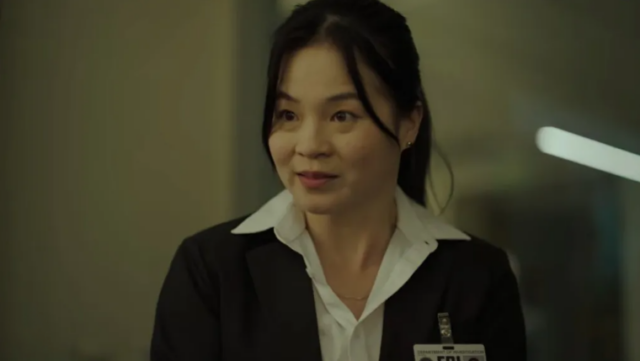
Tran’s FBI agent Emily Lee occupies a different space in the film — observant, practical, and intentionally unglamorous. That realism extended to costume design. Ng and costume designer Colleen wanted Emily’s wardrobe to reflect the actual working reality of federal agents, especially in a specialized department like art crimes, rather than the polished Hollywood version.
“It reflects the reality of the actual FBI, especially the art crimes department, which is something we researched really extensively,” Ng says. “Kelly is an actor who really cares about her costume. It was a joy to get to see when the final fitting happened and it all came together.”
For Ng, making FORGE was its own marathon of discovery. The scale of a feature, particularly the demands of post-production, taught her lessons she will carry forward. But the biggest storytelling lesson was deceptively simple: never lose sight of the main character.
“You have to pay close attention to your main character even more than you think,” Ng says. “Be paranoid about it, if anything.”
That vigilance pays off in FORGE, a crime film where the forgery is not only on canvas but in identity, class, family, authorship, and self-worth. Ng may be making her feature directorial debut, but she does so with a sharp eye for visual storytelling and a deep curiosity about why people need their illusions to be believed.
“I learned that I really love directing,” she says. “I really believe in movies and the stories that people tell, so I’m really passionate about carrying this through.”
With FORGE, Jing Ai Ng has crafted a debut that understands the difference between copying an image and creating meaning. And in Coco’s fractured, fascinating pursuit of artistic legitimacy, the film finds its most haunting truth: sometimes being seen is the greatest con of all.
by debbie elias, exclusive interview 05/05/2026
FORGE opens in Los Angeles beginning May 15 at the Landmark Nuart Theatre and in New York beginning May 22 at Quad Cinema