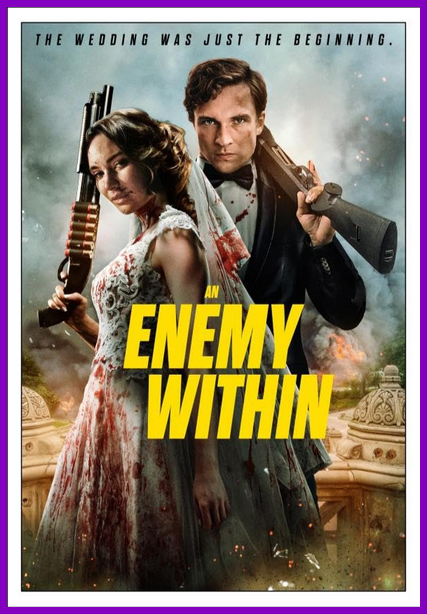
There is something deliciously venomous pulsing through AN ENEMY WITHIN, writer-director John Michael Kennedy’s tightly coiled debut narrative feature. Part Gothic chamber thriller, part psychological standoff, part family bloodsport, Kennedy constructs a sharply staged mystery where inherited privilege, buried resentment, emotional insecurity, and self-delusion become loaded weapons aimed squarely at everyone trapped inside a sprawling English estate.
And the beauty of Kennedy’s film lies in the fact that virtually nobody inside that house deserves our trust.
On his wedding night, Caleb Wingate (William Moseley) receives a chilling ultimatum: kill his wealthy father-in-law before midnight or his bride dies. As tensions escalate and a mysterious sniper known only as “The Wolf” closes in from outside the estate grounds, long-simmering family fractures erupt into manipulation, betrayal, shifting alliances, and increasingly dangerous revelations. But while the setup initially suggests a straightforward whodunit or contained thriller, Kennedy has far more ambitious ideas in mind.
At its core, AN ENEMY WITHIN is not about innocence corrupted. It is about people who have already compromised themselves emotionally, morally, or psychologically long before the first gun is ever raised.
Kennedy’s screenplay thrives on the understanding that every character sees themselves as justified. Nobody believes they are the villain of the story. Instead, they rationalize greed, cruelty, deceit, and selfishness as necessary pathways toward happiness, security, control, or survival. That moral grayness gives the film a far richer emotional texture than many modern ensemble thrillers that rely solely on mechanical twists.
And the twists here work because they feel inevitable rather than arbitrary.
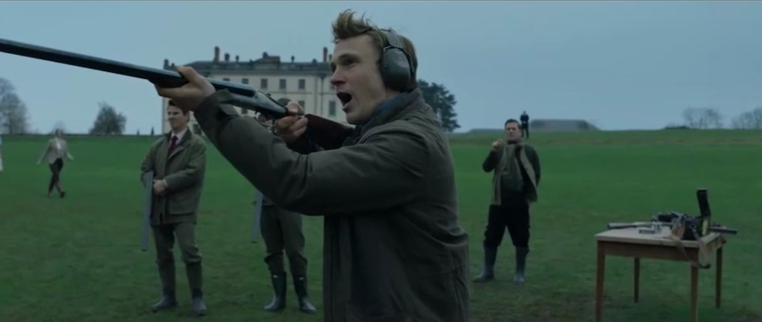
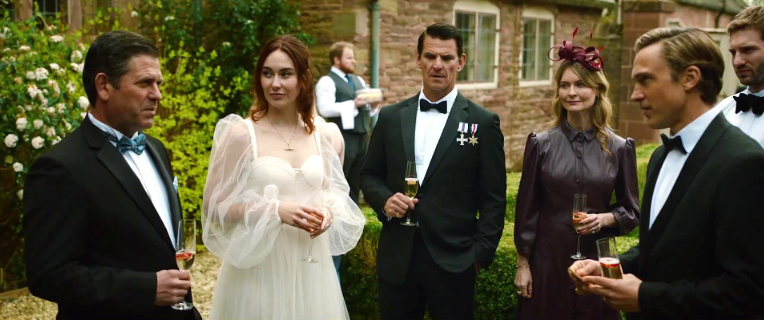
Kennedy carefully structures the narrative so that power constantly shifts hands within the room. Every character becomes a manipulator at some point. Every conversation hides layered motivations. Every accusation conceals another agenda waiting underneath it. The screenplay plants clues, behavioral tells, and emotional inconsistencies with enough confidence that attentive viewers can piece together the larger machinery at work without ever feeling cheated by the eventual reveals.
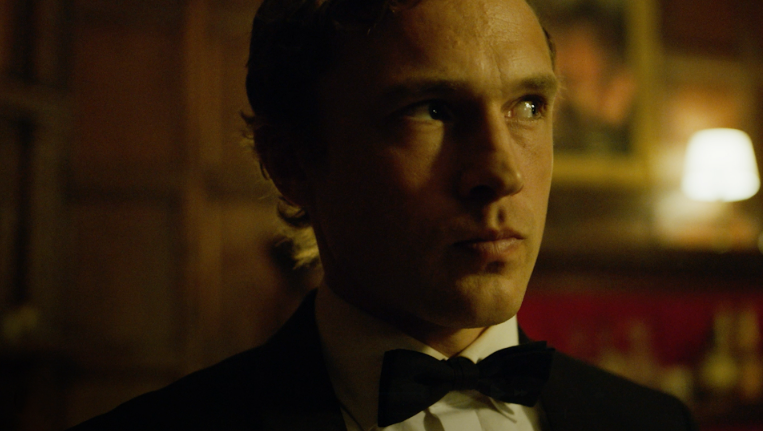
One of the film’s smartest creative decisions is its casting of William Moseley as Caleb. Kennedy cleverly weaponizes audience familiarity with Moseley’s inherently earnest screen persona — still associated by many viewers with the noble innocence of Peter Pevensie from The Chronicles of Narnia — to create immediate subconscious trust. Caleb initially appears to be the emotional center of the film: fresh-faced, sympathetic, and trapped inside a nightmare orchestrated by wealthier, uglier forces around him.
That perceived innocence becomes one of the film’s most effective pieces of camouflage.
Moseley delivers an excellent performance balancing emotional sincerity with growing unease as Caleb’s carefully constructed reality begins fracturing around him. Even as the character’s situation grows increasingly dangerous, Moseley never overplays panic or hysteria, grounding Caleb in a nervous restraint that quietly keeps audiences emotionally tethered to him.
The ensemble surrounding him is equally strong. Alexander Lincoln nearly steals the film outright as Jackson, a snark-fueled powder keg masking deep insecurity beneath swagger, sarcasm, and alcohol. Lincoln injects the film with an unstable unpredictability that keeps scenes constantly alive. Jackson may posture like an alpha personality, but beneath the bravado is a desperate need for validation and relevance that makes him oddly human amid the surrounding moral decay.
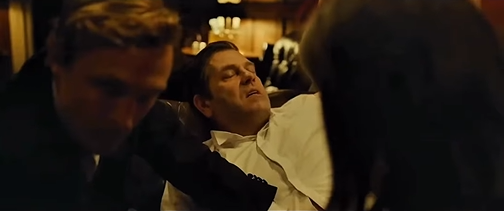
Meanwhile, Patrick Baladi delivers one of the film’s most physically impressive performances as Robert, whose deteriorating condition gradually transforms him into a visual symbol of the families’ collapsing illusion of control. Baladi’s increasingly pallid, corpse-like appearance — aided tremendously by the film’s superb makeup work — becomes hauntingly effective as characters hover around him like mourners at an open casket, waiting for inevitable death while simultaneously calculating how his downfall might benefit them.
Visually, Kennedy and cinematographer Lorenzo Levrini demonstrate remarkable confidence for a first feature. Rather than relying on hyperactive editing or excessive close-ups to manufacture tension, the film embraces spatial storytelling and environmental psychology. Much of the narrative unfolds within a single study and bar room dominated by dark wood paneling, heavy draperies, deep shadows, and centuries of patina. The room itself becomes a living extension of the story’s emotional suffocation.
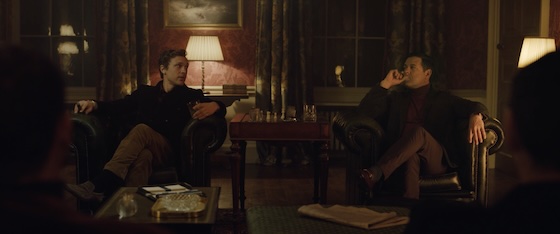
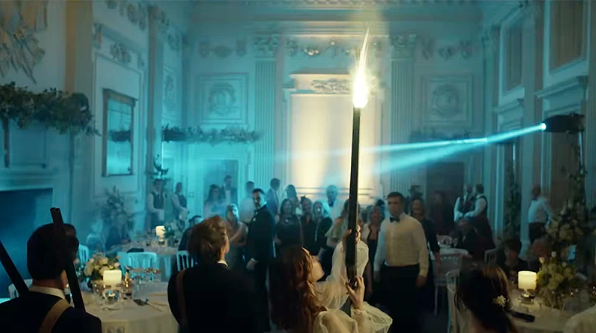
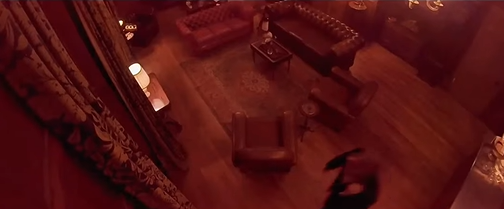
At the film’s opening, the space initially appears almost stately beneath harsh daylight filtering through uncovered windows. But as the night progresses and secrets begin surfacing, Kennedy gradually transforms the same room into something claustrophobic, predatory, and psychologically oppressive. Reds, blacks, greens, and sickly golds seep deeper into the visual palette while the camera increasingly compresses the characters within the frame.
Levrini’s camera work is especially effective because it refuses visual repetition. Every return to the room feels subtly different, offering new angles, new emotional alignments, and new spatial dynamics. Characters crawl across floors, emerge from shadows like assassins entering a duel, or hover ominously around wounded bodies as if death itself has already entered the room ahead of them.
Kennedy’s staging often evokes the tension of a Western standoff transplanted into aristocratic Gothic noir. Mid-shots and layered group compositions allow the audience to study shifting power relationships within the frame rather than isolating characters through constant extreme close-ups. That restraint gives the film a richer sense of ensemble geometry and mounting paranoia.
Equally effective is the film’s use of “The Wolf,” whose infrared surveillance imagery and distant observation create the sensation that the audience itself is participating in the voyeuristic unraveling of the families’ secrets. The Wolf is not simply an assassin hovering outside the estate. He becomes another set of eyes watching privilege rot from within.
Editor Gustav Lindquist deserves enormous credit for maintaining momentum and tonal escalation within the contained setting. The pacing never stagnates, with each new revelation deepening the film’s psychological tension rather than merely extending plot mechanics.
The sound design and score by Caleb Blood further reinforce the film’s mounting pressure. Subtle ticking clock motifs embedded into the soundscape create a constant sense of urgency, reminding viewers that time is steadily collapsing around the characters. Kennedy smartly uses the house itself as part of the sonic environment, allowing creaks, silence, distant movement, and oppressive stillness to become part of the film’s emotional rhythm.
And then comes the glorious third act.
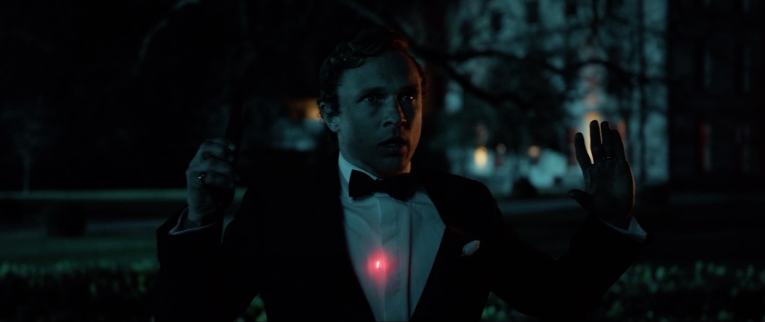
Without spoiling the film’s biggest turns, Kennedy delivers a wildly entertaining escalation that shifts from simmering psychological warfare into outright armed confrontation. Particularly satisfying is the way the film gradually transfers power away from the blustering patriarchal figures toward the women of the families, who ultimately prove far more decisive, ruthless, and emotionally clear-eyed than the men surrounding them.
One standout sequence, in which bloodied family members armed with rifles descend into the brightly lit wedding reception area after spending much of the film trapped inside the darkened study, perfectly captures Kennedy’s understanding of visual tonal contrast. The sudden explosion of light, space, and chaos feels simultaneously absurd, cathartic, and strangely inevitable.
What makes AN ENEMY WITHIN work so well, however, is that Kennedy never loses control of the film’s tone. The movie balances dark humor, suspense, emotional dysfunction, and escalating violence without collapsing into self-parody. There is genuine craft discipline underneath the film’s wicked entertainment value.
For a debut narrative feature produced under the limitations of an independent budget — and the chaos of COVID-era production disruptions — Kennedy displays an impressively assured visual voice and a sophisticated understanding of thriller mechanics, ensemble blocking, and thematic construction.
Most importantly, AN ENEMY WITHIN understands one of the fundamental truths of great chamber thrillers: the walls are never what trap the characters. Their own greed, fear, resentment, and self-delusion locked the doors long before the audience arrived.
Written and Directed by John Michel Kennedy
Cast: William Moseley, Patrick Baladi, Kim Spearman, Alexander Lincoln, Tristan Gemmill, Kate Isset, Toyin Omari-Kinch, Frances Wilding, Mollie Dorman, Harrison Daniels
by debbie elias, 05/04/2026
AN ENEMY WITHIN is available on Digital and On Demand on May 15th.