Memory is a curious thing. It rarely returns to us chronologically or completely. A face. A photograph. The quality of light in a room. A song. A touch never made. A goodbye we wish had gone differently. Decades may pass, but suddenly one image brings everything rushing back with a clarity that makes yesterday feel like today.
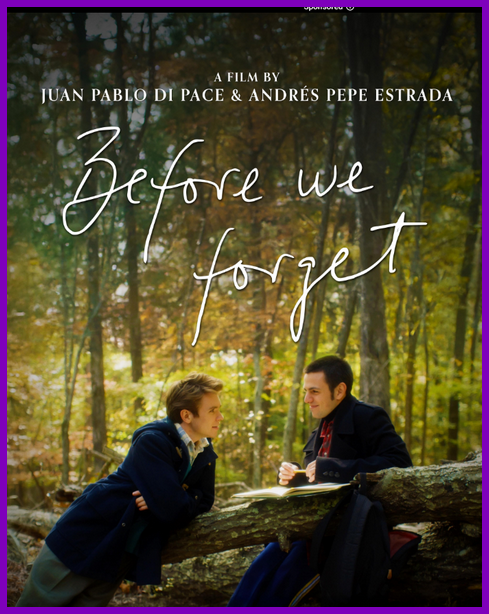
That is the emotional and cinematic language of BEFORE WE FORGET, an exquisite and deeply affecting feature directorial debut from Juan Pablo Di Pace, co-written, co-directed, and co-edited with Andrés Pepe Estrada. More than a story about remembering first love, this is a film about how memory behaves—how it flashes, repeats, idealizes, withholds, and reshapes itself as we do.
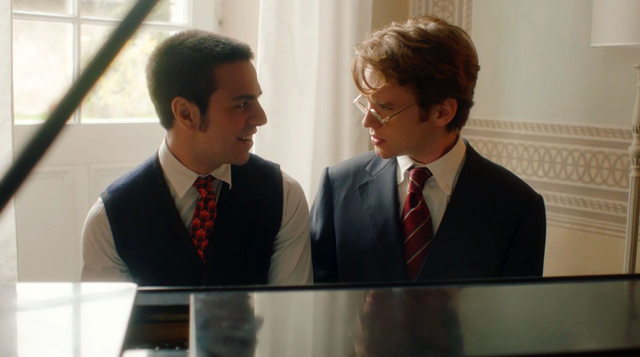
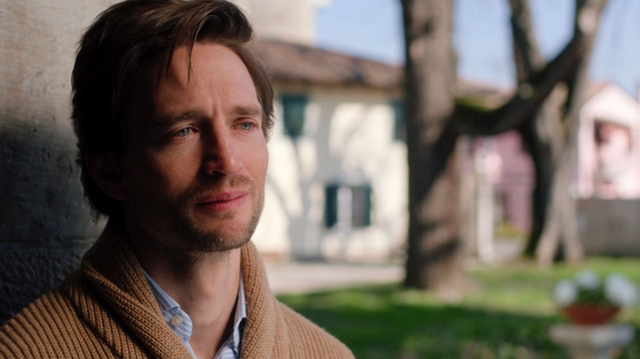
Di Pace stars as Matias, an Argentinian filmmaker struggling to complete a film rooted in his own adolescence at an international boarding school in Italy. His work becomes an excavation as images of his younger self, beautifully played by Santiago Madrussen, pull us into the friendships, family, and emotional awakening of a formative time in his life. At the center of those memories is Alex, played in youth by an outstanding Oscar Morgan and in adulthood by August Wittgenstein.
But Matias isn’t content simply to remember. There is a sense that through his unfinished film he is trying to re-enter that time—to experience it again, perhaps even reshape what happened within it. And therein lies the rub. We can revisit memory. We can reinterpret it. We can even edit it. But we cannot live it again.
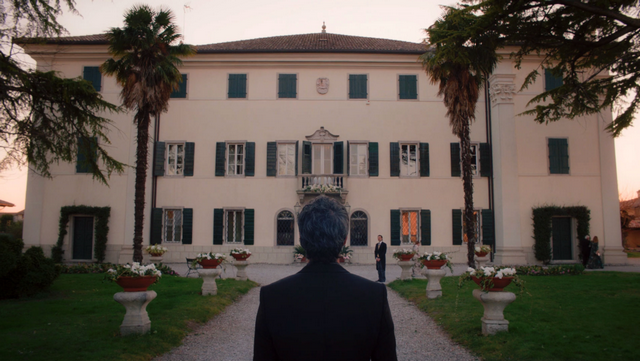
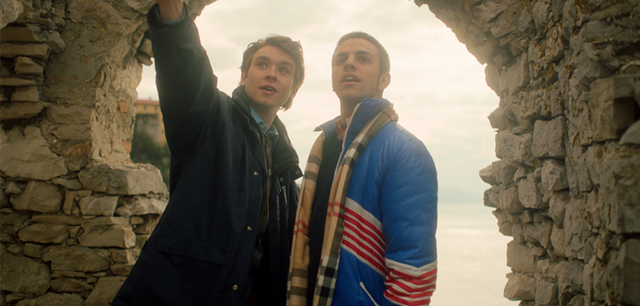
Cinematographer Devin Doyle gives that idea extraordinary visual expression. The past is alive with light and color, particularly during the boarding-school years, where exteriors open onto woods, beaches and the magnificent natural light of northern Italy. There is an almost tactile softness to these images, befitting memories that have been handled and revisited countless times.
The present is another matter.
Here the palette cools and desaturates. Framing tightens. Matias’ world becomes grayer and increasingly claustrophobic, particularly as he sits surrounded by the images of a past he is attempting to turn into a finished film. Past and present don’t merely look different; they feel different. And gradually, almost imperceptibly, those visual languages begin to move toward one another.
That evolution is essential because BEFORE WE FORGET isn’t constructed as a simple then-and-now narrative. Di Pace and Estrada edit memory according to emotion rather than chronology. Photographs become portals. Images trigger other images. Faces bridge decades. Fragments appear and disappear, sometimes acquiring different meaning when we encounter them again. The result is less like watching someone recount his past than being inside his head while he remembers it. And faces matter enormously here.
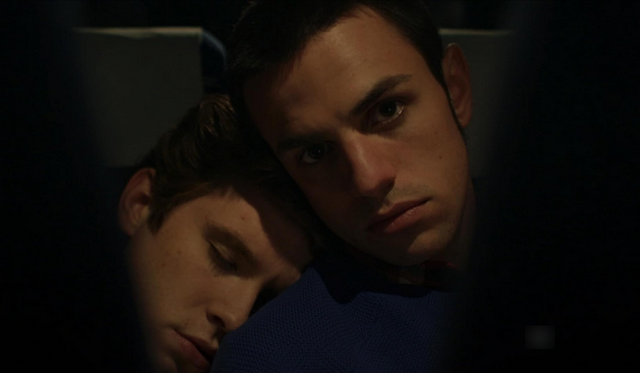
Doyle’s camera repeatedly finds them in close-up, allowing expressions and silence to carry what dialogue deliberately leaves unsaid. This becomes particularly important with young Alex. Oscar Morgan gives a beautifully restrained performance, letting us watch Alex struggle with feelings he cannot—or will not—articulate. A look held too long, discomfort at an unexpected intimacy, jealousy that arrives before anyone has named it, the physical hesitation between moving closer and pulling away—Morgan allows Alex’s internal life to register without explaining it.
Madrussen complements him beautifully as young Matias, more open in his observation of the world and increasingly aware of emotions he doesn’t yet fully understand. Together they create the tentative, exhilarating and sometimes painful uncertainty of first love without romanticizing away its confusion.
And Di Pace wisely allows silence to remain silence.
That sensitivity carries into the family relationships, particularly with Matias’ mother, Roma, played magnificently by Araceli González. Her performance is award-worthy. There is a scene following Christmas involving Roma, Matias and a car. That is all you’re getting from me.
It is the emotional heart of BEFORE WE FORGET, and González is simply breathtaking. Nothing is pushed. Nothing is played for easy tears. A mother sees what her son cannot yet say, and González allows understanding, concern, love and acceptance to move across her face with devastating simplicity. Tissues are advisable.
The film also understands that memory isn’t exclusively visual. Sound has memory, too.

Ambient sounds of school life, voices, nature, the beach and a bonfire create an aural geography beneath the images, while composers Dorian Dionisi, Kjartan Holm and Sindri Mar Sigfusson provide music that moves between piano, strings, symphonic textures and a recurring tango motif without dictating emotion. The score doesn’t tell us when to feel. It seems instead to emerge from Matias’ recollections, sometimes carrying us into a memory before the images have fully done so. That restraint proves invaluable because this is material that could very easily have tipped into sentimentality. It never does.
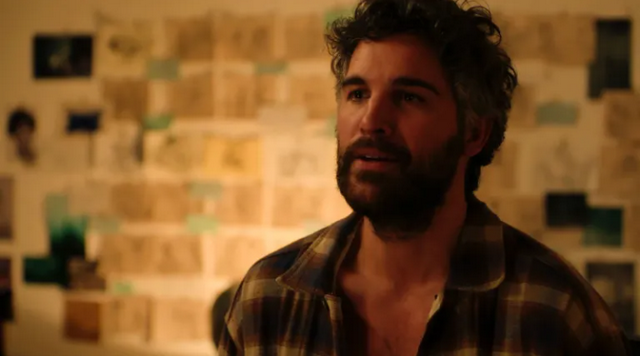
Even as Matias’ unfinished film becomes increasingly entangled with his unresolved past, Di Pace and Estrada resist manufacturing grand revelations merely to provide answers. BEFORE WE FORGET is more interested in the things people couldn’t say when they were young, the things they may understand differently with age, and the uncomfortable truth that memory preserves feeling far more faithfully than fact.
Krista Kosonen as adult Kathrine and Julia Bender as her younger counterpart add another dimension to that emotional landscape, while the adult Alex allows the film to confront perhaps its most important question: What happens when the person preserved in memory becomes a flesh-and-blood human being again? Because the Alex who has lived in Matias’ mind for decades cannot possibly be identical to the man time has created. Nor is Matias the boy who first loved him.
And this is where BEFORE WE FORGET becomes something richer than a story about lost love. It becomes a story about accepting the distance between memory and reality without diminishing the importance of either.
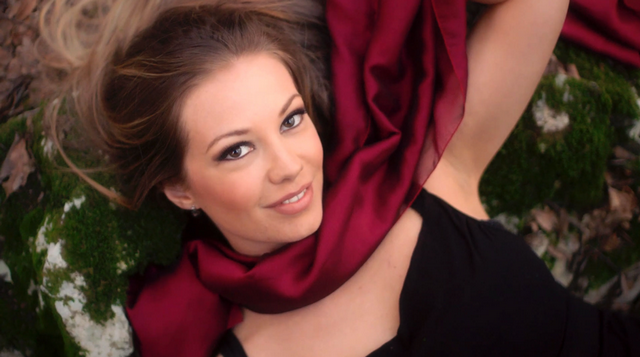
Di Pace is particularly effective here as an actor. There is an appealing stillness to his adult Matias, a man who has spent so much time manipulating images of the past that he has allowed those images to hold him in place. When his world finally begins opening again, Di Pace doesn’t announce the change. We see it incrementally—in his face, his body, and, importantly, in the film’s visual language.
One of the loveliest ideas comes late in the film when Matias, who has spent so much time looking at old photographs and editing old images, begins making new ones. It is a deceptively simple gesture. But after a film built around the impossibility of recreating the past, there is something quietly profound about turning a camera toward the present.
Di Pace and Estrada show remarkable assurance for first-time feature directors, but perhaps even more impressive is their restraint. They trust Doyle’s imagery. They trust their actors. They trust the editing. They trust sound and music. And most importantly, they trust us to understand what hasn’t been explicitly stated.
BEFORE WE FORGET understands that memory isn’t a recording. It is something living, changing as we change, colored by longing, regret, joy, and everything we’ve learned since the moment itself disappeared.
We can’t go back. We can’t re-edit life until the ending becomes the one we wanted. But sometimes looking back finally allows us to see what was there all along. And then, perhaps, we can make a new image.
Co-directed, co-written, and co-edited by Juan Pablo Di Pace and Andres Pepe Estrada
Cast: Juan Pablo Di Pace, Santiago Madrussen, August Wiggenstein, Oscar Morgan, Krista Kosonen, Julia Bender, Araceli González
by debbie elias, 09/20/2026
BEFORE WE FORGET is available on October 20th on AppleTV, Prime Video, and other streaming platforms.