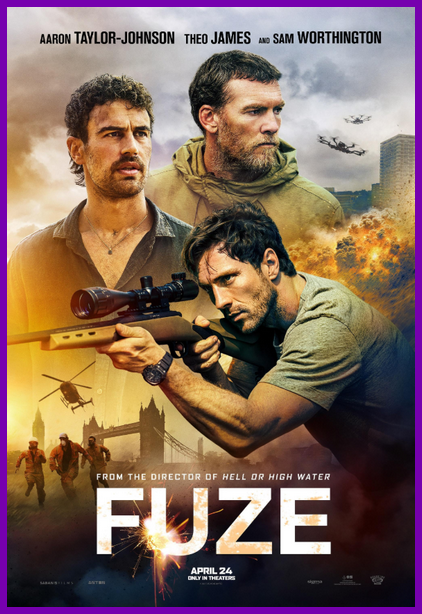
There’s a moment early in FUZE where you think you’ve got it figured out.
You’re watching closely. You’re tracking the players. You’re clocking the details. You’re ahead of the game.
And then—quietly, efficiently—David Mackenzie pulls the rug out from under you.
And he keeps doing it.
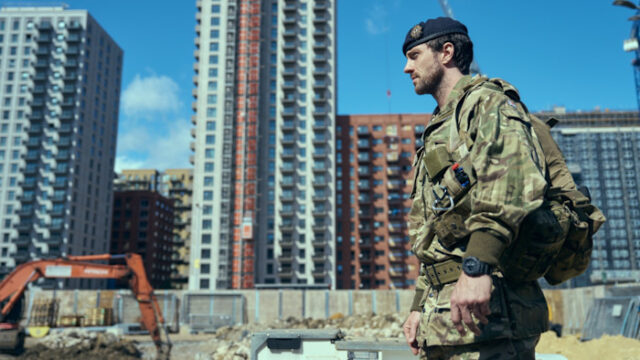
Executed with razor-sharp precision, FUZE is a tightly coiled, high-wire heist thriller that unfolds like a cinematic shell game—constantly shifting perspective, redirecting attention, and daring audiences to keep up. Built around the discovery of an unexploded World War II bomb in London, the film uses its premise not just as a ticking clock, but as the perfect cover for a meticulously orchestrated bank heist.
What makes FUZE so effective isn’t just the plot—it’s the execution.
Mackenzie, working once again with editor Matt Mayer, crafts a relentless rhythm that drives the film forward with near-surgical intensity. With over 300 scenes packed into just over 90 minutes, the editing is lean, jagged, and deliberately disorienting—in the best possible way. Cuts come just before you expect them, pushing the narrative forward while subtly denying the audience time to fully process what they’ve seen.
Even after the bomb detonates—and yes, so much for defusing—the tension doesn’t dissipate. It escalates.
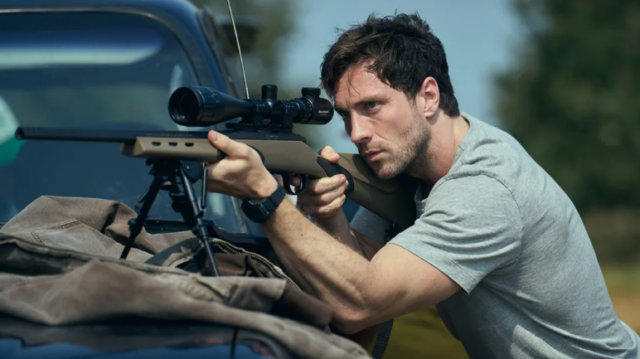
Visually, Mackenzie reunites with cinematographer Giles Nuttgens to deliver a masterclass in controlled realism. Eschewing flashy wides for tightly composed two-shots and close-ups, the film keeps audiences focused on the mechanics of the moment—bomb disposal procedures, vault breaches, tactical movements—while quietly obscuring the larger truth hiding in plain sight.
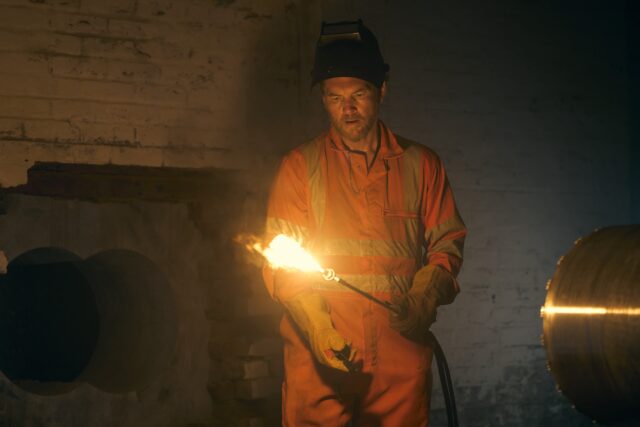
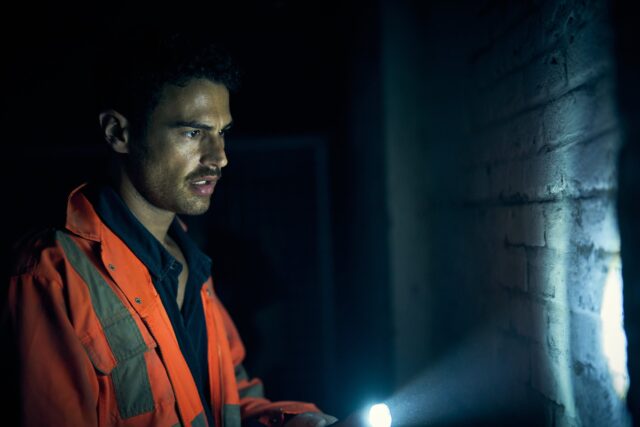
Lighting plays a critical role here. From the reflective gleam of safety deposit boxes to the practical illumination of flashlights and work lamps in subterranean spaces, every frame feels tactile, grounded, and immediate. Even underground, visibility is never sacrificed—because the trick isn’t hiding the action.
It’s hiding the intent.
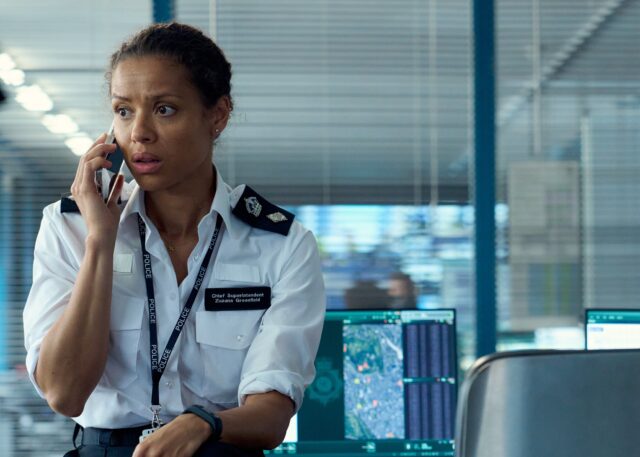
Performance-wise, the ensemble delivers across the board. Aaron Taylor-Johnson’s Major Tranter exudes controlled authority with just enough edge to raise suspicion, while Gugu Mbatha-Raw anchors the film as a sharp, unflinching Chief Superintendent whose instincts cut through the chaos.
A standout turn comes from Alexander Arnold as a young corporal whose quiet skepticism becomes one of the film’s most compelling through-lines—his simple observation about a “shiny” bomb speaking volumes in a world built on deception.
On the criminal side, Theo James brings a roguish physicality to Karalis, while Sam Worthington’s X operates with calculated menace. Their dynamic—equal parts collaboration and distrust—adds an extra layer of unpredictability to an already volatile situation.
And then there’s the score.
Composed by Tony Doogan, the music builds like a tightening coil—minimalist, rhythmic, and relentless. Drawing inspiration from Terry Riley’s In C, the score pulses beneath the action, amplifying tension without ever overwhelming it.
But perhaps the film’s greatest sleight of hand is tonal.
After ratcheting up pressure to near-breaking point, FUZE delivers a final act that not only recontextualizes what we’ve seen—but punctuates it with a wickedly satisfying comedic release. It’s unexpected, earned, and—frankly—hilarious. In other words, stay for the credits.
Yes, this film is that good.
Smart, stylish, and relentlessly entertaining, FUZE is a razor-sharp, high-wire thriller. A masterclass in tension, misdirection, and momentum that doesn’t just keep you guessing. It keeps you looking in all the wrong places until the very last frame.
Directed by David Mackenzie
Written by Ben Hopkins
Cast: Aaron Taylor-Johnson, Theo James, Gugu Mbatha-Raw, Elham Ehsas, Honor Swinton Byrne, and Sam Worthington
by debbie elias, 04/13/2026
FUZE is in theatres on April 24, 2026.