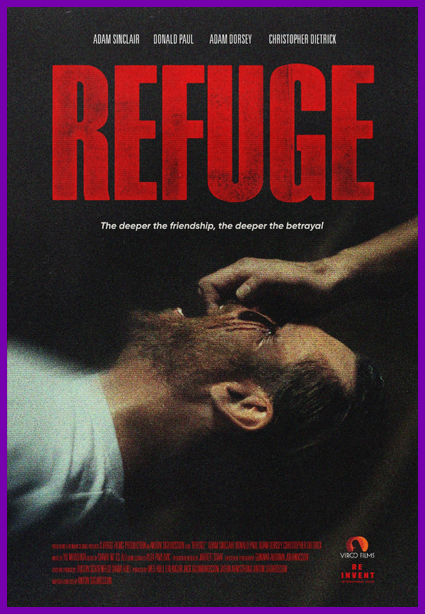
There’s nowhere to run in REFUGE. No escape hatch. No relief valve. Just four men, one remote cabin, and a past that refuses to stay buried.
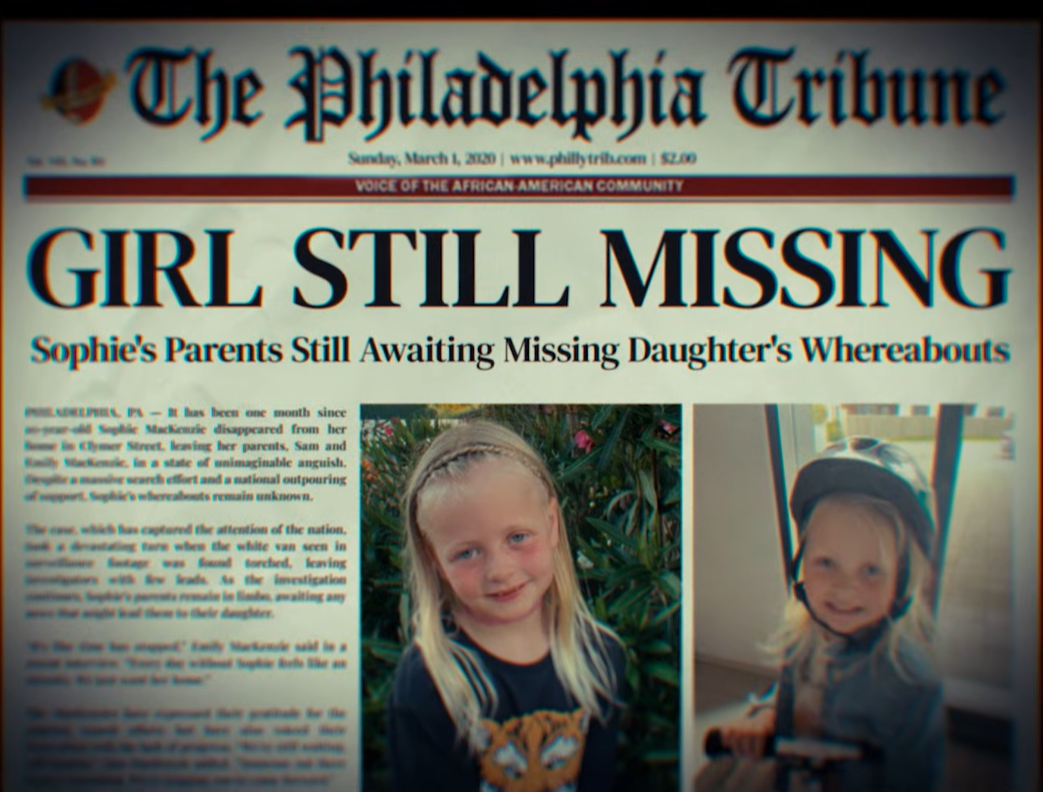
Writer/director Anton Sigurdsson constructs a tightly wound psychological thriller that begins with quiet unease and steadily tightens the screws until it snaps—hard. What starts as a reunion among longtime friends quickly devolves into something far more volatile when Sam (Adam Sinclair), still reeling from the disappearance and presumed death of his young daughter, turns suspicion inward. Someone knows something. Someone is lying. And in that cabin, trust becomes the first casualty.
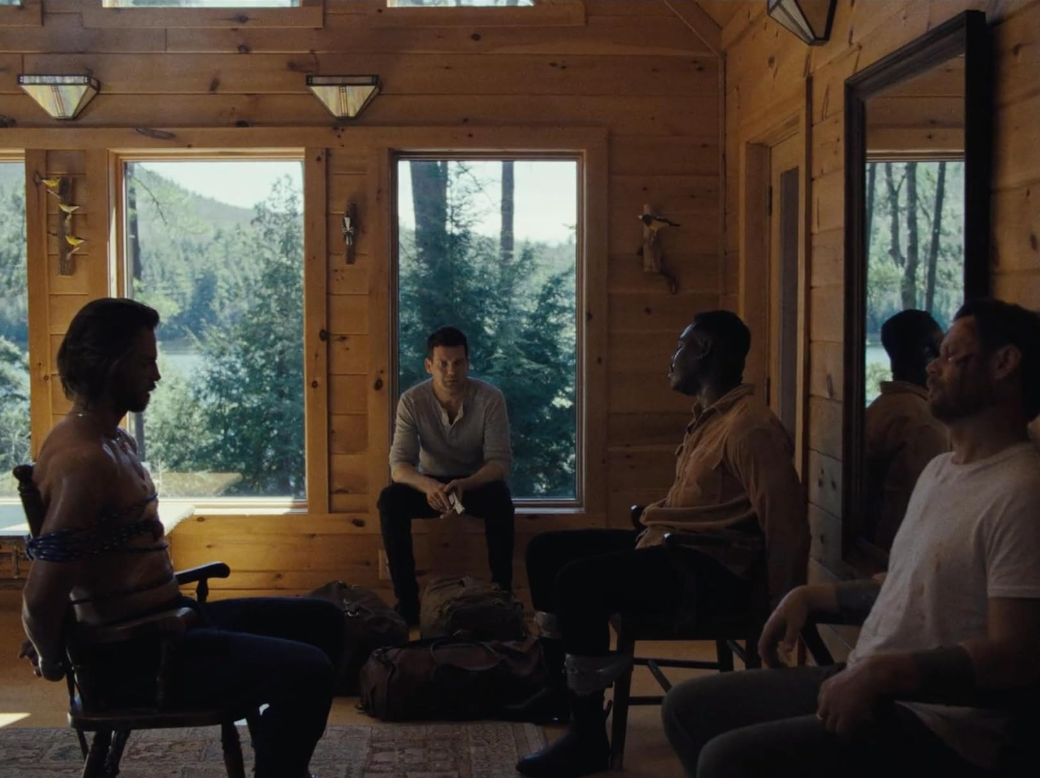
Built as a four-hander and confined almost entirely to a single location, REFUGE thrives on the tension generated between its characters. These are not easy friendships. There’s history here—fractured, uncomfortable, and increasingly suspect. As accusations begin to surface, each man—Mike (Adam Dorsey), Barry (Donald Paul), and Jay (Christopher Dietrick)—casts a shadow of doubt on himself, whether intentionally or not. It’s a fascinating inversion of expectation; this kind of emotional volatility is more commonly explored in female-driven ensembles, but here, Sigurdsson exposes the fragile underbelly of male friendship with unnerving precision.
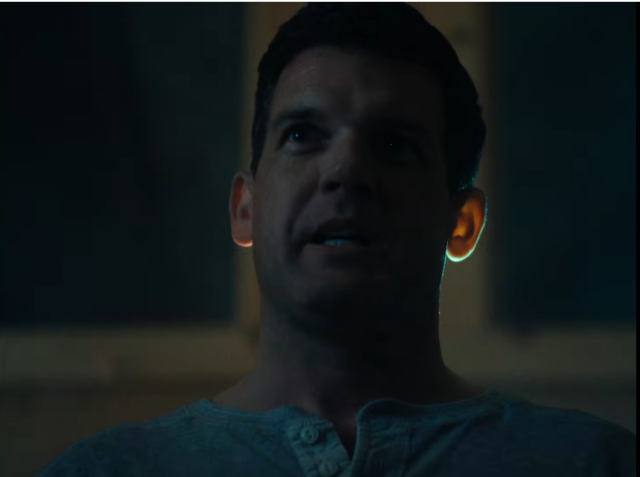
At the center of it all is Sinclair’s Sam, a father desperate for answers, for closure—for something. His grief is palpable, but so too is his volatility. Sigurdsson wisely never overplays the hand; instead, he allows Sam’s emotional state to simmer, to boil, to lash out in unpredictable waves. The result is a character who is as sympathetic as he is dangerous.
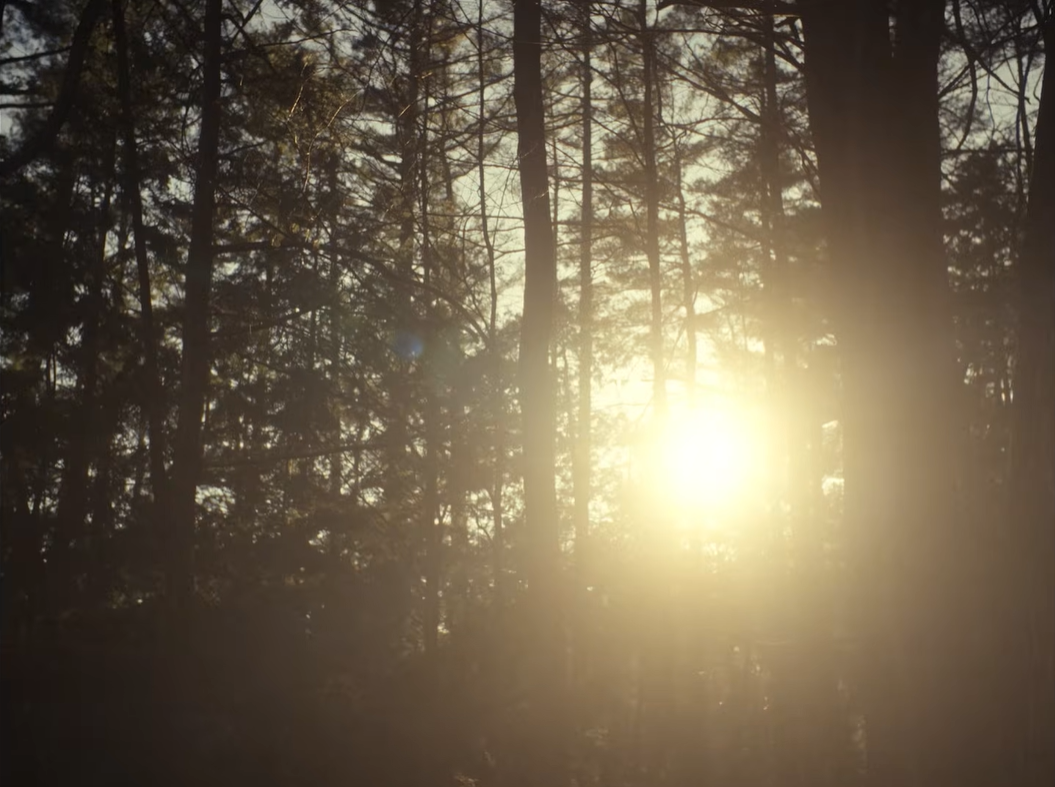
The film’s single-location structure becomes one of its greatest strengths. The cabin is not just a setting—it’s a trap. Multi-leveled, with its now-infamous basement, the house becomes a physical manifestation of the characters’ psychological descent. Secrets rise to the surface upstairs while darker truths lurk below, waiting to be dragged into the light. The surrounding wilderness—glimpsed through windows or at the edge of the frame—offers no comfort, only the suggestion that whatever happened to Sam’s daughter could just as easily remain hidden forever.
Visually, REFUGE is striking. Sigurdsson and cinematographer Gunnar Audum Johansson employ a 4:3 aspect ratio that compresses the frame, amplifying the claustrophobia. Extreme close-ups force us into the characters’ personal space, while Dutch angles and inventive camera placement subtly disorient. The camera doesn’t just observe—it implicates. It corners. It traps.
And then there’s the sound.
Often overlooked in films of this scale, the sound design in REFUGE is nothing short of exceptional. The house breathes. Floors creak with purpose. Voices carry differently depending on where you are—especially between the basement and the upper floors—creating an acoustic geography that mirrors the film’s emotional terrain. Sigurdsson uses sound not merely as atmosphere, but as storytelling, allowing it to shift between objective reality and subjective experience, pulling the audience deeper into the psychological labyrinth.
But make no mistake—REFUGE is not a polite exercise in tension.
It is brutal. It is bloody. And it is unflinching.
As the film progresses, the violence escalates in both intensity and intimacy. This is not stylized, distance-driven brutality; it is close, tactile, and often difficult to watch. And yes—duct tape plays a starring role. Over the years, duct tape has become something of a cinematic shorthand for restraint, control, and impending harm, and Sigurdsson leans into it here with unapologetic gusto. It’s not just a prop—it’s a presence, binding not only bodies, but the film’s escalating sense of dread.
Yet even amid the darkness, Sigurdsson injects moments of sharply observed, dark humor—often through Jay, whose nervous energy and incessant chatter both relieve and heighten the tension. It’s a tonal balancing act that doesn’t always play by American rules, but that unpredictability only adds to the film’s edge.
If there is a caveat, it lies in the very nature of the film’s construction. A single-location, dialogue-driven thriller lives or dies by its pacing, and there are moments where the narrative lingers perhaps a beat too long. But even then, Sigurdsson uses those pauses to deepen character or subtly shift dynamics, making them feel more like calculated breaths than missteps.
And then there’s the ending.
Without venturing into spoiler territory, it’s enough to say that Sigurdsson doesn’t take the easy way out. The film’s final turn is as unsettling as it is provocative, leaving audiences to wrestle with the same questions that haunt Sam from the very beginning. Closure, it seems, is not always clean. Nor is it guaranteed.
In the end, REFUGE is a film about grief, about suspicion, and about the dangerous spaces in between truth and perception. It’s a tightly controlled descent into paranoia and pain, elevated by strong performances, confident direction, and a commitment to craft that is evident in every frame—and every sound.
And if nothing else, it may forever change the way you look at a roll of duct tape.
Written and Directed by Anton Sigurdsson
Cast: Adam Sinclair, Adam Dorsey, Donald Paul, Christopher Dietrick
by debbie elias, 03/22/2026
REFUGE is available on Digital and On Demand