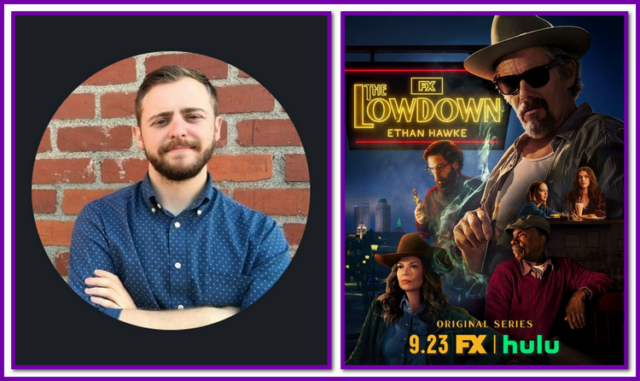
For editor PATRICK TUCK, the secret to cutting THE LOWDOWN is surprisingly simple.
“The plot is secondary.”
That philosophy may sound almost radical in an era of heavily serialized mystery television dominated by convoluted twists, puzzle-box plotting, and algorithmic cliffhangers. But for Tuck and creator/director Sterlin Harjo, the emotional engine driving THE LOWDOWN is not the mystery itself. It is the people colliding within it.
“We always put the characters first,” Tuck explains. “The plot brings our characters together, and we become attached to those people, especially Lee and Francis.”
That character-first philosophy ultimately defines every aspect of the show’s editorial language. While THE LOWDOWN operates within the framework of a Tulsa-set noir mystery involving corruption, white supremacy, stolen art, and powerful local elites, the series consistently prioritizes emotional rhythm, tonal unpredictability, and character chemistry over procedural formula.
The result is one of the most distinctive tonal balancing acts currently on television.
For Tuck, that tonal confidence began with the pilot episode — one that he and Harjo spent an unusually long six months refining before the remainder of the season moved forward.
“We really put the effort into the pilot,” Tuck says. “It was a labor of love.”
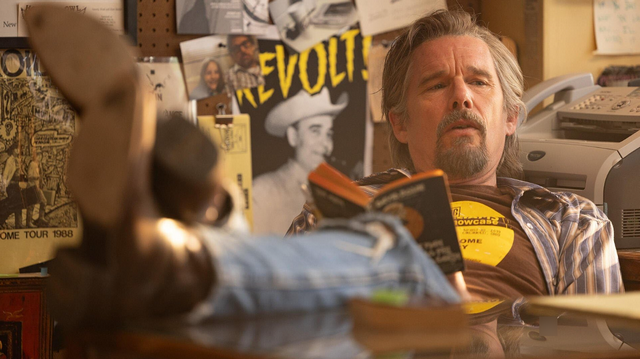
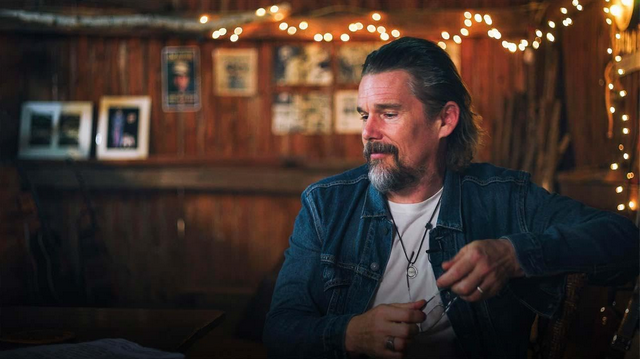
That extended editorial process became essential in establishing the emotional grammar of the series, particularly in shaping bookstore owner and investigative journalist Lee Raybon, played by Ethan Hawke, into the audience’s emotional anchor.
“We wanted to make sure all our motivations were centered on setting up Lee as the driving force and making sure the audience could fall in love with him,” Tuck says.
Fortunately, Tuck notes, Hawke made that task relatively easy.
“It’s Ethan Hawke,” he laughs. “He brings everything to the table every take.”
But creating the unique rhythm of THE LOWDOWN required more than simply constructing an engaging protagonist. Harjo and Tuck intentionally resisted the rigid structural formulas common to procedural television.
“Every episode was focused on those characters,” Tuck explains. “The formula shifts as the season goes on.”
Ironically, Tuck believes that refusal to lock the show into repetitive structure became the show’s greatest strength.
“That’s actually the formula for success,” he says. “It allows the show to grow and dive into different styles and textures and rhythms.”
That flexibility becomes apparent throughout the season as the series seamlessly moves between dark comedy, noir mystery, emotional intimacy, absurdist chaos, and outright manic energy without ever losing tonal cohesion.
Transitioning from Harjo’s acclaimed half-hour series Reservation Dogs into an hour-long drama also presented new editorial challenges for Tuck himself.
“This was my first time cutting an hour-long show,” he admits.
The biggest adjustment, surprisingly, was not pacing but thematic management.
“There’s so much more to keep track of,” Tuck says. “I feel like every good episode of television should distill down into one main theme. In a half-hour, you find that much faster. In an hour-long, it takes more stamina to get to the point where you know exactly what the episode is saying.”
That process of distillation became particularly important on a series juggling multiple storylines, tonal shifts, and sprawling ensemble dynamics. Tuck credits fellow editors Dane McMaster and Gina Sansom for helping expand the stylistic possibilities of the show throughout the season.
“They brought their own flair to the table and really expanded what the show could be,” he says.
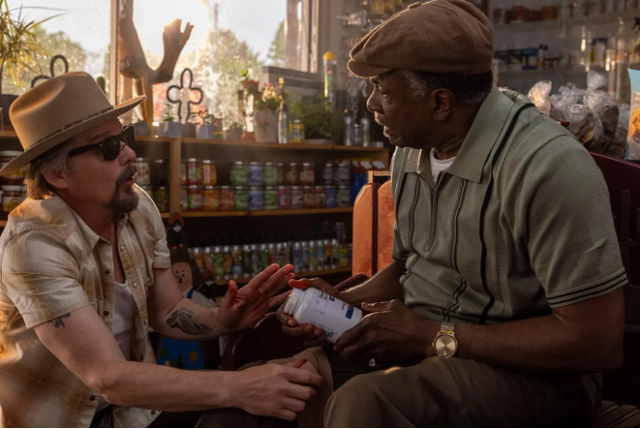
One of the series’ standout strengths is its ability to balance tightly controlled editorial precision with performances that feel loose, spontaneous, and improvisational — particularly in scenes involving Hawke and Keith David, whose chemistry as Lee and Marty became one of the show’s defining elements.
Tuck describes Hawke’s process as remarkably dynamic from take to take.
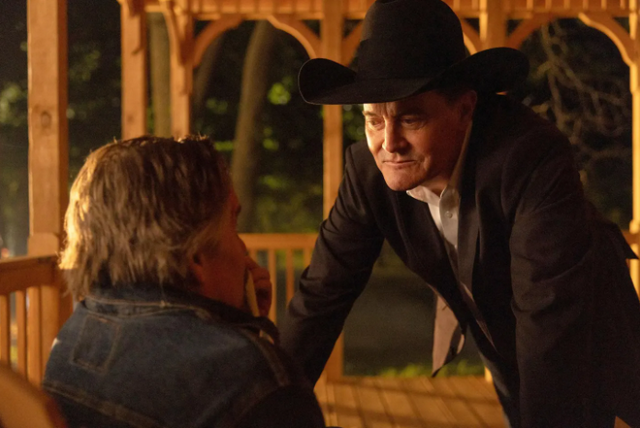
“Ethan will do the manic Lee take where he’s just an insane person,” Tuck says with a smile. “Then he’ll do the calmer version, and then a middle-ground version between the two.”
That range of tonal performance gave Tuck enormous flexibility in sculpting Lee’s unstable but deeply charismatic personality throughout the season.
“It’s fun to swap between them,” Tuck explains. “That shifting mentality makes Lee feel a little unstable.”
In turn, Keith David’s wonderfully exasperated reactions as Marty become an essential counterbalance to Lee’s chaos.
“He’s so good at playing the straight man who still has his own quirks,” Tuck says.
That chemistry is perhaps most evident in the now-memorable van sequence in Episode Six, “Old Indian Tricks,” where Marty, after being shot, reacts with escalating frustration to Lee’s panicked mania. According to Tuck, scenes like that often relied less on excessive coverage and more on finding the perfect emotional seams between performances.
“There wasn’t a ton of coverage,” Tuck says. “But Ethan and Keith are crushing every performance.”
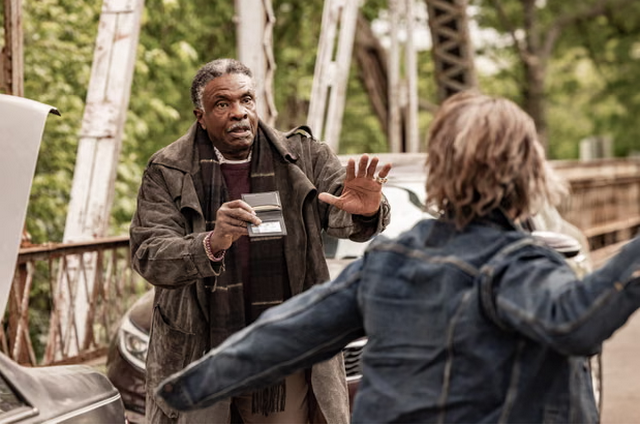
By contrast, larger sequences like the chaotic funeral home melee in Episode Two offered enormous editorial freedom due to the sheer amount of coverage and movement captured by the production team.
“That scene was such a joy to cut,” Tuck says. “There were so many characters to clock and so many moving pieces.”
The kinetic energy of the funeral sequence — complete with Lee screaming literary quotes while chaos erupts around him — became one of the season’s defining tonal showcases.
“It becomes a fun ride,” Tuck says. “A soup of kinetic energy.”
Tuck also credits Harjo’s relaxed and highly collaborative directing style for fostering the creative environment necessary to sustain the show’s unusual tonal balance.
“Sterlin is extremely collaborative,” Tuck says. “He’s never a ‘this is an emergency’ kind of person.”
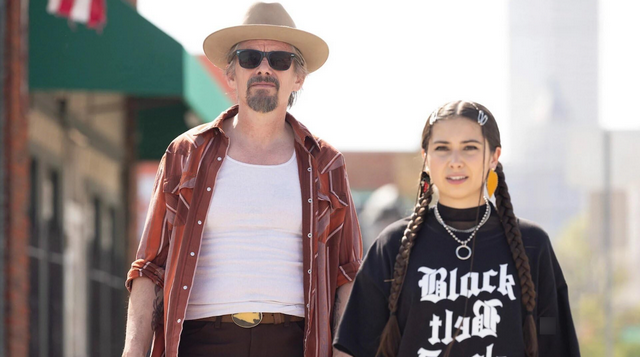
That atmosphere extended from the editing room onto the set itself, where cinematographers Mark Schwartzbard, Chris Norr, and Steadicam operator Joe Hernandez contributed heavily to the show’s dynamic visual identity.
Importantly, Tuck views editing not as an isolated technical craft, but as an act of orchestration — bringing together the collective voices of every department into a unified emotional experience.
“The edit is about bringing all those voices together to make a singular voice,” he says. “That’s really what makes this job special.”
Music became an especially crucial part of that process.
Tuck worked closely with composer JD McPherson and music editor/producer Emily Kwong throughout the season, often integrating temp music and early compositions directly into the editorial workflow long before final scoring.
“The edit changes to match the score, and the score changes to match the edit,” Tuck explains.
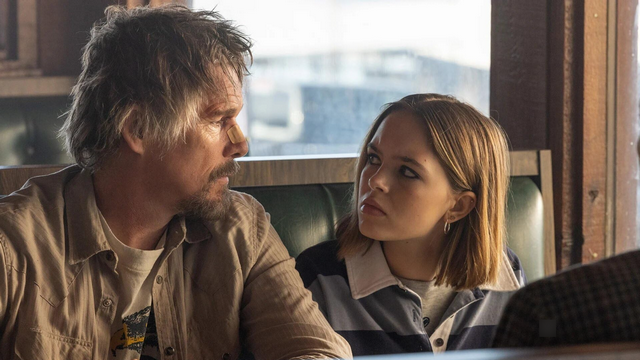
That collaborative musical evolution helped shape what Tuck calls the show’s defining sonic identity.
“JD really found the Tulsa noir voice,” he says.
That “Tulsa noir” sensibility permeates the entire series — a fusion of mystery, melancholy, humor, instability, and regional texture that gives THE LOWDOWN a tone unlike anything else currently on television.
Tuck points to the final episode as one of the season’s most satisfying editorial challenges, particularly as the series circles back to the opening mystery and recontextualizes events audiences thought they already understood.
“We wanted it to feel like we discovered it with Lee,” Tuck says, “but also like we knew it all along.”
That delicate balancing act between revelation, memory, and emotional perspective became part of the show’s larger editorial philosophy: allowing the audience to feel immersed inside the psychological rhythm of the characters rather than simply processing plot information.
Even technically, Tuck approaches editing with a flexible philosophy. Though he primarily cuts on Avid Media Composer, he views software simply as another storytelling tool rather than a defining creative element.
“The storytelling should always come first,” he says.
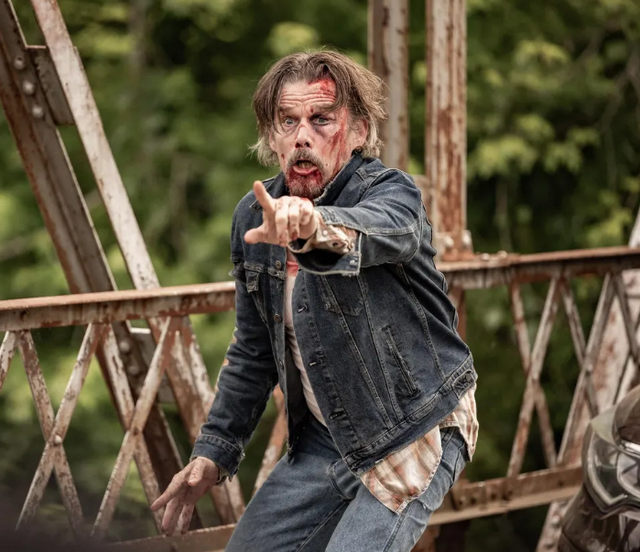
Now deep into work on Season Two, Tuck confirms that returning cinematographers Mark Schwartzbard and Chris Norr are once again helping shape the evolving visual language of the series, alongside several high-profile new cast additions that are already generating excitement behind the scenes.
With its richly layered characters, improvisational energy, jazz-like tonal rhythms, and uniquely textured “Tulsa noir” atmosphere, THE LOWDOWN has already established itself as one of television’s most distinctive crime dramas. And much of that success can be traced back to the editorial philosophy Patrick Tuck helped establish from the very beginning: Forget the formula. Follow the characters.
By debbie elias, exclusive interview 05/05/2026
Season One of THE LOWDOWN is now streaming on HULU and Disney+