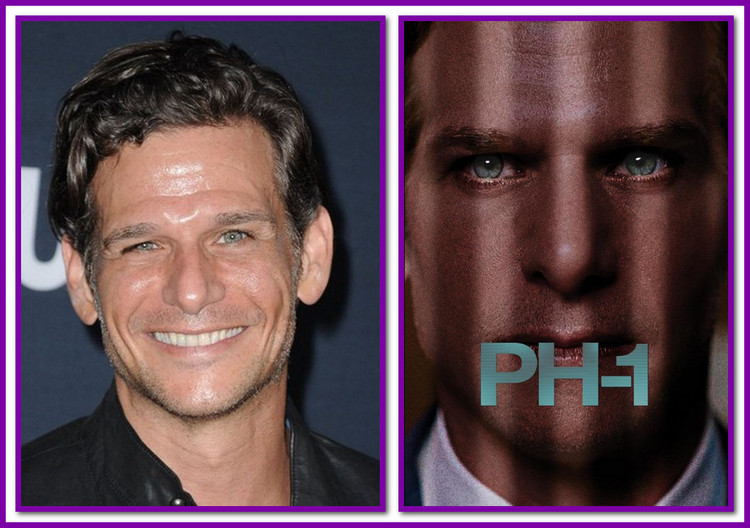
In PH-1, writer/director and lead actor MARK KASSEN constructs a pressure cooker of a political thriller—one that unfolds not through physical confinement alone, but through the far more insidious architecture of modern media. Co-written with Cheryl Guerriero, PH-1 is set almost entirely within a luxury penthouse, the film traps Senator Payton Burnham (Kassen) in a digital crossfire where perception mutates into reality in real time.
Reputation used to unravel over time. In PH-1, it collapses in minutes—under the glare of screens, speculation, and a media machine that never blinks.
But for Kassen, the foundation of PH-1 begins not with politics or even technology—but with identity itself.
“I’ve always been obsessed with the idea of who we say we are to get what we want versus who we really are,” he says. “And media is where that collision happens.”
That collision—between the authentic self and the curated persona—drives every frame of PH-1. Drawing from his experience co-founding the political platform A Starting Point, Kassen has spent years watching that tension play out in real life.
“I’ve watched politicians come in naive, wanting to do something meaningful,” he explains. “And then, in trying to get there, they start playing into the things that get them attention. At first, it’s in service of something—but sometimes it becomes more in service of themselves. That line is a wild thing to watch.”
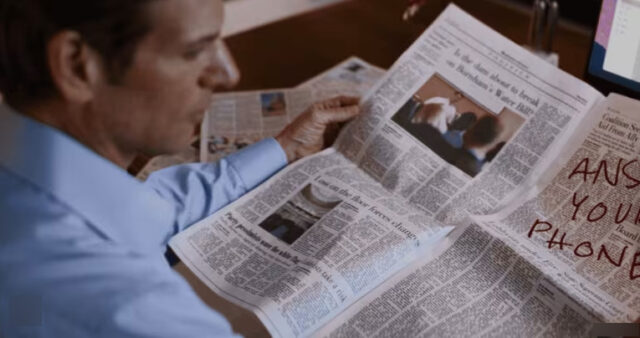
It’s that behavioral truth that grounds PH-1, giving its high-concept premise a disquieting sense of realism. As Kassen puts it, “I felt like I had some inside behavioral information to make this feel as real as possible.”
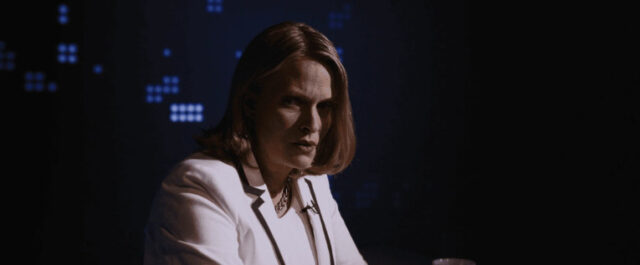
Though the film is set within a single penthouse, the world of PH-1 expands through screens—phones, televisions, surveillance feeds, and social media streams that relentlessly intrude on Burnham’s reality.
“A tweet becomes a fact,” Kassen notes. “And facts are hard to run from.”
That idea—how quickly information calcifies into truth—is central to the film’s design. The penthouse may appear open, bathed in light and glass, but it becomes increasingly claustrophobic as technology infiltrates every corner.
“He’s captive in his home,” Kassen says, “but he’s also captive in front of the media—and by the technology itself.”
To achieve that sense of escalating pressure, Kassen worked closely with his cinematographer Sven Estos to construct a visual language rooted in duration and immediacy.
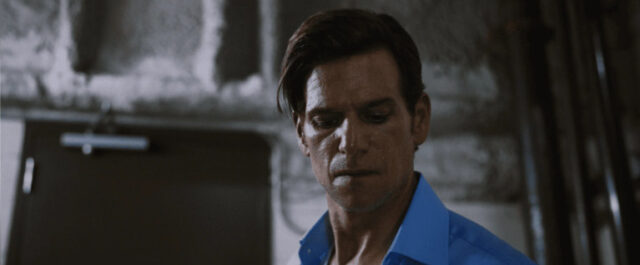
“We shot long, continuous scenes—11, 12 pages at a time,” he explains. “I wanted the tension baked in, not something we manufactured later.”
Those extended takes required rigorous preparation. Kassen and his team rehearsed extensively within the space, mapping out movement and timing before cameras ever rolled.
“We would go into locations and literally run scenes up and down hallways to figure out what we needed,” he says. “There was a lot of planning just to make sure we could execute what we envisioned.”
But that precision was paired with a willingness to adapt in the moment.
“You prepare like hell,” Kassen says, “and then you stay open. If you stay open, the film keeps evolving—even after you think you know what it is.”
Taking on the dual role of director and lead actor in such a tightly controlled environment added its own layer of complexity—one Kassen acknowledges with a wry sense of humor. “Don’t play the lead in something like this,” he says. “Not with this few characters.”
Yet that dual perspective also allowed him to shape performance tone with clarity. His portrayal of Burnham traces a precise arc—from composed political confidence to unraveling panic, and finally into something more guarded and calculating.
“I couldn’t just show up and figure it out,” he explains. “I had to come in completely prepared—word perfect—so I could then be open to what was happening in the moment.”
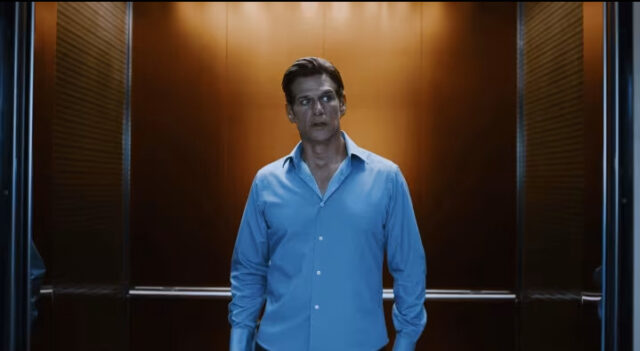
That balance between structure and spontaneity extends to the entire cast. While the script was tightly constructed, Kassen allowed space for organic interaction where possible—particularly given the film’s unique technical setup, with actors sometimes performing remotely in real time.
“It allowed us to actually feel the pressure of the moment,” he says. “We were really interacting with each other, not just pretending to.”
Once production wrapped, the film’s complex visual and narrative elements moved into the hands of editor Martin Pensa—whose role proved critical in shaping the final experience.
“You come in with a strong vision,” Kassen says, “but then you hand it over to artists who challenge it and elevate it. What you get back is exactly what you wanted—just better than you imagined.”
With multiple streams of information—live action, digital overlays, surveillance feeds—the challenge was not just technical, but psychological.
“There’s so much information coming at you,” Kassen notes. “We wanted the audience to feel that—how overwhelming it is, how hard it is to keep up.”
That sense of overload extends into the film’s sound design and score. Composer Adam Peters blends classical elements with electronic textures and real-world digital sounds, embedding the language of technology directly into the film’s sonic landscape.
“He started building things out of cell phone tones and computer sounds,” Kassen says. “So the score itself feels like part of the world.”
The result is a soundscape that doesn’t just support the narrative—it invades it, reinforcing the constant presence of media and technology in Burnham’s unraveling.
At its core, PH-1 is about control—who has it, who loses it, and how quickly it can be stripped away in an age where information moves faster than truth.
And for Kassen, the filmmaking process itself echoed that theme.
“If you stay open,” he reflects, “that journey never really ends. You keep learning from the film, even after you’ve made it.”
As Kassen continues to explore the intersection of storytelling, media, and identity, PH-1 stands as a reflection of both his creative ambitions and his lived engagement with the political and digital landscape. PH-1 is an ambitious, tightly constructed media thriller that leans heavily into its conceptual framework, offering a timely meditation on identity and information in the digital age.
by debbie elias, exclusive interview 04/28/2026
PH-1 is currently in select major markets. A North American digital release is set for May 8th on all the major platforms.