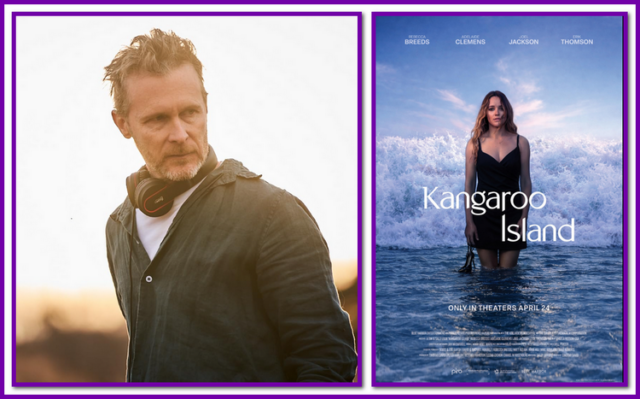
INSIDE THE BUILD. . .
With KANGAROO ISLAND, first-time narrative feature director Timothy David faced a challenge familiar to many filmmakers making the jump from acclaimed short-form commercial work to long-form storytelling: how do you preserve visual intention, capture emotional authenticity, and stay agile when shooting a low-budget feature on a remote island with limited infrastructure and very little margin for error?
David’s answer was not to tighten control, but to loosen it.
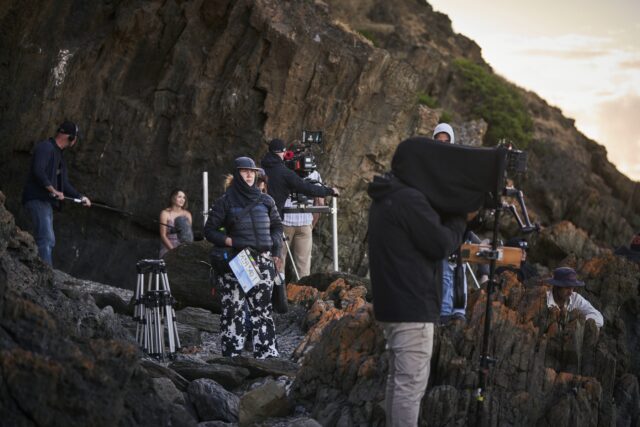
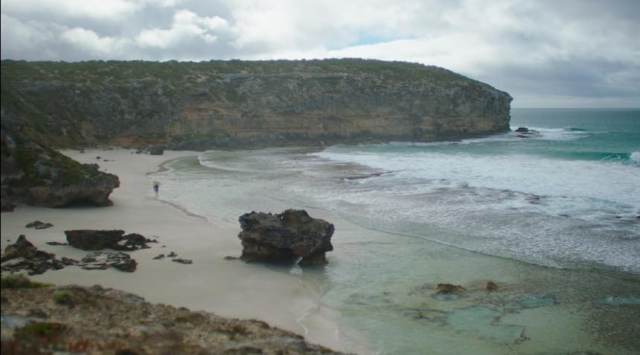
Shot on location on South Australia’s Kangaroo Island, the film embraces the rugged unpredictability of its environment, both logistically and aesthetically. Rather than fighting the conditions, David built a production approach around them, favoring two-camera coverage, long lenses, minimal lighting, and a visual style rooted less in technical perfection than in behavioral truth.
“What’s going to work against you, you have to make work for you,” David says, summing up a philosophy that shaped the entire production.
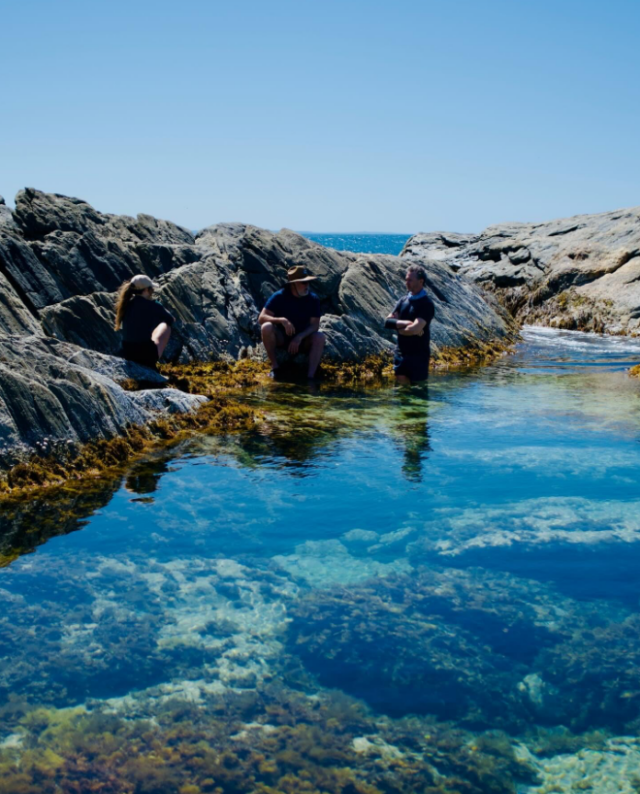
Building a Feature Around Constraints
The realities of shooting on Kangaroo Island dictated the production method from the outset. Infrastructure was limited, equipment replacement was far from immediate, and weather and environmental conditions were not always cooperative. If a camera failed, David knew a replacement could take days to arrive—time and money the production could not afford to lose.
His solution was to bring in a second camera, both as insurance and as a core part of the film’s shooting language.
“We had to shoot 100 scenes in 23 days,” he says. “So I decided, very late, to get a second camera. I always pay for beautiful lenses… and then I got another cameraman, and I decided I’ll always shoot with two cameras.”
That decision did more than protect the schedule. It helped define the film’s aesthetic. Working with two cameras at once reduced the opportunity for precise, heavily sculpted setups, but it also created a freer, more responsive environment for the actors.
Long Lenses and Observed Behavior
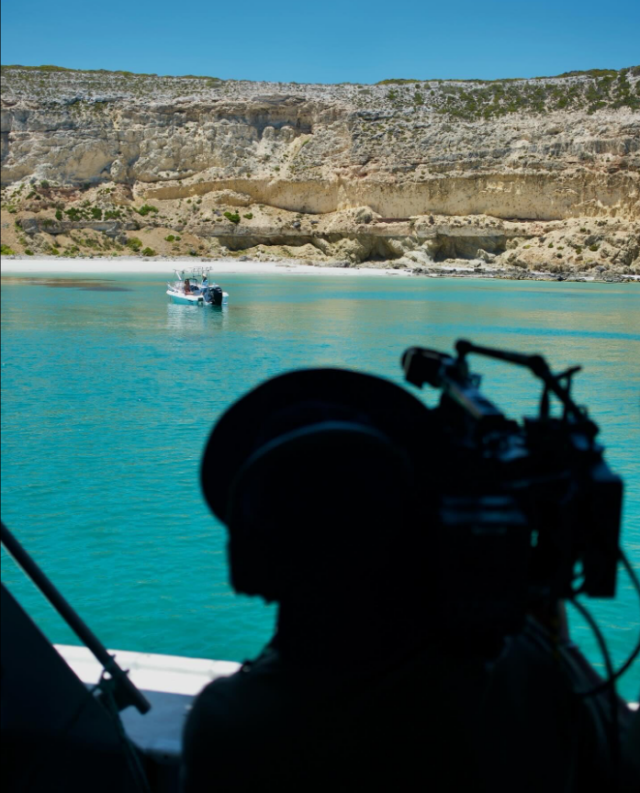
David strongly favored long-lens shooting, particularly the 135mm. That choice gave the film an observational intimacy that feels less staged than quietly witnessed.
“With a long lens like that, you feel like you’re spying on characters,” he says. “Because you’ve got to shoot so far away.”
That distance helped performances remain natural, particularly in emotionally fraught scenes where excessive camera proximity might have made actors more self-conscious. It also allowed David to strip away unnecessary visual information. With a tighter field of view, less art direction had to be controlled in frame, which proved useful on a modest budget and in practical locations.
The result is a film that often feels as though it is discovering behavior rather than staging it—an effect David actively pursued. “I really started to treat the film very early on as though we were documenting human behavior,” he says.
Lighting 360 and Letting Actors Roam
To support that documentary-like freedom, David asked cinematographer Ian McCarroll to light scenes in a way that would work in every direction.
“I told the cinematographer he really had to light 360,” David says. “I didn’t care about lighting” in the conventional, heavily controlled sense, because he knew the two-camera setup would make traditional flagging, shaping, and off-camera gear placement far more cumbersome.
The production therefore leaned into a more open method. Actors were not rigidly pinned to marks. The camera adjusted to them rather than the other way around. If a performer drifted out of ideal light or slipped momentarily out of focus, David was willing to accept it, provided the emotional truth of the moment remained intact.
“If they were out of focus for a minute, I didn’t care,” he says. “If they went out of the light and were silhouetted, I didn’t care… as long as their performance was authentic.”
For many productions, that would read as compromise. For David, it became the point.
Canon K35s and the Value of Beautiful Glass
If David was willing to let go of precision in some areas, he was uncompromising in one: lenses.
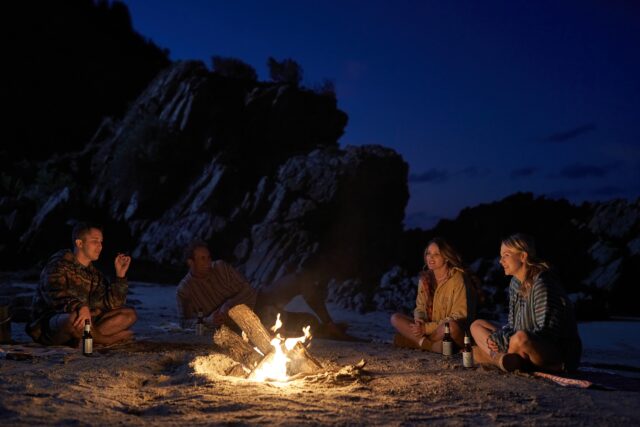
“I always pay for beautiful lenses,” he says. For Kangaroo Island, that meant vintage Canon K35s paired with an ARRI Alexa Mini LF. David was drawn to the K35s for their softness, low-light capability, and shallow depth of field—all qualities that suited both the island environment and the film’s emotional tone.
He credits a cinematographer collaborator in New York with first pointing him toward the K35s, noting their association with Barry Lyndon and their ability to work beautifully in natural, low-light situations. “It has a really soft look,” David says. “It’s a beautiful lens. It picks up any kind of natural light and gives a very shallow depth of field.”
That softness becomes a defining trait of the film’s visual character. The K35s render skin, water, and landscape with a gentle naturalism that tempers the harsher edges of both family conflict and the island’s rugged terrain. David did not want to exaggerate those elements in post. “The colors were the colors,” he says. “I didn’t want to exaggerate anything in post.”
The Alexa Mini LF, meanwhile, gave him the digital reliability and familiar workflow he wanted while still preserving a filmic quality once a touch of grain was added later. “A nice Alexa with a beautiful lens and just a smidge of grain in post,” David says, “and I can’t tell the difference between that and film.”
When Imperfection Becomes the Method
One of the more revealing aspects of David’s process is how openly he embraced imperfection. That was not simply resignation to budget or schedule. It became a core creative principle.
One focus puller, more accustomed to tightly controlled shooting conditions, initially bristled at the looseness of the setup and the reality that not everything would be tack sharp all the time. David held firm. “This is not a film where everything is perfect,” he says. “This is a film which, like life, is messy.”
That philosophy aligns directly with the material itself. Kangaroo Island is a story about family wounds, buried tensions, and unresolved emotion. A visually over-controlled approach might have undercut the lived-in truth David was chasing. Instead, the production leaned into the unpredictability of weather, movement, performance, and place.
Editing for Instinct, Not Coverage
David also edited the film himself, alongside assistant editor Jamie Rusiti, and that editorial control reinforced his confidence in the shooting method. Because he knew how he intended to shape scenes, he was comfortable moving quickly on set once he felt he had the material he needed.
A key test came with a central dinner scene, one that might traditionally require extensive coverage and a much longer shooting schedule. David shot it quickly with two cameras and minimal fuss, then cut it early in the edit to see whether the method would hold.
“I cut it in an hour,” he says. “It wasn’t perfect… but the performances were so good.” That was enough. He did not revisit the scene obsessively or comb through every alternate take looking for technical tidiness. If it worked emotionally, it stayed.
That instinctive editorial approach is one of the clearest through-lines between David’s commercial background and his first feature. He knows when a moment lands, and once it does, he moves on.
A Small Bedroom, a Big Lesson
Asked about a favorite scene to shoot, David points not to one of the island’s spectacular exteriors, but to a small bedroom scene between Lou and Freya. The room was cramped, difficult to light, and by conventional standards should have been a technical headache. One character was nearly silhouetted; there was barely space to move; the lighting was minimal.
Instead, it became a revelation.
David loved the way the handheld camera followed Lou through the room, the way the blocking felt alive, and the way the performances grounded the scene. What could have been the ugliest scene in the film became one of its most intimate and visually affecting. It confirmed for him that the production’s less precious, more performance-centered method was working.
The Takeaway
For David, the most valuable lesson from making Kangaroo Island was not about scale, scheduling, or even logistics. It was about priority.
“I think what I would take forward is to not be precious about how it’s shot, but be precious about how the characters are feeling,” he says.
That distinction is what gives Kangaroo Island its unusual texture. It is visually beautiful, certainly, but it is not polished into lifelessness. It moves, breathes, and occasionally slips off-center in ways that make the emotional reality feel stronger, not weaker.
In an era when many productions chase control, Kangaroo Island offers a useful reminder: sometimes the most effective production strategy is not to eliminate the mess, but to understand what kind of truth the mess can reveal.
by debbie elias, exclusive interview 04/17/2026
Part of our ongoing focus on the Artisans Behind the Lens.