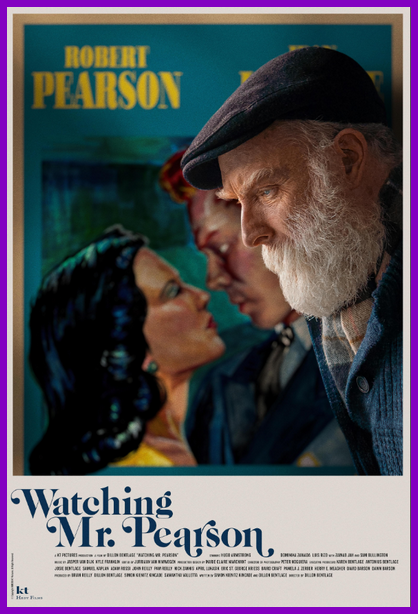
In his feature directorial debut, writer/director Dillon Bentlage delivers something increasingly rare with WATCHING MR. PEARSON: a film about dementia that leads with humanity, not heartbreak.
WATCHING MR. PEARSON centers on Robert Pearson (Hugo Armstrong), a once-renowned actor now struggling to distinguish past from present. Under the care of two very different caregivers—Caroline (Dominika Zawada), an empathetic immigrant holding tight to her belief in possibility, and Miguel (Luis Rizo), a pragmatic first-generation American worn down by responsibility—Robert’s world begins to fracture. But instead of retreating from that fracture, Bentlage leans into it, finding an unexpected pathway forward through imagination, performance, and connection.
Rather than treating Robert as someone who is already lost, Bentlage insists on his presence. The film’s greatest strength lies in this perspective. Robert is not a vessel of decline; he is a man still capable of feeling, responding, and connecting—even as memory slips away. By centering that idea, Bentlage reframes dementia not as an ending, but as a different way of experiencing the world.
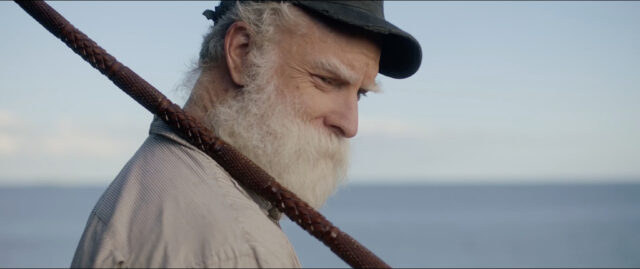
What elevates WATCHING MR. PEARSON beyond familiar territory, is its structural and thematic use of Robert’s past as a film actor. Through fragments of imagined films—complete with lovingly crafted one-sheets and genre-specific visual flourishes—Robert is able to revisit versions of himself that feel vivid and alive. These sequences, spanning westerns, noir, and classic Hollywood melodrama, are more than stylistic flourishes. They become emotional bridges, allowing Robert to remain engaged with the present by stepping into the language of his past.
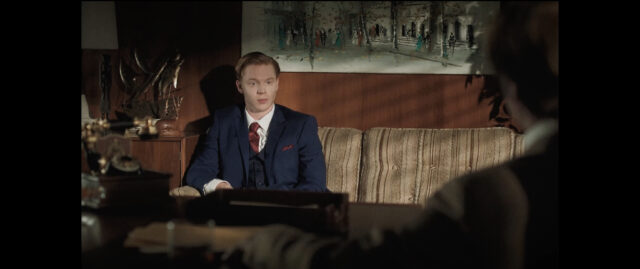
Crucial to the success of this device is the seamless casting of Sam Bullington as young Robert. The physical and emotional continuity between Bullington and Armstrong is striking, creating an almost uncanny sense that we are witnessing the same man across time. It’s a testament not only to casting but to performance calibration on both ends.
And at the center of it all is Hugo Armstrong, delivering a performance of remarkable restraint and depth. There is nothing showy here, no overt grasping for sympathy. Instead, Armstrong works in micro-expressions—subtle shifts in the eyes, fleeting moments of recognition, confusion that never tips into caricature. It’s a performance that invites the audience in rather than pushing emotion outward.
Visually, the film is defined by its softness and light. Working with cinematographer Peter Nogueira, Bentlage makes a deliberate choice to avoid the visual gloom often associated with stories of aging and memory loss. Interiors are bathed in natural light, exteriors feel open and breathable, and even moments of disorientation are grounded in a gentle visual warmth. The effect is quietly radical. Rather than signaling tragedy through darkness, the film allows its emotional weight to exist in full view—clear, present, and human.
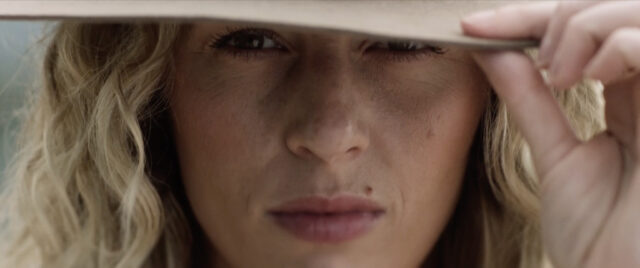
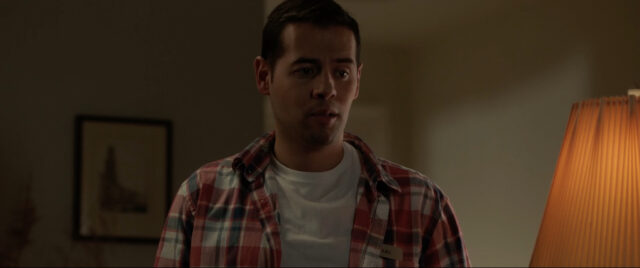
This approach also reinforces the film’s underlying thematic current: hope. Not false hope, not denial, but a steady, grounded belief that connection still matters. That belief is embodied most clearly in Caroline, whose approach to caregiving is rooted in friendship rather than function. Where Miguel initially approaches Robert with clinical efficiency, Caroline meets him where he is—reading scripts with him, engaging in his imagined realities, and treating his shifting perception as something to work with rather than correct.
The dynamic between Caroline and Miguel adds an additional layer of complexity. Bentlage introduces subtle commentary on immigration, generational perspective, and the idea of the “American Dream,” but never allows those elements to overwhelm the narrative. Instead, they inform character behavior. Caroline’s optimism contrasts with Miguel’s quiet resignation, and over time, both perspectives begin to shift as they engage more deeply with Robert—and with each other.
The film’s pacing is another standout element. Editor Jurriaan Van Nimwegen crafts a rhythm that feels organic and unforced. Scenes are allowed to breathe, but never linger unnecessarily. There is a careful balance at play—one that avoids both the sluggishness that can accompany contemplative dramas and the artificial urgency that can undermine them. The result is a film that unfolds with emotional clarity, allowing the audience to remain present with Robert rather than observing him from a distance.
Complementing this is a beautifully modulated score by Jasper Van Dijik and Kyle Franklin. Rather than overwhelming the film with sweeping orchestration, the composers opt for a lighter, more intimate approach, weaving in genre-specific touches that echo Robert’s cinematic past. A recurring trumpet motif gives Robert a quiet sense of grandeur, while subtle shifts in instrumentation mirror his transitions between memory and present experience. It’s a score that supports rather than dictates, enhancing the film’s emotional texture without drawing attention away from it.
Perhaps most surprising—and most welcome—is Bentlage’s willingness to embrace moments of humor. Dementia is not treated as a purely somber experience, and the film finds space for absurdity without ever compromising its compassion. A standout sequence involving an escort arriving at the house walks a delicate tonal line, balancing discomfort, humor, and empathy in equal measure. It’s a reminder that life, even in its most difficult moments, rarely exists in a single emotional register.

If the film falters at all, it is only in its ambition to layer multiple thematic threads into a relatively compact runtime. Elements of artistic longing, immigration, and generational divide occasionally feel as though they could be explored further. Yet even these threads ultimately enrich the central narrative, reinforcing the film’s core belief in connection and shared humanity.
In the end, WATCHING MR. PEARSON leaves a lasting impression not because it overwhelms, but because it understands restraint. Bentlage resists melodrama, avoids easy sentimentality, and instead builds something quieter, more enduring.
Memory may fade. Time may fracture. But as Bentlage so eloquently illustrates, feeling endures.
A quietly powerful debut filled with compassion, craft, and an unwavering belief in the resilience of the human spirit.
Directed by Dillon Bentlage
Written by Dillon Bentlage and Simon Kincade
Cast:
Hugo Armstrong as “Robert Pearson”
Dominika Zawada as “Caroline”
Luis Rizo as “Miguel”
Sam Bullington as “Young Robert”
by debbie elias, 04/09/2026
WATCHING MR. PEARSON is starting its theatrical rollout across the country on April 9, 2026.